

PhysicsGraph
418 posts

PhysicsGraph
@physicsgraph
effective and efficient physics education
Katılım Ocak 2025
4 Takip Edilen2.9K Takipçiler

MA is not just for gifted kids, we have made an impact on a huge range of students (both age and mastery levels). I'm so pleased to share this email:
"I am truly grateful to have discovered your system in March. Since then, my two kids have diligently worked on their courses, spending 15–35 minutes each day.
My son, who is 14 and has intellectual challenges (autism), also finished grade 8 at his specialized school. He started in March with 35% knowledge of "grade 4." Initially, using the platform was difficult for him. He often skipped instructions, guessed answers for challenging concepts, and rushed through lessons to finish quickly. As a result, the system responded by assigning him negative XP. This pattern continued for about 3–4 weeks; he would complete easy lessons for positive XP, then rush and guess through harder ones, earning negative XP. At first, he wasn't concerned about these setbacks, but he eventually became motivated to make real progress. Now, he aims for a daily goal of 15 XP and averages about 12 XP per day. He has reached a 95% knowledge level for his course and is very proud of his achievements."
English
PhysicsGraph retweetledi

Set a goal for 10 school partnerships by Fall and reached it through cold INBOUND alone.
Clearly not ambitious enough. If you know other schools out there that would benefit from PhysicsGraph for their physics/chemistry, reach out now and lock in our cheapest rate!
English
PhysicsGraph retweetledi

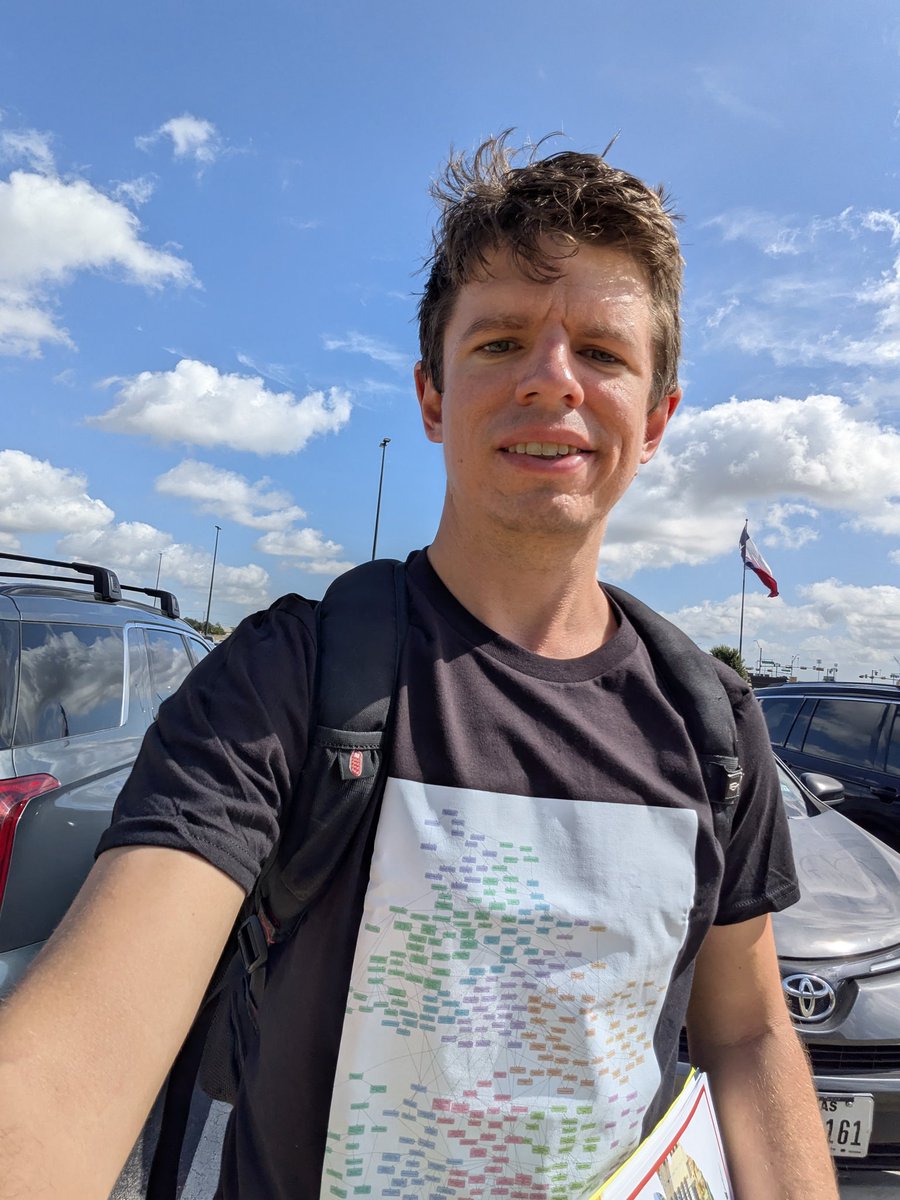
At the texas homeschool conference stepping knowledge graphs
English
PhysicsGraph retweetledi

Watch me relearn physics on Recess using @physicsgraph. My entire session, unedited.
Ran into some bugs + reported them to the team.
Got tripped up over scientific notation but sue me I haven't done this since I was in high school.
Feedback is always welcome!
English
PhysicsGraph retweetledi

Never been more optimistic for my kids’ education prospects. Exciting times
Chris@sutherlandphys
MathAcademy, Alpha School, Mentava, Recess, and yes I'm throwing PhysicsGraph in there are lighting the world of education on fire and I couldn't be more excited.
English
PhysicsGraph retweetledi

Wanna spend the next decades of my life mastering knowledge graphs. Ty @physicsgraph and @_MathAcademy_ 🙏. Cannot wait to introduce this way of learning to my kids 🙂👌
English
PhysicsGraph retweetledi
Imagine an aggregate view of everything your class has mastered so far
As well as detailed reports about each individual student's effort level and performance

Chris@sutherlandphys
If you're a school, teacher, professor, and you want more students succeeding in physics, reach out. We've had a bunch of schools cold reach out to us recently, plus some aggregators, and we're working with all of them starting Fall. We'd love to work with you too. And cheap!
English
PhysicsGraph retweetledi

PhysicsGraph retweetledi
If you're a school, teacher, professor, and you want more students succeeding in physics, reach out.
We've had a bunch of schools cold reach out to us recently, plus some aggregators, and we're working with all of them starting Fall.
We'd love to work with you too. And cheap!
English

Crazy thing is, this 3rd grader is not our first elementary schooler to learn all of middle/high school math in a year, take AP Calculus BC, and ace the AP exam. This is a trend, not a one-off.
Alex Smith@ninja_maths
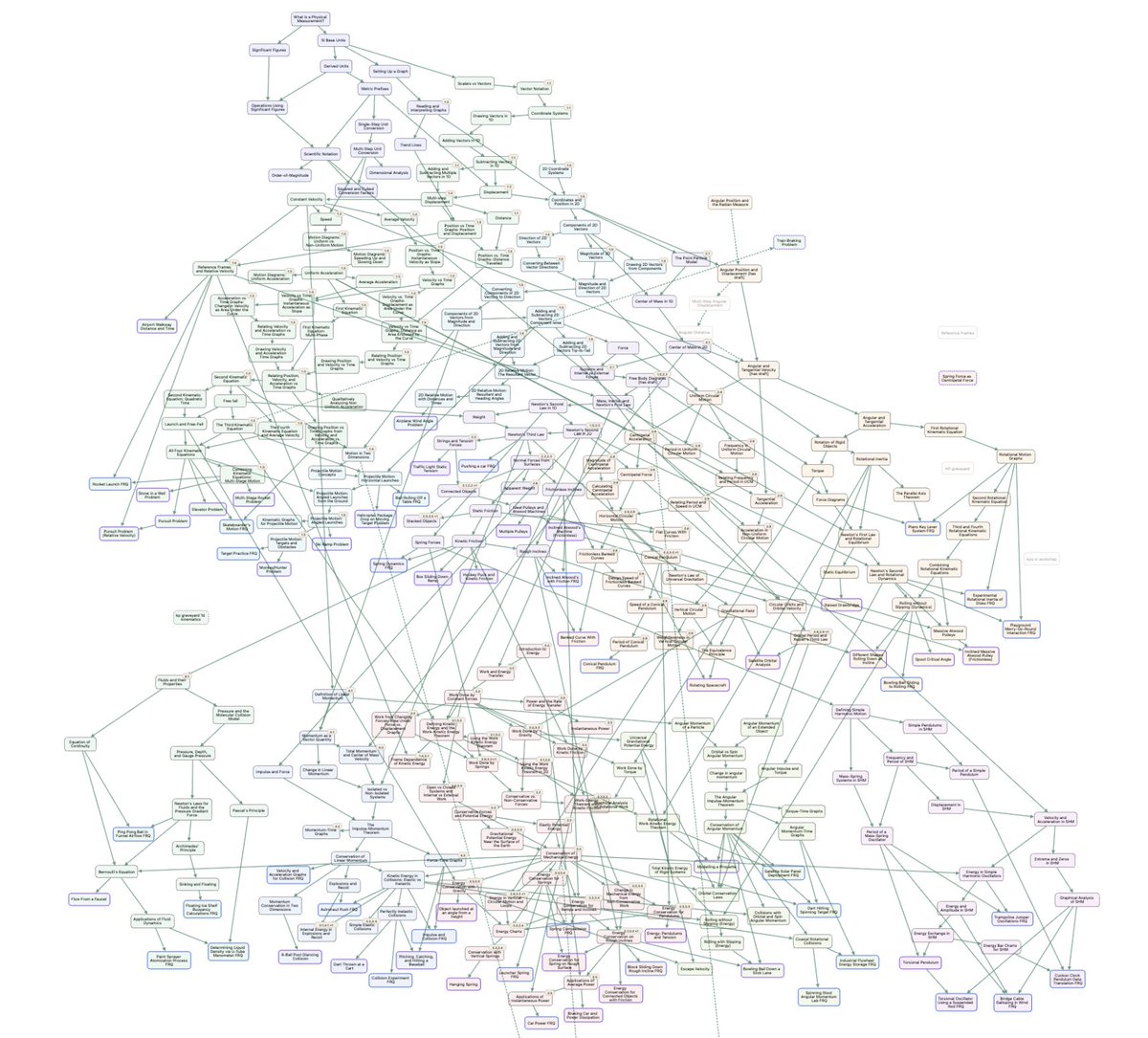
For anyone wondering how a third-grader can complete six years' worth of math in a single year AND score a 5 on the AP Calculus exam. This knowledge graph spans 3,000 math topics, from 4th grade to the university level, providing the perfect basis for mastery learning. Students can go as fast or far as they want! There are no restrictions whatsoever. The only requirement is that they must demonstrate mastery of each topic before moving on to the next. Kids are capable of incredible things when given that kind of freedom and support.
English
PhysicsGraph retweetledi
PhysicsGraph retweetledi

These topics will take full advantage of @physicsgraph 's animations to help illustrate concepts to students in ways that a textbook could not.
Luca Camarra@camarraluca
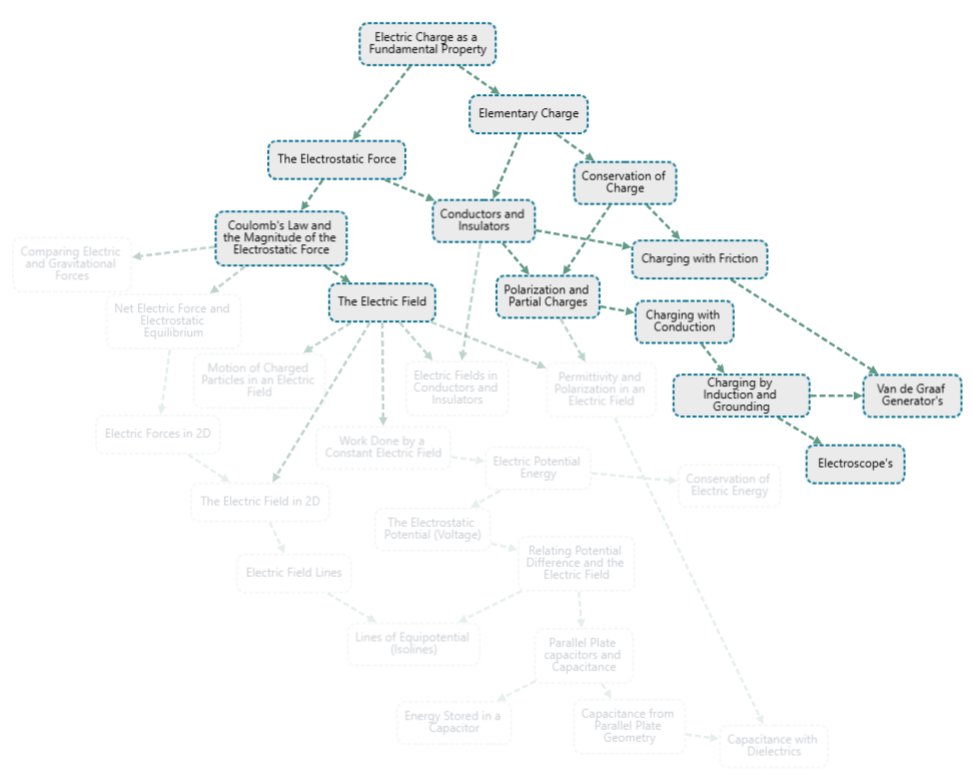
Electricity and Magnetism content coming soon to PhysicsGraph! Take a look at our planned unit covering topics in electrostatics. We'll be releasing TEKS-aligned topics (bold) first and later expanding to include AP topics (+faded)!
English
PhysicsGraph retweetledi
Electricity and Magnetism content coming soon to PhysicsGraph!
Take a look at our planned unit covering topics in electrostatics. We'll be releasing TEKS-aligned topics (bold) first and later expanding to include AP topics (+faded)!
English
PhysicsGraph retweetledi
Amazing. And we’ll make sure they get 5’s on physics and chemistry next year.
Math Academy@_MathAcademy_
Incredible! A 3rd grader and a 6th grader both achieving 5's on the AP Calc BC exam! Congrats on the hard work!!
English
PhysicsGraph retweetledi
This is why every college professor should ditch their current Learning Management Systems like Blackboard, Canvas, D2L, etc.
Professors should be using LMS' that do what the quoted tweet is saying. Better for everyone.
PhysicsGraph for physics, MathAcademy for math, etc.
Mitch Forest - edu/acc@MitchForest
Mastery learning requires a live model of every student's knowledge state across a prerequisite graph. Imagine one teacher tracking this for 30 kids — mastery per node, per subject, with evidence scattered across worksheets, homework, cold calls, and assessments. Impossible. So we default to one-size-fits-all instruction: teaching to a fictional average student who doesn't exist, at a point on the graph almost nobody is actually standing. Edtech should do two things. Hold the live student model. Generate the personalized path. That's it.
English
PhysicsGraph retweetledi
"Edtech should do two things. Hold the live student model. Generate the personalized path. That's it."
A nice framing. And the "personalized" doesn't need to be AI btw. Just the most effective/efficient path through the curriculum based on each student's unique mastery profile.
Mitch Forest - edu/acc@MitchForest
Mastery learning requires a live model of every student's knowledge state across a prerequisite graph. Imagine one teacher tracking this for 30 kids — mastery per node, per subject, with evidence scattered across worksheets, homework, cold calls, and assessments. Impossible. So we default to one-size-fits-all instruction: teaching to a fictional average student who doesn't exist, at a point on the graph almost nobody is actually standing. Edtech should do two things. Hold the live student model. Generate the personalized path. That's it.
English
PhysicsGraph retweetledi
“I’ll wait until school starts to sign the declaration”
--Thomas Jefferson, in a world where America was never founded
Start learning Physics and Chemistry today!
Jeffrey Biles@JeffreyBiles
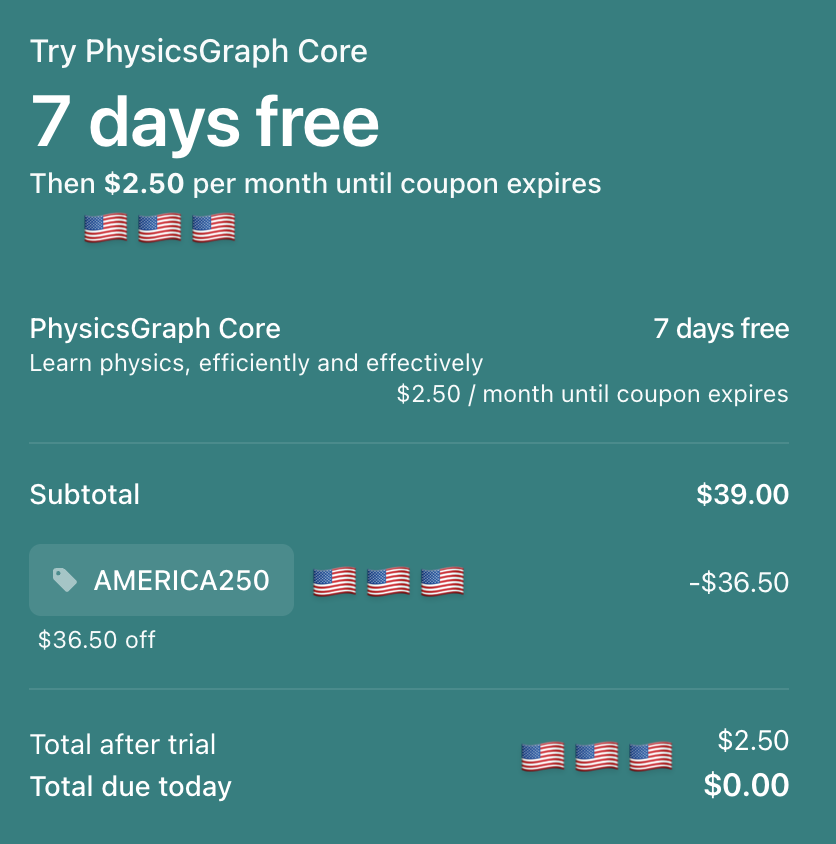
4th of July sale! Get your first month of PhysicsGraph for $2.50 with the code AMERICA250
English
PhysicsGraph retweetledi
4th of July sale!
Get your first month of PhysicsGraph for $2.50 with the code AMERICA250
English
PhysicsGraph retweetledi