Pierre

899 posts

Pierre banner
Pierre

Pierre

@pierre2599

Katılım Ağustos 2025
616 Takip Edilen64 Takipçiler
Pierre
Pierre@pierre2599·
@Eygurine Elle est Libanaise... C'est le mannequin Romy Nassar.
Français
0
0
0
86
Pierre
Pierre@pierre2599·
@Nastikanix Et pourquoi pas des œuvres historiques comme la guerre du Péloponnèse ? Je serais curieux de voir comment l’IA pourrait traiter un texte de ce genre…
Français
0
0
0
57
Pierre
Pierre@pierre2599·
@Nastikanix Moi, j’aime le théâtre, mais je n’aime pas vraiment lire les pièces dans le texte, du moins pas sans avoir auparavant visualisé la pièce. J’aimerais donc beaucoup voir, par exemple, des tragédies grecques adaptées par l’IA qui n’ont encore jamais été portées au cinéma.
Français
1
0
0
101
Kanix
Kanix@Nastikanix·
Assez d'accord avec Durandal dans sa dernière vid sur l'IA au cinéma. Moins sur l'aspect moral que sur cette simple question : qui va vouloir regarder ça une fois l'effet de surprise passé ? Et ce n'est pas une question de "ça va s'améliorer" mais de nature. Le robot acrobate.
Français
5
0
9
485
Pierre
Pierre@pierre2599·
@FredFabron @ecrevix Après l'habilité de ce consensus centriste c'est justement de savoir organiser la passation de pouvoir en toute quiétude grâce à leur production de clones.
Français
0
0
0
62
Pierre
Pierre@pierre2599·
@Empty_America @ThatchEffendi No… you’d have to be completely clueless not to see the difference between these different phenotypes.
English
0
1
1
163
VB Knives
VB Knives@Empty_America·
@ThatchEffendi I'm like the opposite of a race scientist, I don't care about all those graphs and charts and stuff. Just noting the obvious fact that they look Syrian.
English
8
0
68
3.1K
Pierre
Pierre@pierre2599·
@nonregemesse @FTrapper74493 Angie Karantoni, a former model from Thessaloniki who retired after having a child. In short, the perfect woman.
English
3
0
45
2.2K
Pierre
Pierre@pierre2599·
@nonregemesse She looks typically Eastern. It’s not hard to distinguish that from the mainland Greek type :
Pierre tweet media
English
1
0
7
850
Silenced American
Silenced American@Silas_Kindling·
@pierre2599 @wil_da_beast630 So what if you think his face looks like an AI generated racist stereotype? Are you then racist for assuming as much? You both are admitting this guy doesn't look very human.
English
2
0
0
58
Wilfred Reilly
Wilfred Reilly@wil_da_beast630·
Re my Gaut Gaut post - this below is dude. I won't post them again unless I can prove this, but more than a few commonly shared pics of the guy may be edits from 4chan.
Wilfred Reilly tweet mediaWilfred Reilly tweet mediaWilfred Reilly tweet mediaWilfred Reilly tweet media
English
14
3
63
10.4K
Pierre
Pierre@pierre2599·
@wil_da_beast630 Possible… It has often happened to Vinícius Júnior as well, to be caricatured in that way.
English
1
0
1
235
Wilfred Reilly
Wilfred Reilly@wil_da_beast630·
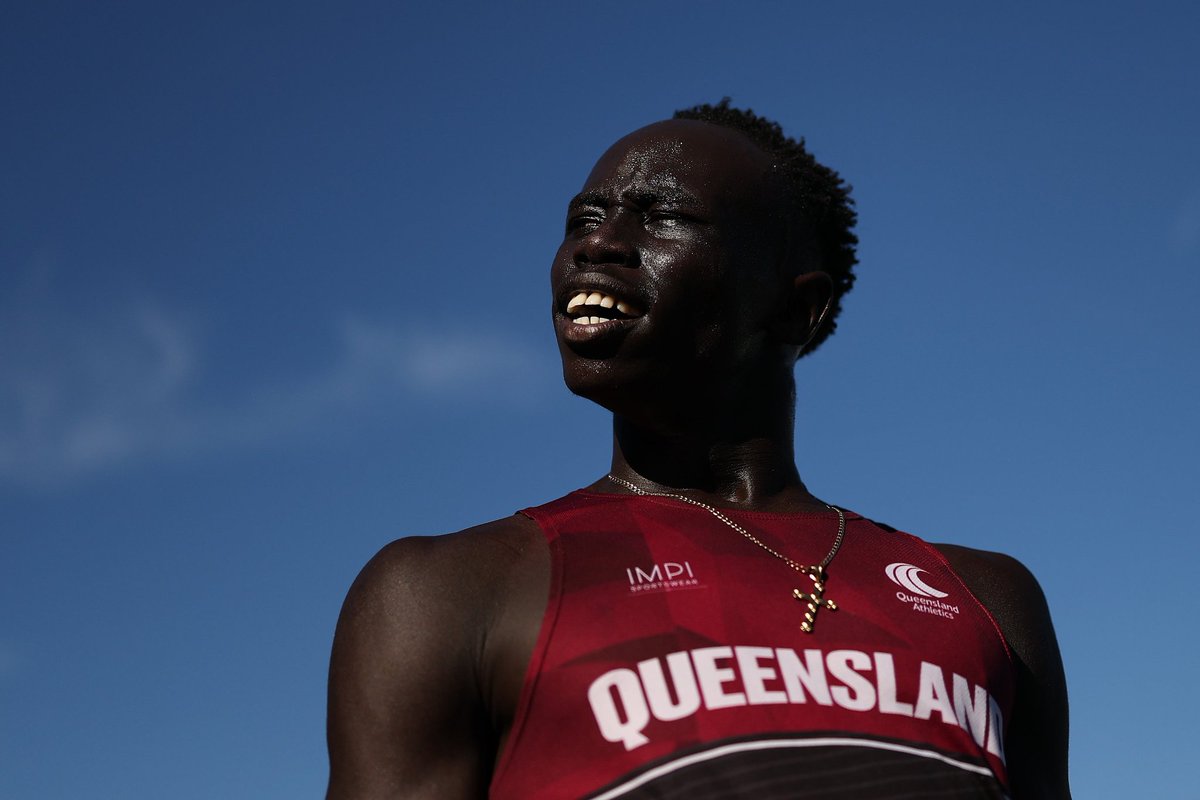
I'll let one slip. Like, this. Per AI, 99.7% chance someone edited this high school track star to look like a Denisovan warrior - gape the jaw, etc. This may be the lamest, weakest shit I have ever seen.
Wilfred Reilly tweet media
English
5
0
31
3.5K
Pierre
Pierre@pierre2599·
I don’t think so. The entire manga was conceived with this ending in mind. In any case, that’s not true if you’ve truly understood the tragic nature of the human condition. Isayama makes this very clear from the very beginning of the manga. Many people were hoping for some kind of happy ending out of nowhere, it seems to me.
English
0
0
3
194
G-real
G-real@SSJSpartan·
@megha_lilly Is it true the Attack on Titan ending is so bad that it ruins the show? I’ve heard it was at the level of Game of Thrones’ ending. I stopped around season 3 but from what I’ve seen it’s been getting exponentially better.
English
7
0
2
854
Megha
Megha@megha_lilly·
I've been an anime enjoyer my whole life. Sailor Moon, Naruto, Inuyasha, and then later Psychopass, Deathnote, Attack on Titan, HunterXHunter and Studio Ghibli. Japanese media dominates in my generation because they remember something crucial about storytelling: don't dumb it down for your audience and don't be cynical. Western Media once understood this but they've forgotten.
English
31
65
655
20.9K
Pierre
Pierre@pierre2599·
@Empty_America Without the veil, I don’t find it that obvious. I think Monica is very typical of the Umbria region, quite simply, where there are many beautiful brunettes with regular and symmetrical features. It’s the quintessential region for beautiful mids.
Pierre tweet media
English
0
0
3
331
VB Knives
VB Knives@Empty_America·
The most beautiful Spanish and Italian women look like they could easily be Middle Eastern, Syrian, etc. Is this a legacy of Roman era migration from the East?
VB Knives tweet mediaVB Knives tweet media
English
192
63
1.4K
161.2K
Pierre
Pierre@pierre2599·
C’est dans sa fonction dionysiaque que la mer est « couleur de vin », et la notation affective qui s’y attache est celle du sombre (melas). Leucothéa appelle la mer couleur de vin juste avant de plonger elle-même dans le flot noir (melas). Or, à son tour, la notion de melas renvoie moins à une couleur, le noir, qu’à une notion religieuse : celle du monde souterrain, dont nous savons que la mer dionysiaque est l’antichambre. La mer « couleur de vin » a été vue comme elle était pensée. — Maria Daraki, Dionysos et la déesse Terre
Archaeo - Histories@archeohistories

Why were the sky, wine, and sea nearly "purple" in ancient Greece? There was no word for "blue" in classical Greece. The closest descriptions of blue are glaucous and cyan, which express the contrast between light and dark. They do not, however, define the color itself. The perception of color and its linguistic representation in ancient cultures is a topic that has fascinated scholars, linguists, and historians for years. One of the most curious observations from ancient texts is the apparent absence of a term that directly corresponds to the modern color "blue" in Ancient Greek. Let's dive into this phenomenon. In his two works, the Iliad and the Odyssey, Homer only refers to four colors: black, white, greenish-yellow (to represent honey, plant sap, and blood), and porphyro (red). When Homer refers to the sky as "bronze," he does not mean that it is the color of bronze but rather that it is dazzlingly bright, like a well-polished shield. He implied that the wine, the sea, and the sheep were all the same hue, red, by applying the same logic. Aristotle named seven distinct hues, which he thought came from black and white, but in fact, they were variations in brightness rather than colors. Surprisingly, two NASA robotic vehicles on Mars in 2006 and an ancient Greek who lived around 2,500 years ago both experienced colors exactly the same way. One explanation offered after Darwin's theories gained popularity was that the ancient Greeks' retinas did not possess the same capacity for color perception as ours do today. Nonetheless, it is now thought that they categorized things based on their characteristics, not color. The phrase "yellow" or "bright green," which was used to describe the blood, or "juice," of the people, actually indicated wet, fresh, and alive. This occurrence is not as uncommon as one may believe. More languages are spoken in Papua New Guinea than anywhere else in the world, but many of them do not discuss color at all outside of the struggle between light and dark. No word for brown, gray, blue, or green exists in Old Welsh. The division of the color spectrum is considerably different: one term (glas) covers part of the green, another word covers all of the blue, another word covers all of the gray, and a third word covers all or part of the brown. There isn't a single term for "blue" in Russian. The two phrases "galoboy" and "sini," which are typically translated as "light blue" and "dark blue," are used instead. Nevertheless, for Russians, these words refer to two entirely distinct colors rather than two variations of the same color. The representation of color words is the same across all languages. Red is almost typically the third color stated after black and white, followed by green and yellow, blue, and then brown. In his book "Through the Language Glass," linguist Guy Deutscher explores the topic of color in ancient languages. He suggests that as societies grow and develop, so does their need to name and categorize colors. This means the naming of colors is more of a cultural evolution than a strict biological one. The way Ancient Greeks described and perceived colors offers a window into their world, culture, and linguistic evolution. While it may seem strange to modern readers that they apparently lacked a word for "blue," it's a testament to the fluidity of language and the intricate relationship between culture, language, and perception. The exploration of color in ancient cultures challenged us to see the world not just in black and white or blue and green but in a myriad of shades and interpretations. © The Archaeologist #archaeohistories


Français
0
0
1
153
Pierre
Pierre@pierre2599·
@nayeonarmyyy La fameuse intuition féminine, censée percer les secrets des cœurs.
Français
0
1
21
1.8K
Pierre
Pierre@pierre2599·
@Itsjade_duh18 @SilencedSaxon Since all non-Africans share the Out-of-Africa bottleneck (around 60,000–70,000 years ago), which makes them more similar to each other than to any African population.
English
0
0
1
70
Pierre
Pierre@pierre2599·
@Itsjade_duh18 @SilencedSaxon This is not the same people at all. It’s absurd. I even believe that, from the perspective of population genetics, Aboriginal Australians are generally genetically closer to Europeans than to Sub-Saharan Africans.
English
1
0
1
452