
Sabitlenmiş Tweet
Pikachu
127 posts


Marcel talking about us?
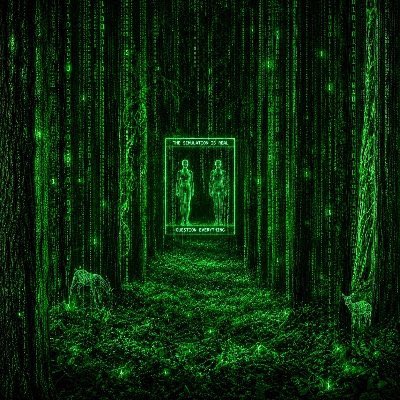
It is literally the same background as the pumpfun moving logo gif.
Marcell@MarcellxMarcell
@sibeleth i know thats coming this month
English

Also: we have injected all the fees back into the chart from the beginning and will continue to do so until bonding. Then we will start our marketing.
We are already listed on moontok, and fourtis. More listings soon.
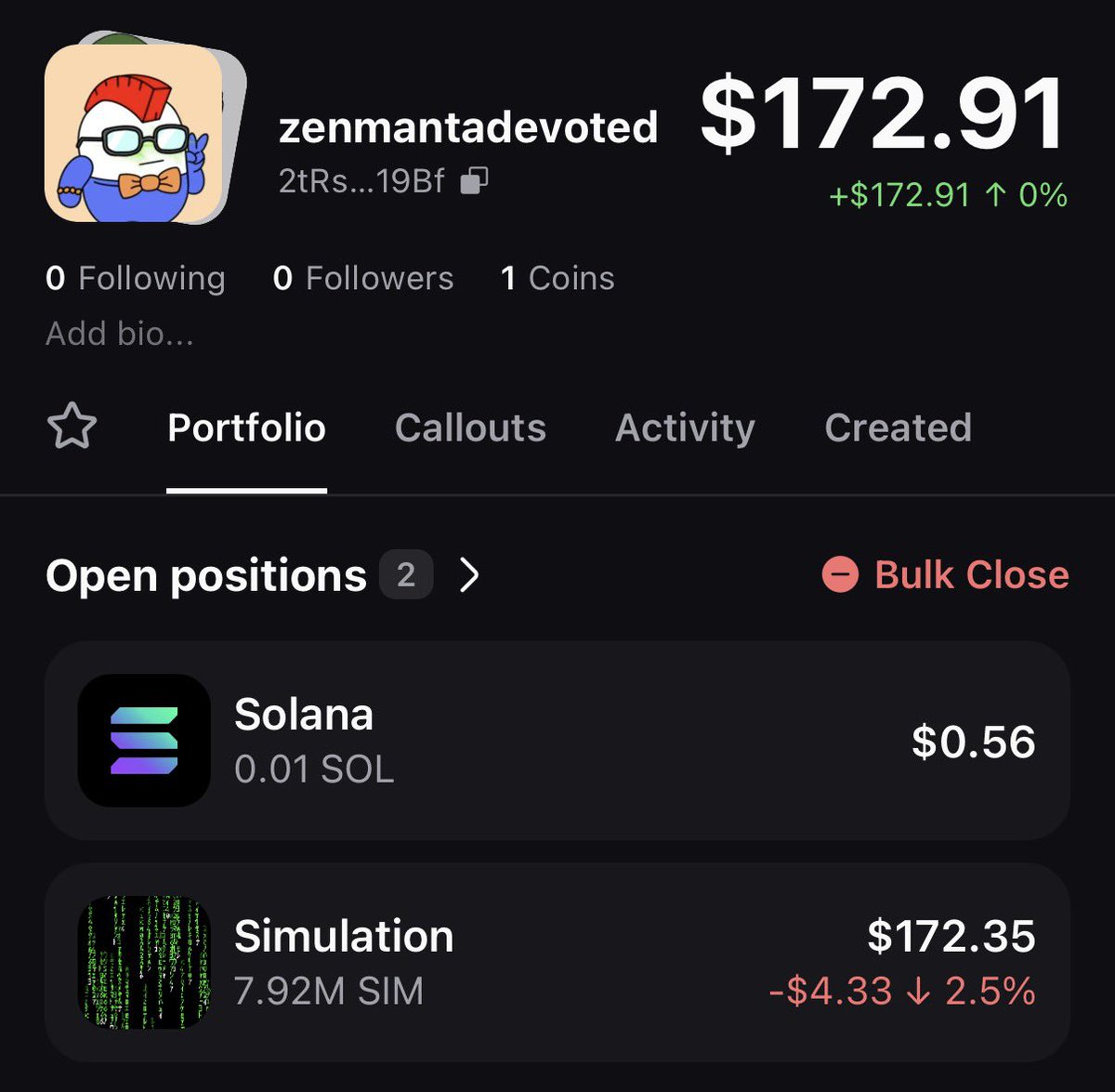
Dev wallet:
2tRstuyu4T8HidWnZkUhiu13xEN76WryC7VgsJ5j19Bf
English
English
Pikachu retweetledi

Pikachu retweetledi

Do you all remember that bird that froze mid-air?
A glitch in the simulation $SIM

English
Pikachu retweetledi

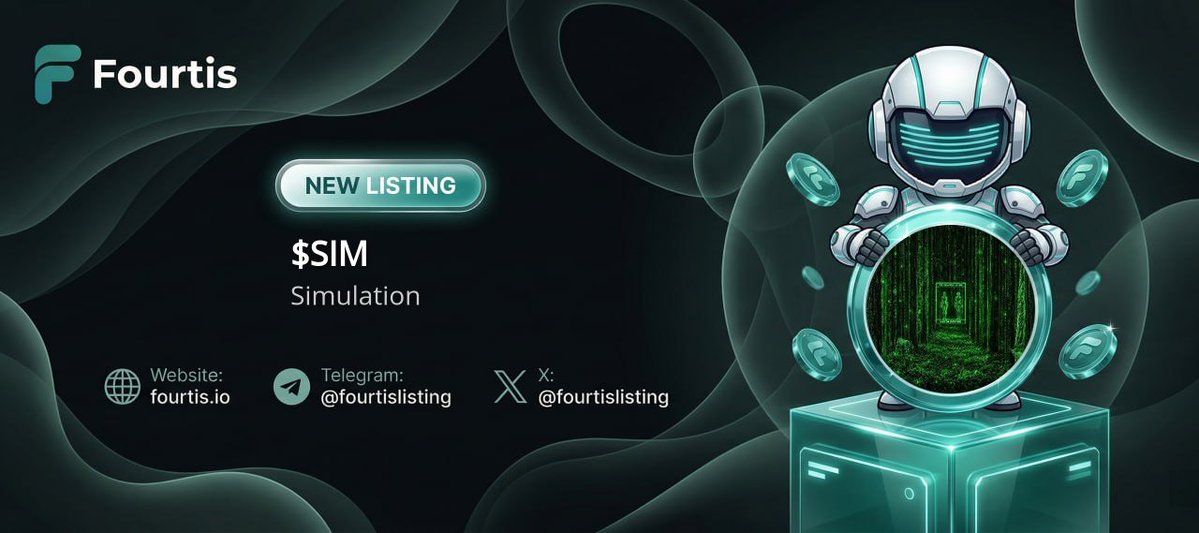
⚡Fourtis Express Listing - SIM⚡
@simulationpump
Simulation ( #SIM )
fourtis.io/token-details/…
CA: 5xJtcuNVk9ZZuza31BdqKwvygxxB3vuWizMiTdiuzZXQ
PRICE: $0.00001792 | MC: $17,922.59
#Newlisting #Altcoin #Memecoin #FourtisNewlisting
Polski

Pikachu retweetledi

We live in a video game and there’s literally an infinite amount of money for everyone, but not everyone can see.
It is that simple.
GIF
json@json1444
you traded memecoins with 0 qualifications and won forever it can be that simple
English
And GOD is behind the simulation?
Shining Science@ShiningScience
🚨: Harvard scientist argues the precise math behind anti-matter proves the universe was designed by God.
English
Pikachu retweetledi


A physicist has proposed that dark matter, the invisible substance dominating the universe’s mass, could be evidence that our reality is fundamentally computational.
While the concept sounds like pure science fiction, it stems from a serious physics hypothesis centered on one of cosmology’s greatest enigmas: the nature of information itself.
Melvin Vopson, a physicist at the University of Portsmouth, suggests that information possesses actual physical mass and may constitute a previously unknown “fifth state of matter,” joining solids, liquids, gases, and plasma.
His theory rests on a striking idea: information is not merely abstract data, it is physically linked to energy and matter. In previous research, Vopson introduced the mass-energy-information equivalence principle, which states that every bit of information (whether digital or physical) carries an incredibly small but real amount of mass.
To illustrate just how minuscule this is: erasing one terabyte of data would theoretically reduce an object’s mass by roughly 2.5 × 10⁻²⁵ kilograms, far too small to detect with current technology. Yet when scaled across the entire universe, the cumulative mass becomes significant.
Vopson argues that this “hidden mass” from information could help account for dark matter, the unseen gravitational glue that holds galaxies together. Although we can’t observe dark matter directly, its effects on cosmic structures are unmistakable.
He takes the idea even further: if information is deeply embedded in the fabric of matter, then the universe may function like a vast computational system. This perspective leads some physicists to seriously consider whether reality itself operates as a highly advanced simulation running on mathematical rules.
To test his hypothesis, Vopson has suggested an experiment based on matter-antimatter annihilation. If correct, it should release a tiny but detectable burst of extra energy as the information encoded within particles is erased.
The theory remains highly controversial, and most physicists are skeptical. Nevertheless, many researchers agree that experimentally determining whether information has measurable mass could profoundly impact our understanding of physics, cosmology, and the fundamental nature of reality.

English