pillarbear

1.9K posts

pillarbear banner
pillarbear

pillarbear

@pillarbear_

Katılım Ekim 2022
2.1K Takip Edilen794 Takipçiler
pillarbear retweetledi
Star_OKX
Star_OKX@star_okx·
It’s an objective analysis. First of all, Ethena Labs has done an impressive job in both portfolio and risk management — their transparency should be an example in the industry. OKX already lists the ENA token and may consider supporting USDe in the future as well. In fact, OKX is also a small angel investor in Ethena. That said, it’s important to remind the market that USDe should not be viewed as a 1:1 pegged stablecoin — it’s a tokenized hedge fund. Such funds typically employ relatively low-risk strategies such as delta-neutral basis trading or money-market investments, but they still carry inherent risks — including ADL events, exchange-related incidents, and custodian security breaches. Labeling USDe as a “stablecoin,” or describing recent market movements as “unpegging,” is inaccurate. A tokenized hedge fund was never designed to maintain a hard peg to USD. If any exchange decides to include USDe within its collateral framework, it must apply robust and dynamic risk-mitigation controls. Treating USDe as a simple 1:1 stable asset could introduce systemic risks to the entire crypto industry in the future. @gdog97_ @hosseeb
YQ@yq_acc

x.com/i/article/1977…

English
216
42
451
211.7K
pillarbear retweetledi
Haseeb >|<
Haseeb >|<@hosseeb·
Did Ethena Really Depeg? I’ve seen a lot of chatter about the Ethena depeg during the market mayhem this weekend. The story is that USDe briefly depegged to ~68c before recovering. Here’s the Binance chart everyone is quoting: But digging into the data and talking to a bunch of folks over last couple days, it's now clear this story is not correct. USDe did *not* depeg. First thing to understand about USDe: its most liquid venue is actually not on exchanges, it’s on Curve. There’s hundreds of millions of dollars of standing liquidity on Curve, while only tens of millions on any given exchange, including Binance. So if you just look at that chart of USDe on Binance, it looks like USDe depegged. But if you superimpose the other liquid venues for USDe, you get a different picture: We see here that while USDe wicked down on every CEX, it did not do so uniformly. Bybit briefly hit $0.95 then quickly recovered, yet Binance depegged a crazy amount and took forever to regain the peg. Curve meanwhile dipped a mere 0.3%. What explains this difference? Remember, every single exchange was under immense load on that day—it was the single largest liquidation event in crypto history. Binance was extremely unstable during this period, causing MMs to be unable to shift inventory because APIs were failing and withdrawals and deposits were bricked. Nobody was able to step in and arb. It’s like a fire broke out on Binance, but all of the roads were blocked and firefighters couldn’t make their way in. This caused a wildfire to break out on Binance, but pretty much everywhere else, that fire was immediately put out by bridging liquidity. (As Guy shows in his post, USDC also depegged a few cents temporarily on Binance due to the same general instability issues—liquidity just couldn’t get ferried in, but this wasn’t a depeg event for USDC either.) So OK. Unsurprising that while there’s API instability, prices on exchanges are wildly different because nobody can get inventory in. But why did it decline so much deeper on Binance than on Bybit? The answer is twofold—first, Binance did not have any primary dealer relationship with Ethena to be able to directly mint and redeem on-platform (Bybit and other exchanges have this integrated) which allows MMs to stay on-platform and still perform peg arbitrage. This is huge, as otherwise an MM has to take their money *out* of Binance, go do the Ethena peg arb, and then bring back their inventory. Nobody was doing that in a moment of crisis when APIs were failing (plus so many other coins were cratering). Second, Binance had their oracle poorly implemented and started liquidating positions they shouldn’t have—good liquidation mechanisms don’t trigger on flash crashes. If you are not the primary venue for an asset (which Binance is not for USDe) then you should look at the price on the primary venue. If you are only looking at your own order book, you will liquidate too aggressively. This caused Binance to start liquidating USDe as though it was worth $0.80 or whatever, which caused a cascade. This is a big part of the reason why Binance is refunding people who were liquidated on USDe (other exchanges AFAIK are not doing so)—they messed up by only looking at their own price instead of the true external price. So this was a Binance-specific flash crash, which better market structure could’ve prevented. USDe on its primary venue, Curve, was actually trading at a tight peg the entire day. This is really different from what you’d describe as a depeg. If you remember USDC in 2023 during the banking crisis, this is what an actual depeg looks like: During the banking crisis, USDC traded down on every single venue. There was *no* place where you could buy USDC for $1. Redemptions were literally halted, so $0.87 was the *true* price. That’s what a depeg means. This instead was a Binance-specific dislocation. It’s a big lesson for market infra, but critical to understand the nuance here if you are trying to draw inferences about USDe’s mechanism from this weekend. USDe was fully collateralized and worth $1 on its primary venue through the entire episode and actually increased its backing collateral over the weekend due to the price action. That said, this kind of market instability is ultimately good because it exposes lessons for the whole industry. Guy’s post below lays out how any exchange, including Binance, can avoid this kind of issue in the future. TL;DR: USDe did not depeg, Binance did.
Haseeb >|< tweet mediaHaseeb >|< tweet mediaHaseeb >|< tweet media
G | Ethena@gdog97_

While we share these suggestions privately with any partner we work with across both DeFi and CeFi, want to surface this publicly so there is zero doubt going forward on what we view as appropriate oracle design and risk management for USDe:


English
201
300
1.4K
829.3K
Ouroboros Capital / yuzu.money
Ouroboros Capital / yuzu.money@OuroborosCap8·
Are there any reputable companies that can provide independent attestations to your MPC wallet policies? ie issue a periodic (e.g. monthly) attestation saying that they've reviewed your policies and confirm that you are only allowed to interact w X, Y, Z protocols.
English
6
0
9
2.1K
pillarbear retweetledi
qw
qw@QwQiao·
now may be the best time to build in crypto for the v simple reason that there's a lack of serious competition. i have maybe a dozen of good product ideas but struggle to find the right teams to build them. meanwhile in ai for every half-decent idea there's >20 legit startups working on it, not to mention the big ai labs. meanwhile the regulatory env is as friendly to crypto as ever. great time to be a contrarian.
English
134
49
592
71.6K
pillarbear
pillarbear@pillarbear_·
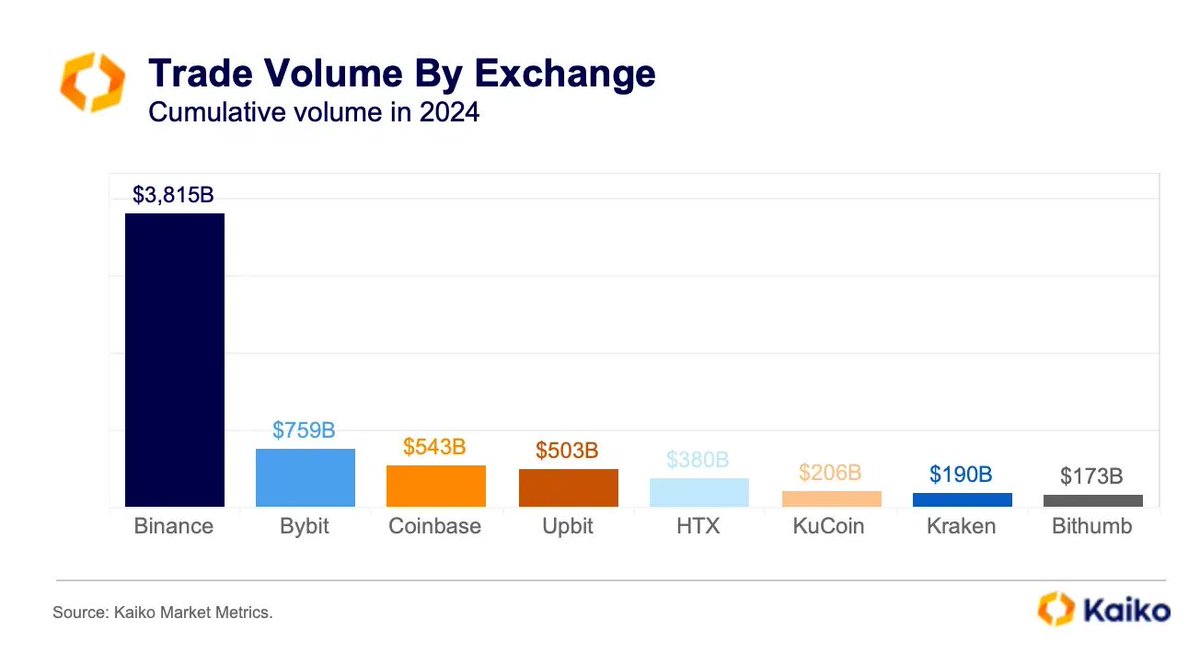
Korea faces a dilemma as the global stablecoin market rises. USD-denominated stablecoins represented over 20% of trading volume on major Korean CEXs, while the local regulatory framework remains underdeveloped. Never limited to Korea, the surge in stablecoin activity significantly threatens the local currency's position and accelerates capital outflow to offshore platforms. However, Korea possesses a unique strategic advantage compared to other countries. Trading volume on major exchanges rivals Coinbase, despite Korea's economy being less than 1/12 the size of the US. Additionally, Korea's tech-savvy population and speculative culture creates ideal conditions for the development and growth of a native KRW stablecoin. By leveraging the local market's extraordinary trading intensity and digital adoption rates, a KRW stablecoin could not only stem capital exodus but establish Korea as a significant player in the global digital asset ecosystem.
pillarbear tweet mediapillarbear tweet media
English
1
0
11
800
pillarbear retweetledi
Nikita Bier
Nikita Bier@nikitabier·
In pursuit of product-market fit, you should be less of a data scientist and more of an anthropologist. Every week I see teams pretending to be scientists and analyzing metrics on a test group of a few hundred users who came from odd sources unrepresentative of their broader target audience — like a Discord server or a handful of friends & acquaintances. Instead, keep it simple: Your analytics dashboard should literally just be a table of users with the following columns: • Name • Registration Date • Last Active Time • Number of Sessions Then follow these steps: 1. Sort the list by Last Active Time 2. Look up the most active users on Instagram or Linkedin 3. Then interpret their behavior on your app through the lens of their online identity 4. If you have a messaging channel such as Intercom, send them a generic message asking for their feedback (and maybe offer a $25 gift card) Do this regularly. It’s certainly not science but it will tell you more about what’s resonating about the product than a bunch of statistically insignificant data.
English
127
371
5.9K
501.6K
pillarbear
pillarbear@pillarbear_·
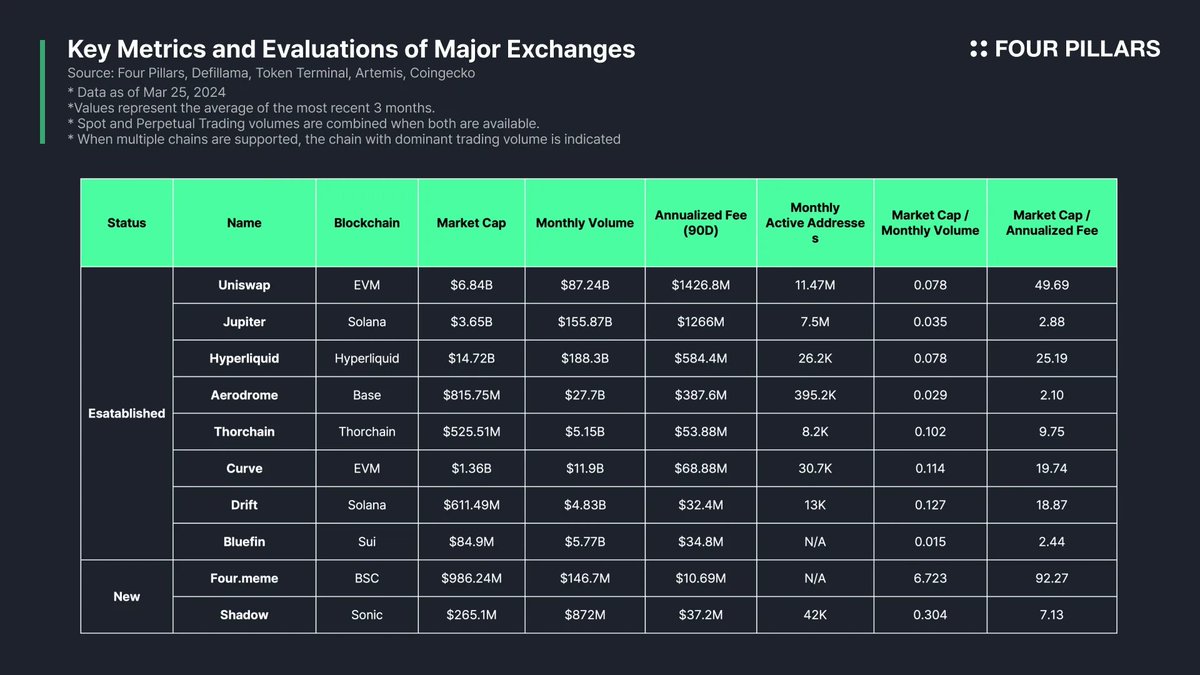
Still, @JupiterExchange and $JUP seem to be one of the most underrated protocols in crypto imo - Highest spot trading volume not just on Solana, but almost across all crypto DEXs/aggregators - Market Cap / Annualized Fee (PSR) ratio of just around 3-4, one of the lowest across DEXs/Perps - Most comprehensive product stack in crypto: Jupiter Swap, Perps, Pro for memes, API and DEX(Meteora) - Visionary and community-aligned founder (h/t @meow) - Recent mobile focus with Moonshot acquisition and portfolio integration - Vibrant community (Jupiverse) and transparent & active governance with incentives (ASR) - Increasing token-protocol alignment via Jupnet launch and ongoing buybacks JFG
pillarbear tweet media
English
1
0
1
244
Jarrod Watts
Jarrod Watts@jarrodwatts·
@ninja_writer21 @brianjhhong @abrilzucchi @AbstractChain What? That's how Relay works works, you bridge funds from other chains and use it on the destination chain. Whether you believe it was real or staged I don't really care, but this screenshot doesn't say anything other than that wallet bridged ETH and then transferred it.
English
3
0
16
2.5K
pillarbear retweetledi
Robbie Petersen
Robbie Petersen@robbiepetersen_·
Eight trends that won’t change over the next 10 years, irrespective of crypto: (1) Payments will get faster and cheaper (2) The amount of global transactions will grow (3) The amount of agentic transactions will grow (4) There will be more demand for AI’s fundamental inputs — compute, bandwidth, energy, storage, and data — and efficient markets for these commodities (5) Financial assets will seek faster, cheaper settlement and deeper liquidity (6) Private investing will get increasingly democratized (7) More yield will end up in the pockets of end users (8) Demand to speculate on non-linear outcomes will grow From first principles, blockchains are a structurally better means of servicing most, and perhaps all, of these use cases
English
16
20
128
15.8K
pillarbear retweetledi
Jay Yang
Jay Yang@Jayyanginspires·
This is the way
Jay Yang tweet media
English
77
2.5K
18.4K
1.6M
pillarbear retweetledi
Peter / 1k(x)
Peter / 1k(x)@pet3rpan_·
Ponzis can actually be fun toys if those involved clearly understand that its a ponzi and the risks associated with it
English
11
2
23
2.6K
pillarbear retweetledi
Dom Cooke
Dom Cooke@domcooke·
Matt Huang is a rare investor. In his early twenties, on a week-long vacation to China, he met with Zhang Yiming. Yiming was building a personalized news app out of a dusty apartment in Beijing. Huang didn’t like the idea, and couldn’t understand a word Yiming said, but he could tell Yiming was special. He found a way to invest at a ~$20 million valuation. Yiming’s app turned into TikTok and Huang’s share of the business, ByteDance, has turned into a sum approaching one billion dollars. At Sequoia, he refined that talent for seeing genius early and developed a stellar reputation. When he left in 2018, Michael Moritz reportedly called him "the only regrettable loss in Sequoia's history." Later that year, he co-founded a crypto investing business with @FEhrsam, who had previously co-founded Coinbase. They called it @paradigm, and today the firm manages over $12 billion. Huang is rare, not because of his success or his ability to spot category-defining companies in their infancy, but because he has built an investing firm where the mission genuinely comes before the money. As @brian_armstrong, CEO and Co-founder of Coinbase, said: “Who leaves a job like that at Sequoia? He’s a silent killer. Our industry needs more people like him who have high integrity and are in it for the long-term and the right reasons.” Paradigm doesn’t just invest, it builds. Its researchers, who double as investors, develop foundational innovations, then give them away to the entire industry. Their open-source tools power 90% of smart contract development. Their mathematical breakthroughs have helped create billion-dollar companies. The mission is to advance the frontier of crypto. Returns follow the mission. Six years in, it is working. Paradigm’s flagship fund has grown from $760 million to $8.3 billion. Behind the numbers is an unconventional team, which Huang likens to the X-Men Academy. “No one is central casting to be hired by another investing firm,” he said. But folks like @_charlienoyes, @danrobinson, and @gakonst do things that no other investors can, and Huang, along with @alanapalmedo, hold their quirks together like few leaders can. I spent the past couple of months learning everything I could about Huang and Paradigm. At first, I was drawn to his remarkable achievements but as I spent more time with him, his Paradigm team, and people close to him, it became clear that the real story was in their steadfast mission to make crypto successful. @matthuang might be the most important investor you've never heard of. You can learn all about him in my profile linked below. In an industry known for short-term thinking, he's playing a game measured in decades, with a team that’s quietly reshaping finance from their penthouse office overlooking San Francisco.
Dom Cooke tweet media
English
16
77
636
161.1K
pillarbear retweetledi
Beff (e/acc)
Beff (e/acc)@beffjezos·
This is the way.
Beff (e/acc) tweet media
English
18
54
462
33.8K
pillarbear retweetledi
Peter / 1k(x)
Peter / 1k(x)@pet3rpan_·
I've advised teams to build on Sol recently, its a fit for some and not for others. But this is straight up retardation. 1) Team hard coded the gas price in the frontend which prevented transactions from going through 2) Team wrote faulty contracts that lost fees earned
Infected@infecteddotfun

We crashed Base and now we’re moving to Solana After building solely on Eth for the past 4 years, we’ve decided to migrate @Infecteddotfun and all of our upcoming games to Solana. There is only one reason that led us to this decision: Base couldn't handle @Infecteddotfun's demand. We’ll explain the details, but we want to make it clear that this is not solely Base’s problem—it’s a fundamental scaling issue for all EVM chains. Here’s what happened: Over the past few years, we've experimented with various consumer apps. Last year, we narrowed our focus to one concept: speculative simulation games. We think speculation has huge potential beyond just memecoins, and in the next 1-2 years, most memecoins will evolve into something completely different from today's format. our first game @Infecteddotfun went extremely viral. It dominated CT. X account grew from 0 to 50K followers in less than 2 months, 130K people signed up in just 48 hours. but here’s the deal: when we launched it, Base couldn’t handle the volume of tx coming in at once. The gas price spiked and most people couldn’t make tx for the first 30 min. Since it's a 7-day momentum game, this issue completely destroyed our hype. so many users DMed us saying they couldn’t play the game and ended up leaving. we believed that L2 was the end-game scaling solution for Eth, but our conclusion was that this bottleneck is likely to continue and can't be solved anytime soon. on top of this scaling issue, Solana is winning in 2 major points. first, culture. Eth community is visionary, long-term oriented, and highly technical. we loved it but there’s one big flaw: A lack of focus on today’s users. on EVM, there is a huge divide between builders and users (= degens). most builders have no idea who the users are and what they want. on the other hand, Solana and its builders are shipping real products for the real world. in fact, most of the popular consumer apps are on Solana: pumpfun, vectorfun, daosfun ... etc We doubted Solana for so long, but now we understand exactly why they’ve dominated the space over the past year. second, user base. we want to build where users are. while it’s true that if you build what people want, they will come regardless of the chain (Infected proved this by pulling 130K sign ups) but still many users told us that they wished we’d build on Solana so that they don’t have to bridge. if they are on XRP, we'd go to XRP. if that was bitcoin mainnet, we'd go there. but today's users are on Solana. it became painfully clear to us that Solana is the best place to build. If you’re building a consumer app that will go mainstream, you have to be there. We’re getting ready to launch more viral simulation games this year, and excited to see if Solana can cope with our games. we'll drop huge news at @pandemicdotfun soon. stay tuned.

English
18
5
257
29.4K