pines
251 posts

@pineurosci
Neuroscience stuff | Postdoc @Stanford_PMHW | https://t.co/xjh6fV4j58 |


🧵1/7 New paper out! We explored how cognitive behavioral therapy (BIT+) affects brain activity & inhibitory task performance in hoarding disorder. Thankful for @CRodriguezMDPhD @LMWilliams_PhD @pineurosci @pineurosci @Stanford_PMHW @warmxue mentorship! sciencedirect.com/science/articl…

Check out our recent work demonstrating that the scalp-based Beam/F3 method is a reliable way to target the dLPFC in #TMS for depression! We learn more by integrating personalized E-field models… 👀 With @NoahSPhilipMD, @LMWilliams_PhD, and others. 👉 sciencedirect.com/science/articl…


Whelp. Maybe a good time to mention that I am about to open a new PhD position in Sweden that just happens to be exactly four years in length. Any aspiring PhD candidates in neurodegenerative imaging or multiomics who want to "take a break" from the US, please get in touch!

We think of white matter as the brain's highways—uniform conduits between cortices. What if we study development along tracts? Turns out the journey matters as much as the cortical destination! We're thrilled to share “Two Axes of White Matter Development”bit.ly/wmaxes

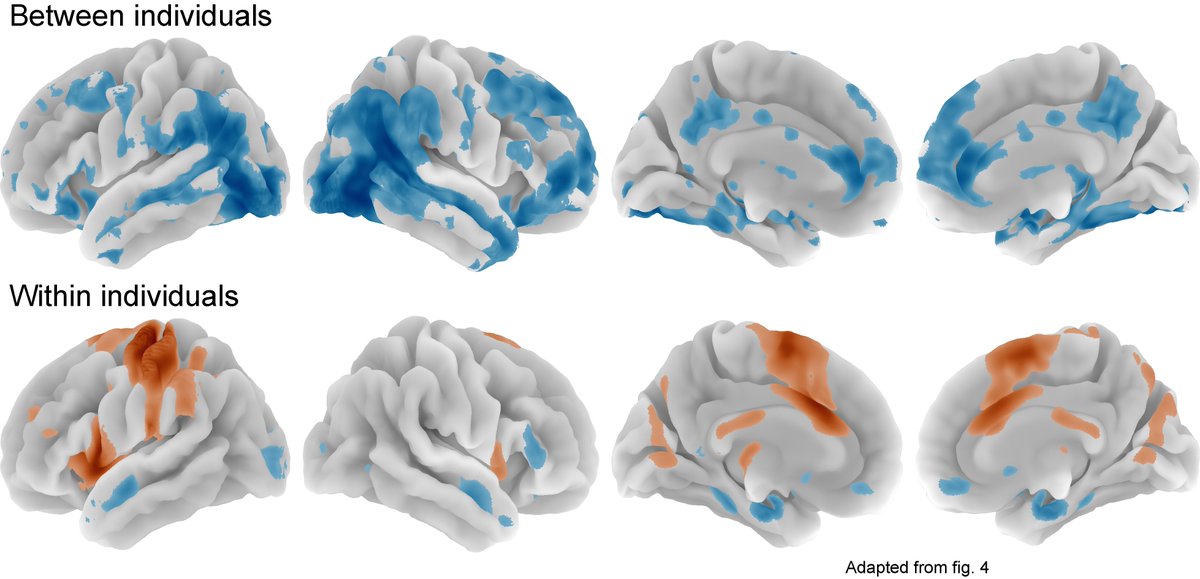
Excited to share our work “Connectional axis of individual functional variability: Patterns, structural correlates, and relevance for development and cognition,” now out at @PNASNews pnas.org/doi/10.1073/pn….


Reproducible Brain Charts: An open data resource for mapping brain development and its associations with mental health biorxiv.org/content/10.110… #biorxiv_neursci


Check out @Sarah_Chang_ 's and my latest preprint: medrxiv.org/content/10.110…. We investigate the effects of attention and probe the developmental specificity of polygenic signal on psychotic-like experiences in adolescents using ABCD.


1/ Thrilled to share our new paper published in @ScienceTM! We explored how targeted behavioral interventions can modify neural circuits to improve depression outcomes, especially in patients with comorbid conditions like obesity. Read the full paper here: science.org/doi/10.1126/sc…