
A. Sánchez Alvarado
14K posts

A. Sánchez Alvarado
@Planaria1
An ongoing collection of places, ideas and people I run into during the practice of science


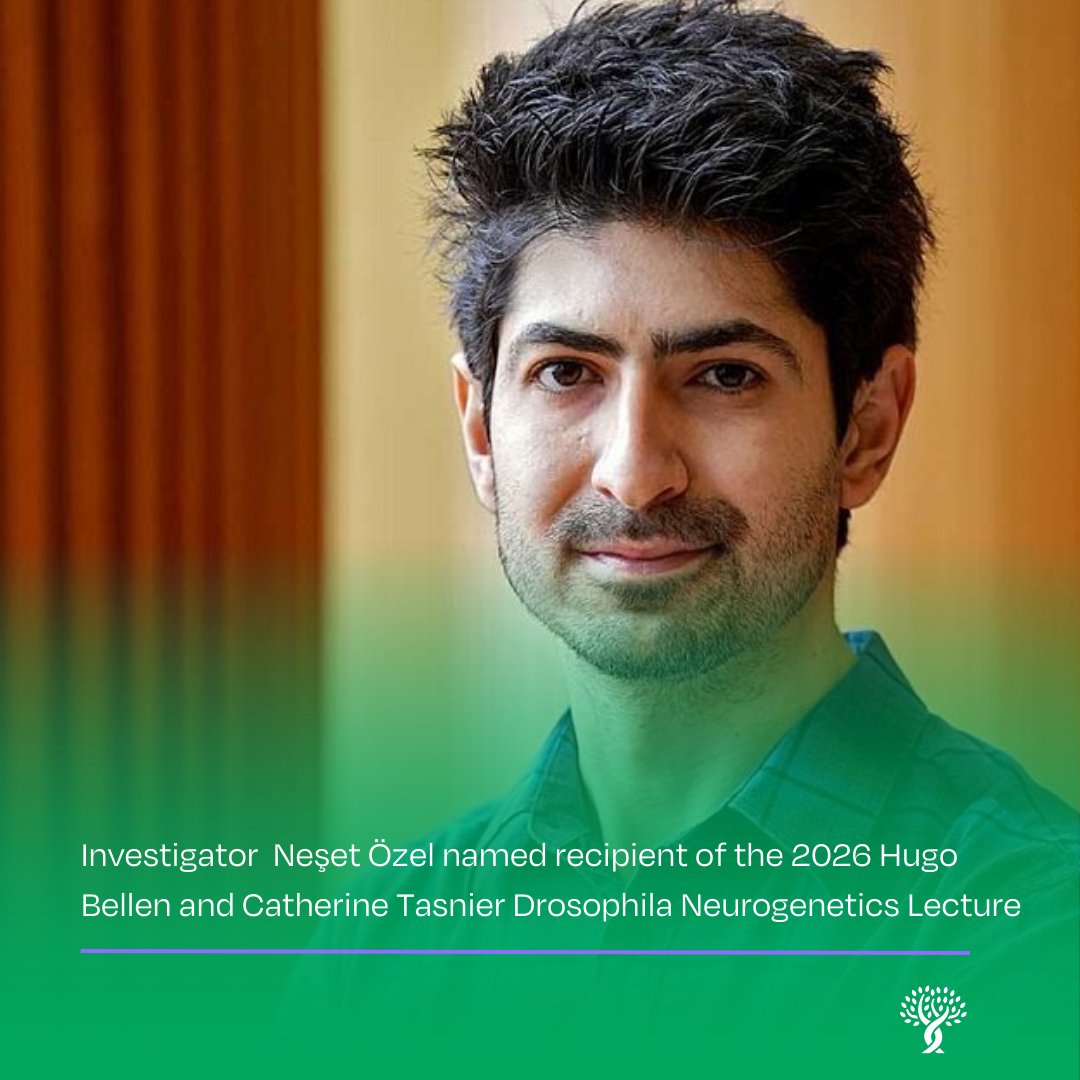
Congrats to M. Neşet Özel at @ScienceStowers, recipient of the 2026 Hugo Bellen and Catherine Tasnier Drosophila Neurogenetics Lecture! 👏 This award honors early career scientists advancing genetics & neuroscience in Drosophila. Read more about his work: buff.ly/9coE6et


Congrats to M. Neşet Özel at @ScienceStowers, recipient of the 2026 Hugo Bellen and Catherine Tasnier Drosophila Neurogenetics Lecture! 👏 This award honors early career scientists advancing genetics & neuroscience in Drosophila. Read more about his work: buff.ly/9coE6et

Have you ever wondered how you can remember your childhood home or a wedding day decades later, even though the cells in your body are constantly changing and replacing themselves? A fascinating new study just answered that question, and the answer is surprising. For years, scientists thought "amyloids" (clumps of proteins) were purely bad news. We usually hear about them in connection with Alzheimer’s disease, where they form toxic plaques that damage the brain. Researchers have found that your brain actually needs these clumps to make memories last! A team at the Stowers Institute discovered a tiny "helper" protein named Funes. Its job is to act like a construction foreman. When you learn something new, Funes helps your brain proteins fold into a rigid, stable structure—a "good" version of those amyloids. Think of it like pouring concrete: Without Funes: The memory remains liquid and washes away. With Funes: The memory hardens into a solid, permanent structure that stays in your brain for years. In Disease: The concrete pours uncontrollably (which is what happens in Alzheimer's). This proves that the mechanism behind Alzheimer's might actually be a broken version of a vital survival tool. Understanding this "good" process gives scientists a new map to fix the "bad" process when it goes wrong. Journal Reference: Si, Kausik et al, A J-domain protein enhances memory by promoting physiological amyloid formation in Drosophila, Proceedings of the National Academy of Sciences (2026). DOI: 10.1073/pnas.2516310123. #ScienceNews #BrainMysteries #Memory #Neuroscience #NewDiscovery