Political Analysis

1.1K posts

Political Analysis banner
Political Analysis

Political Analysis

@polanalysis

Official Journal of the Society for Political Methodology
Katılım Eylül 2010
2.6K Takip Edilen18.9K Takipçiler
Sabitlenmiş Tweet
Political Analysis
Political Analysis@polanalysis·
We're back! We are excited to share lots of new and exciting research with you all here and on our new Bluesky account. Find us at polanalysis.bsky.social!
English
0
3
4
3.3K
Political Analysis
Political Analysis@polanalysis·
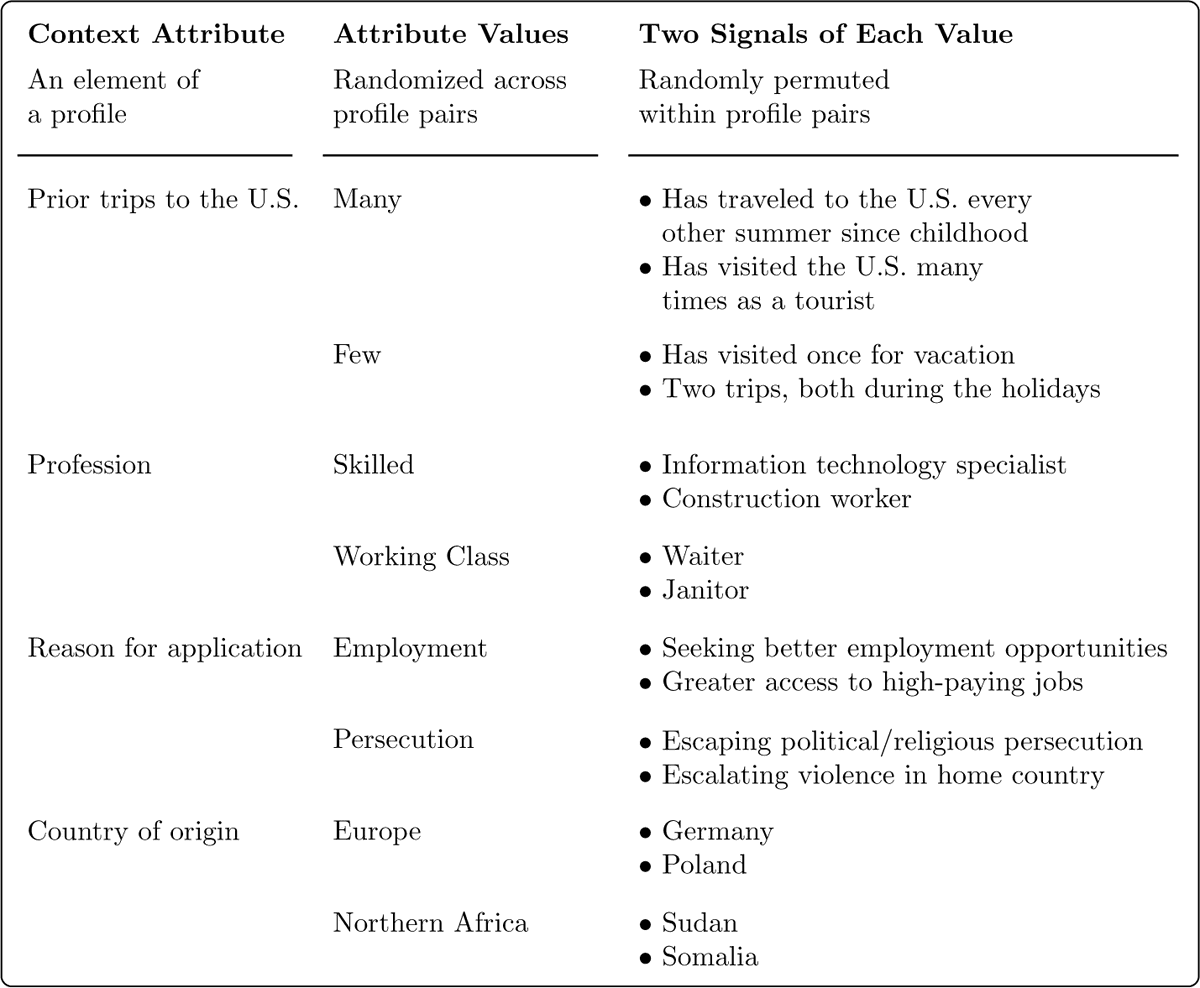
By adaptively adjusting randomization probabilities via Thompson sampling, the method efficiently identifies the contexts in which the focal attribute has its most positive and most negative effects. You can read the paper here: #article" target="_blank" rel="nofollow noopener">cambridge.org/core/journals/…
English
0
1
3
312
Political Analysis
Political Analysis@polanalysis·
Currently in FirstView: In “Adaptive Randomization in Conjoint Survey Experiments,” @jennahgosciak, @danieljmolitor, and @IanLundberg1 develop a response-adaptive design for conjoint experiments that summarizes the range of effects of one attribute as a function of all others.
Political Analysis tweet media
English
1
16
52
4.8K
Political Analysis
Political Analysis@polanalysis·
All models consistently attributed more liberal ideologies to women while racial associations differed by model. They conclude that using these models political content analysis may unknowingly introduce model-specific confounds. Read the paper here: #article" target="_blank" rel="nofollow noopener">cambridge.org/core/journals/…
English
0
1
1
256
Political Analysis
Political Analysis@polanalysis·
Currently in FirstView, in “From Faces to Politics: Vision-Language Models (Sometimes) Link Visual Demographic Characteristics to Ideological Labels,” Soyeon Jeon, Messi Lee, @Jacob_Montg, and @CalvinKLai ask how models use demographics as shortcuts for ideological attribution.
Political Analysis tweet media
English
1
7
21
1.7K
Political Analysis
Political Analysis@polanalysis·
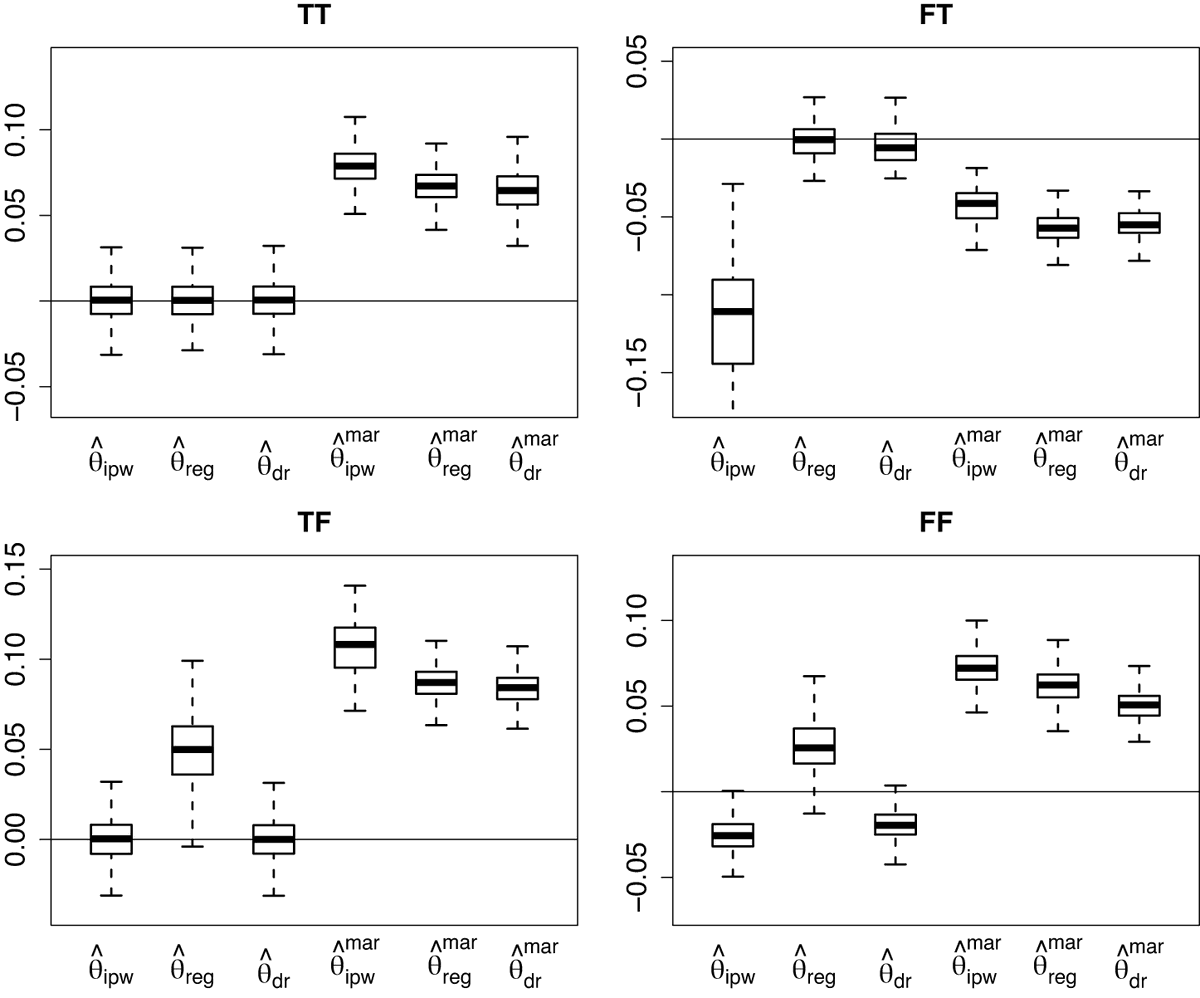
They propose an assumption to account for nonignorable missingness in the outcome. Integrating this assumption with covariate information provides an identifiable method for estimating voter turnout. You can read the full paper here: #article" target="_blank" rel="nofollow noopener">cambridge.org/core/journals/…
English
0
1
1
398
Political Analysis
Political Analysis@polanalysis·
Currently in FirstView: In “Correcting Nonignorable Nonresponse Bias in Turnout Estimation Using Callback Data,” Xinyu Li, Naiwen Ying, Kendrick Li, Xu Shi, and Wang Miao look at the role of callback data as a way of adjusting for nonresponse bias in estimating voter turnout.
Political Analysis tweet media
English
1
3
14
1.2K
Political Analysis
Political Analysis@polanalysis·
The authors offer a GP framework and highlight certain use cases. GPs have the ability to incorporate extrapolation uncertainty, widening intervals as predictions rely more heavily on assumptions beyond the observed support. Read the paper here: cambridge.org/core/journals/…
English
0
0
2
574
Political Analysis
Political Analysis@polanalysis·
Currently in FirstView: In “Inference at the Data’s Edge: Gaussian Processes for Estimation and Inference in the Face of Extrapolation Uncertainty,” Soonhong Cho, Doeun Kim, and Chad Hazlet illustrate the value of Gaussian Processes (GPs) for capturing counterfactual uncertainty.
Political Analysis tweet media
English
1
2
7
1.4K
Political Analysis
Political Analysis@polanalysis·
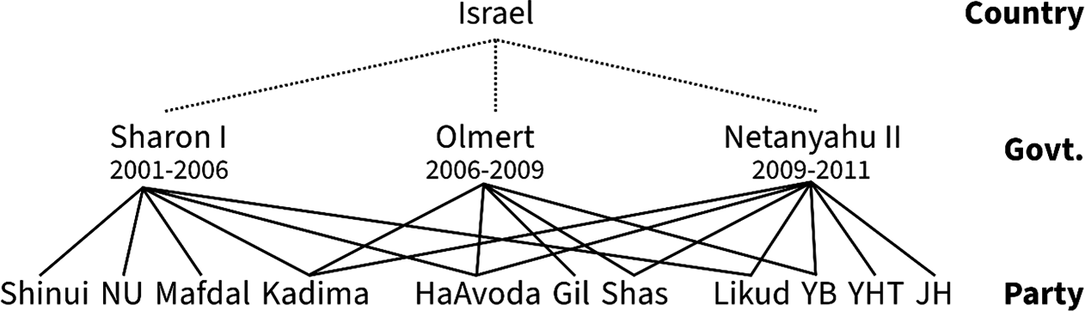
The model is validated with data on coalition government survival, showing that ignoring party-level dependencies can produce misleading conclusions at all levels of analysis. The paper also introduces an accompanying R package. You can read it here: cambridge.org/core/journals/…
English
0
0
2
368
Political Analysis
Political Analysis@polanalysis·
Currently in FirstView: In “A Multilevel Model for Coalition Governments: Uncovering Party-Level Dependencies Within and Between Governments,” Benjamin Rosche extends the Multiple Membership Multilevel Model to represent the multilevel structure of coalition government data.
Political Analysis tweet media
English
1
1
15
1.6K
Political Analysis
Political Analysis@polanalysis·
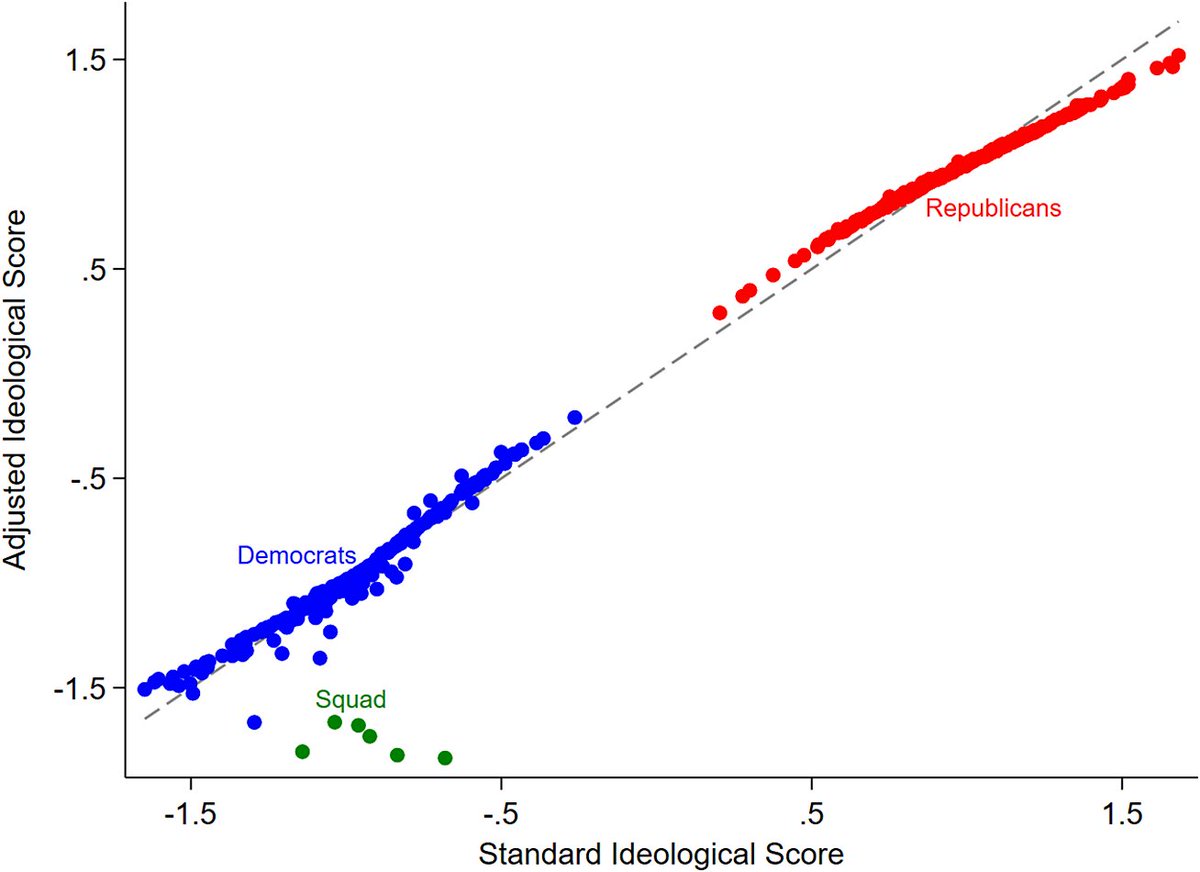
The adjusted estimates show that congressional polarization and its increase over time are ever greater than previously thought, and the electoral penalty associated with ideological extremism is greater than previously thought. Read the paper here: cambridge.org/core/journals/…
English
0
1
6
449
Political Analysis
Political Analysis@polanalysis·
Currently in FirstView: In “Accounting for Protest Voting in the U.S. Congress,” Anthony Fowler and Jeffrey B. Lewis estimate a model of congressional voting that allows for non-ideological protest voting. This has significant implications for roll-call estimates of ideology.
Political Analysis tweet media
English
1
7
30
2.1K
Political Analysis
Political Analysis@polanalysis·
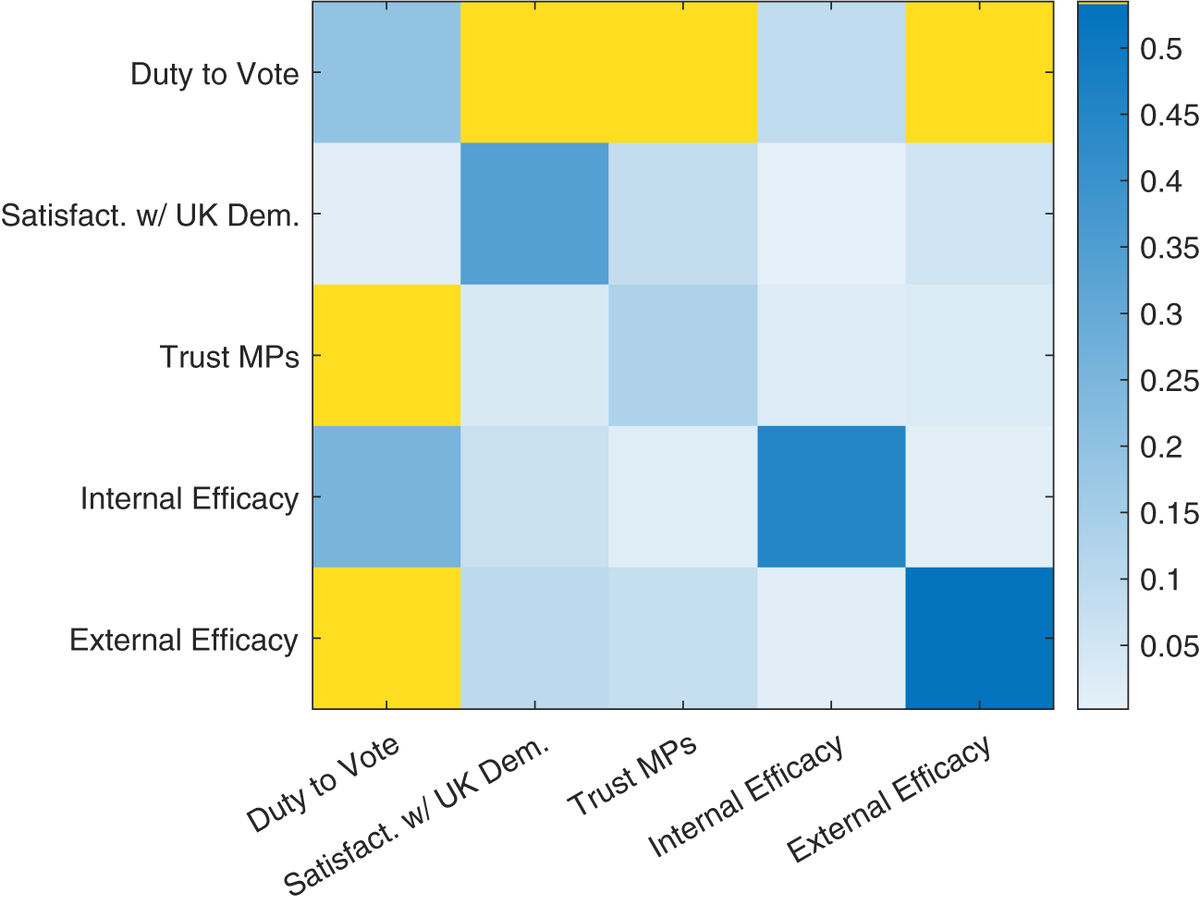
The model offers insights about stability, the direction of causation between attitudes, and their relative influence. They use their model to show the role of ideology on attitudes toward government spending and immigration. Read the paper here: #article" target="_blank" rel="nofollow noopener">cambridge.org/core/journals/…
English
0
2
5
559
Political Analysis
Political Analysis@polanalysis·
Currently in FirstView: In “A Dynamic Discrete Choice Approach to Attitude Stability and Constraint,” Alecia Nepaul and Steven Stern introduce a discrete choice framework to identify influential attitudes within attitude systems.
Political Analysis tweet media
English
1
6
12
2.4K
Political Analysis
Political Analysis@polanalysis·
The findings challenge Gamson’s law: the idea that cabinet ministries in multiparty democracies are distributed in proportion to seats. Because portfolio and seats are mutually dependent, ILR addresses concerns of bias and uncertainty. Read the paper here: #article" target="_blank" rel="nofollow noopener">cambridge.org/core/journals/…
English
0
1
0
525
Political Analysis
Political Analysis@polanalysis·
Currently in FirstView: in “Refining Gamson: The Isometric Log-Ratio Transformation and Portfolio Proportionality in Multiparty Governments,” Lanny Martin and Georg Vanberg propose the isometric log-ratio (ILR) as an alternative to the additive log-ratio (ALR) transformation.
Political Analysis tweet media
English
1
3
8
1.5K
Political Analysis
Political Analysis@polanalysis·
They demonstrate the utility of their models by analyzing civil rights protests in the US. These models are useful because many datasets in political science are nested and can potentially have diffusion processes at multiple levels. Read the paper here: cambridge.org/core/journals/…
English
0
0
2
477
Political Analysis
Political Analysis@polanalysis·
Currently in FirstView: in “Modeling Hierarchical Spatial Interdependence for Limited Dependent Variables,” Ali Kagalwala and Kankyeul Yang propose a class of hierarchical models with binary outcomes to account for spatially independent and dependent unobserved group effects.
Political Analysis tweet media
English
1
0
2
801
Political Analysis
Political Analysis@polanalysis·
Using a dataset of all televised U.S. presidential debates from 1960 to 2020, the authors highlight many applications including forced alignment of audio text, speech characterization, and custom classification models. Read the paper here: cambridge.org/core/journals/…
English
0
1
7
1.2K
Political Analysis
Political Analysis@polanalysis·
Currently in FirstView: in “Potential and Pitfalls of Audio as Data for Political Research: Alignment, Features, and Classification Models,” Rafael Mestre and Matt Ryan provide solutions to challenges encountered when analyzing audio data in political science research.
Political Analysis tweet media
English
1
6
28
2K