Political Circle
68 posts

Political Circle
@politic_circle
Political labels like 'Left' and 'Right' are blunt. Political Circle helps you understand yourself and your friends better. Take the free test!
US/UK Katılım Ekim 2025
118 Takip Edilen37 Takipçiler

Here's something fascinating: show someone their political position visually and they often say "that's not what I expected." Turns out we're all more complex than Left vs Right allows for. Take 2 minutes to see your real stance 🧭 politicalcircle.app
English

The weirdest thing about political polarisation? Most people agree on way more than they think. It's the labels doing the fighting, not the actual positions. Explore where you really stand beyond the tribal noise politicalcircle.app
English

Most political tests were built decades ago with hidden assumptions about what matters. What if we started fresh – mapped our views across multiple dimensions instead of being forced into outdated boxes? politicalcircle.app

English

@paulrfrancis65 @basedandbougie Yes, 48 questions in all for both UK and US, so you can take it a few times, and you might even shift around a bit in the circle (but hopefully not too much). Even if you had the same questions, depending on what mood you were in, shift would occur.
English

@politic_circle @basedandbougie Do the questions change if you do it again? Yeah surveys/questions like this are much more telling.
English

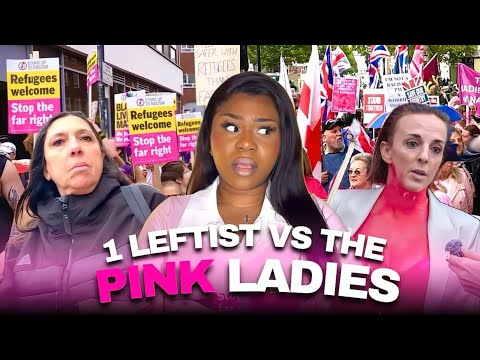
it’s very embarrassing to call strangers far right and then struggle to define the term far right😪
FULL VIDEO ➡️ youtu.be/CWWqz-qfr4k?si…

YouTube
English

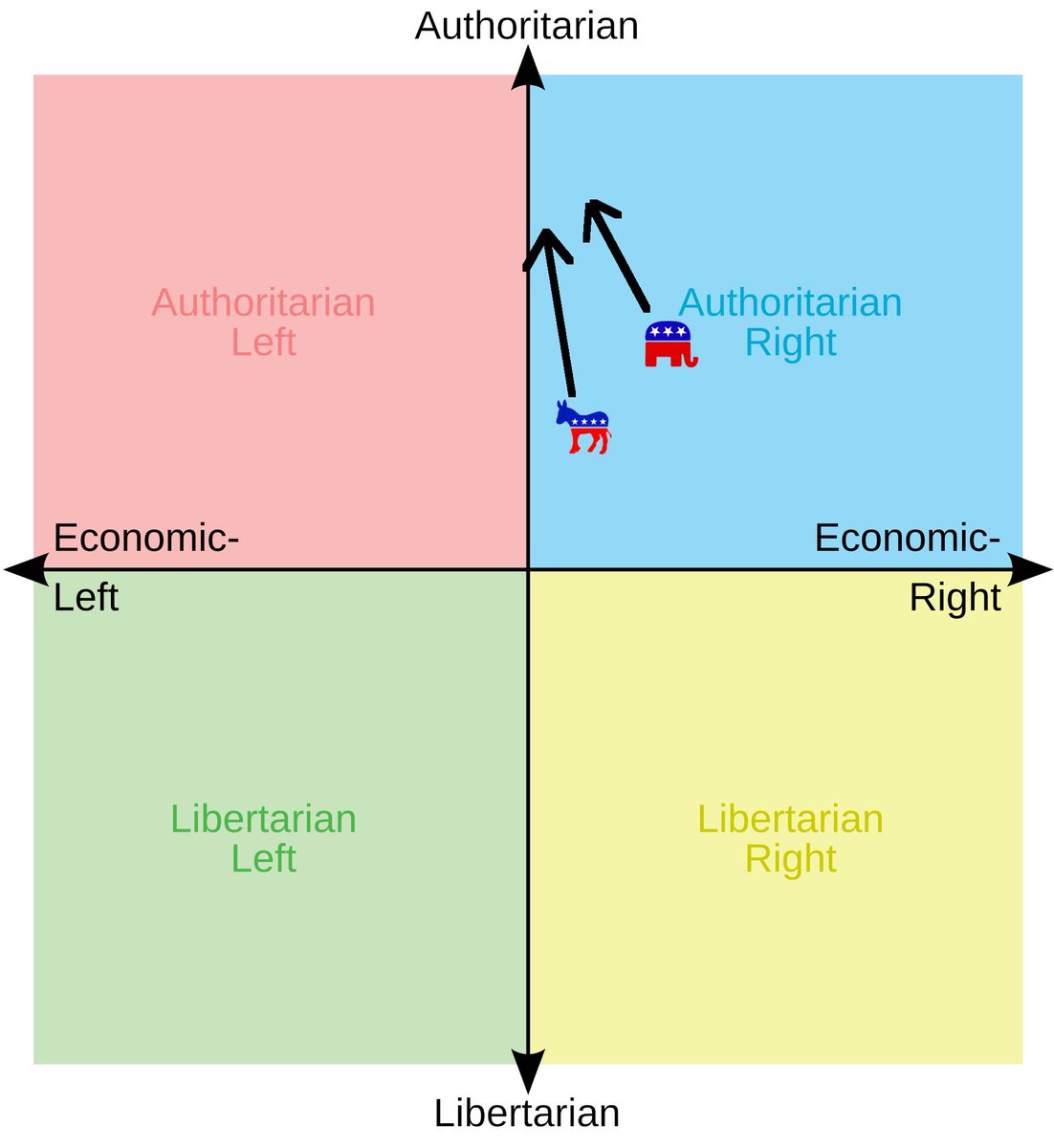
@Femboy_Ancap Spot on observation. The traditional left-right spectrum obscures how authoritarianism can creep in from multiple directions. People often discover they're not where they thought they were politically when they map beyond simple binary thinking.
English

@MarcusJ_3194 Definitely! The "us vs them" framing became the default because it's simpler to sell than nuanced policy discussion. Most people's actual views don't fit neatly into left/right boxes anyway, they're way more complex than politicians want to admit.
English

I’ve come to realize that polarization didn’t just pop up out of nowhere. Old-school politicians fed division for easy wins, the public got hooked on outrage, media cashed in, and now we’re stuck in a toxic feedback loop where everyone expects drama instead of governing. It’s a mess built by all three.
English

@PartisanPitfall @communist_bimb0 @berningman16 Thanks for checking it out. That's the beauty of the test – because we tend to think in tribal terms, we get caught up in specific aspects, but ignore other things that don't sit so neatly in that framework. We're much more nuanced and open to 'opposition' ideas than we think.
English

@politic_circle @communist_bimb0 @berningman16 That’s great; I fully agree
Test needs improving though
It thinks I’m a Social Democrat but I think we need a revolution lol
It may be mistaking my openness to non-state socialisms & opposition to our two party regime for something else
English

@paulrfrancis65 @basedandbougie Thanks for checking it out! There are more questions, but I wanted to strike a balance between depth and not sending people to sleep. What I find it most useful for is understanding where my friends and family sit in relation to me. That's quite an eye-opener, sometimes.
English

@politic_circle @basedandbougie I did the test. I like the logo, the design and colour scheme. Be good with more questions but interesting to do.

English

@paulrfrancis65 @basedandbougie Yeah, it was the seating arrangements of the French National Assembly in 1789 or thereabouts. Not terribly helpful for today’s discussions!
English

@politic_circle @basedandbougie Yeah need to move on from the outdated left/right shenanigans, an old French thing wasn't it? I did the cross one, i was left of centre and centre on the authoritarian/ libertarian line
English

@AutumnCapital Exactly this! People grab simplified labels and think they've cracked the code. Most think they know their stance, but haven't mapped their actual views across social, economic, environmental dimensions. The real picture is usually more nuanced than "left" or "right" 🧭
English

@RazaqGadehi Excellent analysis! This is exactly why we need to move beyond 'Left vs Right' tribal thinking. Political Circle maps your actual views across multiple dimensions - most people find their real position surprising. Two minutes to break free from the polarisation trap 🧭
English

Political Disagreement turn into Social Suspicion and Emotional Hostility.
Affective polarisation, a term coined by American political scientist Shanto lyengar, describes the increasing emotional hostility and mutual distrust between supporters of different political parties, rather than just disagreements over policy. This has increasingly dominated public and political analyses, intensifying significantly over the last 2 decades.
The current era is widely considered distinct from previous periods of political division. Today's political polarisation is characterised by an unprecedented level of animosity, One should keep in mind that affective polarisation differs from 'ideological polarisation. The latter is strictly measured by policy differences.
As noted by Estonian scholar Andres Reiljan, affective polarisation is fundamentally "about people's feelings", creating a society split into "mutually hostile political groups" and fostering a powerful "tribal" instinct. Individuals begin to strongly identify with their political party and express a wider hostility toward the opposition. This mentality is strengthened when social identities merge with political affiliations,
According to Reiljan, some political parties and media outlets often exacerbate this divide for financial or political gain, choosing to intensify conflict rather than promoting consensus. This cycle leads individuals to perceive fellow citizens through a prejudiced lens, based solely on political preferences.
A 2020 study by the American Family Survey indicated a significant decline in marriages and romantic relationships between Democrats.
and Republicans, as individuals increasingly prefer partners who share their political views.
Such divisions are being reported from multiple countries. People don't just dislike the other party's policies, they dislike the supporters of the other parties as well. Consequently. relationships and social networks are being formed that are politically homogeneous. If one has friends across the political aisle, they often. avoid discussing political or social issues to maintain the relationship.
A 2022 study by the US-based Pew Research Centre shows that affective polarisation leads partisans to attribute negative, non-political traits to the opposing group. The dislike is so strong that it becomes a moral judgement. Partisans are less likely to trust members and supporters of the opposing party, even in non-political contexts. They're also less likely to feel empathy for the opponent group when it experiences a personal or financial setback.
On social media platforms. for example, one can see clusters supporting a party actually celebrating the misfortunes of supporters of the opposing party. Survey data shows that partisans frequently describe the opposing side as dishonest, unintelligent, immoral or unpatriotic. This shifts the debate away from policy disagreement toward identity rejection.
Indeed, the characteristics of affective polarisation are mostly observed in right wing populist parties and in groups that support them. But these characteristics are increasingly becoming common among 'left' and 'liberal' sides also, The latter two often pose as being more sorted, decent, 'balanced and 'democratic'. They really aren't.
Affective polarisation symbolises the failure of rational mechanisms. Indeed. these failed and undermined the importance of what they were discouraging or suppressing. From the late 1970s onwards, the post-modernists' rejoiced this failure by romanticising emotion, intuition and impulse. But by doing this (through academic means, marketing, religious revivals and pop culture) they ended up thoroughly dermonising rationality. The result was not really societies
brimming with joyous, free and tolerant people, but societies pregnant with mistrust, emotional chaos and an overindulgent misuse of certain vital democratic notions, especially freedom of speech.
By Nadeem F.
@BBhuttoZardari
@AseefaBZ
English

@Od_Ana407 Did you try the Political Circle test? politicalcircle.app
English

Politicians love simple labels because they're easier to sell. But when did you last meet someone who was genuinely "just left" or "just right"? Most of us are walking contradictions – and that's where interesting politics actually lives 🧭 politicalcircle.app
English

@communist_bimb0 @PartisanPitfall @berningman16 Exactly! That binary thinking is what I'm trying to break with Political Circle. Most people discover they're not "left" or "right" but somewhere completely different when you map across multiple dimensions. The nuance you mention? That's where real understanding starts 🧭
English

@PartisanPitfall @berningman16 Yr literally *the most polarised & divided society on Earth. It's blacks/whites, reps/dems, Christians/Muslims, friend/foe, us/them, rich/poor, democracy/communism...It's a giant feedback loop that feeds further division over trivial things. U guys can't see the nuance in between
English

@g_gosden Political labels like "far right" often obscure more than they reveal. Most people's views are far more nuanced than these blunt categories suggest. What if we mapped the actual complexity of political positions instead? 🧭 politicalcircle.app
English