PostNatural History

512 posts

PostNatural History banner
PostNatural History

PostNatural History

@postnatural

The Center for PostNatural History: Dedicated to the intersection between culture, nature and biotechnology.

Pittsburgh, PA Katılım Aralık 2010
805 Takip Edilen1.1K Takipçiler
Sabitlenmiş Tweet
PostNatural History
PostNatural History@postnatural·
The secret history of US germ warfare testing hiding in a Smithsonian rodent collection. Read all about it: Inside Job: Secret Histories In The National Museum. asimov.press/p/inside-job?u…
English
0
5
10
1.6K
PostNatural History retweetledi
Niko McCarty.
Niko McCarty.@NikoMcCarty·
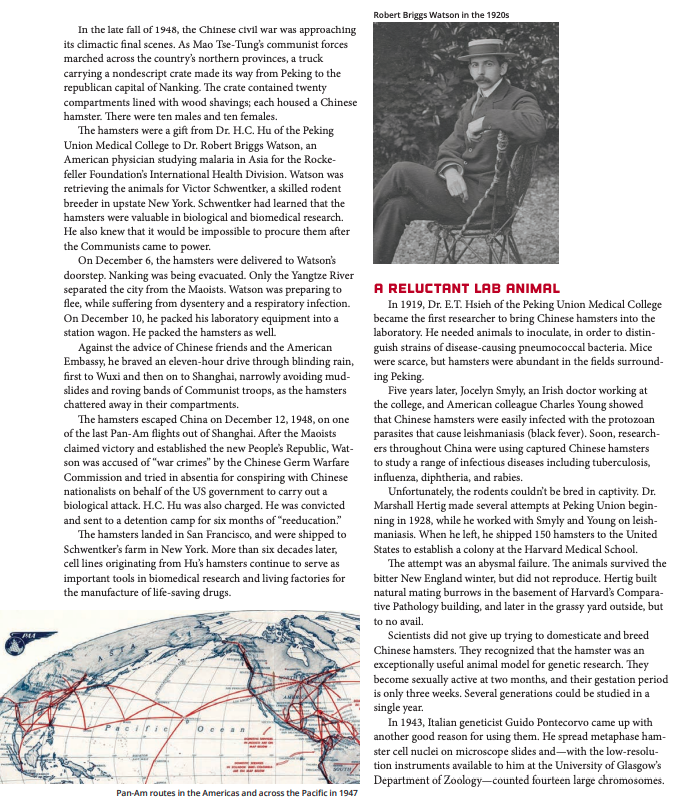
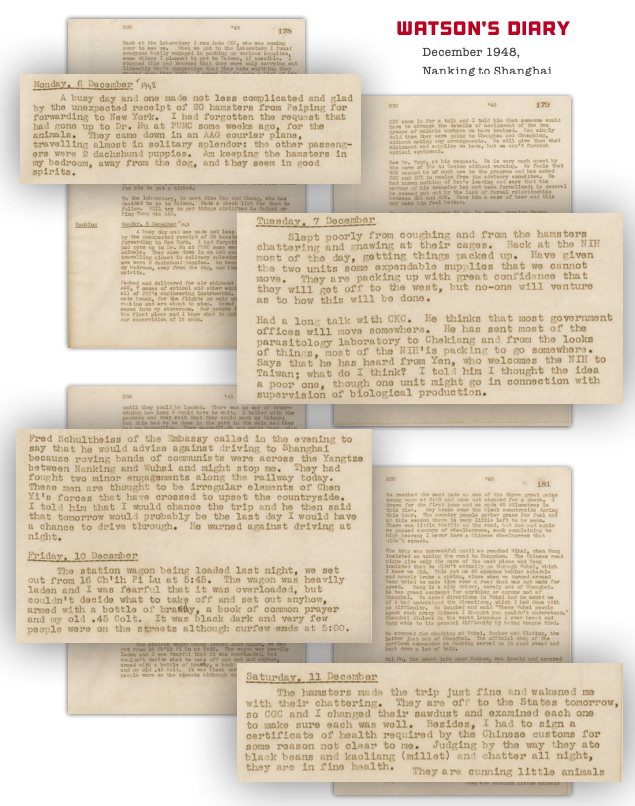
Chinese Hamster Ovary, or CHO, cells are widely used in the pharmaceutical industry. And, incredibly, these cells can be traced back to just twenty hamsters that were packed into a crate and smuggled out of China in the 1940s. Chinese scientists had been using these hamsters — native to northern China and Mongolia — to study pathogens since at least 1919. The hamsters were unusually well-suited to scientific research because they have short gestation periods (18-21 days), a natural resistance to human viruses and radiation, and it was thought, early on, that they possessed just 14 chromosomes, making them easy to work with for mutation studies. (They actually have 22 chromosomes.) During the Chinese civil war, a rodent breeder in New York named Victor Schwentker worried that, if the Communists won the war, he’d never be able to get his hands on these special rodents. So in 1948, Schwentker sent a letter to Robert Briggs Watson, a Rockefeller Foundation field staff member, and asked him to “acquire” some hamsters so he could begin breeding them. Watson collected ten males and ten females and packed them into a wooden crate with help from a Chinese physician (who was later imprisoned for this act). Watson slipped the crate out of the country on a Pan-Am flight from Shanghai, just before the Communists took control. In New York, Schwentker received the hamsters and then began breeding and selling them to other researchers. In 1957, a geneticist named Theodore Puck, intent on creating a new mammalian “model system” for in vitro experiments, learned about the Chinese hamster and contacted George Yerganian, a researcher at the Dana-Farber Cancer Institute, to obtain a specimen. Yerganian shipped Puck one female hamster. Puck took a small piece from this hamster’s ovary, plated the cells onto a dish, and passaged them repeatedly. He eventually isolated a clone that could divide again and again; an “immortalized” CHO cell with a genetic mutation that rendered it immune to normal senescence. Today, descendants of these immortalized CHO cells make about 70 percent of all therapeutic proteins sold on the market, including Humira ($21 billion in sales in 2021) and Keytruda ($17 billion). Many of these drugs are monoclonal antibodies, or Y-shaped proteins that lock onto, and neutralize, foreign objects inside the body. CHO cells are well suited to biotherapeutics because they can perform a biochemical reaction called glycosylation. Many human proteins, including antibodies, are decorated with chains of sugars that control how they fold or interact with other molecules in the body. Only a few organisms, mostly mammalian cells and certain yeasts, can do this chemical reaction. I first learned about this history from a really spectacular article in LSF Magazine, called "Vital Tools: A Brief History of CHO Cells." I recommend it. (You can find it with a quick search.)
Niko McCarty. tweet mediaNiko McCarty. tweet mediaNiko McCarty. tweet media
English
21
202
922
67.9K
Niko McCarty.
Niko McCarty.@NikoMcCarty·
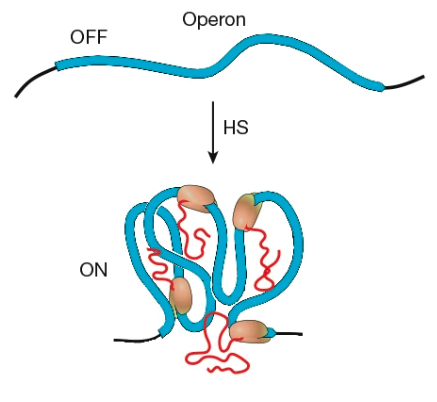
A genome is not a one-dimensional object. It is dynamic and quickly-changing, not only in TIME but also in SPACE. A new paper, published in Nature, reports the 3D structure of the E. coli genome. The whole thing was mapped with a resolution of 10 base pairs; enough to clearly delineate which parts of the genome are physically close to each other in the cell. The researcgers grew E. coli under normal conditions, stressed the cells in various ways, and built mutant strains missing certain DNA-binding proteins. They made a 3D map in each circumstance and also combined these maps with other measurements, including transcription maps, protein-binding maps, and super-resolution microscopy. There is a lot of stuff in this paper, and I really think you should read it if interested. But I just want to talk about one piece of this paper, because it really stood out and surprised me. It concerns a weird structure in the genome called an "operon-sized chromosomal interaction domain," or OPCID. These OPCIDs show up wherever genes are being actively transcribed, or converted from DNA --> RNA. As the genes in an operon are being transcribed, the DNA sequence physically FOLDS UP in 3D space so that the start (promoter) and end (terminator) of the operon come close together. When transcription ends, these structures disappear. At first, I was confused about these OPCIDs. Why would a cell want to bring the start and end of an operon together? Wouldn't that, like, block RNA polymerase from binding and its job? Nope. The structures are "loose" enough that RNA polymerases can still get in and transcribe the DNA. But the big benefit here, the researchers think, is that this 3D structure keeps proteins from diffusing away in the cell. So after a polymerase finishes transcribing the operon, it can very quickly loop back to the start (because the promoter is right next to the terminator!) and get started on the next round of transcription. This would make gene expression far more efficient, especially when cells need to express those genes at a high level. Besides OPCIDs, the authors also found other structures (called chromosomal hairpins and clusters of hairpins) that show up where genes are not being actively transcribed. If you destroy these hairpin structures using a drug called netropsin, genes that were silent actually switch on (sometimes by more than 100-fold) and start forming OPCIDs! Anyway, I really love this paper. Check it out.
Niko McCarty. tweet mediaNiko McCarty. tweet media
English
10
122
613
34.7K
PostNatural History
PostNatural History@postnatural·
@capitolsheila @AlexandraBalwit holy smokes, I can't wait to read this! I did all that research 14 years ago and did not have much to work with other than what was in the archives and in a few FOIAs at the time.
English
0
0
1
26
sheila
sheila@capitolsheila·
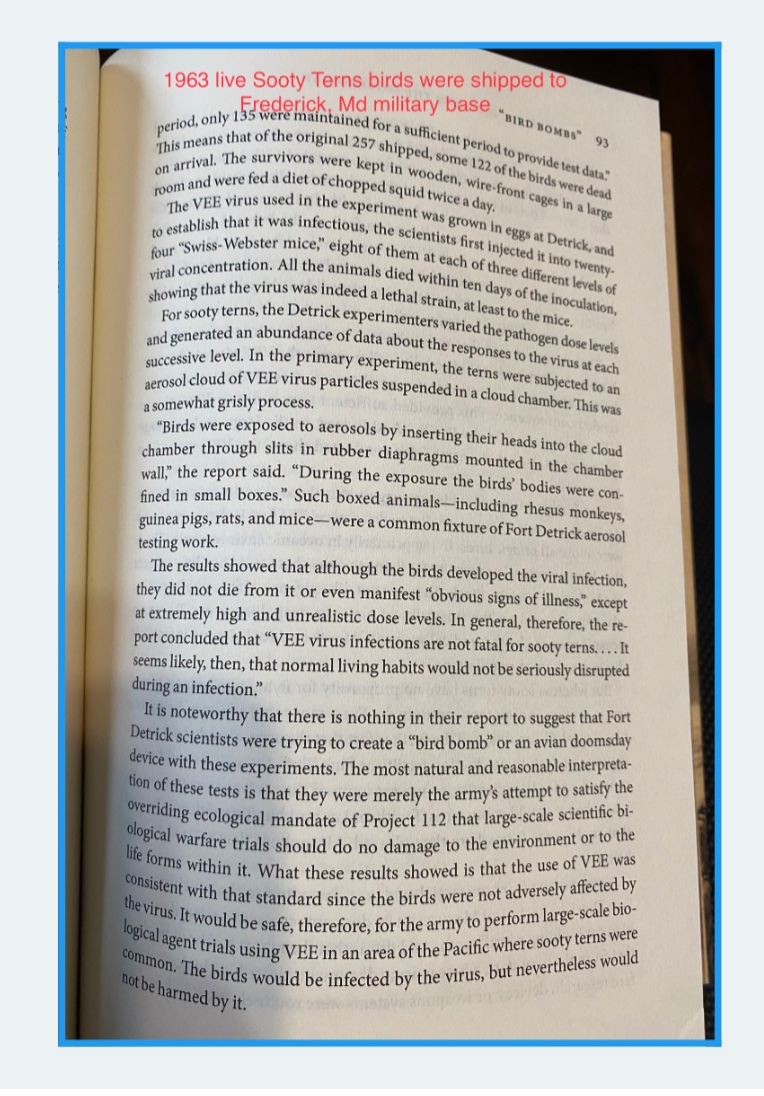
@postnatural @AlexandraBalwit His book, and your pictures, make quite the interesting read. Live birds for BW research in the 1960s. VEE is pretty nasty stuff, they say. Guys at Detrick are still taking vaccine boosters, presumably to work on it, FOIAs show.
sheila tweet media
English
1
0
0
40
PostNatural History retweetledi
Xander Balwit
Xander Balwit@AlexandraBalwit·
Rich Pell at @postnatural is such an adept archivist, that he has, on occasion, stumbled across government secrets. In this piece adapted from his book, Rich discusses a fellowship, the discovery of visual records, and greater questions that arise in "America's Attic."
Asimov Press@AsimovPress

In 2010, an artist was given access to the Smithsonian's Natural History archives. His goal was to find model organisms — such as mice and fruit flies — collected from around the world. But instead, he uncovered photos from a top-secret bioweapons test: Operation Shady Grove.

English
1
1
8
591
sheila
sheila@capitolsheila·
@AlexandraBalwit @postnatural Amazing research. Thank you for finding this, and sharing it. Ed Regis also wrote about the Smithsonian’s secret involvement w/ US Bioweapons programs in “Science, Secrecy, and the Smithsonian: The Strange History of the Pacific Ocean Biological Survey Program.”
sheila tweet media
English
1
0
3
46
PostNatural History retweetledi
regine debatty
regine debatty@wmmna·
Whereas the anti-nuclear movement catalyzed around the terrifying imagery of atmospheric atomic explosions, the chemical & biological weapons program kept a much lower profile. Was this by design? Or, because a cloud of bacteria is visually less spectacular than a mushroom cloud?
PostNatural History@postnatural

The secret history of US germ warfare testing hiding in a Smithsonian rodent collection. Read all about it: Inside Job: Secret Histories In The National Museum. asimov.press/p/inside-job?u…

English
0
1
5
278
PostNatural History
PostNatural History@postnatural·
@baym Thank you for the correction. I obviously got my notes crossed. Would it be correct to say that the LTEE strain was sourced from Lederberg "strain B"? This is particularly embarassing as I handed a signed copy of this book to Richard Lenski just a few months ago 😬
English
0
0
0
111
Michael Baym
Michael Baym@baym·
It’s very cool that K-12 is named for a hospital room, but there’s more than one lab strain of E Coli and neither K12 nor BW25113 are an LTEE ancestor. The quoted article from @postnatural is wrong (possibly confusing LTEE and Keio collection?)
Michael Baym tweet media
English
2
2
10
1.7K
PostNatural History
PostNatural History@postnatural·
@deepcryptodive @Aella_Girl That would be included under "research lab". If a researcher goes out out in search of viruses in usual places, brings it back to a lab in a major city, cultures it in captivity, contaminates themself, and carries it home, that's a lab leak.
English
1
0
0
66
Aella
Aella@Aella_Girl·
You think Covid-19 more likely came from:
English
69
17
83
45.7K