

Pranjal Verma
346 posts



Just an AI Engineer trying to build a deterministic path to my weekend destination

English
Coming and posting 100 tweets on twitter once a month and expecting people to start recognising me..
Woahhh…
English
They told me i look south indian
Do you guys see that vision??

English

“design a RAG pipeline for 10M docs with zero hallucination”
apparently this was asked in a Google L5 interview round. came across it somewhere on the internet and honestly it’s a way more interesting system design problem than most classic distributed systems questions
1. ingest + normalize docs
- remove duplicates, standardize formats, extract metadata, maintain version history
2. hybrid retrieval (BM25 + embeddings)
- BM25 handles exact keyword matching while embeddings capture semantic meaning
- semantic search alone usually struggles with precision at massive scale
3. ANN retrieval + reranking
- ANN (Approximate nearest neighbor ) quickly pulls top candidate chunks from millions of docs
- then a reranker rescoring step improves relevance by deeply comparing query vs retrieved chunks
4. source confidence scoring
- every retrieved chunk gets scored based on freshness, trust level, overlap and retrieval consistency
- low-confidence context should never heavily influence generation
5. constrained generation
- the model is only allowed to answer using retrieved context (nothing new to be invented outside of the retrieved context)
6. citation-backed responses
- every major claim links back to exact chunks, documents or timestamps
7. hallucination fallback layer
- if retrieval confidence drops below a threshold: “insufficient evidence found”
8. continuous evals
- run adversarial queries, retrieval recall benchmarks and hallucination tests continuously
9. caching + memory layer
- cache high-frequency enterprise queries and retrieval paths (improves latency and output)
10. observability everywhere
- trace retrieval paths, chunk rankings, token attribution and failure points
Also at 10M docs, retrieval quality matters more than the frontier model itself.

English
So, apparently my favourite times in office is when i come to my desk, when i have my lunch and when i leave for home.
Productivity is boring.
English
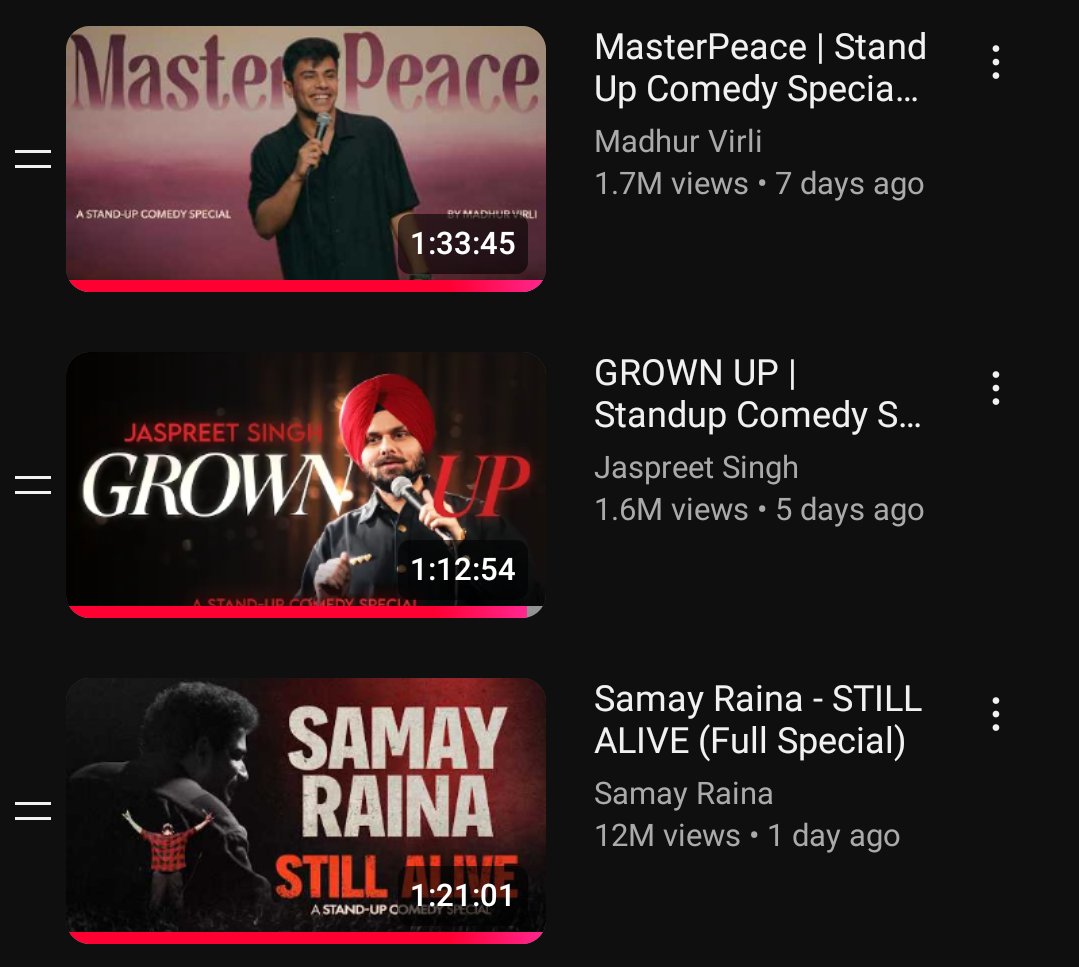
Am i too late to say this??
Pranjal Verma@pranjjaall
Dhurandhar 2 mei jaise hi mudi ji dikhe , samajh gyi mai🙏
English
Looks like the sunflower is wrapped around a scarf and knots below.
how cute bhai

English

Yesterday i was talking to a friend saying ‘delhi toh delhi hi hai yarrr❤️❤️💕💕🎊🎊’ after two minutes into the conversation and two coughs later i repeated myself. ‘ delhi toh delhi hai yar😞😭😖🫠☠️’
English
Pranjal Verma retweetledi

Every new beginning looks chaotic before it looks right !
English

Has someone noticed anu malik singing is just he enjoying moaning 😋
English