Prince Boadu

13.1K posts

Prince Boadu banner
Prince Boadu

Prince Boadu

@princeboadu

Program Manager @Google | @TEDxKNUST Organiser | @Atl_Dialogues Emerging Leader

Netherlands Katılım Ağustos 2010
818 Takip Edilen2K Takipçiler
Prince Boadu
Prince Boadu@princeboadu·
@onepilato9 James Barnor is a living legend. I felt the same way your feeling when I saw him in the video. Epic!
English
0
0
0
12
Prince Boadu
Prince Boadu@princeboadu·
Who can relate?
Prince Boadu tweet media
English
0
0
1
24
Prince Boadu
Prince Boadu@princeboadu·
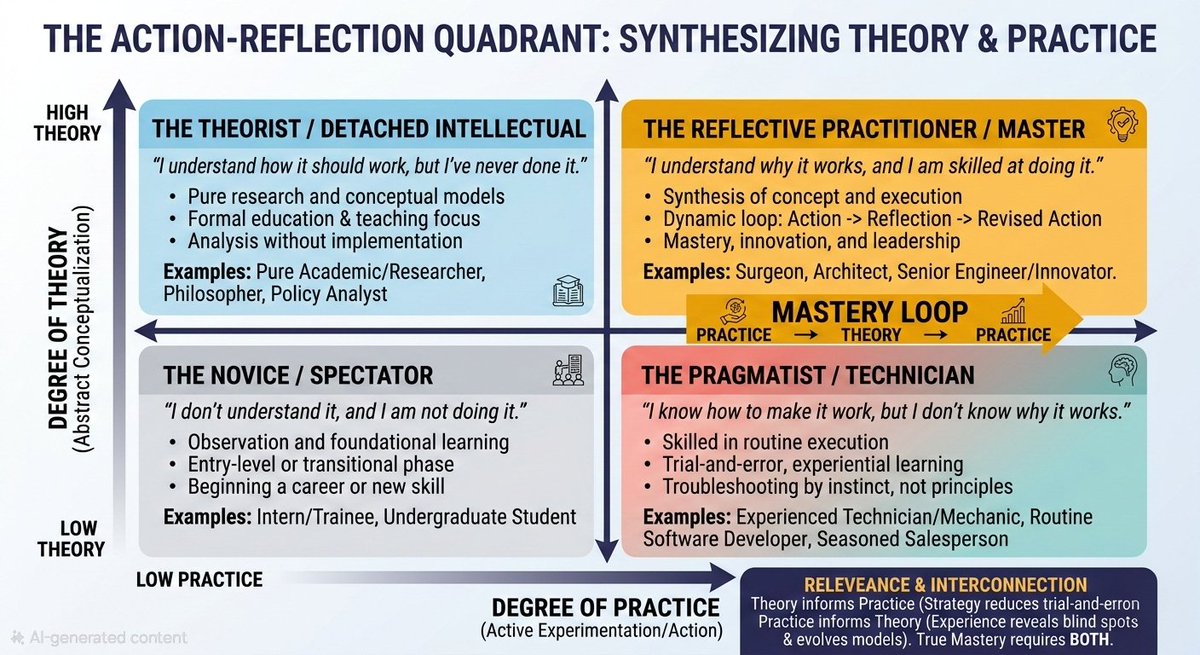
A few years ago I came across a simple quadrant that changed how I think about work. On one axis was Theory. On the other was Practice. It divided people into four groups: Low theory, low practice. High theory, low practice. Low theory, high practice. High theory, high practice. Lately I keep seeing the phrase online: “Execution is everything. Ideas are cheap.” It sounds bold. It feels practical. It is also incomplete. Yes, execution matters. I have worked in environments where poor execution costs millions. In supply chain and data center operations, ideas do not keep servers online. Execution does. But here is what the hustle culture often ignores. Execution amplifies whatever idea sits behind it. If the idea is flawed, execution simply scales the flaw. You can execute perfectly on a broken demand forecast. You can optimize a supply network that was badly designed. You can run S&OP meetings efficiently while solving the wrong problem. Execution without sound thinking is expensive energy. On the other hand, theory without practice is sterile. I have also seen beautiful models collapse the moment they meet regulatory friction, supplier constraints, or real human behavior. The real leverage sits in the quadrant of high theory and high practice. The integrated builder. The person who understands the model and has felt the friction of reality. Toyota did not just execute. They had a theory of waste and flow. Amazon did not just ship fast. They had a theory of customer obsession and flywheels. Great operators do not just move quickly. They think clearly about what they are moving toward. Execution is oxygen. Ideas are direction. Oxygen without direction creates fire. Direction without oxygen creates nothing. In an era where AI is accelerating execution, the quality of our ideas will matter even more. The question is no longer whether you execute. The real question is this: Are you executing a well formed idea? #build #theory #practice #execution #grind
Prince Boadu tweet media
English
0
0
0
20
Prince Boadu
Prince Boadu@princeboadu·
10/ In an era where AI is accelerating execution, the quality of our ideas will matter even more. The real question is no longer: “Do you execute?” The question is: Are you executing the right idea?
Prince Boadu tweet media
English
0
0
0
13
Prince Boadu
Prince Boadu@princeboadu·
9/ Execution is oxygen. Ideas are direction. Oxygen without direction creates fire. Direction without oxygen creates nothing. You need both.
English
1
0
0
18
Prince Boadu
Prince Boadu@princeboadu·
1/ A few years ago I came across a simple quadrant that changed how I think about work. On one axis: Theory On the other: Practice It divides people into four groups. And it completely reframes the popular idea that “execution is everything.” Let me explain.
English
1
0
0
24
Prince Boadu
Prince Boadu@princeboadu·
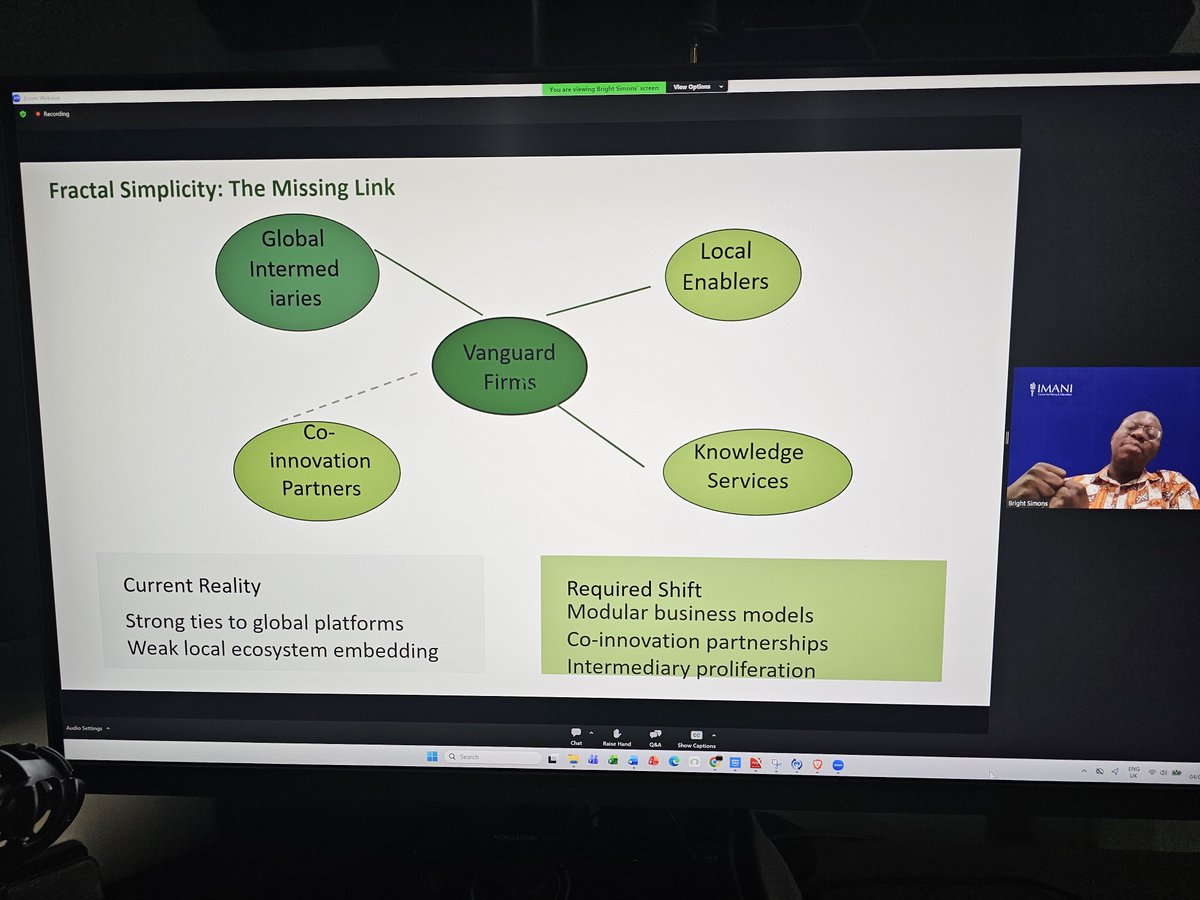
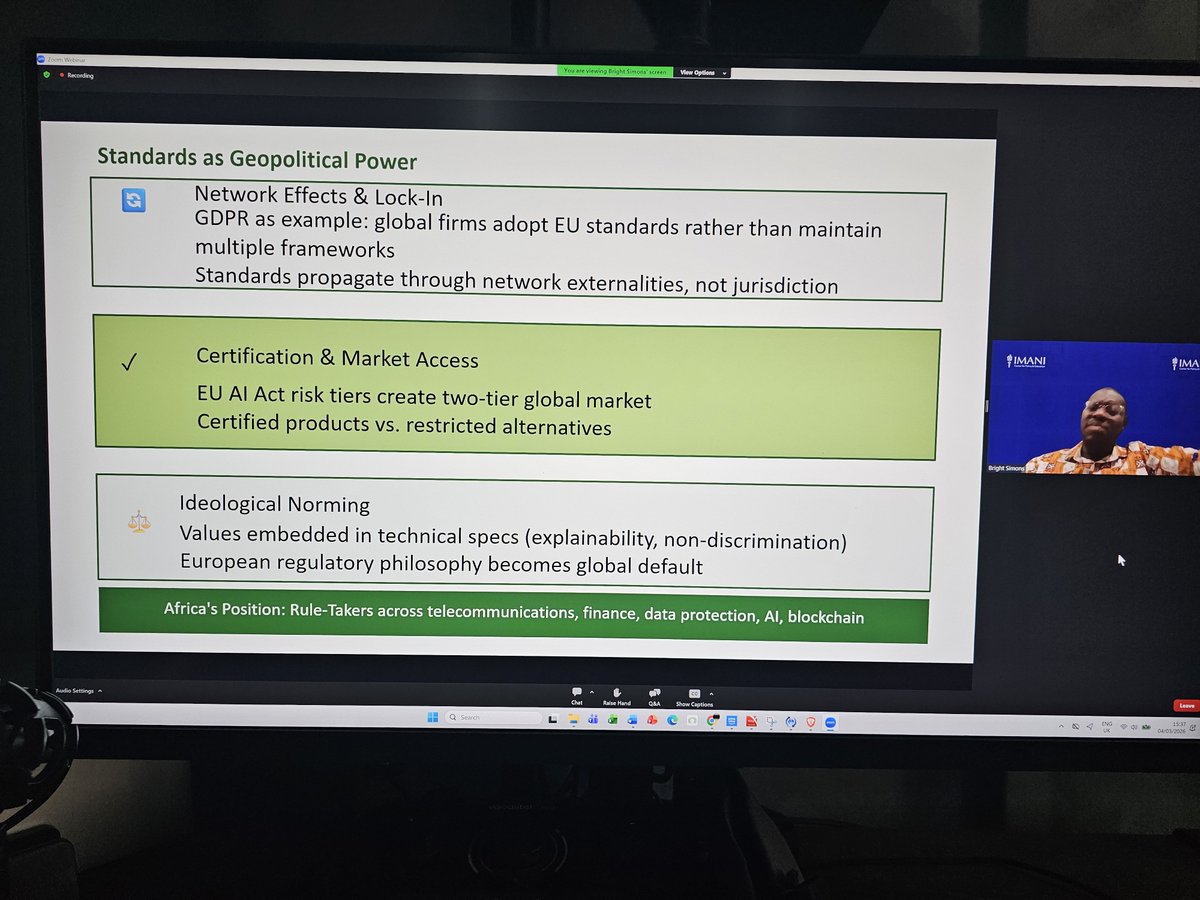
I just attended a webinar themed "The Political Economy of Innovation: Why Good Ideas Struggle and How Africa Can Build Systems That Work". @BBSimons made a solid case around building Trust through strong policy implementation to drive robust institutional mechanisms that propels innovation ecosystems. @BBSimons posits that many people are naturally drawn to the endgame of power. They want to be the ones signing contracts, approving budgets, and making the final decisions. Titles, authority, and visibility sit there. But beneath that visible layer sits something far more consequential: the architecture of the system itself. The policies, incentives, institutional design, and underlying structures that determine what outcomes are even possible. In many ways, the real leverage is not always in the decision itself, but in the system that shapes the range of decisions available. In my own experience working across large organizations, I have come to appreciate the quiet but critical role of system builders. The people asking uncomfortable questions about incentives, long-term consequences, and structural integrity. Will this design scale? Will this policy produce the outcome we think it will? What unintended behaviors will this incentive create? Power executes. Systems determine outcomes. One of the key reflections from the webinar is that societies, companies, and institutions often reward the visible act of decision-making more than the invisible work of system design. Yet history repeatedly shows that the durability of any organization depends less on individual decisions and more on the strength of the systems behind them. It is a useful reminder that building institutions, policies, and structures that work over time may not always be glamorous. But it is often where the real impact lies. Thank you, Bright Simons, for such intensive insights. Solid moderation by Patrick O. Okigbo III.
Prince Boadu tweet mediaPrince Boadu tweet mediaPrince Boadu tweet media
English
0
3
15
703
Prince Boadu
Prince Boadu@princeboadu·
This take is so profound! Thanks for sharing this @BetterCallMedhi
Mehdi (e/λ)@BetterCallMedhi

I spent time in Shenzhen last year and when I saw Merz come back from China saying Germans need to work more I immediately knew what broke his brain because I lived the exact same cognitive shock my first week in Huaqiangbei I burned through 4 prototype iterations of a motor controller board for less than a thousand bucks total, back home a friend was working on something similar and spent over 12 thousand for a single revision that took almost two months to arrive when you live that contrast in your own hands with your own project something permanently shifts in how you see the world and it goes way deeper than speed & cost what Shenzhen actually built is a collective learning organism, imagine 20 PCB fabs 15 injection mold shops 30 component distributors and a hundred firmware freelancers all within a 2km radius, looks insanely redundant from the outside until you realize redundancy is actually information density in disguise I watched this firsthand with an injection mold supplier I was working with, this guy had seen a hundred founders iterate similar thermal designs over 6 months so he proactively modified his tooling before I even opened my mouth, he knew what I needed before I knew what I needed, the intelligence lives in the relationships between the nodes and it compounds daily the west thinks about manufacturing as a cost center you optimize by centralizing… China accidentally built a distributed neural network of manufacturing intelligence where knowledge diffuses horizontally across thousands of agents faster than any single western company can process internally so when Merz comes back and says we need to work a bit more I think he saw the problem but COMPLETELY misdiagnosed the solution, telling Germans to work harder is like telling a horse to gallop faster when the other side built a combustion engine the gap is ARCHITECTURAL it’s ecosystem density, you need a custom connector in Shenzhen you walk 200 meters, in Munich you send an email and wait 3 weeks it’s iteration speed, parallel search vs sequential optimization at the system level, it’s risk tolerance, Chinese founders ship something broken on Monday fix it Tuesday ship again Wednesday while European companies are still in the approval phase for the pilot program of the feasibility study… and Merz only saw the surface, what he missed is the tier 2 cities like Hefei Chengdu Wuhan replicating the Shenzhen model at scale right now BYD going from irrelevant to outselling every european automaker combined in roughly 5 years, Huawei building its own 7nm chip under maximum sanctions when every analyst said it was physically impossible & behind all of that a government that treats advanced manufacturing as an existential national priority while europe debates whether AI needs another ethics committee I think what we’re watching is the most asymmetric economic competition in modern history and most western leaders are still framing it as a productivity problem when it’s actually an ontological one Europe & America are optimizing variables that China stopped tracking years ago meanwhile China is compounding on dimensions the west has no framework to even measure Merz at least had the courage to name it out loud and I respect that genuinely but working a bit more inside a broken architecture just means you arrive at the wrong destination slightly faster

English
0
0
1
154
Prince Boadu
Prince Boadu@princeboadu·
@asemota And of the 1% that are not expired, 99% do not know how to use them in the event of a fire outbreak!
English
0
1
4
487
Prince Boadu
Prince Boadu@princeboadu·
Nothing will ever be attempted if all possible objections must first be overcome ~ Samuel Johnson
English
1
0
1
50
Prince Boadu
Prince Boadu@princeboadu·
He called it!
Meta Alchemist@meta_alchemist

Feels like OpenClaw will be acquired by OpenAI. Events around this has been quite interesting: > @steipete calls his open source agent operating system Clawd > works on it day and night for it > clear tribute to Claude > Clawd gets popular > Claude strikes with lawyers > Peter needs to change the name, twice > OpenClaw is the new name > Peter shares in Lex Friedman interview that both Meta & OpenAI is interested in the acquisition, and sent offers > Peter is talking negative about Claude's coding capabilities at every instance > Peter is on OpenAI podcast It feels like Claude missed a very big opportunity here, and turned someone who could bring millions of users into a foe. Peter may strike back by accepting OpenAI's acquisition offer next.

English
1
0
2
82