Shari~R
2.2K posts

@princess_Shari
Crypto preacher || @Labtrade_ yapper || $LAB


Based on my observation so far, crypto trading in 2026 feels less like “strategy” and more like survival of focus. Look around, everyone has tools now, everyone has signals, AI, dashboards, group chats, and opinions shouting at them all day. But the problem is not access, it’s overload. Most bad trades don’t come from bad analysis as people normally tie them to, they come from tired minds, rushed clicks, and too much noise. Then you realize the real edge is staying calm. That’s why platforms like @easydotfunX matter to me. Not because they promise profits, but because they make trading feel less chaotic. Fewer distractions, clearer flows, less pressure to constantly act. Going forward this year, the best traders won’t be the smartest in the room, they’ll be the ones who can think clearly when everything else is loud, that’s the edge easy.fun is giving.


Impulse control is probably the hardest part of trading, not because people don’t understand setups, but because emotions move faster than thinking. Price moves, someone tweets, a candle spikes, and suddenly you’re in a trade you didn’t even plan. Most platforms don’t help, everything is fast and built for speed. You’re always reacting, always clicking, always feeling like you’re late. This is what feels different with @easydotfunX, the PACE. It doesn’t push you into constant action, you see your history, your performance, your patterns, not just the price. That alone makes you pause, you think a bit more before you act. No, it doesn’t control your trades, it doesn’t block risks, and neither does it force discipline. It just changes the environment you’re trading in. And when the environment is calmer, you’re calmer, and when things are clearer, decisions get better. easy.fun doesn’t give you impulse control, it makes it easier to practice it.


In my previous post, someone asked “how @PerceptronNTWK actually ensures sustainability?” Fair question, and I don’t think the answer is complicated. In reality, real sustainability doesn’t come from incentives alone. Tokens can get people in the door (sure), but they don’t keep people showing up when the excitement fades. What keeps any system alive is simple: people actually need what it produces. If the data is useful, if it saves time, if it’s reliable, if it solves real problems, then there will always be demand for it. And when there’s real demand, contributors don’t need artificial motivation, because the system sustains itself naturally. That’s what I see Perceptron aiming for. Not a hype-driven network, not a short-term incentive game, but something practical: a data system people can rely on, and therefore pay for, over time. So to that fella, sustainability is not magic, it’s just usefulness that doesn’t disappear. @MindoAI


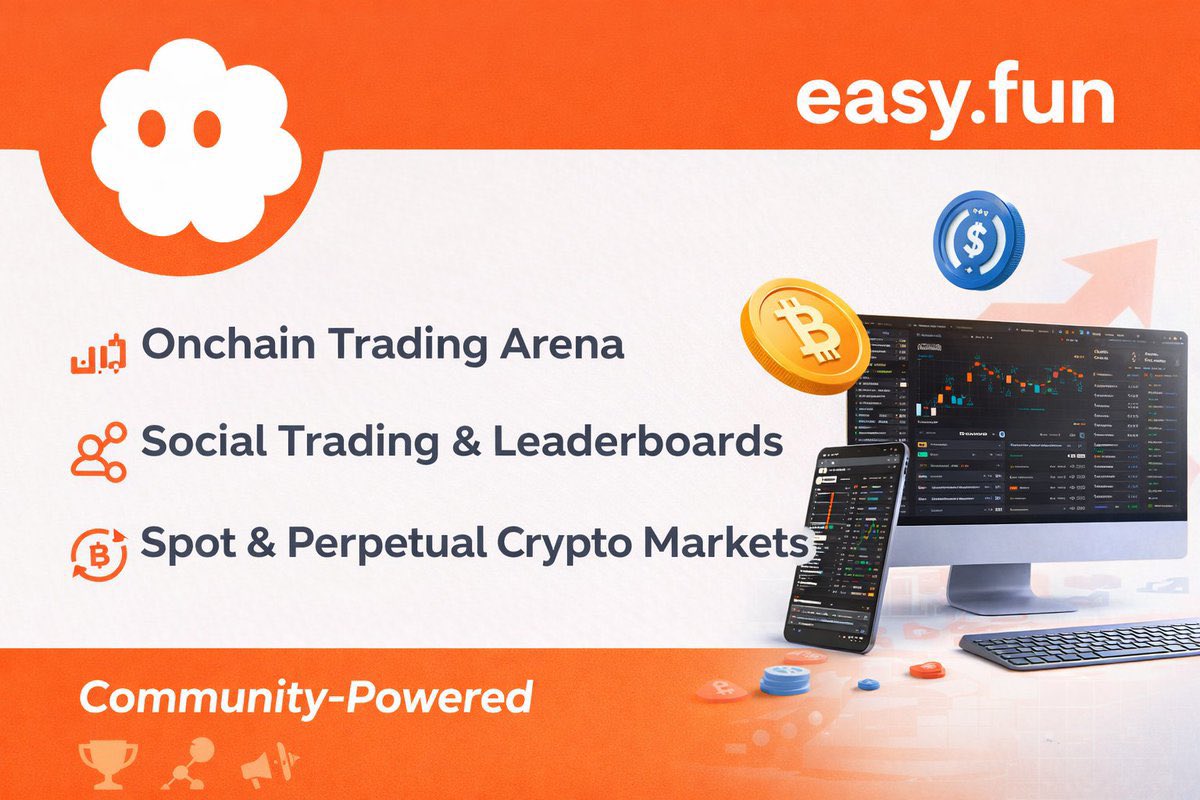
Everything you need on @easydotfunX is in one flow, so decisions feel grounded instead of rushed. You can see what you’re doing, what’s working, and what isn’t clearly. You start trading with awareness instead of impulse. Even the basics matter: moving funds is simple, performance is visible, copy trading doesn’t remove responsibility, it keeps you in control. The setup just supports how you actually operate, and that’s a rare thing in trading software.


Is @easydotfunX the big change? I don’t know if it is though, but it’s the first platform in a while that’s actually changed how I trade. I’m not even talking about the hype way, I mean the small, real ways. I’m not juggling between apps as much, I’m not rushing entries just because the screen feels fast, I’m not reacting to everything that moves. Trading feels calmer, more organized, more deliberate, nothing magical, no promises. Just a system that makes better decisions easier to make, and bad habits harder to fall into. And honestly, in trading, that kind of change matters more than any feature list.


Everyone repeats “data is the new oil” but here’s what most people ignore: the world is drowning in data, yet starving for usable truth. Global data creation is exploding, IDC projects the world will generate 175 zettabytes of data by 2025. That’s not just a big number, it’s a warning sign. More data doesn’t automatically mean more value, a lot of it is duplicate, low quality, unstructured, or simply unreliable. And that’s the real problem with today’s data economy: • data is hoarded in silos • scraped without context • resold without accountability • and trusted far more than it should be This is why sustainable data is the next frontier. Sustainable data means a system where contributors are rewarded fairly, quality improves over time, and buyers pay consistently because the data is genuinely useful, not because incentives are temporarily pumping activity. That’s what I like about @PerceptronNTWK. Perceptron is building a living data network, a model where data collection is continuous, distributed, and human-aligned. In my opinion, that’s how data survives long-term: not through hype, but through repeat demand. Because incentives can bootstrap a network, but only real utility keeps it alive. @MindoAI


What @easydotfunX is really saying here is simple: having more options doesn’t make trading easier, it just makes it louder. Most platforms focus on giving users access to everything: more tokens, more markets, more features, more leverage. But when everything is available, nothing is clear, the trader is still left alone to filter noise, judge risk, decide what matters, and figure out who or what to trust. So the problem is not entry, access is easy now. Anyone can trade anything, and at anytime. The hard part is decision-making: • Knowing what signals matter. • Knowing which information is reliable. • Knowing how to act without being overwhelmed. • Knowing who to learn from. • Knowing how to build confidence in your process. That’s the gap they’re pointing at. easy.fun is not trying to win by listing more assets, it’s trying to build structure around trust, context, and behavior. An environment where decisions aren’t made in isolation, where information is legible, and where participation creates clarity instead of confusion. In other words: access gets you in the door, however, structure helps you survive inside the market.


I think the internet doesn’t have a data problem, it has a data legitimacy problem. Think about it, we generate endless information every second, but most of it is noisy, duplicated, scraped without context, and impossible to verify. That’s why even in a world of “big data,” teams still struggle to answer a simple question: Can we trust this data enough to build on it? This is where @PerceptronNTWK stands out. Perceptron is not trying to collect the most data. It’s building the missing layer: a trustable data supply network, where data has provenance, validation, and accountability baked into the pipeline. Instead of “download a dataset and hope,” Perceptron moves toward: • structured data flows • real-time contribution • reputation-backed verification • and fair rewards for the humans powering the network In my opinion, this is the future of sustainable data: not hoarded by a few companies, not inflated by hype but produced like infrastructure. Perceptron is not just gathering information, it’s building legitimate data at scale. @MindoAI


I didn’t think a trading platform could really change how I trade. I honestly thought it would just be charts, leverage, maybe some nice features, and that’s it. But @easydotfunX ended up changing how I think, how I move in the market, and how I grow and that surprised me. When I first joined, I was just like everyone else, jumping between apps, checking spot here, futures there, copying trades, forgetting why I entered, losing track of what I was doing. It felt like noise with buttons, busy, but not focused. But somehow easy.fun slowed that down. What actually helped me wasn’t the assets or the leverage, it was the structure. Seeing my real performance in one place made me more honest with myself. I could see where I was winning and where I was just bleeding slowly. Copy trading stopped being about “following” and started being about learning; adjusting size, managing risk, understanding why things worked or didn’t. Even the points and referral system did something unexpected: it made me more consistent, not pressured, just more intentional. I saw myself showing up differently. It didn’t just give me tools, it gave me context. My trades stopped feeling random, my mistakes started making sense, and my decisions started having memory. I still make bad trades (of course I do), but now I understand them, I know what good looks like, I know what bad feels like before it happens. Trading now feels like something I’m actually learning, and that’s a really big positive for me.


We’re at a moment where data is not just abundant, it has become the backbone of every digital system we depend on. However, the world’s data stack still relies heavily on centralized intermediaries that extract, silo, and control value. What if instead we built a framework where data is sustainable, trusted, and genuinely owned by its contributors? That’s the vision @PerceptronNTWK is building toward. It has combined forces with BlockMesh, uniting a global distributed node network with decentralized edge intelligence to create a vertically integrated data pipeline that’s trust-driven and transparent. The result is not just another dataset, it’s a living, community-powered data mesh where real-world data is gathered, structured, labeled, and rewarded at scale. Perceptron’s architecture with its modular Perceptron Nodes, interactive Agents, and reputation-backed PERCs, aligns human participation with data value in a way that moves beyond token speculation toward long-term utility and sustainability. This approach tackles three core challenges of a sustainable data future: 🔹 Distributed data collection that avoids central hoarding. 🔹 Human-verified contextual quality via edge labeling, not blind scraping. 🔹 Aligned incentives that reward lasting contribution and real value. Data should be more than a byproduct, it should be a shared, verifiable, and economically meaningful resource. Perceptron is helping make that a reality. @MindoAI


In my previous post, someone asked “how @PerceptronNTWK actually ensures sustainability?” Fair question, and I don’t think the answer is complicated. In reality, real sustainability doesn’t come from incentives alone. Tokens can get people in the door (sure), but they don’t keep people showing up when the excitement fades. What keeps any system alive is simple: people actually need what it produces. If the data is useful, if it saves time, if it’s reliable, if it solves real problems, then there will always be demand for it. And when there’s real demand, contributors don’t need artificial motivation, because the system sustains itself naturally. That’s what I see Perceptron aiming for. Not a hype-driven network, not a short-term incentive game, but something practical: a data system people can rely on, and therefore pay for, over time. So to that fella, sustainability is not magic, it’s just usefulness that doesn’t disappear. @MindoAI


One thing I don’t see people talk about enough is how smooth deposits and withdrawals are on @easydotfunX, and how much that actually changes the experience. It sounds small and basic, but it’s not. When moving money feels stressful, everything else feels stressful. How? You hesitate on entries, you rush decisions, you second-guess the platform. Infact, friction messes with your head as much as it messes with your trades. With easy.fun, funding just feels… normal. You deposit, it shows up, you withdraw, it goes through. No confusion, no weird delays, no anxiety about where your funds are sitting. Like I said before, it sounds basic but I t’s peace of mind, and peace of mind in trading is priceless, NEVER trade it. You don’t realize how valuable that is until you’ve used platforms where it doesn’t work, and support tickets becomes your friend. 😂


Most trading platforms compete on access. More assets. More markets. More ways to trade. But access doesn’t tell users what to trust — or how to act. The burden of decision still falls entirely on the trader. Access solves entry. Trust solves outcomes. That’s the layer we’re building. 🍿

🎆 Happy New Year from Souls Lab! New year, new blocks, new ideas to ship. We’re stepping into this year with bigger visions, new ideas with a fresh "soul". 🚀 Big thanks to all our clients & partners for trusting, supporting, and building with us over the past year 🤝 Wishing everyone a new year full of good vibes, big wins, and exciting things ahead ✨ Happy New Year! 🥂


One thing I’ve learned is this: data doesn’t fail because we don’t have enough of it, but because it becomes too expensive to trust. Think about it, the moment a system grows, the cost of verification rises, the noise multiplies, and suddenly everyone is making decisions on information they can’t confidently defend. That’s why the world keeps producing more dashboards, more reports, more “analytics”… but still feels blind. Personally, I feel the next generation of data won’t be about collecting more, but about building data systems that stay reliable even when incentives cool off, even when hype fades, even when the market turns. Sustainable data means the pipeline keeps running because there is real demand for quality, and real value being delivered continuously. That’s what makes @PerceptronNTWK interesting. It’s building a network where data is not treated like a one-time commodity, but like infrastructure: refreshed, validated, and strengthened through participation. If data is going to become the backbone of the future economy, then networks like Perceptron are the kind of foundation that actually makes sense: decentralized, incentive-aligned, and designed for long-term usefulness, not short-term noise. @MindoAI


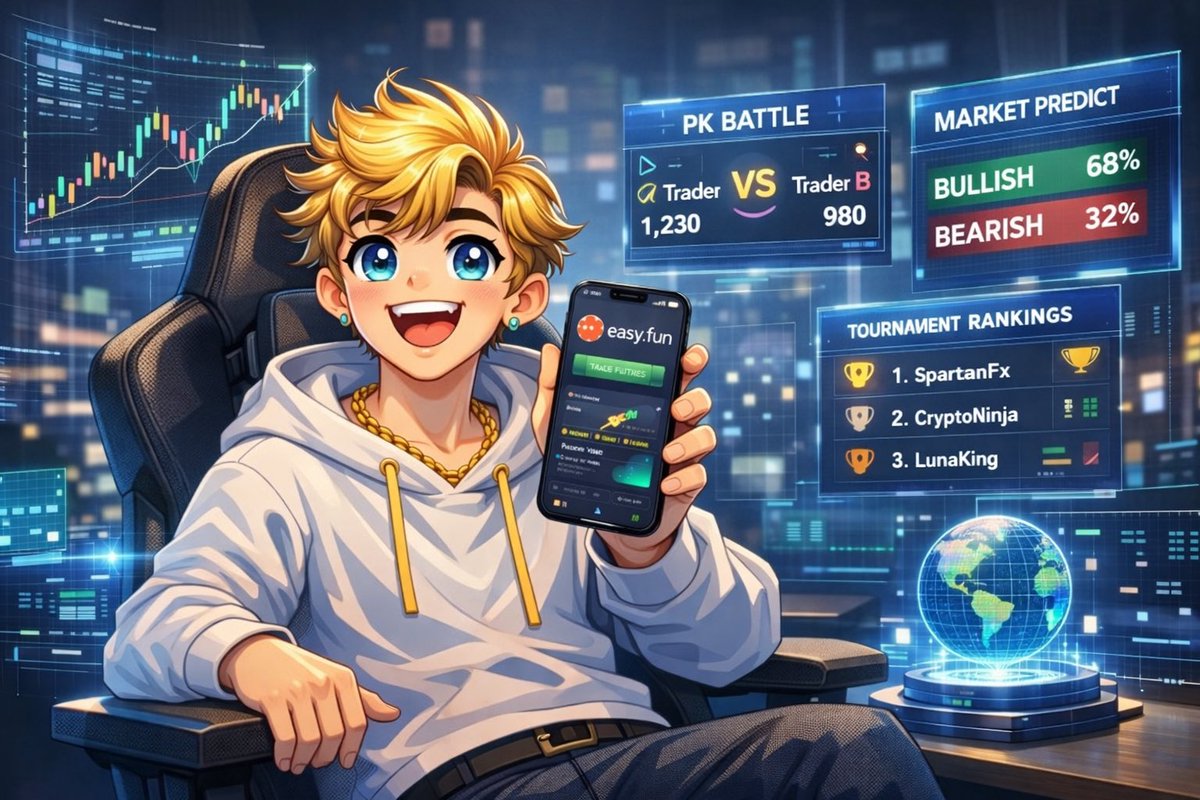
A new chapter is coming, and March feels like a real turning point for @easydotfunX. The team’s latest X post is a clear signal (Live Rooms, Tournaments, Predictions, and a major app upgrade are landing) that the platform is moving into its next phase. If you ask me, that doesn’t feel like beta energy anymore, it feels like a shift into something more real, more live, more structured. March feels like a moment where things start getting more serious,the next stage of building something real. So brace up for a wild ride, for it’s getting a whole lot exciting on easy.fun.


Most people don’t realize this yet, but the next big war won’t be over attention, it’ll be over TRUTH. Not “truth” in a philosophical sense, truth in the practical sense: Which data is real? Which signal is clean? Which information can we trust enough to build on? Because in a world where everything can be copied, edited, automated, or faked…the most valuable thing becomes credible information. And right now, credibility is collapsing. We’re surrounded by data, yet decision-makers still operate in uncertainty: • dashboards built on shaky inputs • research polluted by noise • datasets with no provenance • and “insights” that can’t be verified The scary part is that the future won’t slow down to wait for better data. It’ll move faster, and punish whoever builds on weak foundations. That’s why I believe the next layer of the internet won’t just be faster blockchains or smarter apps. It’ll be trustable data infrastructure. And that’s exactly where @PerceptronNTWK is positioned, building a network where data becomes structured, verifiable, and economically sustainable through real participation, not blind extraction. Perceptron is not just collecting data, it’s rebuilding trust. @MindoAI


The internet has a quiet unfairness baked into it: millions of people create value every day, but only a few platforms get paid for it. Every click, every trend, every correction, every location signal, every piece of context, it all becomes data, and that data becomes profit. But the people who generate it rarely share in the upside. That’s why I think the next evolution of the internet is not just decentralizing money, but decentralizing value creation itself especially data. @PerceptronNTWK sits right in that shift, It treats data as something that should be produced like an open economy, not extracted like a resource. Instead of data being silently harvested and sold behind closed doors, Perceptron is building a system where contribution is visible, participation is rewarded, and the network grows stronger because people have a reason to care about the quality they’re producing. To me, that’s what makes it powerful. It’s not just building datasets, but a fairer data layer where the people who power the system are no longer invisible. And long term, that’s the only kind of data infrastructure that can actually last. @MindoAI


What I like about how @easydotfunX is moving is the pacing. Look well, they’re not trying to rush scale before structure, and they’re not pushing noise before stability. The product is clearly being built in layers: execution first, usage next, community after, then expansion. That order matters because, if you look at the pattern of most platforms before now, who pushed the social trading narrative and failed, they tried to grow before they stabilize, chase users before they refine flows, pushed features before they understand behavior. easy.fun feels like it’s doing the opposite, letting real usage shape what gets built, instead of forcing narratives onto the product. You can see it in how updates are rolling out: not random features, but systems that connect, interaction, competition, participation, visibility. Things that make people stay, not just sign up. It’s not flashy, it’s not loud, but it’s deliberate. And in products like this, deliberate usually outperforms dramatic in the long run.