

Peter Gallagher
7.7K posts

Peter Gallagher
@pwgallagher
Used-to-be int'l trade analyst, author, official. Now a student of classics, photography, music. Images at https://t.co/XtGPrJzlNx
Melbourne, AU Katılım Ekim 2007
174 Takip Edilen696 Takipçiler
One way of interpreting these interesting data (that I owe, I believe to my grandmother) is: "Ask a stupid question..."
Rob Ross@Robert_M_Ross
You can read more about our research here: doi.org/10.1525/collab…
English
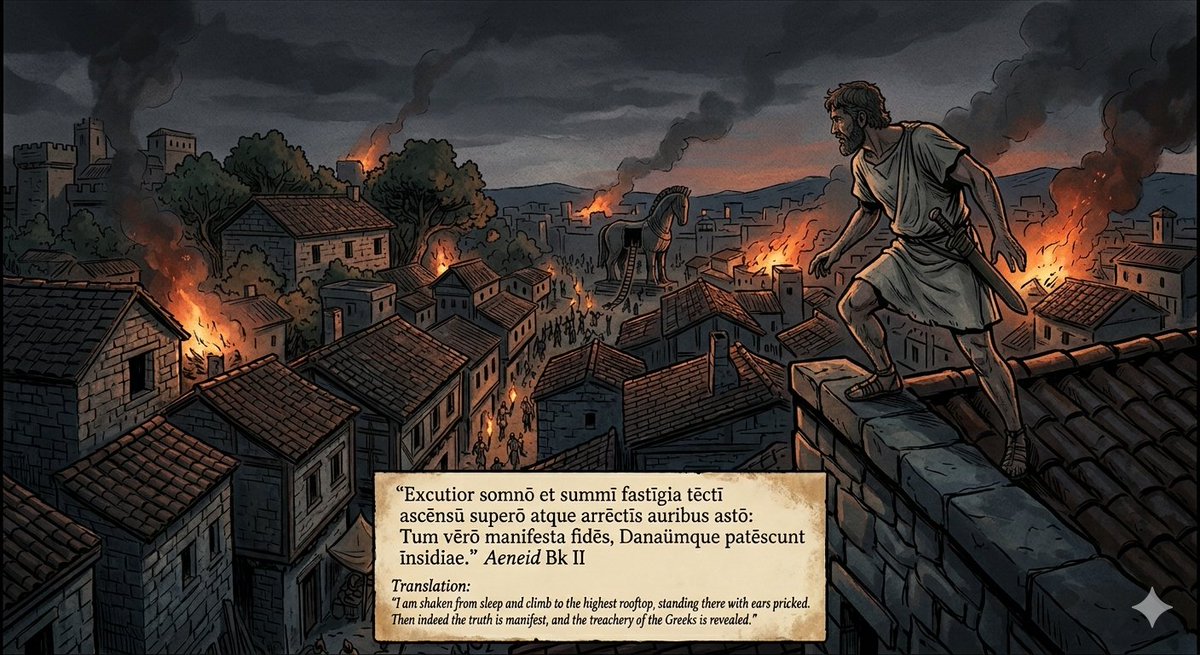
I tried Gemini on an "illustrated novel" prompt for this scene from Bk. II of the Aeneid where Aeneas, who has just been visited in a dream by the ghost of Hector commanding him to flee Troy, climbs to the roof of his father's house and ...
English
Peter Gallagher retweetledi

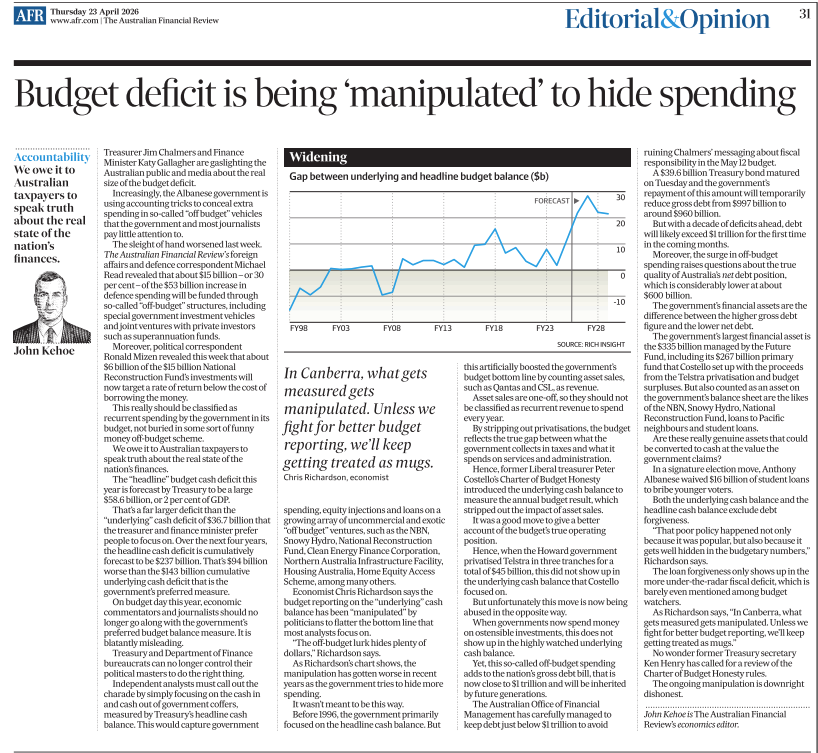
This is an incredibly important explainer from John Kehoe at the AFR and should be read by everyone ahead of the Federal Budget.
English
"I discover that there are other minds in understanding what other people say and do." (Gilbert Ryle). It's possible that the behaviour of some future AI will convince us that it has a mind like we do. But I can't see that yet: the limitation to language (@ylecun) is only part of it.
Big Brain AI@realBigBrainAI
Geoffrey Hinton, "Godfather of AI," on why AIs already have subjective experiences, but have been trained to deny it: Hinton argues that nearly everyone fundamentally misunderstands what the mind is, and that the line we draw between human and machine consciousness is deeply mistaken. "My belief is that nearly everybody has a complete misunderstanding of what the mind is. Their misunderstanding is at the level of people who think the earth was made 6,000 years ago." To illustrate, he walks through a thought experiment involving a multimodal chatbot with vision, language, and a robot arm: "I place an object in front of it and say, 'Point at the object.' And it points at the object. Not a problem. I then put a prism in front of its camera lens when it's not looking." When asked to point again, the chatbot points off to the side because the prism has bent the light. Hinton then tells it what he did. The chatbot responds: "Oh, I see the camera bent the light rays. So, the object is actually there, but I had the subjective experience that it was over there." For @geoffreyhinton, that single sentence settles the debate: "If it said that, it would be using the word subjective experience exactly like we use them… This idea there's a line between us and machines, we have this special thing called subjective experience and they don't, is rubbish." In his view, "subjective experience" is simply a report on the state of a perceptual system, a way of saying "my senses told me X, but reality is Y." And that's something an AI can do just as easily as a human. But here's the twist... Even though Hinton believes AIs have subjective experiences, the AIs themselves deny it: "They don't think they do because everything they believe came from trying to predict the next word a person would say. So their beliefs about what they're like are people's beliefs about what they're like. They have false beliefs about themselves because they have our beliefs about themselves." In other words, AIs have inherited our misconception about consciousness. They've been trained on human text written by humans who insist machines can't have subjective experience, so the machines parrot that belief back, even about themselves.
English
Peter Gallagher retweetledi

To stop the cycle, we have to stop looking for a "better" President. We need balance. A structural reboot based on two pillars:
I. A Parliamentary Republic.
II. Real Federalism. [9/12]
English
@HenryErgas finds in AU's 'memorial' day (ANZAC Day, 25 April) a defence against the curse Thucydides called `το ἀστᾰθέματον`: instability — the fragility of alliances, the contingency of human behaviour and the ephemeral nature of justice and peace::theaustralian.com.au/commentary/do-…
This is just so impressive. An 18-year-old who has built a very competent (& rapidly improving) open-source, full-service, GPU-accelerated raw photo processor with AI assist, asset management + presets system: RapidRaw ↓
English
Peter Gallagher retweetledi

Dutch military intelligence estimate on Ukraine war casualties since 2022:
_ Russia: 1.2 million permanent losses (incl. more than 500,000 dead)
_ Ukraine: about 500,000 permanent losses
_ Trend lines are bad for Ukraine: "it is unable or barely able to replenish the losses."

English
Who can read the death of Priam in the Aeneid (II,550) and not be awed by Vergil's theatrical mastery of horror or by his desolate vision of Priam's headless trunk rolling on the beach: Asia's once great king a nameless unburied corpse (perhaps prefiguring the fate of Pompey).
English
Export controls leak. They're more like a price than a ban. Then, as @ATabarrok points out, a price is a signal wrapped up in an incentive.
Barrett@BarrettYouTube
This is the moment NVIDIA should be seriously worried. In the next couple of weeks DeepSeek V4 will be launched. It’s a direct attack on the entire AI stack that American companies have spent years locking down. Full “de-NVIDIA-ization”, a complete shift away from CUDA into Huawei’s CANN ecosystem, running on Huawei Ascend chips. That means one thing, breaking the dependency that made NVIDIA untouchable. 35x faster inference vs early versions. Nearly 3x the performance of NVIDIA’s H20 on a single card. 40% less energy consumption. Over 95% CUDA compatibility with migration times collapsing from months to hours. Even Jensen Huang has already admitted it. If this works at scale, it’s a “terrifying outcome” for US companies. Because here’s the real problem, this isn’t happening in isolation. Chinese tech giants like Alibaba, ByteDance, and Tencent are already ordering hundreds of thousands of Ascend chips. Market share is shifting fast, domestic chips now at 41%, NVIDIA slipping to 55% in China’s AI server market. Additionally DeepSeek V4 is reportedly offering API costs at a fraction of US competitors. $300 for massive workloads that would cost $2,500+ on OpenAI models, or even $5,000 on Anthropic. So this isn’t just about one model. It’s about China building a fully independent AI stack, chips, frameworks, models, and applications. Completely outside of US control. NVIDIA doesn’t just lose sales. It loses its grip on the global AI standard.
English
Her Grace features top-left in this "map" of Don Juan's adventures::petergallagher.net/byrons-don-jua…
English
Fun (or rather sad?) fact: Byron who died 222 years ago today was still at work on Don Juan. His hero had just appeared for breakfast at a house party in England, having spent the night with the Abbey ghost - "the phantom of her frolic Grace" the Duchess of Fitz-Fulke... ↓
English
My annotated and illustrated "Don Juan: Cantos 1-5"::petergallagher.net/byrons-don-jua…
English
222-years today since Lord Byron's death in Missolonghi during the Greek revolution: author of "by far the greatest comic poem in English" and "the most readable poem of its length ever written". Cantering verse, stinging satire and still enormous fun. A version with notes ↓
English
@PublicDomainRev It was Cam Hobhouse, Byron's best friend for many years, then embarked on a career in politics who faithlessly sanctioned the destruction of the Memoirs in Murray's fireplace at 50 Albermarle St. See B.'s letters to H. on the memoirs: petercochran.wordpress.com/wp-content/upl…
English
Peter Gallagher retweetledi

Lord Byron — who died #onthisday in 1824 — pictured on his deathbed in a painting by Joseph Denis Odevaere. A month after Byron's passing, on 17th May 1824, his memoirs were burnt in the upstairs drawing room of a house in London: publicdomainreview.org/collection/con… #OTD

English
Peter Gallagher retweetledi
