QuickSense.app

22 posts

QuickSense.app banner
QuickSense.app

QuickSense.app

@quicksense_app

Ultimate YouTube Summary Tool powered by AI

Katılım Nisan 2024
2 Takip Edilen29 Takipçiler
QuickSense.app retweetledi
Karthik Pasupathy
Karthik Pasupathy@wordsbykp·
We've been a bit silent about @quicksense_app for the last couple of weeks because we're working on a few quality of life improvements and features. We want to do this before we launch on ProductHunt. A special lifetime plan is in the works too! Stay tuned.
English
0
1
5
510
QuickSense.app retweetledi
K R Adithya
K R Adithya@KRADITHYA1·
Tried @quicksense_app today and loved how crisp and contextual the summaries are even for regional videos. What I liked more is how @wordsbykp breaks down the idea and the process of building it!
English
0
1
5
312
QuickSense.app retweetledi
Karthik Pasupathy
Karthik Pasupathy@wordsbykp·
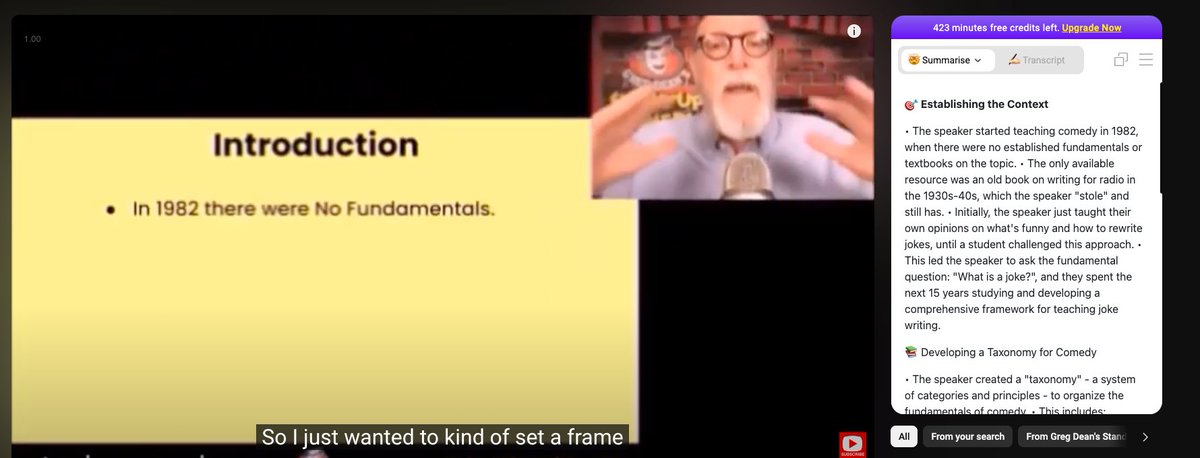
See how cool the summary is? Try it out yourself. Sign up for FREE! @quicksense_app
Aishwarya Ashok@aishashok14

Here is a summary of the key points from the my conversation with Dan Shipper on The Founder's Foyer: f/t @quicksense_app 🗣️ Embracing Multiple Identities - Dan initially struggled with identifying as a writer vs. a founder, but realized he could embrace both roles by delegating operational tasks to his team. - He emphasizes that identities are fluid - you can emphasize different aspects at different times, without being permanently defined by any single label. 📚 Leveraging AI for Reading and Writing - Dan uses AI tools like ChatGPT and DALL-E to discover new books, enhance his comprehension of complex texts, and generate visual aids to complement his reading. - He sees AI as a powerful "co-pilot" that can augment and enhance human creativity, rather than fully replace it. 🎨 The Appeal of 1970s Aesthetics - Dan is drawn to the optimism and authenticity of 1970s technology and culture, which felt more like a "work in progress" compared to today's highly polished digital experiences. - He finds physical books to be more engaging and "souvenir-like" compared to the homogeneous feel of e-books. 🧠 Insights from Interviewing @hume_ai - Discussing Hume's approach to detecting and expressing emotions sparked Dan's interest in the science of emotions and how it relates to art and creative expression. - He was fascinated by the idea of emotions existing in a high-dimensional "semantic space", and how naming and mapping uncharted emotional territories is a key function of great art. Overall, the conversation highlights Dan's multifaceted approach to creativity, his embrace of AI as a tool for augmentation, and his thoughtful reflections on the interplay between technology, aesthetics, and the human experience.

English
0
2
8
892
QuickSense.app
QuickSense.app@quicksense_app·
This is amazing @aishashok14 @danshipper
Aishwarya Ashok@aishashok14

Here is a summary of the key points from the my conversation with Dan Shipper on The Founder's Foyer: f/t @quicksense_app 🗣️ Embracing Multiple Identities - Dan initially struggled with identifying as a writer vs. a founder, but realized he could embrace both roles by delegating operational tasks to his team. - He emphasizes that identities are fluid - you can emphasize different aspects at different times, without being permanently defined by any single label. 📚 Leveraging AI for Reading and Writing - Dan uses AI tools like ChatGPT and DALL-E to discover new books, enhance his comprehension of complex texts, and generate visual aids to complement his reading. - He sees AI as a powerful "co-pilot" that can augment and enhance human creativity, rather than fully replace it. 🎨 The Appeal of 1970s Aesthetics - Dan is drawn to the optimism and authenticity of 1970s technology and culture, which felt more like a "work in progress" compared to today's highly polished digital experiences. - He finds physical books to be more engaging and "souvenir-like" compared to the homogeneous feel of e-books. 🧠 Insights from Interviewing @hume_ai - Discussing Hume's approach to detecting and expressing emotions sparked Dan's interest in the science of emotions and how it relates to art and creative expression. - He was fascinated by the idea of emotions existing in a high-dimensional "semantic space", and how naming and mapping uncharted emotional territories is a key function of great art. Overall, the conversation highlights Dan's multifaceted approach to creativity, his embrace of AI as a tool for augmentation, and his thoughtful reflections on the interplay between technology, aesthetics, and the human experience.

English
0
2
4
455
QuickSense.app retweetledi
Karthik Pasupathy
Karthik Pasupathy@wordsbykp·
Everyone who signed up but couldn't get access to @quicksense_app due to sign up bug will get 250 minutes extra credits from our side for all the trouble. Please try the app to use the credits.
English
0
1
6
597
@jason
@jason@Jason·
Best AI tool to give a YouTube link to and say “summarize this?”
English
263
66
1.2K
744.6K
QuickSense.app retweetledi
Karthik Pasupathy
Karthik Pasupathy@wordsbykp·
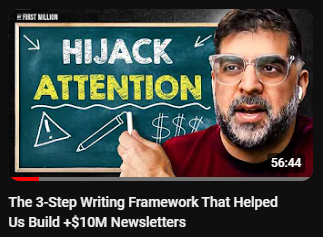
If you're interested in writing, @ShaanVP and @thesamparr's one-hour video on writing is a brilliant place to start. (youtu.be/Q0N-z0H8VEU?si…) But, if you don't have one hour, here's an in-depth summary of the video I've created using @quicksense_app The Promises of Becoming a Better Writer - The speaker promises that in the next 60 minutes, you will become a significantly better writer, even if you currently struggle with writing. - The speaker and their co-host Sam have built successful careers and businesses through their writing skills, not necessarily because they are the best writers, but because they have learned to get great results from their writing. - To establish credibility, the speaker highlights their experience in building and selling newsletter businesses, growing large social media audiences, and generating millions in online sales through email. Why You Should Care About Being a Better Writer - Persuasion in the most scalable way: Writing allows you to persuade and convince people to take action, whether it's for a business, personal relationships, or any other goal. - Clarity of thought: Writing forces you to think clearly, and the reverse is also true - clear thinking leads to clear writing. Bad writing reveals bad thinking. - Idea generation: The process of writing can generate new ideas and insights that you may not have had before. The Importance of Preparation Before Writing - Begin with the end in mind: Decide the desired reaction, action, and key takeaway before starting to write. - Avoid outlines, and instead focus on crafting a compelling headline and sub-headline that capture the essence of what you want to convey. - Unlearn the traditional writing techniques taught in school, as they are often not effective for writing on the internet, where conciseness and accessibility are key. The Writing Process: Copy Work, Drafting, Incubation, and Editing - Copy work: Manually copy passages from writing you admire to get into the flow and absorb their style. - Drafting: Quickly produce a "bad" first draft without worrying about quality, as this allows for the next step. - Incubation: Step away from the draft for a period of time, allowing your subconscious to work on refining the ideas. - Editing: This is where the real magic happens, as you ruthlessly cut, rearrange, and improve the writing. Additional Tips for Effective Writing - Avoid burying the lead: Start with the most important, provocative, or attention-grabbing statement. - Write like you talk: Use a conversational, accessible tone rather than overly formal language. - Maintain a swipe file: Collect examples of great writing, phrases, and ideas to reference and draw inspiration from. The Power of Writing and Persuasion - Writing is a powerful tool for persuasion, idea generation, and personal growth. - Applying the techniques discussed, such as beginning with the end in mind, copy work, and the drafting-incubation-editing process, can significantly improve your writing skills. - The speaker emphasizes the importance of unlearning traditional academic writing approaches and focusing on conciseness, accessibility, and emotional impact for effective online communication. Other tips include: Informal Language Can Be Professional - The speaker emphasizes that informal language can be just as professional as formal jargon. He cites examples like Louis CK's simple, conversational writing style. - He advises against using words you have to look up, and instead recommends using common, everyday language that most people understand. Writing About What You Would Actually Talk About - When training writers for his newsletter, the speaker had them record short voice memos describing the news, rather than writing formal drafts. - This helped filter out topics that were boring or that the writers wouldn't actually discuss with a friend. - The key is to write about things you find genuinely interesting and would naturally talk about, not just what you think you should write about. Writing to One Person - The speaker advises writers to imagine they are writing to a single person, rather than a large audience. - This makes the writing more personal and relatable. Aiming for a 6th-8th Grade Reading Level - The speaker cites examples showing that even complex topics like finance can be explained at a 6th-8th grade reading level. - He recommends tools like Hemingway App to help writers achieve this level of clarity and simplicity. The Power of Storytelling - The speaker shares the example of how a story about Hint Water's founder getting dismissed by a Coke executive went viral and drove sales. - He explains the key elements of effective storytelling: intention, obstacle, and high-stakes emotions in a low-stakes environment. Rhythm and Variety in Writing - The speaker emphasizes the importance of varying sentence length and structure to create a pleasing rhythm in writing. - He cites examples from great writers like Warren Buffett and the "Hey.com" CEO to illustrate how simplicity and clarity can be achieved even on complex topics. Resources for Improving Writing - The speaker recommends books like "On Writing" by Stephen King, as well as studying comedians, true crime podcasts, and other engaging storytellers. - He also suggests practicing "copy work" by hand-copying passages from great writers to internalize their techniques. Letting Your Unique Voice Shine - The speaker emphasizes the importance of letting your authentic voice and interests come through in your writing, rather than trying to emulate a persona. - He plugs his own writing course and resources, including "Maven" and "Copy That", which provide structured practice and examples to help writers improve. If you have a lot of such long form videos saved in your “Watch Later”, you can instantly summarize them for free using @quicksense_app. Try the app today!
YouTube video
YouTube
Karthik Pasupathy tweet media
English
0
3
9
900
Aishwarya Ashok
Aishwarya Ashok@aishashok14·
So what could be special about a summarizer you ask? I loved the way @quicksense_app took me to the 'Aha' moment with a single click—the quality, style, format of the summary is so neatly packed, just as how a storyteller would write down (@wordsbykp magic indeed!) Going straight from here to The Founder's Foyer social posts and newsletters. Can't wait for further cool updates.
Aishwarya Ashok tweet media
English
3
0
19
2.1K
QuickSense.app
QuickSense.app@quicksense_app·
@nimmypal You can choose between insightful summary and time based summary.
English
1
0
1
15
equa-nimmi-ty
equa-nimmi-ty@nimmypal·
@quicksense_app Thanks. Are there any decision points for the user before the summary is generated?
English
1
0
0
20
QuickSense.app retweetledi
Sanjeev NC
Sanjeev NC@yenceesanjeev·
Started using @quicksense_app to summarise YouTube videos. Very helpful in deciding if I should watch a video or not based on the summary. Awesome stuff @wordsbykp!
Sanjeev NC tweet media
English
1
1
21
2.3K
QuickSense.app retweetledi
Karthik Pasupathy
Karthik Pasupathy@wordsbykp·
Here's a quick demo of the “time-stamped summary” feature we've added to @quicksense_app. Check it out!
English
1
3
9
844
QuickSense.app retweetledi
Karthik Pasupathy
Karthik Pasupathy@wordsbykp·
We've sent out beta invites for @quicksense_app to everyone who signed up for the waitlist. If you haven't received the email, DM me for access. And one more thing! We've managed to add an exciting feature before we sent out the beta invites — Time-based summary. How does a 'Time-based summary' work? A one-hour video is split into smaller chunks and a summary is generated for every chunk. This is highly useful when listening to a podcast or a lecture because every chapter or section is summarized as part of the process. Try it and let us know what you think.
English
2
2
15
1.3K
QuickSense.app retweetledi
Karthik Pasupathy
Karthik Pasupathy@wordsbykp·
We've added some exciting enhancements to @quicksense_app over the weekend: 1. Sharper summaries — We've fine-tuned the system to give better quality summaries. 2. Handle longer videos — Useful in getting key insights from long podcast videos. 3. A Generous free plan — Users on the free plan can summarize 500 minutes worth of video. 4. Added a feedback widget — To understand the types of videos where the app isn't meeting the expectations. Starting this week, we'll send invites to those who signed up for early access. For those who didn't, sign up for early access: quicksense.app
English
0
5
14
1.5K