
Sabitlenmiş Tweet
Rooj Rin🔎
3.7K posts


Rooj Rin🔎
@r_rooj
Com Sci and Elec Eng Undergrad @BristolUni
Bangkok, Thailand Katılım Nisan 2016
3.8K Takip Edilen173 Takipçiler
Rooj Rin🔎 retweetledi

Euler is one step closer to launch!
We're excited to unveil the codebase for the Euler Vault Kit (EVK) & the Euler Price Oracle 🧵
English
Rooj Rin🔎 retweetledi

Some animated debates about lending protocol design have been going around recently. Let me take you through my view of things and where I see Euler v2 and its unique ability to chain together vaults and build lending vault clusters fitting in.
By the end of this thread I hope to have convinced you that there won’t be a more powerful lending protocol out there than Euler v2 when it launches in the next few months.
I recently published a piece about lending protocol designs fairly recently, with all the trade-offs of different designs laid out in a structured manner. Check it out below if you haven’t seen it.
In that article I draw a distinction between paternalistic models of risk management and free market approaches as two extremes on a spectrum of wider possibilities.
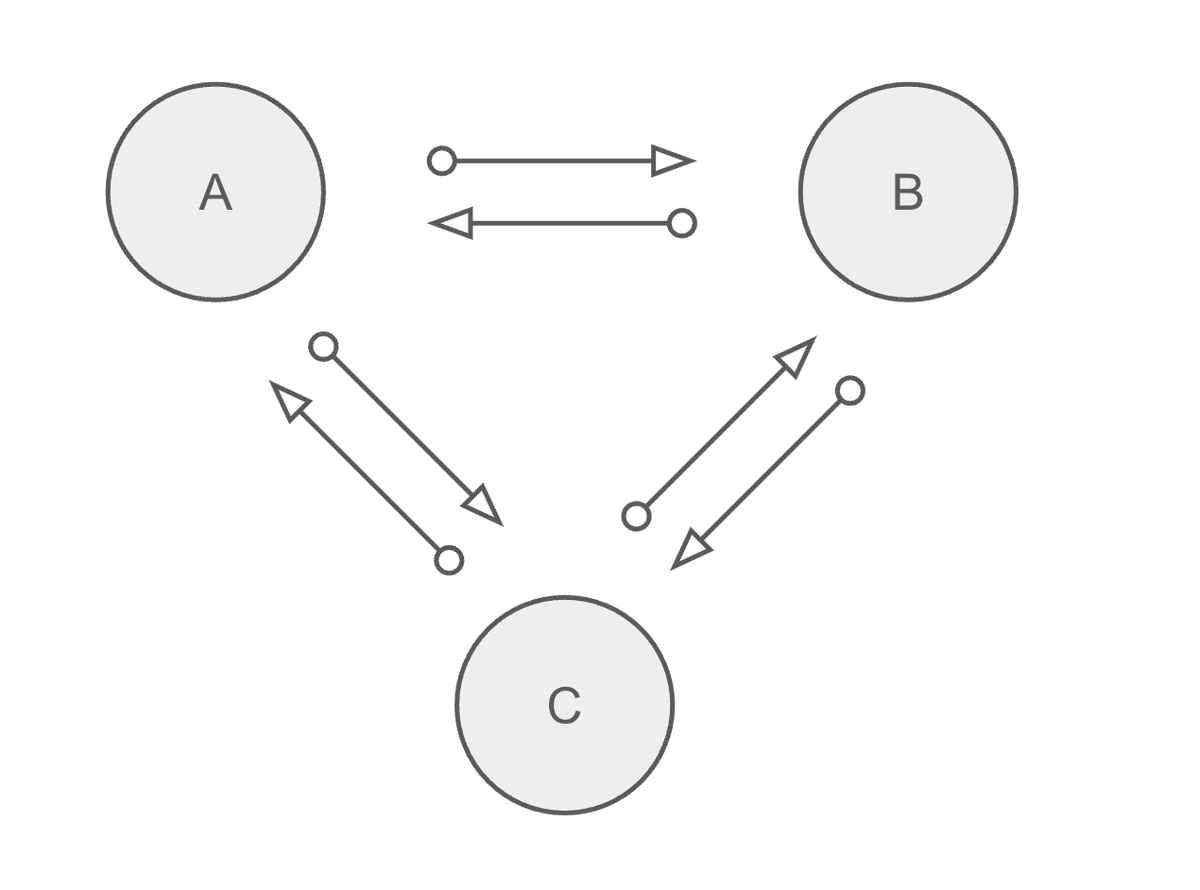
Pure free market protocols usually work as follows. You have a simple pair design where users deposit asset A as collateral and borrow asset B. Lenders deposit B into a pool and earn yield from interest paid by borrowers. Collateral asset A usually cannot itself be borrowed and therefore earns no yield (i.e. there is no collateral ‘rehypothecation’).
These sorts of protocols are free market in philosophy because the loan-to-value (LTV) between a pair of assets is usually fixed. This means there is no one actively managing risk for lenders and risk management emerges in the broader market through the ‘invisible hand’.
The first example of this design was implemented by Kashi back in 2020, but the same design has recently been popularised by newer protocols like Morpho Blue.
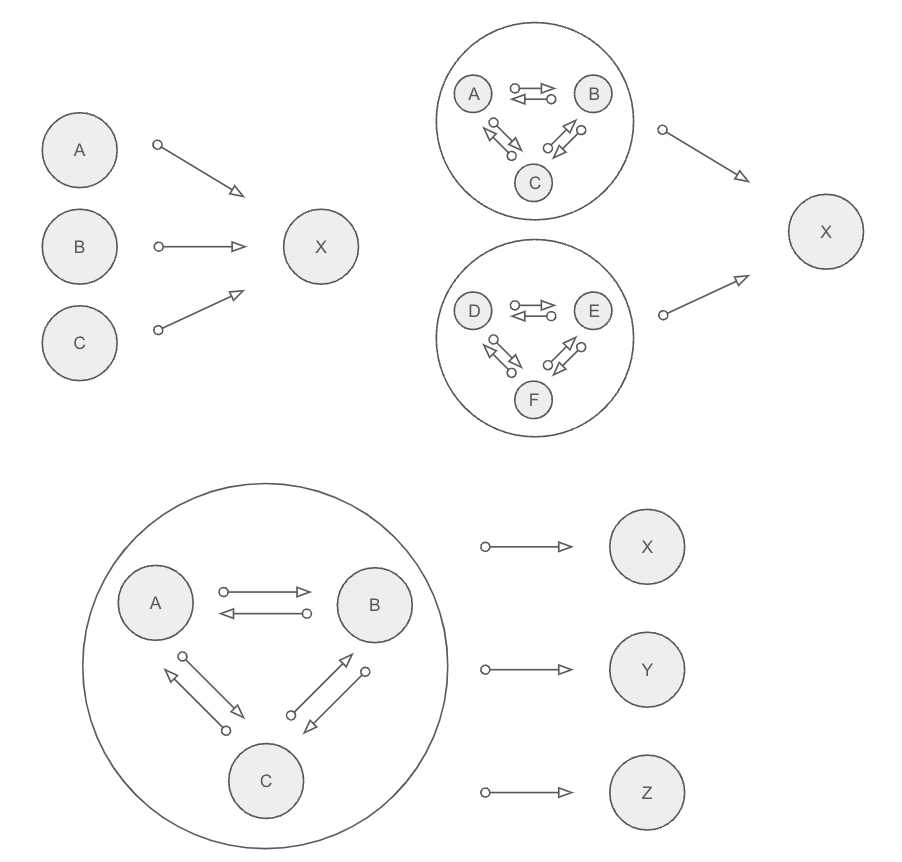
At the other end of the spectrum, paternalistic protocols usually connect multiple assets to one another in a larger, monolithic protocol. There is a group of collateral assets A, B, C, … and they can all be used as collateral to borrow one another, as well as used to borrow a group of non-collateral assets, X, Y, Z, …. This design is often more capital efficient because it allows for collateral rehypothecation and connects together multiple collaterals. Yet it also comes with added complexity and risk, because the entire group of assets is exposed to all collaterals inside the protocol.
For this reason, these kinds of protocols have usually been accompanied by a risk manager, whose job it is to actively manage LTV parameters for the entire protocol. Examples of this approach include Aave v3, Spark, Compound v2, and Euler v1.
It should hopefully be clear that both asset pairs and monoliths are opinionated extremes on a spectrum of possibilities. For example, Silo improves the capital efficiency of the pair design by allowing collateral A to borrow asset B, and vice versa. This allows collateral A to borrow asset C, and vice versa, in a risk isolated way, so long as there are separate markets connecting A to B and B to C. On the other end, Rari Fuse offered lenders a free market of monolithic lending protocols, expanding the collateral options for lenders in more capital efficient pools.
Euler v2 abstracts away all of this complexity into modules, allowing market creators the opportunity to create anything from a simple pair all the way up to a monolith and beyond. We call these ‘clusters’ of vaults.
Similar to Kashi or Morpho Blue users can create a market where asset A can be used as collateral to borrow B, where A cannot be borrowed:
But this can easily be extended to offer Silo-like cross-collateral capabilities:
But why stop at 2 cross-collateral assets? Why not have 3 (or more):
Or users can extend the Kashi/Morpho Blue model to create a Compound v3-like market, where there’s a single borrowable asset, but now multiple collateral-only assets. But why not extend this further and make each collateral a cross-collateral cluster? Users can add borrow-only assets and create an Aave-like structure. These structures could then be replicated to recreate something like Rari Fuse. And on and on. The design space is limitless.
Note that Euler v2 is strictly an improvement on anything that has come before in terms of flexibility and functionality. Users that don’t want rehypothecation can opt for a design without it. But in many cases, rehypothecation is going to be desired. After all, the global financial system is built on rehypothecation, because it is more efficient. Simple pairs and bureaucratic monoliths won’t help DeFi scale to accommodate trillions of dollars. Euler v2 will.
Where does Euler v2 stand with respect to governance? Ultimately, it is entirely agnostic. Risk management is no longer exclusively performed by Euler DAO.
Instead it is externalised to vault creators. Euler v2 is a software development kit for builders. It is up to builders and the users that use their products what risks they are open to. They should not expect Euler DAO to step in if the risk environment changes.
If vault creators want to operate a monolith, they will be able to apply to the Euler DAO to do so, and then will be able to manage risk on their monolith as they see fit. They could even opt to use a mixture of actively governed and ungoverned markets. Alternatively, vault creators can deploy in a permissionless manner anything from a simple ungoverned pair or an entire ungoverned cross-collateral cluster. This flexibility represents a major extension of what users can create on Kashi, Morpho Blue, or Silo.
Another major advantage for builders on Euler v2 is that whatever type of vault they create, vault fees are split among the vault creator and the broader protocol, unlike in other protocols where 100% fees usually go to the protocol (in some cases only when a fee switch is activated).
This fee-sharing on Euler v2 at the vault layer helps foster the growth of a community of vault creators who compete with one another for liquidity, either through their own deposits and market making, incentive mechanisms, or simple marketing.
When using ungoverned vaults, lenders can either choose to deploy capital into the free market of vaults themselves, or they can have a risk manager do it for them via a Managed vault. A Managed vault on Euler v2 is similar to a Yearn vault or a Metamorpho vault in the Morpho ecosystem. It is a simple aggregator who takes multiple user deposits and funnels them into lower-level vaults.
The basic idea is that lenders deposit to a Managed vault, and the risk manager for that vault (which might be an algorithm or an organisation of some sort) specifies rules under which the flow of lenders assets goes into vaults with different risk parameters. Any fees taken on a Managed vault go directly back to the risk manager as compensation for their efforts in managing risk. Those risk managers who better manage user risk will tend to be favoured over by depositors to those who perform poorly.
Similar to Yearn, but unlike in Metamorpho vaults, deployers of Managed vaults are encouraged to support deposits in vaults outside of the Euler ecosystem as well as within it. After all, a Managed vault that secures the best risk-adjusted returns for depositors wherever that yield comes from will always outperform a more protectionist alternative.
For users wanting to manage their own risk, Euler v2 has another important feature that allows users to specify their own fund flow preferences and have this managed on a more individualised, rather than aggregated, basis. More on this another time.
Ultimately, Euler v2 is a modular protocol that functions as a flexible and powerful developer kit, allowing builders to create their own lending protocol of any variety. Coming to a blockchain near you soon.*
*After the largest code audit competition in history on @cantinaxyz.


English
Rooj Rin🔎 retweetledi
Euler is coming back, LFG!
Euler v2 has been almost two years in development and it will comfortably be the most powerful lending protocol on the market when it goes live.
We've abstracted everything a lending protocol needs to be successful and rebuilt the foundations up in a modular fashion.
Consequently, Euler v2 is agnostic about almost everything. Governance, oracles, you name it. You can build what you like with it and the ability to chain-vaults together provides opportunities that simply won't be available anywhere else - especially with the rise of LRTs and the increasing popularity of basis trades.
At launch there will be a module called the Euler Vault Kit (EVK), designed to allow users deploy their own customisable lending markets, and a module called the Ethereum Vault Connector designed to supercharge vaults and let them talk to one another.
The EVC has been out for a few months already and has received four very clean audits, on top of formal verification, and pre-audit security reviews from industry leaders.
The EVK is now ready to receive the same treatment with many audits on the way, including a special code audit competition. More details in the near future.
For now I just want to say how proud I am of the relience our team has shown over the past year and how proud I am of this fine piece of work.
The Lite Paper is a good place to start understanding what Euler v2 offers, but if you want to dig into the developer docs, the EVK white paper also has a lot to offer.
docs.euler.finance/euler-v2-lite-…
docs.euler.finance/euler-vault-ki…
English
Rooj Rin🔎 retweetledi

🚀One event-packed week later, we arrive to Week 2 of U-Hack. Here’s what you can expect this week…
As always, find links to events under the uhack.xyz "Agenda" page🌐
🛠️Tuesday & Wednesday | Technical Workshops from @Conflux_Network
✍️Thursday | Technical writing workshop with @DAppaDanDev
👥Friday | Book your Mentoring & Technical Assistance slots!
💬Saturday | Joining us as speakers are:
@RocketPool_Fi, @acryptosdao, @single_finance, @TProtocol_, @pendle_fi, @LidoFinance, @MountainUSDM
U-Hack is co-hosting #BUIDLHOUSE at @EthereumDenver! Drop by if you're there👇
x.com/supermooncamp/…

English
Rooj Rin🔎 retweetledi
Rooj Rin🔎 retweetledi

The Ethereum Foundation stated that the Devcon 7 conference will be held in Bangkok, Thailand, from November 12 to 15, 2024. The Ethereum Foundation says the Ethereum community in Southeast Asia has huge potential, as evidenced by its rapidly growing cryptocurrency adoption.
blog.ethereum.org/2024/01/03/dev…
English
Rooj Rin🔎 retweetledi

Rooj Rin🔎 retweetledi

ชีวิตหมอปี2เทอมแรก เอา 4.00 มาได้แระ 🫶🥹 ตอนแรกเคยคิดว่าทำไม่ได้แน่ ๆ ผ่ากรอสยากจะตาย จำเส้นเลือดทุกเส้น เส้นประสาททุกเส้น กล้ามเนื้อทุกมัด กลไกการทำงานทุกอย่าง ความรู้ใหม่แทบจะร้อยเปอเสน แต่ผ่านมาได้แบบมีเวลาอ่านนิยาย 100 เล่มในปีนี้ด้วย เก่งอ่ะ
(เขียนวิธีเรียนในเมนชั่น ↓)

ไทย
ข่ายบัตร octopop general entry 2 ใบค่า นัดรับได้ค่ะ ไม่อับราคา dm ได้เลยค่า #OCTOPOP2023
ไทย
Rooj Rin🔎 retweetledi

Small is beautiful.
Small cap stocks outperformed the S&P500 with more than 4% per year over the past century.
Here are 15 small cap stocks you should know:

English
Rooj Rin🔎 retweetledi

1/7 Announcing WinterGov - A Delegate’s Tool for Governance!
As a delegate across multiple platforms, ensuring that we at @wintermute_t keep on top of all live on-chain votes is super important and that's why we created WinterGov.
English
Rooj Rin🔎 retweetledi

ด่วน! ศาลรัฐธรรมนูญมีคำสั่งให้พิธา ลิ้มเจริญรัตน์ @Pita_MFP หยุดปฏิบัติหน้าที่ ส.ส. ชั่วคราว จากกรณีหุ้นสื่อ ITV อย่างไรก็ตาม ตามกฎหมาย พิธายังสามารถเป็นแคนดิเดตนายกรัฐมนตรีอยู่ แต่สถานการณ์ในที่ประชุมรัฐสภาไม่สู้ดี เนื่องจากมีการถกเถียงกันในเรื่องข้อบังคับการประชุมว่าจะสามารถเสนอชื่อพิธาให้รัฐสภาพิจารณาอีกครั้งได้หรือไม่ หลังจากไม่ได้รับเสียงเพียงพอในการประชุมรัฐสภาเมื่อวันที่ 13 กรกฎาคม 2566
โปรดติดตามสดๆ การประชุมรัฐสภา
#ประชุมสภา #โหวตนายก #พิธา

ไทย
Rooj Rin🔎 retweetledi

Rooj Rin🔎 retweetledi



Rooj Rin🔎 retweetledi

Rooj Rin🔎 retweetledi
Oracle-free lending protocols. Lots of discussion about them recently.
How do they work? Are they a good idea? As ever, this is all about trade-offs.
Here's some meandering thoughts about them as we work on the relaunch of Euler.
English
Rooj Rin🔎 retweetledi

1/ We're super excited to announce the launch of #TokenUnlocksV1
A whole new experience in tokenomics analytics awaits for you👇
English
Rooj Rin🔎 retweetledi
With the release of the 'v4 Deep Dive: Governance' blog posted by @dYdX, this 🧵 expands on what the x/gov module entails in @cosmos 🦔
And why this is relevant for dYdX v4 #governance
dydx.exchange/blog/v4-deep-d…
English
Rooj Rin🔎 retweetledi

Does humanity have any greater architectural legacy than the Gothic cathedrals of Europe?

English
Rooj Rin🔎 retweetledi

We are excited to release Reth v0.1.0-alpha! 🎉🎉🎉
Reth is a modular, contributor-friendly, and blazing-fast Ethereum node, in Rust, using the Apache/MIT license.
Let's unpack what is behind today's release.

English