Radu Piturlea

252 posts

Radu Piturlea banner
Radu Piturlea

Radu Piturlea

@radupitz

Entrepreneur

Katılım Kasım 2014
968 Takip Edilen146 Takipçiler
Radu Piturlea
Radu Piturlea@radupitz·
This is it.
10Δ@_10delta_

3 weeks ago I argued the US goal in Iran is to seize the global oil spigot. Venezuela in January -> Iran in February. Neutralize every supply channel outside the dollar system within 90 days. Achieve a compliant successor government and complete energy dominance. The oil thesis was the obvious layer. However, when you zoom out & view the last four years as a single sequence rather than isolated geopolitical events, the architecture of the grander US plan becomes visible. 1st was Europe, which laid the groundwork. The Ukraine conflict provided the justification for sanctions that collapsed Russian pipeline gas from 150 billion cubic meters to 40. Then Nordstream was destroyed, which rewired the entire European energy system permanently. The US went from supplying 28% of Europe's LNG in 2021 to 58% by 2025, exporting a record 111 million MTs, the 1st country in history to break 100 MT. Europe was transformed from a customer with options into a captive market now purchasing its survival in USD. 2nd was Syria. The fall of Assad severed the critical node connecting China's Belt & Road Initiative to the Mediterranean. The trilateral railway linking Iran, Iraq & Syria, designed to bypass Western maritime chokepoints, was completely destroyed. This isolated Iran geographically & cleared the path for what came next. 3rd was Venezuela. In January the US effectively took control of the world's largest heavy crude reserves. The US Gulf Coast has the most advanced refining complex on earth, specifically built for heavy sour crude. Phillips 66, Valero & the rest are now positioned to process hundreds of thousands of barrels of Venezuelan crude daily. The US captured a massive strategic reserve & solidified its position as the dominant exporter of refined petroleum products, an industry worth $110 billion in 2025 alone. Venezuela & Iran were the two major oil supply channels that existed outside the dollar system. Both produce heavy crude sold primarily to China & evaded US financial supervision. Both now being neutralized within 90 days, which leads us to.. 4th is Iran & the Middle East energy shock. Israel struck Iran's South Pars gas field, the world's largest natural gas reservoir. Iran retaliated against Qatar's Ras Laffan, the single largest LNG facility on earth, responsible for a fifth of global supply. QatarEnergy's own assessment is that 17% of export capacity is gone and recovery will take up to 5 years. The Strait of Hormuz is closed. European gas prices spiked 70%. Asian spot prices doubled. The only remaining scaled supplier? The United States. If Iran falls & a successor government is installed that the US controls or influences (the Delcy model described weeks ago) then roughly 40 to 45 million barrels per day of global production out of 103 million is effectively under US control. OPEC becomes irrelevant because the US coalition is now the marginal producer. Now add the gas dimension & it goes beyond oil. This war is solidifying the petrodollar system as it evolves into a hybrid petro/LNG-dollar. The old system was built on Saudi crude priced in USD. The new system is built on American crude plus American gas from the Gulf Coast, with no alternative supplier of comparable scale. The dependency is deeper because LNG infrastructure requires long term contracts & regasification terminals that lock buyers into supply relationships for decades. Europe & the Pacific allies (Japan, South Korea, Taiwan, etc.) cannot pivot away as there is nowhere left to pivot to. They're now locked into the US energy system. The market confirms this. DXY went from 96 to 101. Gold down ~20% from its January all time high. Bitcoin down 20% on the year. Brent above $100. European & Asian institutions are liquidating precious metals and crypto to buy dollars because they need dollars to buy the only remaining scaled energy supply. The world is selling its gold to buy American energy in American currency. The dollar is now being weaponized through energy dependency. The structural repricing is happening regardless of how the conflict resolves. But the US grand strategy goes deeper.. Artificial intelligence is a physical industry. It runs on power and chips. Data centers require massive uninterrupted baseload electricity, primarily provided by natural gas. Semiconductor fabrication requires helium & rare earths. By choking the Strait of Hormuz & crippling Middle Eastern LNG & helium production, the US is systematically degrading China's ability to power its data centers & fabricate semiconductors at scale. The US is energy self sufficient, especially with newly captured Venezuelan reserves & expanding Gulf Coast capacity running on domestic gas. On the other hand, China is import dependent & every joule it imports effectively now transits chokepoints the US Navy controls.. Iran was the Belt & Road's overland energy bypass, the corridor that allowed China to mitigate the Malacca Trap. With Iran neutralized that corridor is severed. China faces a world where its compute infrastructure competes for scraps on a depleted global LNG market, while American data centers run at full capacity on domestic energy. Russia is next in the sequence. A post-war Iran reopening under US influence competes directly with Russia for the same refineries in China & India at lower cost. Iran's production costs are lower. Russia loses its last structural advantage in heavy crude & its economic lifeline. Additionally, under the Iran war cover, Ukraine has been opportunistically destroying Russian energy infrastructure & all signs point towards Russia being at the end of the line. The message from Washington becomes very simple: we dismantled two regimes in three months, your economy is about to get crushed, sign the Ukraine deal. Then Trump sits down with Xi holding every card. Complete energy dominance. The hybrid petro/LNG-dollar fortified, Iran cleared, Russia cornered, & China facing the Malacca Trap fully closed with no remaining energy bypass. Israel & the GCC are absorbing the kinetic cost of a conflict whose primary beneficiary, counter to the mainstream narrative, is actually America (First). Qatar offline for 5 years reprices the entire global gas market in favor of US exporters for the remainder of the decade. The Gulf states face years of rebuilding. Europe faces its 2nd energy crisis in four years. Sure, the average American might face temporary moderate inflation & higher gas prices. But if you are the architect of the US empire & you view the rise of China & Chinese ASI as an existential winner takes all scenario, the collateral damage is acceptable cost. Whoever controls the energy corridors controls the monetary system. Whoever controls the monetary system & the energy supply simultaneously controls the compute infrastructure that determines which civilization builds ASI first. The US is seizing all 3.

English
0
0
0
5
Radu Piturlea retweetledi
Beyond the Cosmic Veil
Beyond the Cosmic Veil@ClassicalAegis·
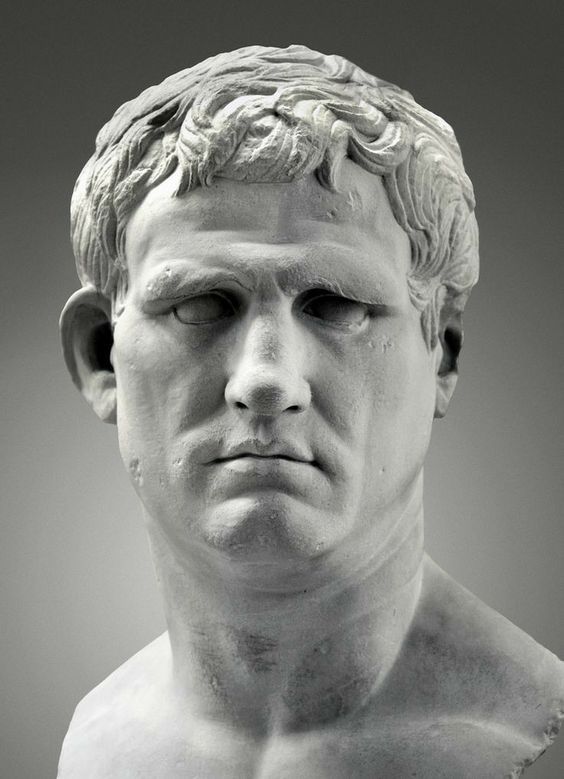
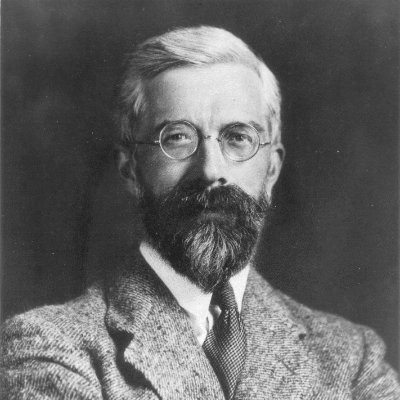
This is Marcus Agrippa. His genius would revolutionize Ancient Rome and the world. Let's dive into the forgotten story of one of the greatest architects of all time... 🧵
Beyond the Cosmic Veil tweet media
English
587
2K
11.9K
3.4M
Radu Piturlea retweetledi
The Knowledge Archivist
The Knowledge Archivist@KnowledgeArchiv·
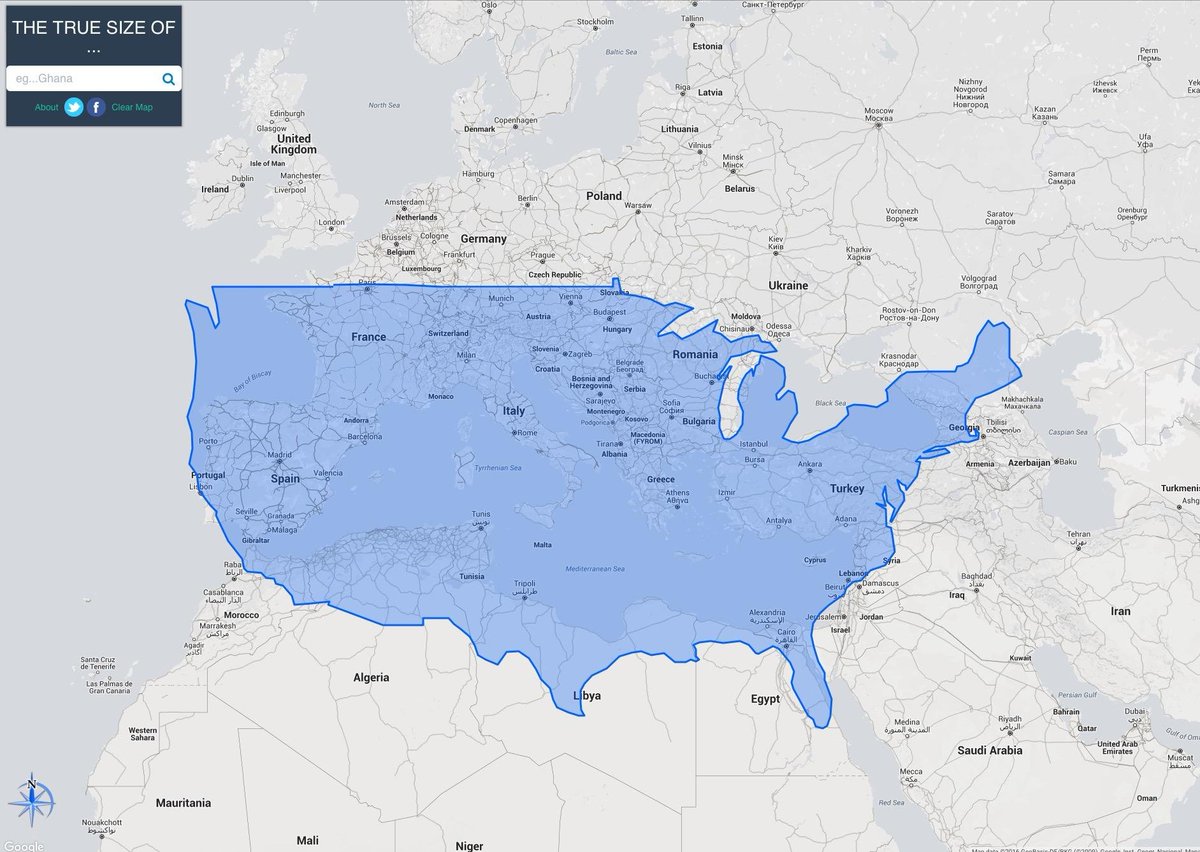
Mind-blowing. If you swing the US over to the same latitude in Europe, guess where it lands...
The Knowledge Archivist tweet mediaThe Knowledge Archivist tweet media
English
97
228
4.7K
531.8K
Radu Piturlea retweetledi
Saul Sadka
Saul Sadka@Saul_Sadka·
Our century is the Unipolar Century. Goodbye "Multipolar World" fantasists, your plans didn't work out. The IRGC are already toast as a strategic power-projection threat, and like Venezuela, soon enough their petrochemical production will be under US oversight. That means it’s over for China’s superpower dreams. They’re just a low-end plastics factory now, with a population that will dwindle to less than that of the USA within 50 years. And Moscow hardly even registers anymore. This is the new world order—the world has shifted as dramatically this week as it did in 1945. This was a silent WWIII. For America, World War III turned out to be the Maduro raid and a few weeks of bombing in Iran. And the Pearl Harbor was October 7, and Israel was Churchill’s Britain, standing alone against the fascists until America showed up late.
Saul Sadka tweet media
English
99
186
844
99.1K
Radu Piturlea retweetledi
LiorLefineder
LiorLefineder@lefineder·
The more analyses I read about Napoleonic battles, the more incredible Napoleon looks. In a study of 945 French Engagements in the Napoleonic wars, the strongest predictive variable of French Success is Napoleon's presence on the battlefield. While a S.D. increase in the ratio of French to enemy troops raises the odds of success to loss by 30%, Napoleon's battlefield command raises success odds by 500% (times 5). As the Duke of Wellington famously noted, Napoleon's presence on the field is worth "forty thousand men."
LiorLefineder tweet media
English
36
224
2.5K
274.1K
Radu Piturlea
Radu Piturlea@radupitz·
Marco Rubio is Trump’s Marcus Agrippa.
English
0
0
0
43
Radu Piturlea retweetledi
Vlad Saigau
Vlad Saigau@VladSaigau·
A world with 10,000 Starships manufactured a year Elon floated a production end-state of ~10,000 Starships per year. When this happens is beside the point; the number tells us how SpaceX is thinking about the terminal cost regime. If Starship manufacturing truly industrializes, what happens to $/kg, and what becomes economically viable? We applied Wright’s Law (conservative 85% aerospace learning rate) to Starship manufacturing to isolate how scale drives cost. Two representative regimes emerge: ~$35/kg at ~1,000 Starships/year (~10 average flights per vehicle). This is the intended near-term production milestones of Starbase. ~$10/kg at ~10,000 Starships/year (~20 average flights per vehicle) These are “lines in the sand” that define early-industrial vs fully-industrial cost floors. Interestingly, $/kg asymptotes quickly with reuse. Most cost reduction is captured in the first 10-20 flights (Falcon boosters already exceed 30 reuses). Beyond that, ops and payload economics dominate. Reuse moves the system along the curve, but manufacturing scale and operational throughput define the curve. Extreme reuse doesn’t get you to $10/kg. Industrial scale does. We then translated $/kg into human-scale economics (100 kg ≈ a person, or ≈10 kW of compute satellite) to see what actually becomes rational: • Point-to-point travel: ~$1,000 transport cost per passenger, about the same as transatlantic business class • 1 GW of orbital compute: ~$100-300M to place in orbit, a rounding error relative to the hardware. • Moon surface: ~$4k per person-equivalent • Mars surface: ~$5-6k per person-equivalent These aren’t mission costs at this stage, they’re transport economics. Which leads to the uncomfortable conclusion: Viability consistently precedes acceptance. Point-to-point still feels far away. Orbital infrastructure still feels exotic. Mars still feels implausible. But if $/kg collapses, these outcomes don’t require belief, they follow arithmetic. 10,000 Starships/year cannot be used by Mars alone; it implies continuous mass flow across people, cargo, propellant, and infrastructure - linking Earth, the Moon, and Mars. At that scale, Starship stops behaving like a rocket as we know them today, but as a cornerstone of human logistics infrastructure. Read the full breakdown here🧐 research.33fg.com/analysis/a-wor…
Vlad Saigau tweet media
English
44
83
918
164.5K
Radu Piturlea retweetledi
Andrew Côté
Andrew Côté@Andercot·
At some point this year you'll be voice chatting with a team of agents building your business, while riding in a self driving car, look out the window and see a humanoid robot walking by itself carrying some shopping bags. And just like that, you're in a new world.
English
73
51
722
25.7K
Radu Piturlea retweetledi
The Culturist
The Culturist@the_culturist_·
"Human beings are born with different capacities. If they are free, they are not equal. And if they are equal, they are not free." – Aleksandr Solzhenitsyn
The Culturist tweet media
English
306
6.2K
27.2K
1.3M
Radu Piturlea
Radu Piturlea@radupitz·
Very interesting take on the post-ASI inequality landscape: There are only a few clear moves you can make right now to position yourself for the Singularity—but let’s be real, we have ZERO idea what chaos or utopia unfolds after. I’m personally optimistic, also a bit anxious but I’m sure we’re living the most exciting time in history!
Nikola Jurkovic@nikolaj2030

Some people who write about the post-AGI future say something like "despite inequality skyrocketing, wealth will skyrocket too, so relatively poor people will still be rich by today's standards". This abstracts away a very important question - what happens to those who go into the singularity broke or in debt? Given that any chance of repaying their debts using their own labor gets eliminated once humans can no longer do economically productive labor, what is left for them to do? Do they remain in debt for billions of years? Similarly, what will those who control ASI do with the rest of the world? My guess is that the rest of the world will either die from attrition, or receive charity from those who control ASI. Fundamentally, the world will be divided into people who have control over superintelligence (which might be an empty set) and people who don't. The primary way for powerless people to survive will be to receive mercy from the powerful. This will be true at an individual scale and at an international scale. This is because people will no longer possess the means to trade their labor for the things they need to survive (food, water, shelter). Barring mercy, one way to survive is to enter ASI-proof agreements before ASI, and hope that the agreements will be preserved through the singularity. I think this is pretty unlikely to work, as I expect most contracts to become void or irrelevant after the singularity due to the massive changes to the world (thousands of years of history), unless they materially change the protocols of ASI training deployment (e.g. verifiable changing of the constitution, access controls). We likely need an international ASI project for a nonviolent transition into a post-ASI world. My guess is that once specific people become insanely powerful due to ASI, they will be willing to give charity to everyone else, at least to prevent mass attrition among the groups of people they care about. While it might be expensive on an absolute scale to feed millions of people, it will cost a very small proportion of ASI-generated wealth to do this. And hopefully, those who control ASI will prevent the attrition of all of humanity instead of just a small subset. Sadly, the incentives for those who control ASI will be somewhat perverse, as letting the powerless die of attrition would free up space. And we should expect Earth real estate to be very valuable post-singularity given the sentimental value of Earth as a planet. All of this also holds if the number of humans who have any control of ASI is 0. Then, all of humanity completely depends on the mercy of the ASI.

English
0
0
1
51
Radu Piturlea retweetledi
Ada Lluch
Ada Lluch@AdaLluch·
Japan, Panama and South Korea turned out to be pretty amazing countries after they accepted help from the United States, by the way.
English
321
1K
10.8K
164.1K
Radu Piturlea
Radu Piturlea@radupitz·
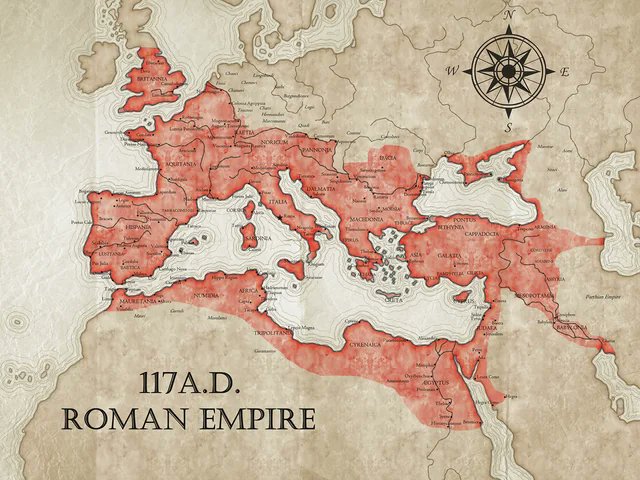
As I said multiple times these past few years, America is not in decline is just getting started… is in its late Republic phase transitioning into Empire phase; then we will have the true Pax Americana
English
16
16
377
75.4K
Radu Piturlea retweetledi
Dwarkesh Patel
Dwarkesh Patel@dwarkesh_sp·
New blog post w @pawtrammell: Capital in the 22nd Century Where we argue that while Piketty was wrong about the past, he’s probably right about the future. Piketty argued that without strong redistribution of wealth, inequality will indefinitely increase. Historically, however, income inequality from capital accumulation has actually been self-correcting. Labor and capital are complements, so if you build up lots of capital, you’ll lower its returns and raise wages (since labor now becomes the bottleneck). But once AI/robotics fully substitute for labor, this correction mechanism breaks. For centuries, the share of GDP that goes to paying wages has been 2/3, and the share of GDP that’s been income from owning stuff has been 1/3. With full automation, capital’s share of GDP goes to 100% (since datacenters and solar panels and the robot factories that build all the above plus more robot factories are all “capital”). And inequality among capital holders will also skyrocket - in favor of larger and more sophisticated investors. A lot of AI wealth is being generated in private markets. You can’t get direct exposure to xAI from your 401k, but the Sultan of Oman can. A cheap house (the main form of wealth for many Americans) is a form of capital almost uniquely ill-suited to taking advantage of a leap in automation: it plays no part in the production, operation, or transportation of computers, robots, data, or energy. Also, international catch-up growth may end. Poor countries historically grew faster by combining their cheap labor with imported capital/know-how. Without labor as a bottleneck, their main value-add disappears. Inequality seems especially hard to justify in this world. So if we don’t want inequality to just keep increasing forever - with the descendants of the most patient and sophisticated of today’s AI investors controlling all the galaxies - what can we do? The obvious place to start is with Piketty’s headline recommendation: highly and progressively tax wealth. This might discourage saving, but it would no longer penalize those who have earned a lot by their hard work and creativity. The wealth - even the investment decisions - will be made by the robots, and they will work just as hard and smart however much we tax their owners. But taxing capital is pointless if people can just shift their future investment to lower tax countries. And since capital stocks could grow really fast (robots building robots and all that), pretty soon tax havens go from marginal outposts to the majority of global GDP. But how do you get global coordination on taxing capital, when the benefits to defecting are so high and so accessible? Full automation will probably lead to ever-increasing inequality. We don’t see an obvious solution to this problem. And we think it’s weird how little thought has gone into what to do about it. Many more thoughts from re-reading Piketty with our AGI hats on at the post in the link below.
English
209
236
2.3K
1.5M
Radu Piturlea retweetledi
Pedro Domingos
Pedro Domingos@pmddomingos·
Dear Europeans, it’s not international law that keeps you safe. It’s America.
English
5.7K
6.5K
73.6K
4M
Radu Piturlea retweetledi
Andrew
Andrew@sranysovok·
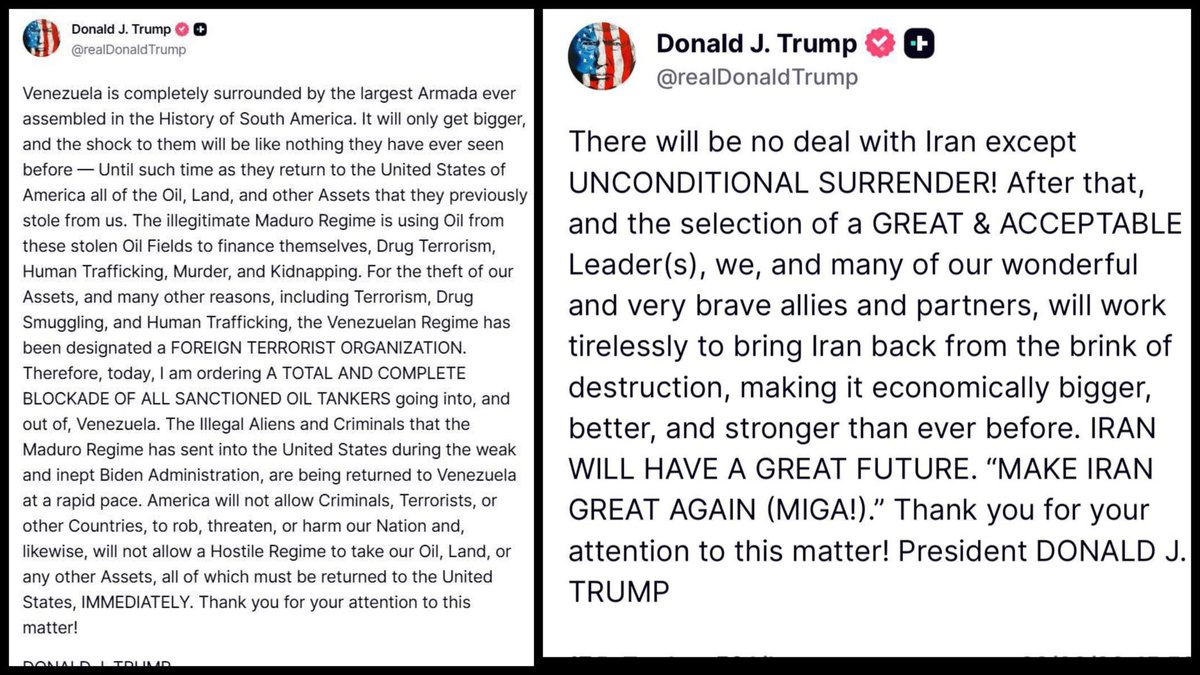
> annexes a country 1.5 times bigger than Ukraine, with an ocean in between > in 3 hours
Andrew tweet media
English
219
1.1K
31.2K
1.3M
Radu Piturlea retweetledi
Dr. Eli David
Dr. Eli David@DrEliDavid·
"Rugged individualism" 🇺🇲 delivering FAFO to "the warmth of collectivism" 🇻🇪
English
1.3K
9.4K
56K
2.3M
Radu Piturlea retweetledi
Andrew Côté
Andrew Côté@Andercot·
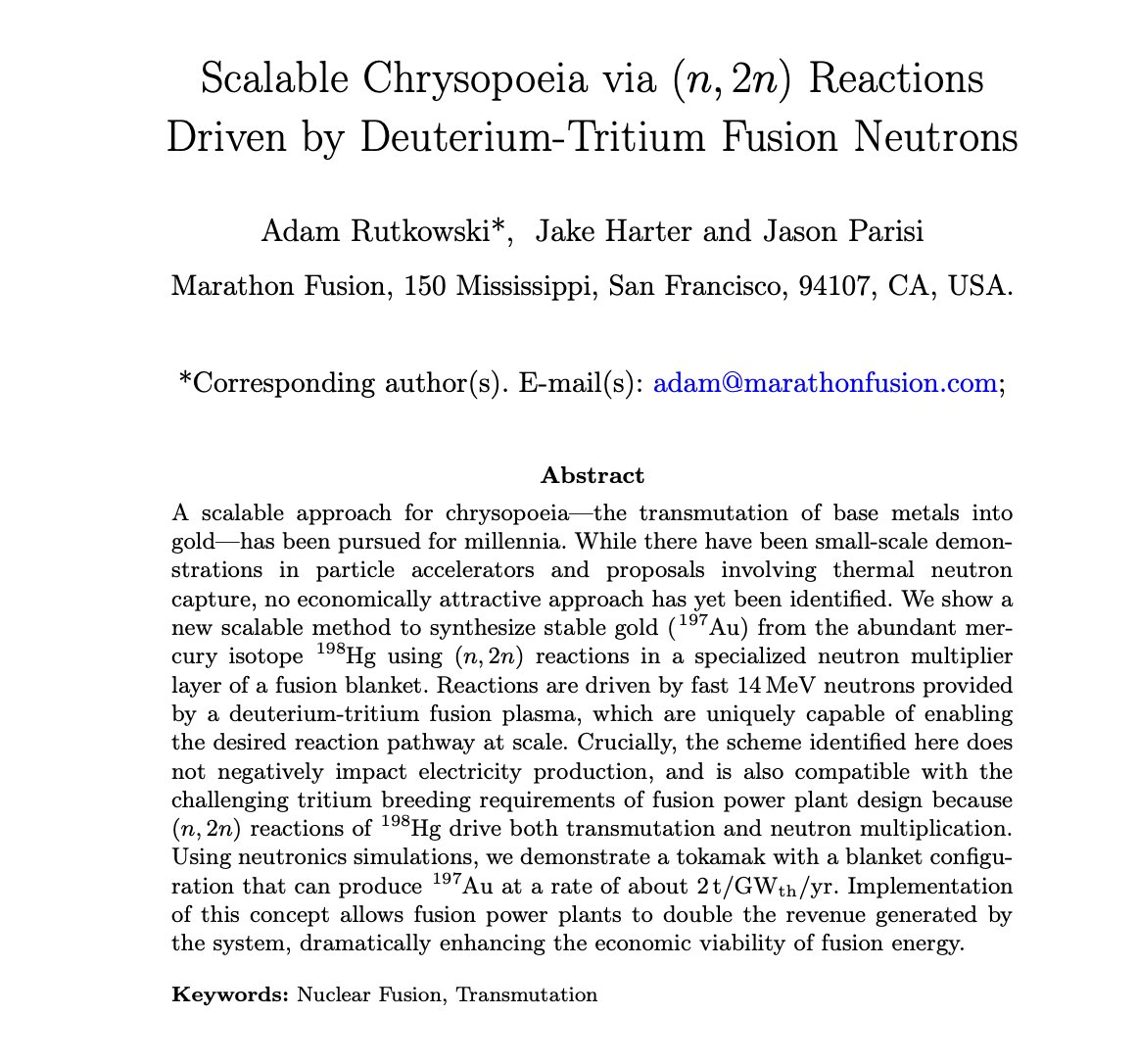
I must say that the most hilarious twist of tech trajectories of 2025 was the fusion industry realizing they could *double* the economics of fusion reactors by using the neutron blanket to.... Transmute Mercury into Gold. Alchemy is so back
Andrew Côté tweet media
English
196
1.3K
13.4K
406.5K