Rafael Albuquerque

59.8K posts

Rafael Albuquerque banner
Rafael Albuquerque

Rafael Albuquerque

@rafaqueque

:wq

localhost Katılım Mart 2009
1.7K Takip Edilen870 Takipçiler
Sabitlenmiş Tweet
Rafael Albuquerque
Rafael Albuquerque@rafaqueque·
é para um estudo de mercado.
Português
3
1
1
0
Palantir
Palantir@PalantirTech·
Because we get asked a lot. The Technological Republic, in brief. 1. Silicon Valley owes a moral debt to the country that made its rise possible. The engineering elite of Silicon Valley has an affirmative obligation to participate in the defense of the nation. 2. We must rebel against the tyranny of the apps. Is the iPhone our greatest creative if not crowning achievement as a civilization? The object has changed our lives, but it may also now be limiting and constraining our sense of the possible. 3. Free email is not enough. The decadence of a culture or civilization, and indeed its ruling class, will be forgiven only if that culture is capable of delivering economic growth and security for the public. 4. The limits of soft power, of soaring rhetoric alone, have been exposed. The ability of free and democratic societies to prevail requires something more than moral appeal. It requires hard power, and hard power in this century will be built on software. 5. The question is not whether A.I. weapons will be built; it is who will build them and for what purpose. Our adversaries will not pause to indulge in theatrical debates about the merits of developing technologies with critical military and national security applications. They will proceed. 6. National service should be a universal duty. We should, as a society, seriously consider moving away from an all-volunteer force and only fight the next war if everyone shares in the risk and the cost. 7. If a U.S. Marine asks for a better rifle, we should build it; and the same goes for software. We should as a country be capable of continuing a debate about the appropriateness of military action abroad while remaining unflinching in our commitment to those we have asked to step into harm’s way. 8. Public servants need not be our priests. Any business that compensated its employees in the way that the federal government compensates public servants would struggle to survive. 9. We should show far more grace towards those who have subjected themselves to public life. The eradication of any space for forgiveness—a jettisoning of any tolerance for the complexities and contradictions of the human psyche—may leave us with a cast of characters at the helm we will grow to regret. 10. The psychologization of modern politics is leading us astray. Those who look to the political arena to nourish their soul and sense of self, who rely too heavily on their internal life finding expression in people they may never meet, will be left disappointed. 11. Our society has grown too eager to hasten, and is often gleeful at, the demise of its enemies. The vanquishing of an opponent is a moment to pause, not rejoice. 12. The atomic age is ending. One age of deterrence, the atomic age, is ending, and a new era of deterrence built on A.I. is set to begin. 13. No other country in the history of the world has advanced progressive values more than this one. The United States is far from perfect. But it is easy to forget how much more opportunity exists in this country for those who are not hereditary elites than in any other nation on the planet. 14. American power has made possible an extraordinarily long peace. Too many have forgotten or perhaps take for granted that nearly a century of some version of peace has prevailed in the world without a great power military conflict. At least three generations — billions of people and their children and now grandchildren — have never known a world war. 15. The postwar neutering of Germany and Japan must be undone. The defanging of Germany was an overcorrection for which Europe is now paying a heavy price. A similar and highly theatrical commitment to Japanese pacifism will, if maintained, also threaten to shift the balance of power in Asia. 16. We should applaud those who attempt to build where the market has failed to act. The culture almost snickers at Musk’s interest in grand narrative, as if billionaires ought to simply stay in their lane of enriching themselves . . . . Any curiosity or genuine interest in the value of what he has created is essentially dismissed, or perhaps lurks from beneath a thinly veiled scorn. 17. Silicon Valley must play a role in addressing violent crime. Many politicians across the United States have essentially shrugged when it comes to violent crime, abandoning any serious efforts to address the problem or take on any risk with their constituencies or donors in coming up with solutions and experiments in what should be a desperate bid to save lives. 18. The ruthless exposure of the private lives of public figures drives far too much talent away from government service. The public arena—and the shallow and petty assaults against those who dare to do something other than enrich themselves—has become so unforgiving that the republic is left with a significant roster of ineffectual, empty vessels whose ambition one would forgive if there were any genuine belief structure lurking within. 19. The caution in public life that we unwittingly encourage is corrosive. Those who say nothing wrong often say nothing much at all. 20. The pervasive intolerance of religious belief in certain circles must be resisted. The elite’s intolerance of religious belief is perhaps one of the most telling signs that its political project constitutes a less open intellectual movement than many within it would claim. 21. Some cultures have produced vital advances; others remain dysfunctional and regressive. All cultures are now equal. Criticism and value judgments are forbidden. Yet this new dogma glosses over the fact that certain cultures and indeed subcultures . . . have produced wonders. Others have proven middling, and worse, regressive and harmful. 22. We must resist the shallow temptation of a vacant and hollow pluralism. We, in America and more broadly the West, have for the past half century resisted defining national cultures in the name of inclusivity. But inclusion into what? Excerpts from the #1 New York Times Bestseller The Technological Republic: Hard Power, Soft Belief, and the Future of the West, by Alexander C. Karp & Nicholas W. Zamiska techrepublicbook.com
English
8.7K
7.2K
34K
35.8M
Oracle Red Bull Racing
Oracle Red Bull Racing@redbullracing·
We are pleased to announce a series of organisational changes within our technical department, aimed at reinforcing our focus on performance and innovation.
Oracle Red Bull Racing tweet media
English
95
783
7.3K
607.1K
Jack
Jack@jackunheard·
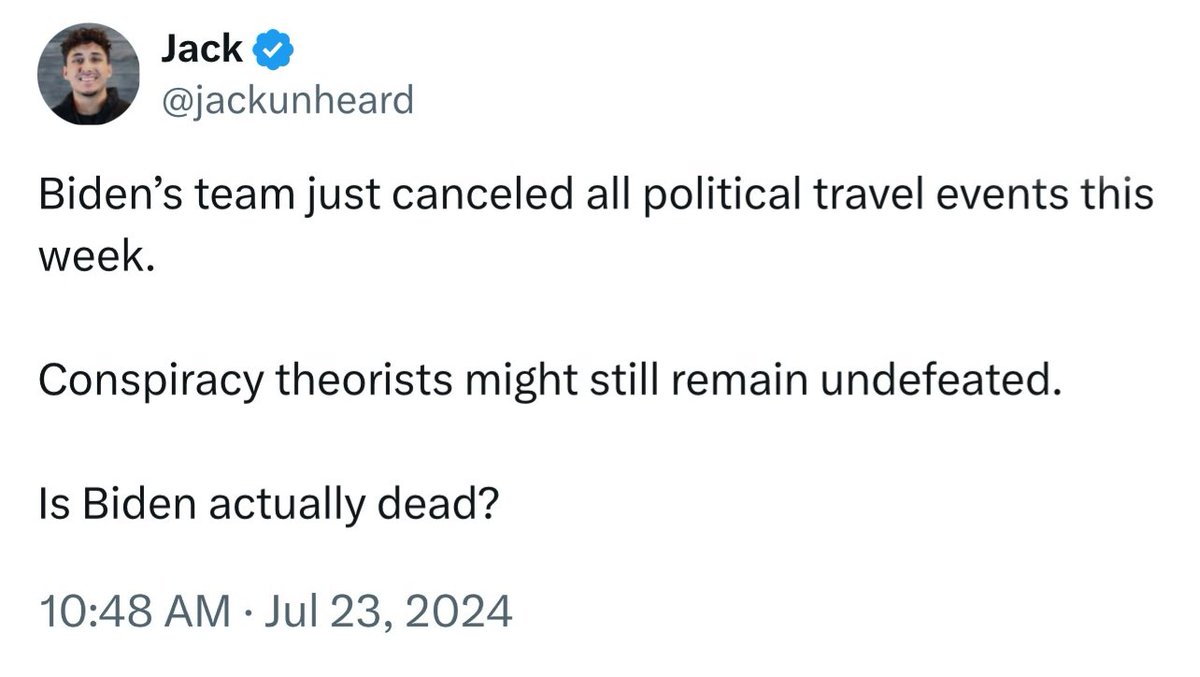
@Thiss_Youu 1) Biden canceled all plans after avoiding the media for days, Trump didn’t 2) Trump was locked into a critical mission to save an American life, Biden wasn’t 3) That’s just me posting, one single post, not dozens of accounts all at the same time. But good try.
English
234
16
208
200.1K
Rafael Albuquerque retweetledi
Ricardo Paiva
Ricardo Paiva@ricardoccpaiva·
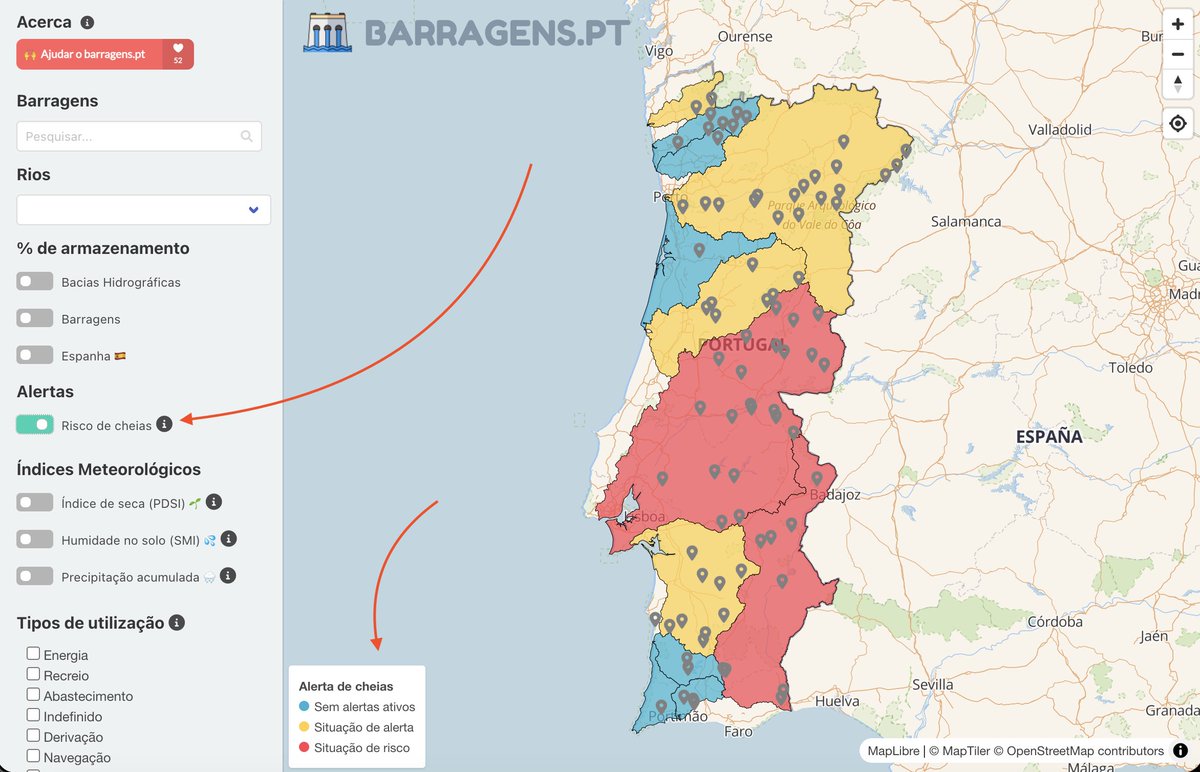
No contexto atual de cheias, o barragens.pt disponibiliza mais um dataset, desta vez para alertar sobre o risco de cheias por bacia hidrográfica. (Informação recolhida do portal InfoAgua da APA) Feedback é sempre bem-vindo!
Ricardo Paiva tweet media
Português
10
24
123
12K
Elon Musk
Elon Musk@elonmusk·
This is a political attack
Global Government Affairs@GlobalAffairs

French judicial authorities raided X’s Paris office today in connection with a politicized criminal investigation into alleged manipulation of algorithms and purported fraudulent data extraction. We are disappointed by this development, but we are not surprised. The Paris Public Prosecutor’s office widely publicized the raid—making clear that today’s action was an abusive act of law enforcement theater designed to achieve illegitimate political objectives rather than advance legitimate law enforcement goals rooted in the fair and impartial administration of justice. The Paris Public Prosecutor's Office is plainly attempting to exert pressure on X’s senior management in the United States by targeting our French entity and employees, who are not the focus of this investigation. The Prosecutor’s Office has ignored the established procedural mechanisms to obtain evidence in compliance with international treaties and X’s rights to defend itself. These procedural mechanisms are well known and used on a daily basis by judicial authorities around the world. The allegations underlying today’s raid are baseless and X categorically denies any wrongdoing. Today’s staged raid reinforces our conviction that this investigation distorts French law, circumvents due process, and endangers free speech. X is committed to defending its fundamental rights and the rights of its users. We will not be intimidated by the actions of French judicial authorities today. ___________________ Les autorités judiciaires françaises ont perquisitionné ce jour les bureaux parisiens de X dans le cadre d'une enquête pénale reposant sur des motivations politiques et faisant suite à des allégations de manipulation d'algorithmes et de prétendues extractions frauduleuses de données. Nous sommes déçus par ce développement mais il ne nous surprend pas. Le parquet de Paris a donné un large écho médiatique à cette mesure, démontrant ainsi qu’elle constitue un acte judiciaire abusif visant à atteindre des objectifs politiques illégitimes plutôt qu’à favoriser la plus juste application de la loi dans le respect d’une administration loyale et impartiale de la justice. Le parquet de Paris tente manifestement d’exercer une pression sur la direction générale de X aux Etats-Unis en visant notre entité française, étrangère aux faits poursuivis, ainsi que ses employés, au mépris des mécanismes procéduraux établis par les traités internationaux leur permettant de collecter des preuves ainsi que du droit de X de se défendre. Ces mécanismes et véhicules procéduraux sont parfaitement connus et utilisés quotidiennement par les autorités judiciaires du monde entier. Les allégations ayant justifié cette perquisition sont infondées et X réfute catégoriquement avoir commis la moindre infraction. Cette mise en scène ne fait que renforcer sa conviction que cette enquête viole le droit français, constitue un détournement de procédure et porte atteinte à la liberté d'expression. X est déterminée à défendre ses droits fondamentaux ainsi que ceux de ses utilisateurs. Nous ne nous laisserons pas intimider par les mesures mises en œuvre aujourd'hui par les autorités judiciaires françaises.

English
12K
23.4K
145.8K
39.9M
Rafael Albuquerque retweetledi
Shane Cashman
Shane Cashman@ShaneCashman·
Elon was hoping to get to Mars before his Epstein emails dropped.
English
229
2.8K
33.4K
628.5K
Rafael Albuquerque
Rafael Albuquerque@rafaqueque·
just a few
Andrej Karpathy@karpathy

A few random notes from claude coding quite a bit last few weeks. Coding workflow. Given the latest lift in LLM coding capability, like many others I rapidly went from about 80% manual+autocomplete coding and 20% agents in November to 80% agent coding and 20% edits+touchups in December. i.e. I really am mostly programming in English now, a bit sheepishly telling the LLM what code to write... in words. It hurts the ego a bit but the power to operate over software in large "code actions" is just too net useful, especially once you adapt to it, configure it, learn to use it, and wrap your head around what it can and cannot do. This is easily the biggest change to my basic coding workflow in ~2 decades of programming and it happened over the course of a few weeks. I'd expect something similar to be happening to well into double digit percent of engineers out there, while the awareness of it in the general population feels well into low single digit percent. IDEs/agent swarms/fallability. Both the "no need for IDE anymore" hype and the "agent swarm" hype is imo too much for right now. The models definitely still make mistakes and if you have any code you actually care about I would watch them like a hawk, in a nice large IDE on the side. The mistakes have changed a lot - they are not simple syntax errors anymore, they are subtle conceptual errors that a slightly sloppy, hasty junior dev might do. The most common category is that the models make wrong assumptions on your behalf and just run along with them without checking. They also don't manage their confusion, they don't seek clarifications, they don't surface inconsistencies, they don't present tradeoffs, they don't push back when they should, and they are still a little too sycophantic. Things get better in plan mode, but there is some need for a lightweight inline plan mode. They also really like to overcomplicate code and APIs, they bloat abstractions, they don't clean up dead code after themselves, etc. They will implement an inefficient, bloated, brittle construction over 1000 lines of code and it's up to you to be like "umm couldn't you just do this instead?" and they will be like "of course!" and immediately cut it down to 100 lines. They still sometimes change/remove comments and code they don't like or don't sufficiently understand as side effects, even if it is orthogonal to the task at hand. All of this happens despite a few simple attempts to fix it via instructions in CLAUDE . md. Despite all these issues, it is still a net huge improvement and it's very difficult to imagine going back to manual coding. TLDR everyone has their developing flow, my current is a small few CC sessions on the left in ghostty windows/tabs and an IDE on the right for viewing the code + manual edits. Tenacity. It's so interesting to watch an agent relentlessly work at something. They never get tired, they never get demoralized, they just keep going and trying things where a person would have given up long ago to fight another day. It's a "feel the AGI" moment to watch it struggle with something for a long time just to come out victorious 30 minutes later. You realize that stamina is a core bottleneck to work and that with LLMs in hand it has been dramatically increased. Speedups. It's not clear how to measure the "speedup" of LLM assistance. Certainly I feel net way faster at what I was going to do, but the main effect is that I do a lot more than I was going to do because 1) I can code up all kinds of things that just wouldn't have been worth coding before and 2) I can approach code that I couldn't work on before because of knowledge/skill issue. So certainly it's speedup, but it's possibly a lot more an expansion. Leverage. LLMs are exceptionally good at looping until they meet specific goals and this is where most of the "feel the AGI" magic is to be found. Don't tell it what to do, give it success criteria and watch it go. Get it to write tests first and then pass them. Put it in the loop with a browser MCP. Write the naive algorithm that is very likely correct first, then ask it to optimize it while preserving correctness. Change your approach from imperative to declarative to get the agents looping longer and gain leverage. Fun. I didn't anticipate that with agents programming feels *more* fun because a lot of the fill in the blanks drudgery is removed and what remains is the creative part. I also feel less blocked/stuck (which is not fun) and I experience a lot more courage because there's almost always a way to work hand in hand with it to make some positive progress. I have seen the opposite sentiment from other people too; LLM coding will split up engineers based on those who primarily liked coding and those who primarily liked building. Atrophy. I've already noticed that I am slowly starting to atrophy my ability to write code manually. Generation (writing code) and discrimination (reading code) are different capabilities in the brain. Largely due to all the little mostly syntactic details involved in programming, you can review code just fine even if you struggle to write it. Slopacolypse. I am bracing for 2026 as the year of the slopacolypse across all of github, substack, arxiv, X/instagram, and generally all digital media. We're also going to see a lot more AI hype productivity theater (is that even possible?), on the side of actual, real improvements. Questions. A few of the questions on my mind: - What happens to the "10X engineer" - the ratio of productivity between the mean and the max engineer? It's quite possible that this grows *a lot*. - Armed with LLMs, do generalists increasingly outperform specialists? LLMs are a lot better at fill in the blanks (the micro) than grand strategy (the macro). - What does LLM coding feel like in the future? Is it like playing StarCraft? Playing Factorio? Playing music? - How much of society is bottlenecked by digital knowledge work? TLDR Where does this leave us? LLM agent capabilities (Claude & Codex especially) have crossed some kind of threshold of coherence around December 2025 and caused a phase shift in software engineering and closely related. The intelligence part suddenly feels quite a bit ahead of all the rest of it - integrations (tools, knowledge), the necessity for new organizational workflows, processes, diffusion more generally. 2026 is going to be a high energy year as the industry metabolizes the new capability.

English
0
0
0
48
Santiago Abascal 🇪🇸
Santiago Abascal 🇪🇸@Santi_ABASCAL·
Hoy los portugueses tienen la oportunidad de elegir a @AndreCVentura frente a las políticas del partido único (de socialistas y populares) que traen pobreza e inseguridad. Adelante querido André, todo nuestro apoyo en esta cita histórica. ¡Viva 🇵🇹 y Viva 🇪🇸!
Español
205
1.3K
5.8K
107K