Ramon Costa

10.6K posts

Ramon Costa banner
Ramon Costa

Ramon Costa

@ramonmcgrady

γεράκι στοργικός

Katılım Nisan 2011
708 Takip Edilen305 Takipçiler
Sabitlenmiş Tweet
Ramon Costa
Ramon Costa@ramonmcgrady·
El otro día me enteré que esto existía y me ha ayudado a consolidar la idea de lo malvado que es el azúcar. Y está en todas partes. Subtitulado al castellano. youtube.com/watch?v=347_eJ…

YouTube video
YouTube
Español
1
0
1
0
Ramon Costa retweetledi
Cristina Rúbies
Cristina Rúbies@seibur_·
Això és exactament el que denuncia @robertamsterdam Hisenda et reclama primer tots els diners i, si no ets milionari, et deixa sense recursos per defensar-te i recuperar-los. Però, quan algú s’ho pot permetre, com Shakira, aconsegueix que li retornin els diners, més interessos i costes, que acabem pagant entre tots, mentre el funcionari ja ha cobrat el bonus. Quan polítics i funcionaris no assumeixen cap conseqüència per possibles prevaricacions, es genera aquesta perversió: ells ja han cobrat el bonus, mentre la ciutadania assumeix el cost de tot plegat.
EL MUNDO@elmundoes

#ÚltimaHora🔴 Shakira queda absuelta de fraude fiscal y Hacienda tendrá que devolverle 60 millones de euros más intereses #Echobox=1779092419" target="_blank" rel="nofollow noopener">elmundo.es/economia/diner…

Català
16
398
637
14.4K
Ramon Costa retweetledi
🇨🇭🏴󠁧󠁢󠁥󠁮󠁧󠁿InLucysHead🏴󠁧󠁢󠁥󠁮󠁧󠁿🇨🇭©
A chemistry professor posted a bonus question to an exam... Is Hell exothermic (gives off heat) or endothermic (absorbs heat)? Most of the students wrote proofs of their beliefs using Boyle's Law (gas cools when it expands and heats when it is compressed) or some variant. One student, however, wrote the following: First, we need to know how the mass of Hell is changing in time. So we need to know the rate at which souls are moving into Hell and the rate at which they are leaving. I think that we can safely assume that once a soul gets to Hell, it will not leave. Therefore, no souls are leaving. As for how many souls are entering Hell, let's look at the different religions that exist in the world today. Most of these religions state that if you are not a member of their religion, you will go to Hell. Since there is more than one of these religions and since people do not belong to more than one religion, we can project that all souls go to Hell. With birth and death rates as they are, we can expect the number of souls in Hell to increase exponentially. Now, we look at the rate of change of the volume in Hell because Boyle's Law states that in order for the temperature and pressure in Hell to stay the same, the volume of Hell has to expand proportionately as souls are added. This gives two possibilities: 1. If Hell is expanding at a slower rate than the rate at which souls enter Hell, then the temperature and pressure in Hell will increase until all Hell breaks loose. 2. If Hell is expanding at a rate faster than the increase of souls in Hell, then the temperature and pressure will drop until Hell freezes over. So which is it? If we accept the postulate given to me by Teresa during my Freshman year that, "it will be a cold day in Hell before I go out with you", and take into account the fact that I went out with her last night, then number 2 must be true, and thus I am sure that Hell is exothermic and has already frozen over. The corollary of this theory is that since Hell has frozen over, it follows that it is not accepting any more souls and is therefore extinct, leaving only Heaven, thereby proving the existence of a divine being, which explains why last night Teresa kept shouting "Oh, my God!" THIS STUDENT RECEIVED THE ONLY "A".
English
143
1.1K
7.9K
461.8K
Ramon Costa retweetledi
Moon Dragon
Moon Dragon@frozenaesthetic·
Emotions that don't exist in English: Sonder (German) The realization that every stranger you pass has a life as vivid and complex as your own Mono no aware (Japanese) The gentle sadness of knowing everything beautiful is temporary and loving it more because it will not last Merak (Serbian) A deep sense of contentment found in small moments. Shared laughter, warm light and feeling fully present Iktsuarpok (Inuit) The restless anticipation that makes you keep checking the door, waiting for someone who has not arrived yet Toska (Russian) A quiet heavy ache with no clear cause. A sadness that settles in and refuses to explain itself Forelsket (Norwegian) The euphoric rush of falling in love, before reality has a chance to interrupt it Kilig (Tagalog, Philippines) The sudden flutter in your chest when affection catches you off guard, a warmth that arrives before logic does Hiraeth (Welsh) A deep longing for a home that no longer exists, or maybe never did. A homesickness for a feeling rather than a place
English
248
888
5K
325.3K
Ramon Costa retweetledi
Francisco Javier Bronchalo ن
Carta de un cura de barrio a Silvia Abril: Estimada Silvia: Me llamo Francisco Javier. Soy un sacerdote del montón que vive y trabaja en un barrio obrero del sur de Madrid, en Leganés. En mi día a día no hay focos ni maquillaje; aquí la vida es muy auténtica. 👇
Español
433
5.3K
14.1K
721.4K
Ramon Costa retweetledi
pablo
pablo@pablogguz_·
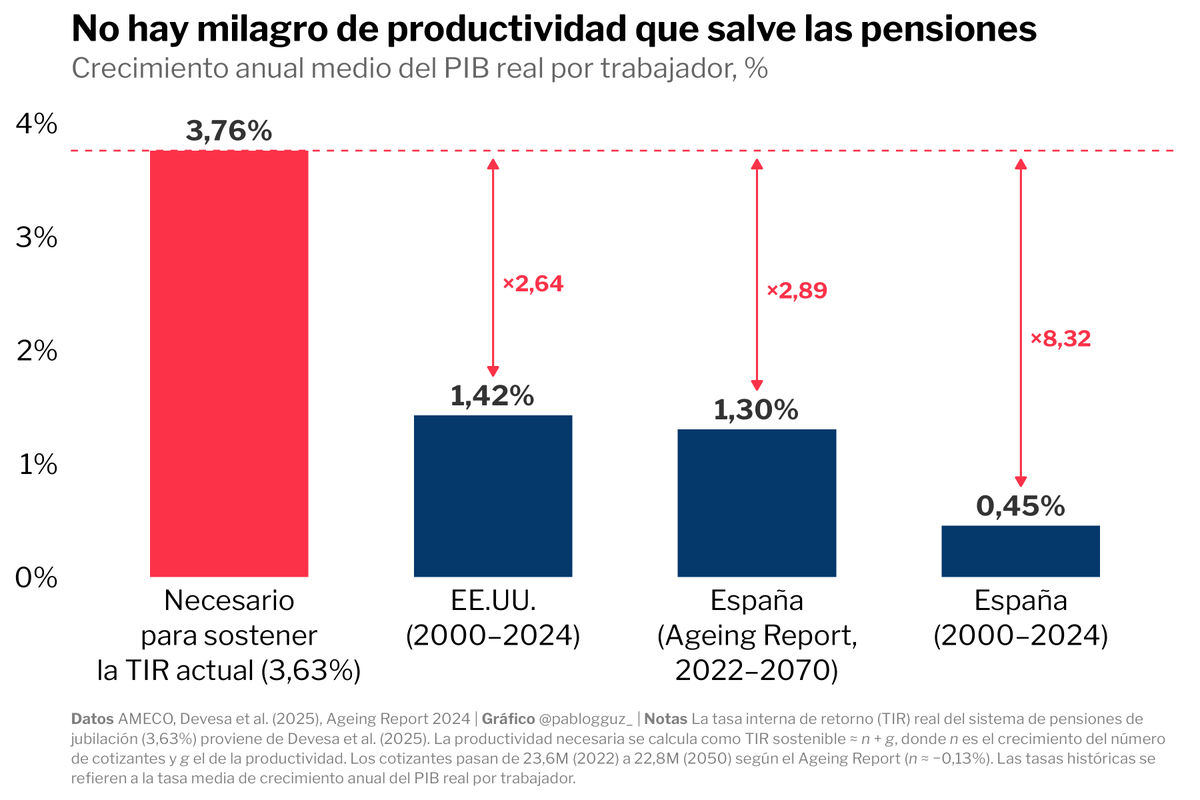
uno de los argumentos más utilizados en el debate de las pensiones en españa es el siguiente: "el problema no es que las pensiones sean altas, es que los salarios son bajos" hay que reconocerle una virtud: es políticamente inmaculado. ¿quién va a estar en contra de que suban los salarios? dices algo contra esto y te conviertes automáticamente en el enemigo del pueblo. subimos los salarios, suben las cotizaciones, se pagan las pensiones y todos felices. sin embargo, para sorpresa de nadie que haya hecho las cuentas alguna vez, es un planteamiento absurdo que no resiste cinco minutos de análisis serio. voy a intentar explicar por qué. todo sistema de reparto ofrece implícitamente una rentabilidad a sus cotizantes. aunque las cotizaciones no se capitalizan (se emplean directamente para pagar las pensiones de quienes ya están jubilados), existe una tasa de descuento que iguala, en valor presente, lo que un trabajador cotiza a lo largo de su vida laboral con lo que recibe como jubilado. esa tasa es lo que se conoce como la tasa interna de retorno (TIR) del sistema. ahora bien, esa TIR no puede ser cualquiera: un sistema de reparto solo es sostenible a largo plazo si la rentabilidad que promete es coherente con el crecimiento de sus ingresos. formalmente, la TIR sostenible de un sistema de reparto es aproximadamente igual a n + g, donde n es la tasa de crecimiento del número de cotizantes y g es la tasa de crecimiento de la productividad (es decir, de las cotizaciones por trabajador). en españa, la TIR real implícita del sistema se sitúa alrededor del 3,63% (fedea.net/una-vision-act…), mientras que los ingresos del sistema vienen creciendo en términos reales a una media del 1,4% anual entre 2005 y 2024. esa brecha de sostenibilidad (de más de dos puntos porcentuales) es el problema de fondo del sistema de pensiones español. una primera observación es que una subida de salarios no es lo mismo que un aumento del crecimiento de la productividad, aunque a menudo se confundan. imaginemos que mañana se produce un salto en los salarios, digamos del 20%. los ingresos por cotizaciones aumentan, lo que genera un alivio inmediato para pagar las pensiones actuales. pero la tasa de crecimiento posterior de los ingresos del sistema sigue siendo n + g. esto es lo que en economía llamamos un efecto de nivel: hay un salto puntual en los ingresos por cotizaciones, pero su tasa de crecimiento no se altera. ¿y qué pasa cuando los trabajadores que disfrutaron de ese salto salarial se jubilan? que sus pensiones se calculan sobre bases de cotización más altas. el sistema entonces tiene que pagar pensiones proporcionalmente mayores, y volvemos al punto de partida. en otras palabras, un efecto de nivel no soluciona un problema de tasa. es como intentar llenar un cubo con un agujero en el fondo: puedes echar más agua de golpe, pero si no tapas el agujero, el cubo se vuelve a vaciar. una segunda observación, más importante todavía, es que incluso si entendemos que lo relevante es el efecto de tasa (es decir, un aumento permanente del crecimiento de la productividad, g), las cifras necesarias son sencillamente inverosímiles. hagamos las cuentas. el ageing report 2024 de la comisión europea proyecta que el número de cotizantes pasará de 23,6 millones en 2022 a 22,8 millones en 2050, lo que implica un crecimiento de n de aproximadamente -0,13% anual. con n negativo, toda la carga recae sobre g: la productividad del trabajo tendría que crecer a un ritmo del 3,76% anual de forma sostenida para cerrar la brecha. ¿es esto remotamente plausible? el PIB por trabajador en estados unidos (la economía frontera del mundo, la que más innova, la que tiene los mercados laborales más dinámicos y flexibles) ha crecido a una media del 1,42% anual entre 2000 y 2024. en ese mismo periodo, el PIB por trabajador en españa ha crecido al 0,45% anual. el propio ageing report, en lo que ya es un supuesto heroico, proyecta un crecimiento de la productividad en españa a largo plazo del 1,3% anual (casi tres veces la tasa observada desde el año 2000). y aun así, esa cifra se queda muy lejos de lo necesario. españa tendría que crecer en productividad más del doble que estados unidos (y unas ocho veces más rápido que su propio ritmo de las últimas dos décadas), de forma sostenida, para que la subida de salarios resolviese el problema de las pensiones. no ha ocurrido en ningún periodo de la historia económica moderna de ningún país avanzado. el argumento de que "el problema no son las pensiones, son los salarios" confunde, por tanto, dos cosas distintas. un aumento puntual de los salarios genera un efecto de nivel que ayuda transitoriamente pero no altera la sostenibilidad a largo plazo del sistema. y un aumento permanente de la productividad del calibre necesario es un absoluto disparate (estamos hablando de que españa tendría que multiplicar por ocho su ritmo de crecimiento de la productividad de las últimas dos décadas, de forma sostenida, indefinidamente). se puede repetir lo contrario las veces que se quiera, pero el problema del sistema de pensiones español no es de salarios: es que promete una rentabilidad que la economía no puede generar. punto. y quien no lo entienda tiene un problema con la aritmética básica, no con las pensiones.
pablo tweet media
Español
20
201
616
47.5K
Ramon Costa
Ramon Costa@ramonmcgrady·
@Diletantez @GangasMIR O igual es gente muy lista, que no se ha entretenido en sacar buenas notas con trabajos que no les aportaban, o peor, haciendo la pelota a algún profesor con ego y se han centrado en entrenar para el MIR, que es la nota que saben que más cuenta. Podría ser, no?
Español
0
0
0
209
Diletante
Diletante@Diletantez·
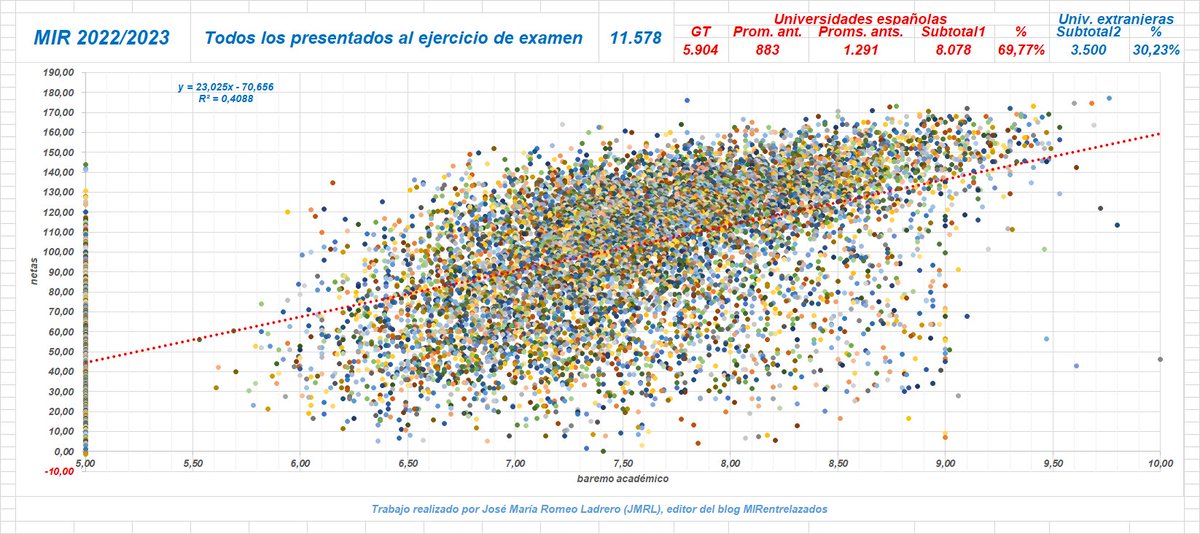
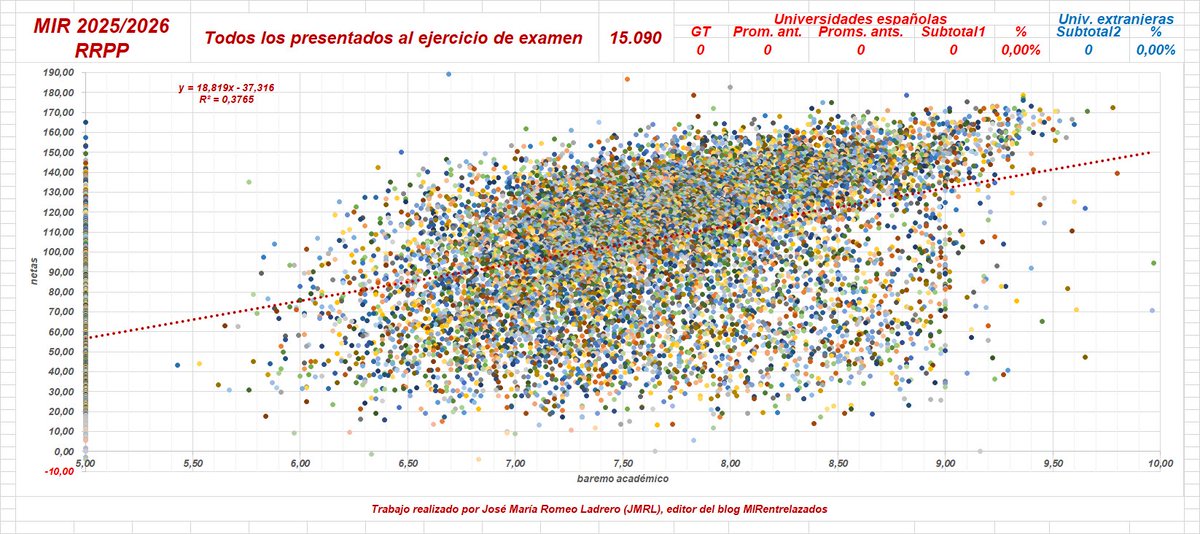
@GangasMIR Ya el año pasado pasaron cosas raras. Esto es de un artículo del El Mundo:
Diletante tweet mediaDiletante tweet media
Español
2
8
64
19K
Diletante
Diletante@Diletantez·
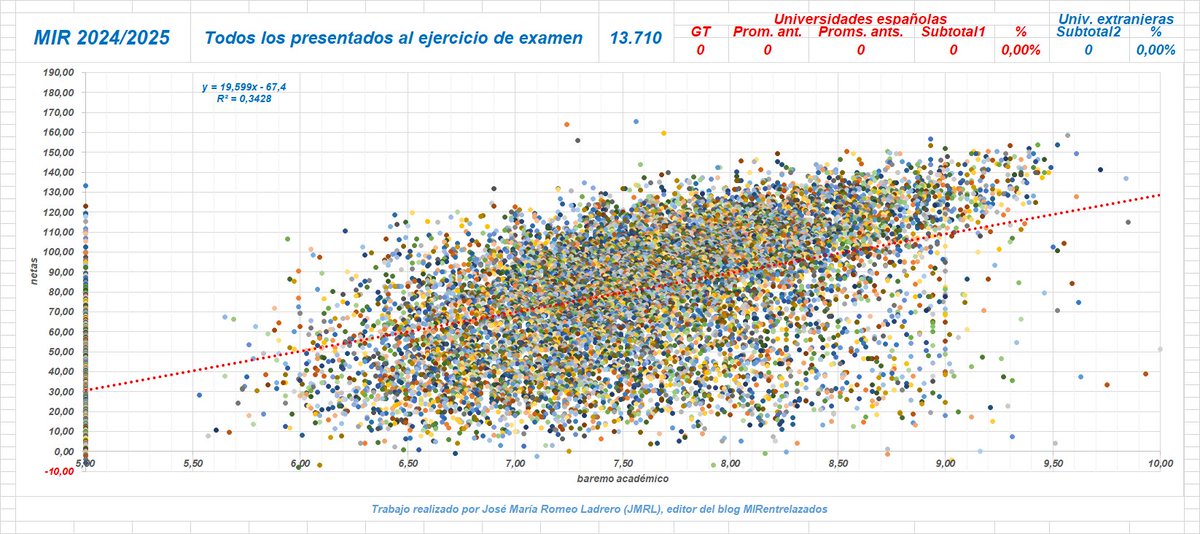
Están pasando cosas un poco raras en el MIR. Ya el año pasado los mejores resultados fueron outliers, pero este año, la nº 1 ha tenido el mejor resultado de la historia, con un expediente muy mediocre. No es imposible, pero es extraordinariamente anómalo (vean la última gráfica).
Diletante tweet mediaDiletante tweet mediaDiletante tweet mediaDiletante tweet media
mir64@mir64_

Con ese expediente, el resultado esperado era 90 netas. Con ese resultado esperado, la probabilidad de sacar 188 netas es menor de 1 entre 3 millones. La probabilidad de que te toque el gordo es de 1 entre 100 mil. Es decir, es más de 30 veces más probable que te toque el gordo.
Español
50
246
1.3K
421.9K
Ramon Costa retweetledi
Michael Strong
Michael Strong@flowidealism·
If your child becomes a reader, about 80% of the education job is already done. That's my honest assessment after working in education for over thirty years. Everything else is secondary. Most parents think science education is important. Yes it is. But if you can't read the biology textbook, you're not going to learn biology. Reading is the meta-skill that enables all other skills. History requires reading. Science requires reading. Even math increasingly requires reading as it becomes more sophisticated. The child who reads voraciously will figure out everything else. The child who doesn't will struggle with everything.
English
417
4.3K
26.2K
2M
Ramon Costa retweetledi
Aakash Gupta
Aakash Gupta@aakashgupta·
Most people will read this and think optimists live longer because they eat better and exercise more. The study says something wilder. Lee et al. controlled for smoking, diet, exercise, alcohol, depression, BMI, and socioeconomic status. The longevity effect still held. The most optimistic quartile lived 11 to 15% longer and had 1.5 to 1.7x odds of reaching 85 even after removing every behavioral difference. Which means something is happening at the level of biology, not just habits. Rozanski’s meta-analysis across 229,391 participants found optimists carry 35% lower cardiovascular event risk. Blackburn’s Nobel Prize-winning lab at UCSF found pessimistic attitudes are associated with accelerated telomere shortening. Cortisol suppresses telomerase, the enzyme that rebuilds the protective caps on your chromosomes. So chronic negative expectation literally erodes the structures that keep your cells from aging. The loop runs: pessimistic cognitive style → sustained HPA axis activation → elevated cortisol → telomere degradation → accelerated cellular senescence. Optimists interrupt that loop at the top. They show less emotional reactivity to stressors, faster recovery from acute stress, and they default to reframing threats as challenges rather than catastrophizing. The part nobody talks about from this paper: the authors explicitly state optimism is modifiable. This isn’t a personality trait you’re born with. Cognitive reappraisal training, morning sunlight for cortisol rhythm regulation, deliberate breathing protocols for vagal tone, structured gratitude practices. All of these shift the prefrontal cortex patterns that determine where you sit on the optimism spectrum. A 35% reduction in cardiac events from a trainable psychological variable is a bigger effect size than most supplements on the market. That’s the real story buried in this abstract.
Sahil Bloom@SahilBloom

Major life hack: Be optimistic. The way you choose to perceive the world impacts every single area of your life. Choose wisely.

English
118
891
6.5K
1M
Ramon Costa retweetledi
George from 🕹prodmgmt.world
junior pm: i have to run my first global alignment meeting and i'm freaking out senior pm: what's your plan? junior pm: schedule the call, walk everyone through the proposal, get buy-in senior pm: how many people? junior pm: like 8 stakeholders across 4 time zones senior pm: and you're meeting them for the first time... in the alignment meeting? junior pm: well yeah. that's the point of the meeting senior pm: there's your problem junior pm: what do you mean? senior pm: alignment meetings don't create alignment junior pm: then what's the point? senior pm: they confirm alignment you already have junior pm: i don't follow senior pm: have you talked to any of these 8 people yet? junior pm: i sent them the pre-read senior pm: that's not talking junior pm: so i should... call them first? senior pm: every single one. 1:1. before the big meeting junior pm: that's 8 separate calls just to prep for 1 meeting senior pm: now you're getting it junior pm: seems like a lot senior pm: it's the whole job junior pm: what would i even say in these calls? senior pm: you're not saying. you're listening junior pm: listening to what? senior pm: their fears. their motivations. their hidden objections junior pm: why wouldn't they just say that in the meeting? senior pm: politics. pride. audience junior pm: so they'll tell me privately what they won't say publicly? senior pm: if you ask right junior pm: how do i ask right? senior pm: frame it as soliciting their expertise junior pm: "i'm new to this and want your input"? senior pm: exactly. people love feeling like the wise advisor junior pm: and then i just... shut up? senior pm: shut up and write everything down junior pm: what am i looking for? senior pm: conflicting goals between stakeholders. who wants what and why junior pm: ok say i do all this. what changes? senior pm: two things junior pm: go on senior pm: first, you adjust your proposal based on what you learned junior pm: makes sense senior pm: second, you sprinkle their exact phrases into your presentation junior pm: why? senior pm: people support what they helped create junior pm: even if they didn't technically create it senior pm: especially then junior pm: what about the difficult ones? the ones who'll disagree no matter what? senior pm: you pre-negotiate junior pm: how? senior pm: in your 1:1, you say "i know you have concerns about X. i can't fully address them. can you disagree and commit in the meeting?" junior pm: you can just ask that? senior pm: you'd be surprised how often the answer is yes junior pm: because you asked privately senior pm: because you respected them enough to ask junior pm: so the alignment meeting itself is basically... senior pm: a ceremony junior pm: confirming decisions already made senior pm: in hallways. in 1:1s. in coffee chats junior pm: the meeting before the meeting senior pm: now you're ready to run alignment
English
71
265
3.8K
292.7K
Ramon Costa retweetledi
Hvygens
Hvygens@Hvygens·
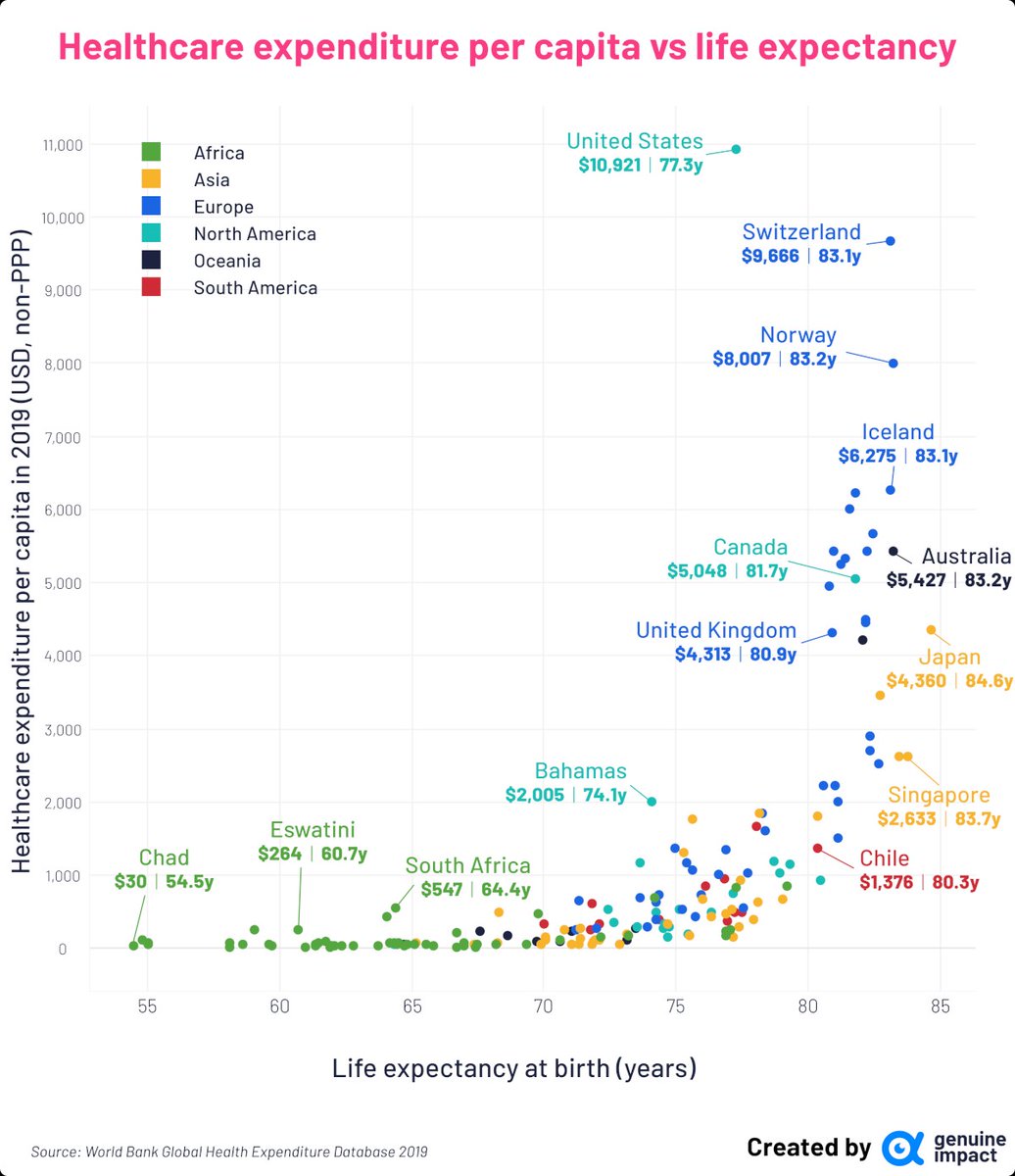
Básicamente, el gobierno de Singapur obliga a la gente a ahorrar una parte de entre el 8 y el 10,5% de sus sueldos brutos —dependiendo de la edad— en cuentas de ahorro médico exentas de impuestos (Medisave), los obliga a contratar al menos un seguro de salud básico provisto por el gobierno (MediShield), con la opción de un seguro privado más completo (un Integrated Shield Plan), y luego les hace pagar algo de su propio bolsillo por todo. En este sentido, los deducibles de MediShield se fijan en niveles relativamente altos, alrededor de S$1.500-$3.000. Y para MediShield, el copago mínimo es del 10%, pero incluso con seguro privado el gobierno exige copagos mínimos de al menos el 5%. Para calificar para la cobertura de internación de MediShield, normalmente necesitás estar hospitalizado al menos 8 horas. El seguro también cubre cirugías ambulatorias específicas aprobadas y tratamientos ambulatorios costosos como quimioterapia o diálisis. Esto es una barrera deliberada para evitar que el seguro se convierta en una forma de pagar consultas generales. Es esencialmente un esquema de seguros con distribución de riesgos (risk pooling) obligatorio, aunque el gobierno ofrece subsidios en las primas para las personas con menores ingresos. Por su parte, las cuentas Medisave tienen límites de extracción, poniendo un tope a cuánto de tus propios ahorros podés usar por día o por procedimiento. Una cuenta MediSave es propiedad personal tuya, aunque podés usar tu saldo para ayudar a pagar la atención de un familiar, y el saldo por encima de un mínimo se convierte en parte de tus ahorros generales para la jubilación. Cuando morís, el saldo pasa a tus herederos. La atención primaria la brindan médicos clínicos privados y se paga de bolsillo, aunque ahora con algunos subsidios para personas de ingresos bajos y medios a través del Community Health Assist Scheme. El gobierno también administra Policlínicos, que brindan atención primaria altamente subsidiada abierta a todos los ciudadanos, incluyendo vacunación, chequeos o el tratamiento de enfermedades agudas estándar. Sin embargo, los Policlínicos suelen estar muy concurridos, por lo que la gente que puede permitírselo generalmente va a un médico privado y paga un poco más. La atención hospitalaria básica se ofrece con tarifas altamente subsidiadas, pero si querés una habitación mejor en el hospital, por ejemplo una habitación privada con aire acondicionado, podés tenerla pagando más. Esto es en los hospitales públicos. Estas tarifas más altas se utilizan entonces, efectivamente, para subsidiar de forma cruzada el costo de la atención básica. También ofrecen subsidios de respaldo a través de otro esquema, MediFund, para personas que absolutamente no pueden pagar. Las decisiones se toman caso por caso. Y recientemente introdujeron un seguro de cuidados a largo plazo obligatorio, CareShield Life, para los mayores de 30 años. La idea central de todo el sistema es minimizar el riesgo moral (moral hazard) a través de los gastos del bolsillo y copagos y usar la discriminación de precios para focalizar los subsidios. Así, Singapur rechaza activamente lo "gratuito en el punto de atención" ("free at the point of use"), el modelo del NHS que critica Lee, como concepto y es activamente anti-igualitario, al tiempo que brinda a toda la población un alto estándar de atención. Los resultados son muy impresionantes, con desenlaces de clase mundial gastando solo alrededor del 3-5% del PIB en salud, del cual el 1-2,5% del PIB proviene del gobierno. Históricamente era más bajo, pero post-COVID, ha estado un poco por debajo del 5%. Para ser un país rico con una población relativamente envejecida (el 14% de la población tiene más de 65 años frente al 10% en el mundo y el 19% en la OCDE), esto es extremadamente bajo. Alrededor de la mitad que la mayoría de los países europeos, y un 25-30% del gasto de Estados Unidos.
Hvygens tweet media
Sonia Borsetti@s_borsetti

@Hvygens Cómo funciona el sistema de salud en Singapur?

Español
48
637
2.8K
261.9K
Ramon Costa retweetledi
Mihura
Mihura@XMihura·
Mientras llegan las bravas, deja que te siga contando. La muerte de los barrios no es solo cosa de que estén llenos de "panchitos". Hay algo más profundo, algo que empezó a moverse mucho antes, como una corriente subterránea que iba erosionando los cimientos de la sociedad sin que nos diéramos cuenta. Y es que, cuando la mujer entró al mercado laboral, no hubo relevo para eso que dejaba atrás. La crianza de los niños, el calor del hogar, las relaciones con los vecinos. Todo eso se daba por hecho, como si creciera solo, como si no costara nada. Pero costaba, y mucho. Antes, en cada casa, casi siempre había alguien. Una madre. Alguien que sabía de la vida de los vecinos. Alguien con tiempo para un café y una charla con la vecina en el descansillo, para bajar al mercado de abastos a por el pan del día y costillas para el estofado, para coserle un siete al pantalón del chándal del crío y repasar con él las tablas de multiplicar. Las mujeres ejercían un trabajo a jornada completa, sin nómina ni reconocimiento en las estadísticas del Ministerio de Trabajo, pero era el aceite que engrasaba la maquinaria de los barrios y de los pueblos. Su labor tejía la vida en común, aportaba ese calor de hogar que no se pagaba con pesetas. Cuando esa figura femenina colgó el delantal para fichar en la oficina, el ayuntamiento o el supermercado, ese tejido empezó a deshilvanarse. Nos vendieron la moto de la liberación, de la igualdad y la emancipación. Y ojo, nadie duda de que la moto hacía falta: muchas mujeres vivían atrapadas en vidas que no eran suyas, aguantando situaciones insostenibles, sin poder tomar las riendas porque dependían económicamente y legalmente de un hombre. El problema es que la "moto" que nos vendieron venía sin gasolina. "La mujer ya no dependerá del sueldo del marido, tendrá su propio dinero, su independencia. Irá a la universidad." Sonaba bien, ¿quién iba a oponerse a eso? Solo cretinos y retrógrados. La trampa, claro, estaba en la letra pequeña. Porque lo que importa no es cuánto ganas, sino cuánto ganas respecto a los demás. La vivienda, la cesta de la compra: son recursos limitados por los que hay que competir, y si en la familia de al lado trabajan dos, pueden pujar más alto por el piso en el barrio bueno. Para no quedarte atrás, tú también necesitas dos sueldos. Y cuando todas las familias hacen lo mismo, nadie gana ventaja, pero ya nadie puede dejar de hacerlo. Es la tragedia de los comunes aplicada a la vida familiar: una carrera en la que todos corren el doble para quedarse en el mismo sitio. Simplemente es el capitalismo funcionando como debe. Y como hacen falta dos sueldos para que los números cuadren a fin de mes, el tiempo se esfuma. Ya no hay tiempo para hacer la cena, para charlar con los vecinos, para cuidar de los mayores, para criar a los hijos, en general, ya no hay tiempo para hacer vida. Ante la falta de tiempo, el mercado y la tecnología, acuden con "soluciones" prácticas, listas para consumir. ¿Que no tienes un rato para pararte en la carnicería de Manolo, para charlar con él mientras te corta la carne como a ti te gusta? No importa, ahí tienes la carne en un blister de plástico, directa del supermercado a tu nevera y sin intercambiar palabra con nadie. ¿Que llegar a casa después de una jornada maratoniana y ponerse a cocinar parece una misión imposible? No pasa nada, un par de clics en el móvil y Glovo te manda a Wilson Javier con un par de smash burgers recalentadas. ¿Y el abuelo, que ya no puede valerse por sí mismo y necesita atención constante? Para eso está la residencia "Los Geranios Felices", donde hay geranios, pero no parecen felices. "No queda otra", nos decimos para consolar la conciencia o justificar la impotencia. Y sin tiempo y con el presupuesto justo, ¿cómo van a venir los hijos? Algunos resabidos hablan de que ahora mismo la juventud no tiene hijos por el "coste de oportunidad", y puede que tengan parte de razón. La gente de ahora quizá no esté dispuesta a renunciar a ciertas cosas que antes no había. Pero también hay realidad en las quejas de los jóvenes. El parque inmobiliario, el coste de la vida y hasta la cesta de la compra están optimizados para exprimir dos sueldos. Y si tú no pasas por el aro, otro pasará. Y si no, tranquilo que ya buscarán al pringado fuera. Entonces, traer críos al mundo se hace cada vez más complicado. Ante esta sequía de nacimientos, la inmigración es solo la siguiente ficha del dominó. Lo demanda el sistema. Exige crecimiento económico, es una máquina que por diseño no puede detenerse. Sin crecimiento económico no se pagan las pensiones y no te vota nadie, ni siquiera Txapote. Esa es la democracia que nos hemos dado. La inmigración simplemente es el parche que necesita el sistema para seguir rodando. Es la consecuencia directa de esa falta de manos, de esa falta de tiempo. Pero este parche, mal implementado, crea un bucle perverso: más inmigración significa más presión sobre las viviendas, lo que sube los alquileres; más oferta de mano de obra barata, lo que baja los sueldos; y en general, más competencia por los recursos limitados de las ciudades. Esto hace que la vida sea aún más difícil para las familias jóvenes que intentan establecerse. Y así el ciclo continúa: menos nacimientos locales, más necesidad de inmigración, más presión sobre el sistema. Y lo más triste de todo es que este sacrificio colectivo hubiera merecido la pena si al menos las mujeres estuvieran contentas con el cambio, pero solo hace falta escucharlas: "Estoy agotada", "No llego a todo", "Me he pedido reducción de jornada pero aun así...", mientras en el bolso llevan la cajita de Lexatín que les recetó el médico de cabecera, o ese comentario que sueltan después de la tercera copa de vino: "Me gustaría haber tenido hijos, pero no pudo ser." La ansiedad, la culpa y el agotamiento se han convertido en la banda sonora de una generación que, en teoría, lo tenía todo para ser feliz. Nunca hubo tantas bajas por depresión, nunca se consumieron tantos ansiolíticos, nunca hubo tanta sensación de soledad y de fracaso. La promesa de la emancipación se ha convertido, para muchas, en una carga doble: la de tener que ser excelentes en el trabajo y en casa, sin renunciar a nada, pero sin tiempo ni energía para disfrutar de ese todo que intentan abarcar. Esto ha creado una sociedad de soledad estructural. Sin hijos, desaparece la excusas que nos obligaban a tejer comunidad; sin vida de barrio, el espacio público se reduce a zonas de tránsito donde nadie se detiene. Y la tecnología, que prometía conectarnos, ha terminado de aislarnos. Ahora cada uno lleva su propio mundo en el bolsillo. Es el resultado lógico de haber priorizado la comodidad individual sobre todo lo demás: estamos solos porque hemos optimizado el contacto humano hasta eliminarlo. Así que aquí estamos, en un bar que ya no es lo que era, hablando de un barrio que ya no es lo que fue, en una ciudad que ya no reconocemos del todo. No es que todo tiempo pasado fuera mejor, ni mucho menos, pero sí que había algo en aquella forma de vivir que se ha perdido y que, quizá, merecía la pena conservar. No se trata de volver a "los años 60", ni de mandar a las mujeres a la cocina y a todos los inmigrantes "a su puto país". Pero hay que reconocer que hemos perdido algo valioso en el camino y que quizá deberíamos preguntarnos si hay forma de recuperarlo. ¿La solución? La desconozco, aunque solo escucho recetas fallidas: -Comunistas y "degrowthers" abogan por decrecer y redistribuir, ignorando que en un mercado global eso solo conduce a la extinción. Es selección natural, quien no crece es absorbido por el que sí. El tecnocapital es un tren en el que te subes o te arrolla. -Feministas insisten en que todo es una construcción social moldeable a voluntad. Pero antes que personas somos humanos, y la evolución no se borra a golpe de ley orgánica. Hay que ser honestos, también con la realidad. -Fascistas y nostálgicos ignoran que el totalitarismo es un callejón que no tiene salida en el mundo al que nos dirigimos. La dirección no debe imponerse: las preferencias deben nacer de la gente. Hay que contar con todos, también con las mujeres. -Los libertarios exigen libertad, acelerando el mismo mecanismo que nos ha llevado hasta aquí. Confiar en la evolución descontrolada del tecnocapitalismo es una apuesta muy arriesgada que puede llevarnos a lugares muy oscuros. Mi opinión es que la automatización y la inteligencia artificial están cambiando el tablero y ahora sería el momento de sentarnos todos a discutir cuales son las nuevas reglas del juego. Pero mientras discutimos, los barrios siguen transformándose, los pueblos muriendo y las ciudades creciendo sin rumbo. Y la vida sigue haciéndose cada vez más difícil para la gente normal. No es culpa de nadie en particular y es culpa de todos a la vez. Es el resultado de una visión del mundo que ha olvidado que el progreso solo tiene significado si mejora la vida de las personas.
Español
193
812
3.1K
359.2K
Ramon Costa retweetledi
Fran Perez
Fran Perez@franperez_co·
Repitan conmigo: China es un país capitalista autoritario. Lo único "comunista" que le queda es el nombre de un partido que, con el tiempo, se volvió más una estructura de poder que una ideología económica. La economía china funciona con incentivos de mercado, competencia feroz entre empresas, atracción de inversión extranjera, superávit comercial, exportaciones masivas y una burguesía empresarial gigantesca. No existe planificación central clásica como la de la URSS: lo que hay es capitalismo administrado, con libertad económica en muchos sectores y control político absoluto. El Partido Comunista mantiene el monopolio del poder, pero el modelo económico es básicamente capitalismo con control estatal, no comunismo. Que un Estado tenga un partido con nombre comunista no lo convierte automáticamente en tal. China hace rato juega con las reglas del mercado global y gana.
Español
992
689
3.1K
224K
Ramon Costa retweetledi
Mindset Machine 
Mindset Machine @mindsetmachine·
The Golden Rule when you're learning a new skill‼️👇
English
153
8.2K
38K
1M
Ramon Costa
Ramon Costa@ramonmcgrady·
@eldeu Especialmente en la salida de balón, una gozada tener a Araújo, que pocos sacrificios tienen que hacer los demás para ayudar, qué poco castigo posicional nos cuesta
Español
0
0
0
162
eldeu🌱
eldeu🌱@eldeu·
Y el bonus track es decir que Araujo muy bien, que para estos partidos es necesario. Me quitáis la puta vida en serio
Español
2
0
32
3.1K
eldeu🌱
eldeu🌱@eldeu·
Una cosa que ha hecho muy bien De Jong es entender que para parecer que ha jugado bien y solamente los que sabemos veamos que ha hecho un partido cobarde y sin carácter es darle todos los balones a Pedri
Español
6
10
78
5.4K
Ramon Costa retweetledi
Robert Sterling
Robert Sterling@RobertMSterling·
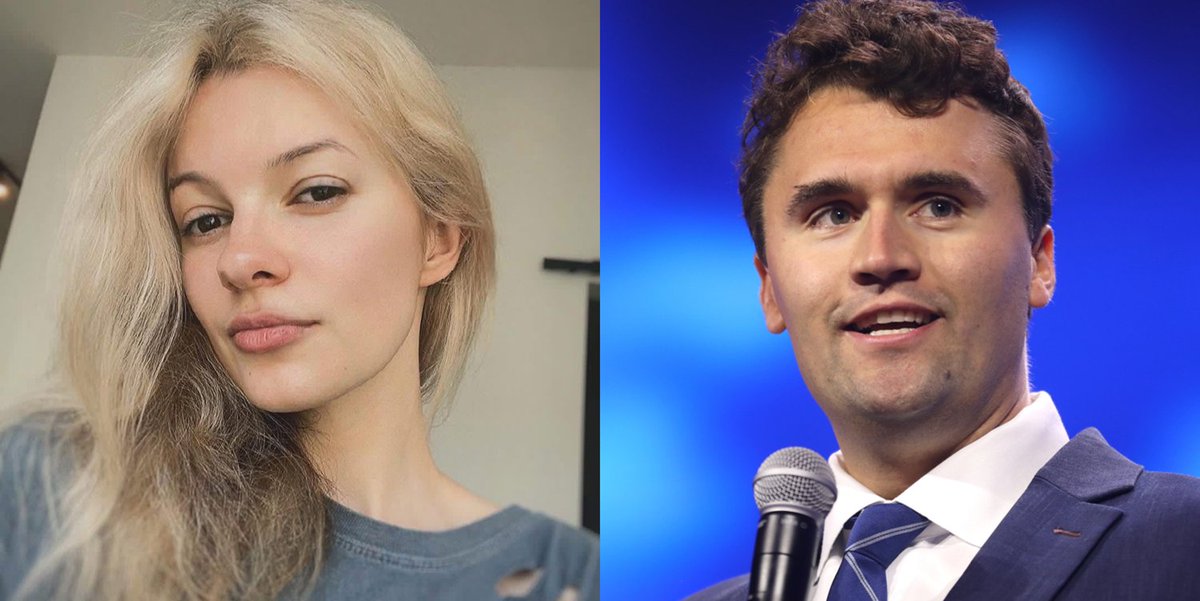
(Warning: long rant) My liberal friends are completely oblivious about how radicalizing the last week has been for tens of millions of normal Americans. Zero clue. I’m not talking about people who are “online”; I mean regular, everyday Americans. “Normies.” People who scroll through Facebook posts and Instagram reels from the Dutch Bros drive thru line. Political moderates who have water cooler chats about Mahomes touchdowns and Bon Jovi concerts, not Twitter threads or Rachel Maddow monologues. Millions of them. Tens of millions. They’re logging on, they’re engaging, and they’re furious. And I’ll be candid: They blame you guys. They blame the left. Regardless of whether you believe it to be justified, they think you’re the bad guys here. And they are reacting accordingly. I can already hear some of you racing toward the comments to start screeching in moral indignation, so I’m going to be blunt: Shut up and listen to what I’m telling you. Your movement will lose any semblance of relevance if you don’t develop some small measure of self-awareness, and—absent someone force-feeding you bitter medicine—you guys collectively lack the humility to do this on your own. Here are the facts: Fact 1. Tens of millions of Americans started the week seeing a 23-year-old blonde woman—a young woman in whom virtually every parent watching pictured their own daughter—stabbed in the neck by a career criminal. These people then found out the murderer had been released from jail 14 times over. Fact 2. Two days later, tens of millions of Americans watched a video of Charlie Kirk get murdered speaking to college students. Millions of these people knew who Charlie was; millions of them didn’t. Upon seeing the video, however, these normal Americans from across the land and across the political spectrum agreed that he was the victim of a terrible, fundamentally unjustifiable crime, and their hearts broke in sympathy for his family. Good people who had never even heard the name Charlie Kirk before wept. Fact 3. Immediately after seeing the footage of a peaceful young man get shot in the neck, these same people logged onto Facebook and Instagram (remember, we are talking about regular Americans, not perpetually online Twitter or Bluesky users) and saw some of their local nurses, school teachers, college administrators, and retail workers celebrating this horrific crime. Not just defending it, but cheering it. These are all facts. You may not like the implications of these facts, and we can certainly debate the underlying causes thereof, but, indisputably, they are nevertheless factual statements. Here’s what it means for you, the Democrats reading this: These normal, middle-of-the-road, non-political citizens just become politically active. They realized that politics cares about them, even if they don’t particularly care about politics. After watching Iryna Zarutska and Charlie Kirk both bleed out from the neck, they think their lives and the physical safety of their families—the bedrock of human society, the foundation of Maslow’s hierarchy of needs—depend on political activation, whether they desire it or not. These people are now sprinting—not jogging, not walking, but racing—to the right. Because they blame you guys for everything that just happened. When they see footage of Decarlos Brown stabbing a Ukrainian refugee to death, they don’t see just one demon-possessed man. They picture every university administrator, HR bureaucrat, and DEI apparatchik that ever lectured them about systemic racism, the “carceral state,” or the need to release violent crime suspects without bail in the name of social justice. They then think back to conversations they’ve had with their cop friends—their buddy from high school who quit the force after getting tired of being called a racist, their friend at the local YMCA who vents about having to release career criminals because Soros-funded prosecutors aren’t willing to file charges—and they realize everything the left has told them over the last five years has been utter bullshit. And they blame you. Because, even if you count yourself as a moderate Democrat, your party supported the district attorneys, city council members, and mayors that let fictitious concerns about mental health and racial justice supersede very real concerns for their family’s safety. When these Americans see blood erupt from the side of Charlie Kirk’s neck, they don’t see just a martyred political activist. They think of every extreme leftist they’ve ever met who (1) calls anyone to the right of Hillary Clinton a fascist and (2) constantly jokes—“jokes”—about punching Nazis and “bashing the fash.” They realize that there really do exist people who wish to see them dead for their moderately conservative political beliefs, their Christian faith, and even the color of their skin. They ask themselves if the violence visited upon Charlie might one day show up on their own doorstep. And they blame you. Because, even if you’re just a center-of-the-road liberal, you lacked the courage to police your own ranks. You let modern-day Maoist red guards run loose across every facet of society, and what started with social-media struggle sessions has now turned to 30-06 bullet holes. When these Americans log onto social media and see their neighbors justifying, celebrating, glorifying murder, they realize that some who walk among them are soulless ghouls at best, literally demon-possessed at worst. These people—whether they faithfully attend church every Sunday or only attend with relatives once a year, on Christmas Eve—start talking about things like spiritual warfare. They implicitly understand that no normal human casually celebrates the mortal demise of a peaceful person. And they blame you. Because, even if you condemned Charlie Kirk’s murder, they probably haven’t seen you condemn those in your own movement who cheered it on. They view you as complicit in allowing heartless fellow travelers to celebrate death, and it repulses them. For all of these situations, what has your response been? Nothing but bullshit. In response to Iryna Zarutska bleeding out on the floor of a train, you post bullshit statistics about reductions in reported crime, when everyone who’s ever been to a major urban center in the last decade knows that actual crime has skyrocketed, only for victims not to waste their time reporting it to cops that don’t have the manpower to respond and prosecutors that seek to downgrade as many felonies as possible to misdemeanor citations. In response to a 31-year-old man taking a bullet to the neck in front of his family, you post nothing but bullshit whataboutism. > “What about January 6th?” (Honest answer: After you let Liz Cheney spend two years operating a star chamber in the House, combined with countless other failed attempts at “lawfare” against Trump, no one cares anymore.) > “What about Mike Lee making a dumb joke on Twitter about some guy in a mask in Minnesota?” (No one outside of Utah, DC, or Twitter knows who Mike Lee even is.) > “What about Paul Pelosi?” (That’s not comparable to Charlie Kirk getting shot, and we all know it. And, again, Paul who?) > “What about regulations on assault rifles?” (That’s not going to get you very far when one of these killers used a knife and the other one used a common hunting rifle.) In response to teachers, healthcare workers, and thousands of other liberals cheering on Charlie’s murder, it’s nothing but more bullshit and misdirection. > “It’s not THAT many people celebrating!” (Yes, it is. Everyone has seen it on their Facebook and Instagram feeds.) > “I thought you guys didn’t support cancel culture.” (We don’t cancel people over their opinions; we’re more than happy to see people lose their jobs—especially their taxpayer-funded jobs—for actively cheering on murder, though. If you can’t see the difference, that’s your own shortcoming.) All bullshit. Not even smart bullshit, but stale, mid-grade, low-IQ bullshit. Ordinary Americans see right through it, and they don’t like how it smells. You probably don’t like hearing this. But you need to hear it. Because I’m right, and, as you reflect on this, you know I’m right. The ranks of my political movement gained millions of righteously angry new members this week. We have a mandate to ensure these crimes never happen again, and that’s exactly what we are now going to do. If you want to keep a seat at the table as we do so, you’d better clean house and start policing your own.
Robert Sterling tweet media
English
10.9K
36.8K
137.5K
25.6M
Ramon Costa retweetledi
B 🇪🇸
B 🇪🇸@b_bbirddd·
Si alguien ve el menor atisbo de extremismo u odio en esto es que está enfermo. Han matado a un hombre por su capacidad de hacer el bien y ayudar a los demás.
Español
45
960
5.2K
162.5K
Ramon Costa retweetledi
Andrej Karpathy
Andrej Karpathy@karpathy·
I am (slowly) re-reading the Tolkien legendarium (of which Lord of the Rings is a small part). The whole body of work is so incredible and there's nothing else like it... it dilutes other worlds of fiction. Wait - your story doesn't have a comprehensive history/mythology spanning multiple ages all the way back to a creation myth as detailed in separate volumes? You didn't first invent new languages and dialects for your characters? You didn't pack it with powerful themes and stories written it in a beautiful, archaic style and compose poems and songs alongside? It didn't take you multiple decades of iteration? And what of all the uncharted territory still remaining? Is Tom Bombadil one of the Ainur. Where are the Entwives. What happened to the two unaccounted Istari. Can we hear more about what it was like in Cuiviénen when the elves first awoke? Or to see the light of the two trees of Valinor. Or of the splendor of the caves of Aglarond. What's most on my mind though - the Tolkien legendarium is imo a concrete example of a height of culture. Does AI, today or soon, make it easier to reach this high via empowerment in both writing and ideation? Or harder, when quick wins are tempting and ~free, and an independent ability to create is stifled. If such a body of work is made again but now with heavy AI assistance, does it inspire the same wonder? What if thousands of them come out on demand with just a prompt? Why do you feel cheated when you learn that something your read was AI generated? Is it transient or a function of capability? Is it slop? What is slop? Or is wonder inseparable from its own creation myth of a lifelong obsession of a mind like your own? So many questions.
English
1K
1.3K
15.6K
9.2M
Ramon Costa retweetledi
El Catalán en Suiza
El Catalán en Suiza@catalanensuiza·
Un familiar metio 10k en acciones de banco Sabadell en 2020. Ahora tiene 120k 🤯 mejor performance que bitcoin
El Catalán en Suiza tweet media
Español
96
71
2K
257.5K