Sabitlenmiş Tweet
Bozidar
2.2K posts



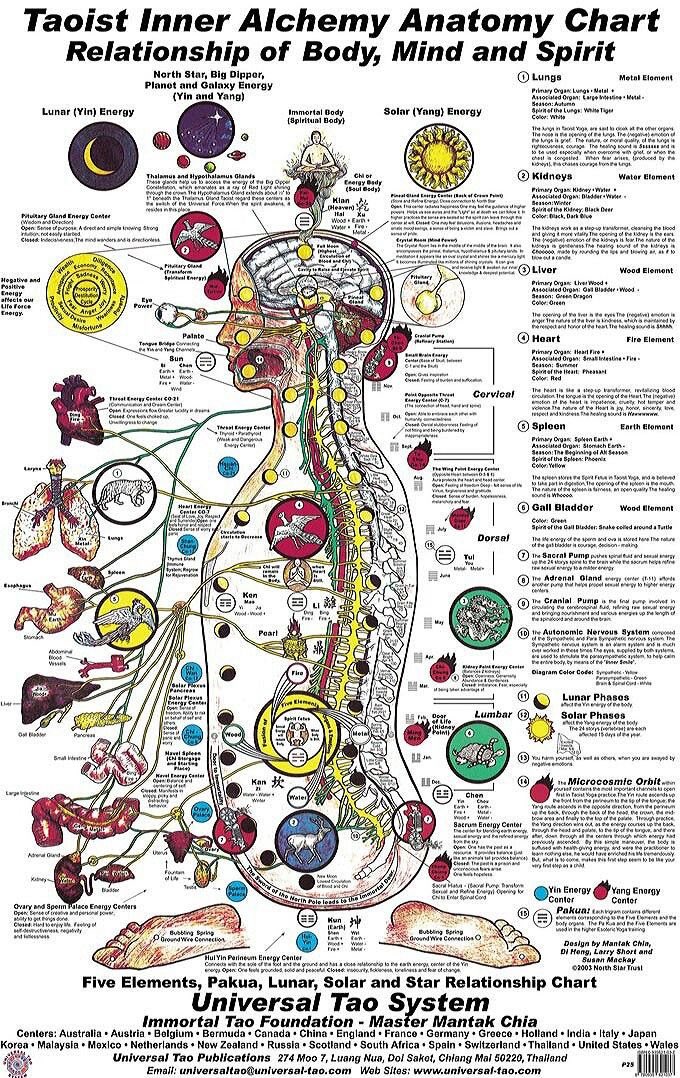
In Traditional Chinese Medicine, there is a secret, invisible door on your back, directly opposite your belly button that you should spend time breathing from and into. Feel where your belly is and follow it around to the back. Massage and tap this point to make contact and feel it expand and contract. Add deeply comforting warm water here (in your minds eye) as you breathe into it, like a funnel is opening a door that is either locked or very nearly closed and sits barely ajar. Just see it warm up and recognize your breath and illuminate this door. Over time the door energetically opens. If you want to know more about this point, it is known as the Mingmen (命门), the “Gate of Life.” In classical thought it holds our ministerial fire : the deep + foundational warmth that animates all our organ systems, especially our kidney Yang, but it also protects and anchors our kidney Yin. When you breathe into it, a few things are happening at once : The diaphragm descends and the back body expands. Most people breathe forward into the chest or belly, but the posterior body - the kidneys, lumbar fascia, deep spinal muscles, often stay tight and unmoving throughout our life. Directing breath to our mingmen point gently inflates that whole back field and softens chronic tension and ‘guarding’ (which is very common in people with adrenal fatigue, fear states, or long term depletion) It warms and activates our entire kidney system. In TCM, the kidneys govern our vitality, reproductive + vital, core essence (Jing), our bones, brain and willpower. Breathing into it softly restores warmth where there may be a cold lack of circulation + stagnation. It anchors and grounds our nervous systems downward. This is why it’s used in Daoist practices for anxiety, dissociation and scattered qi, as it moves our energy away from the upper body, mind and head. The body starts to feel heavier in a good way, more rooted into order and itself. Over time, breathing here hydrates our deep tissues, as the kidney system rules over our fluids and marrow. Further, this gentle breath expansion with breath improves the flow of blood and fluid, including through the fascia and around our spine, which can subtly nourish the yin over time. If someone has excess heat rising upward, agitation, insomnia, or dryness from burned out yin, breathing into the Mingmen is often used very subtly : imagine fogging up a mirror behind your navel, letting the back body widen without force. If done too aggressively, it can feel stimulating instead of nourishing, and I say this doubly for those who are depleted or who have chronic illness. Go slow to be able to work with it often. Do daily. How to feel it : The simplest way to feel it is to place one hand on the lower belly and one on the lower back, and let your inhale expand into both hands at once, like a sphere is inflating through the center of your body. Over time, the back hand starts to move more, and that’s when mingmen begins to “wake up” and open. This is a practice that take time. Regular practice will bring you into a grounded state, calm your adrenals and spirit and slowly open the door of life. My teacher always tells me : “This is the door your ancestors come through. ” Enjoy it, treat it like a somatic practice where you breathe as instructed and feel your adrenals settle out and even lower (your adrenals can absolutely melt and settle and lower) while you’re working on the bigger picture of opening the door. A practice of subtle connection.



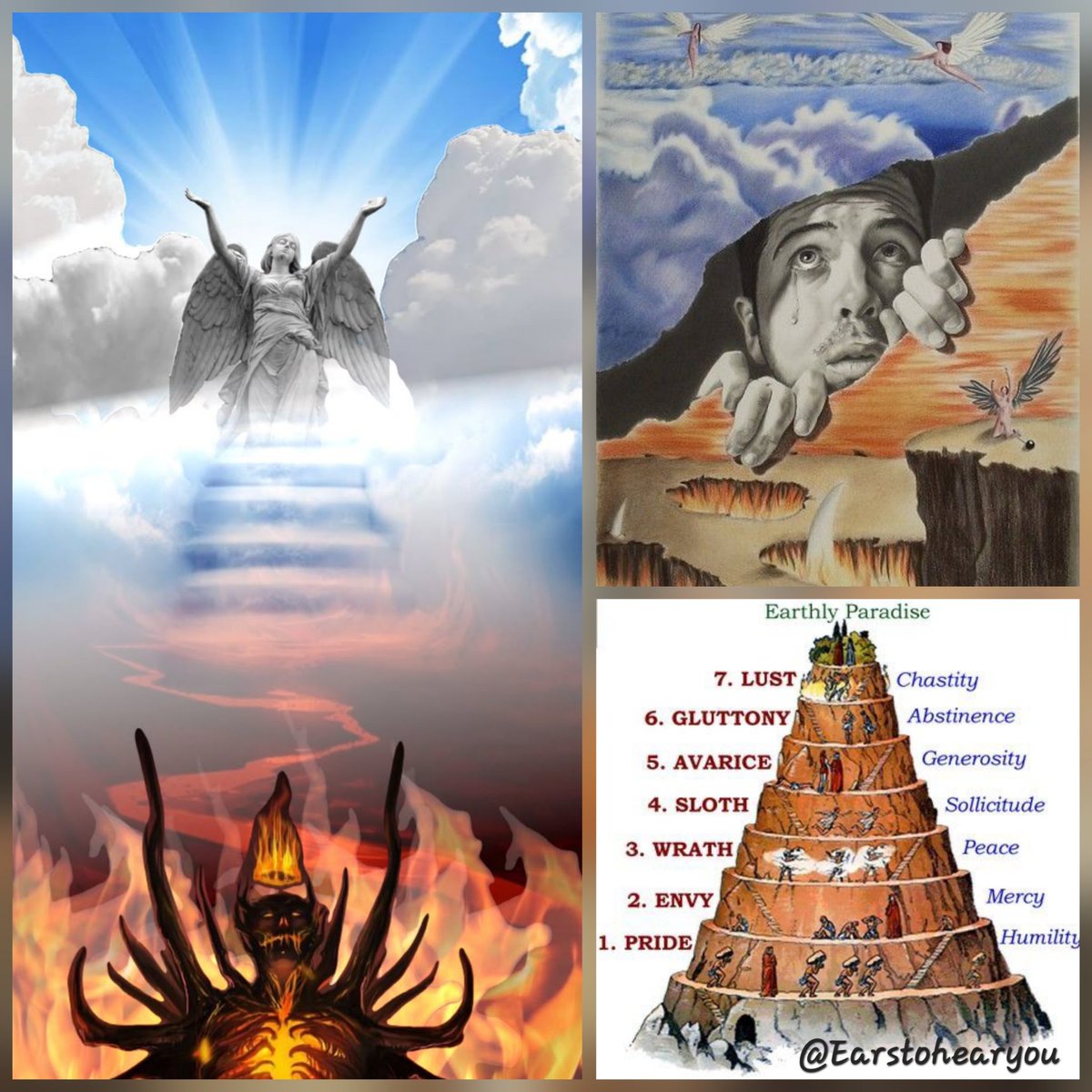
The Complete Structure of the 14 Lokas… From Bhu to Satya 🔥 The Puranic and Vedantic cosmology describes existence as layered planes of experience... These lokas are not merely places… they are levels of consciousness and karma. > Bhu loka… the physical world of human experience and action > Bhuvar loka… the subtle space of prana and ancestral realms > Svar loka… the celestial plane of refined enjoyment and punya > Mahar loka… the realm of great rishis absorbed in contemplation > Jana loka… the plane of higher beings established in knowledge > Tapa loka… the field of intense austerity and near liberation > Satya loka… the highest manifest realm of Brahma… beyond return for the realised 📌 Below the human plane are the seven lower lokas... > Atala… the realm of deep material absorption > Vitala… where gross enjoyment dominates > Sutala… the plane of powerful but bound beings > Talatala… the field of deluded technological and occult power > Mahatala… the realm of intense instinct and fear > Rasatala… the plane of darkness and aggression > Patala… the densest level of material identification 👉 Movement across lokas follows the law of karma and inner evolution... Human birth alone is the turning point where liberation is possible. You do not merely live on one plane, you evolve through them. 👉 Let me know if you want a detailed thread on this. 📌 Follow @_TheSanatani for more timeless wisdom of Sanatana Dharma. 📌 Support my work at... TheSanatani@axl / ko-fi.com/thesanatani







In 2016, Japanese biologist Yoshinori Ohsumi won the Nobel Prize for discovering how autophagy works. Here’s everything he found after 30+ years of research: Ohsumi used yeast cells (simple single-celled organisms used to study basic cellular processes) to identify the genes that control autophagy. He figured out how cells recognize damaged parts, wrap them in membranes, and break them down for recycling. (Before his work, scientists knew autophagy happened but had no idea how it actually worked at the molecular level) For you who don’t know, autophagy means “self-eating''..... Which basically means your cells identify damaged proteins, broken mitochondria & cellular waste, then break them down into reusable parts. Your body recycles those parts to build new structures, create energy & perform essential functions like: • Removing damaged mitochondria • Preventing protein buildup that causes Alzheimer's & Parkinson's • Regulating inflammation & immune function • Protecting against diabetes & cancer • Slowing cellular aging But how does autophagy get triggered? Ohsumi discovered that nutrient deprivation activates autophagy. When cells lack food or energy, they shift from ''growth mode'' to ''cleanup mode'' Fasting, calorie restriction & exercise all increase autophagy (you’ve been hearing your favorite health gurus talk about it – but now you know how it actually works). + You also need to know that autophagy runs at low levels constantly and is not exclusive to fasting. Now let’s get into the part most of you care about: Autophagy and aging. As you age, autophagy slows down, like most processes inside your body. Your cells don’t clean themselves as efficiently. Damage accumulates faster. As mentioned above, this speeds up aging and drives disease. Ohsumi’s research showed that you can support autophagy by: • Avoiding constant snacking (gives your body time to repair itself) • Exercising regularly (tells your cells to clean up and recharge) • Letting your body use stored energy (fat) • Reducing excess calorie intake (too much food keeps the body in growth mode) • Allowing periods of lower protein intake (constant protein keeps the body focused on building muscle instead of repairing and cleaning up damaged cells) Keep this simple rule: Create mild nutrient and energy stress so cells shift from growth mode to repair mode. To wrap it up, autophagy is by far one of the most important survival processes in biology. It’s how your cells take out the trash and recycle the parts to keep running. Without Ohsumi’s work, we wouldn’t know how fundamental this process is for health and longevity:
The Vedas never called food "fuel." They called it Anna Brahma - living intelligence. What you eat slowly becomes your thoughts, your moods, your destiny. A restless plate creates a restless mind. A sattvic plate creates clarity. Eat close to nature. Eat with gratitude. Let your meal become a silent meditation. Before fixing your mind fix your plate. #veda #food #sanatani