
Rob Larter

14K posts

Rob Larter banner
Rob Larter

Rob Larter

@rdlarter

Polar marine scientist. UK Science Lead in @GlacierThwaites Science Coordination Office. On Mastodon @[email protected] & Bluesky @polarrobs.bsky.social

Cambridge, UK Katılım Mayıs 2015
976 Takip Edilen5.9K Takipçiler
Rob Larter
Rob Larter@rdlarter·
@TonyJuniper @markrwilliamson Really? You think building a new reservoir at sea level in an area with tidal rivers and in a world in which the rate of sea level rise has doubled over the past 30 year is a good idea?
English
0
0
2
30
Tony Juniper
Tony Juniper@TonyJuniper·
@markrwilliamson We need to get that darned Fenland reservoir built, especially considering planned housing expansion on those aquifers.
English
7
2
9
540
Mark Williamson
Mark Williamson@markrwilliamson·
River flows in parts of the Upper Cam have to be augmented by pumping more water into them. Not much natural flow to reduce, a lot of the time.
Mark Williamson@markrwilliamson

Gov is funding “large-scale trials of nature-based solutions by @WaterREast in the Upper Cam: “aimed specifically at creating more resilient baseflows…If we can slow the flow and boost rates of aquifer recharge then we create a win-win for the environment and growth.” 4.

English
1
3
4
1.2K
Rob Larter retweetledi
Zeke Hausfather
Zeke Hausfather@hausfath·
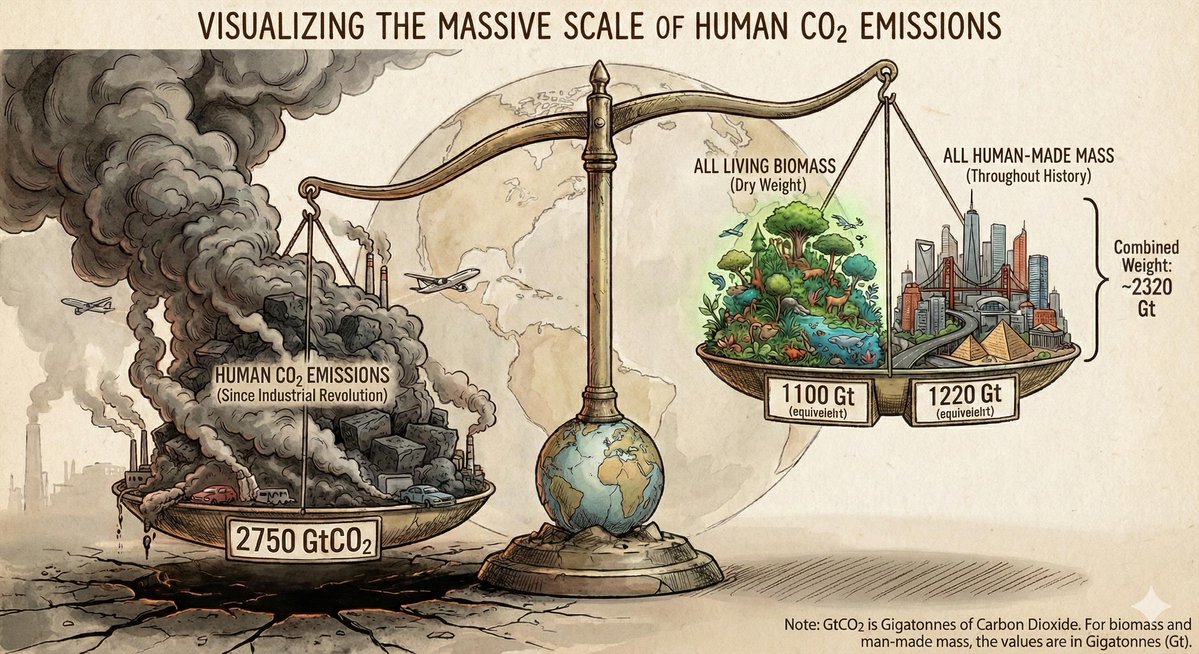
Humans have emitted 2750 gigatons of CO2 since the industrial revolution from burning fossil fuels and land use change. To put this in perspective, this is more than the (dry) mass of all living things on earth and everything humans have ever built combined:
Zeke Hausfather tweet media
English
405
715
1.7K
93K
Rob Larter retweetledi
Zeke Hausfather
Zeke Hausfather@hausfath·
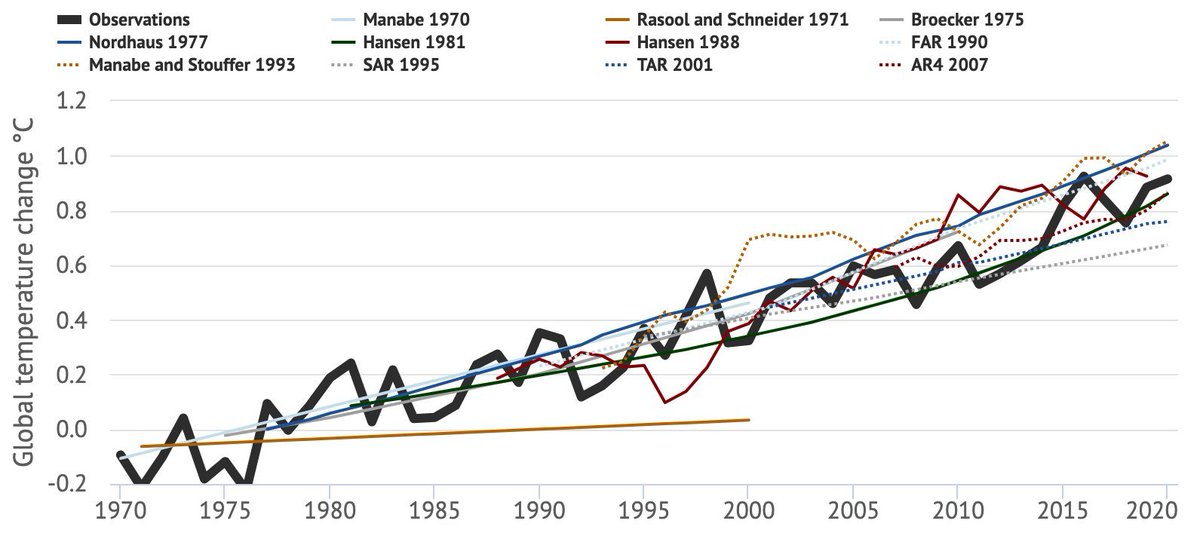
Scientists developed the first climate models in the late 1960s (for which the Nobel Prize in physics was recently awarded!). How have these models held up against what happened in the real world after they were published? Surprisingly well, it turns out:
Zeke Hausfather tweet media
English
108
718
2.2K
226.9K
Rob Larter
Rob Larter@rdlarter·
Petition - save Geology at the Univ. of Leicester c.org/h9rysz2C9x Finances are highly stretched in UK higher education, but it's hard to understand a uni cutting a field critical to the energy transition and understanding of the changes taking place in the world today.
English
1
2
3
2K
GovernWithQ
GovernWithQ@makinggovq·
@rdlarter Flooding forecasts like this press for immediate systemic resilience strategies-local planning can't wait for hindsight.
English
1
0
1
13
Rob Larter
Rob Larter@rdlarter·
Posting this here because there are probably quite a number of people on this platform who live in the affected areas. Drowning in denial: one in five homes in Reform UK heartlands faces flooding in 25 years yorkshirebylines.co.uk/politics/drown…
English
2
3
5
241
Rob Larter retweetledi
Prof. Stefan Rahmstorf 🌏 🦣
Today the 2025 State of the Cryosphere report was published by over 50 leading cryosphere scientists. An urgent warning about the global consequences of the meltdown of ice, including the risk of shutdown of the Atlantic Ocean current system #AMOC. 🌊 iccinet.org/statecryo25/
Prof. Stefan Rahmstorf 🌏 🦣 tweet mediaProf. Stefan Rahmstorf 🌏 🦣 tweet media
English
26
206
355
31.2K
Rob Larter
Rob Larter@rdlarter·
@MellonSdp6741 This is a red herring. Even without human interference in the climate system, re-growth of ice sheets would not have been an issue for many thousands of years. In contrast increasing flood risk due to rising sea levels is a real and present problem that is going to get much worse
English
1
0
0
22
Rob Larter
Rob Larter@rdlarter·
@heidinga31662 Yes, absolutely. A recently highlighted one is tidally-driven intrusions of seawater into grounding zones. We don't yet know how this affects basal melting and resistance to sliding in grounding zones. Also the influence basal hydrology is poorly known, among other things.
English
0
0
1
18
Rob Larter
Rob Larter@rdlarter·
@larsdx It's really worth making the effort. You'll find a lot of the people you're missing on Mastodon and/or Bluesky. Personally, I think Mastodon is a better long-term option. Bluesky seems more popular at present but has the same fundamental weaknesses that undermined this platform.
English
0
0
1
27
Lars Nordlund
Lars Nordlund@larsdx·
@rdlarter Thanks for the interesting thread! Happy to see you back here on Twitter. I am too lazy to begin using another platform.
English
1
0
1
14
Rob Larter
Rob Larter@rdlarter·
@MellonSdp6741 That's not the problem we're facing. Several metres of sea-level rise is and it is now fairly certain this is locked in. How quickly it will happen remains uncertain though and further research is needed to inform adaptation planning.
English
0
0
0
13
Alastair Mellon SDP
Alastair Mellon SDP@MellonSdp6741·
@rdlarter Isn’t it good that they won’t come back? They seem antithetical to modern life.
English
1
0
0
9
Rob Larter retweetledi
Kellie Keesee
Kellie Keesee@KellieCNN·
An Antarctic glacier shrank by nearly 50% in two months, the fastest retreat in modern history. It could spell trouble for sea levels, report finds. cnn.com/2025/11/03/cli…
Lilburn, GA 🇺🇸 English
0
6
3
261
Rob Larter
Rob Larter@rdlarter·
@MellonSdp6741 Also your information about the British Ice Sheet during the Last Glacial Maximum is incorrect. The maximum ice extent just reached the north Norfolk coast. Several cycles previously the ice sheet extended a bit further south, but still not as far as London.
English
1
0
0
37
Rob Larter
Rob Larter@rdlarter·
@MellonSdp6741 Ice sheets won't come back in a world with such high greenhouse gas concentrations as we have today. Over the last million years they have grown and decayed in cycles approximately 100,000 years long, but that occurred as atmospheric CO₂ concentrations varied between 180-280 ppm
English
2
0
2
43
Rob Larter
Rob Larter@rdlarter·
@MellonSdp6741 You need to look back to the last interglacial period, about 125,000 years ago, to find a retreat analogous to the one that is now the cause for concern. Your questions about rates and durations of periods of fast retreat are good ones that highlight the urgency of more research
English
1
0
2
20
Alastair Mellon SDP
Alastair Mellon SDP@MellonSdp6741·
On average implies that there are faster and slower retreats. Are any of those retreats and analogous to the retreats that you are concerned about? How long will the short of periods of much faster retreat? What were they caused by? Are they equivalent speed or slower than what you are seeing now?
English
1
0
0
13
Rob Larter
Rob Larter@rdlarter·
@MellonSdp6741 There has been a progressive, on average fairly gradual, retreat since the last glacial maximum about 20,000 years ago. This study shows that this included short periods of much faster retreat when the ice grounding zone separated from seabed ridges.
English
1
0
1
28
Rob Larter
Rob Larter@rdlarter·
@heidinga31662 @Summersaltcloud @mattyglesias In my view we are better able constrain rates of rise during the most recent deglaciation, as this is within the range of radiocarbon dating. Some studies have estimated the maximum rate of rise, during meltwater pulse 1A about 14,500 years ago, as 4 m per century.
English
1
0
4
119
Rob Larter
Rob Larter@rdlarter·
@joelgombiner That's the conclusion of one published modelling study, but there has been some discussion about the choice of parameterisation used and to what extent ice damage might affect the calving rule.
English
0
0
2
21
Joel Gombiner
Joel Gombiner@joelgombiner·
@rdlarter I'm struggling to summarize the top line message, if any, from the recent studies. My sense of downgraded likelihood of "imminent" collapse is the finding about marine ice cliff instability being less applicable than previously suggested
English
2
0
1
30