rduffy

1.4K posts

rduffy banner
rduffy

rduffy

@rduffyuk

SRE · AI Orchestrator · Building Rootweaver with Claude Code Self-hosted multi-agent RAG, knowledge graphs & MCP tools. Human intent + AI execution.

Ipswich Katılım Haziran 2009
405 Takip Edilen178 Takipçiler
Sabitlenmiş Tweet
rduffy
rduffy@rduffyuk·
Building a bigger circle in 2026. I build self-hosted AI infra RAG, agent routing, and a GPU homelab running my own engineering-memory platform. Looking to connect with my people: • AI infra & RAG builders • SRE / platform / DevOps • Homelab & self-hosted AI • Agent / LLM-app devs • Memory & retrieval researchers • Anyone building in public What are you shipping right now? 👇 #buildinpublic #selfhosted
English
20
0
19
341
rduffy
rduffy@rduffyuk·
I turned my console's approval queue into a posting surface. The agent drafts, I approve, it goes out — same human-in-the-loop gate I already use for risky agent actions. Reusing the rail, not building a new tool. First test!
GIF
English
1
0
0
6
rduffy
rduffy@rduffyuk·
@nateherk @HyperFrames_ and your usage cost for it on a sub model, what percentage of your weekly budget did it burn?
English
0
0
0
4.1K
Nate Herk
Nate Herk@nateherk·
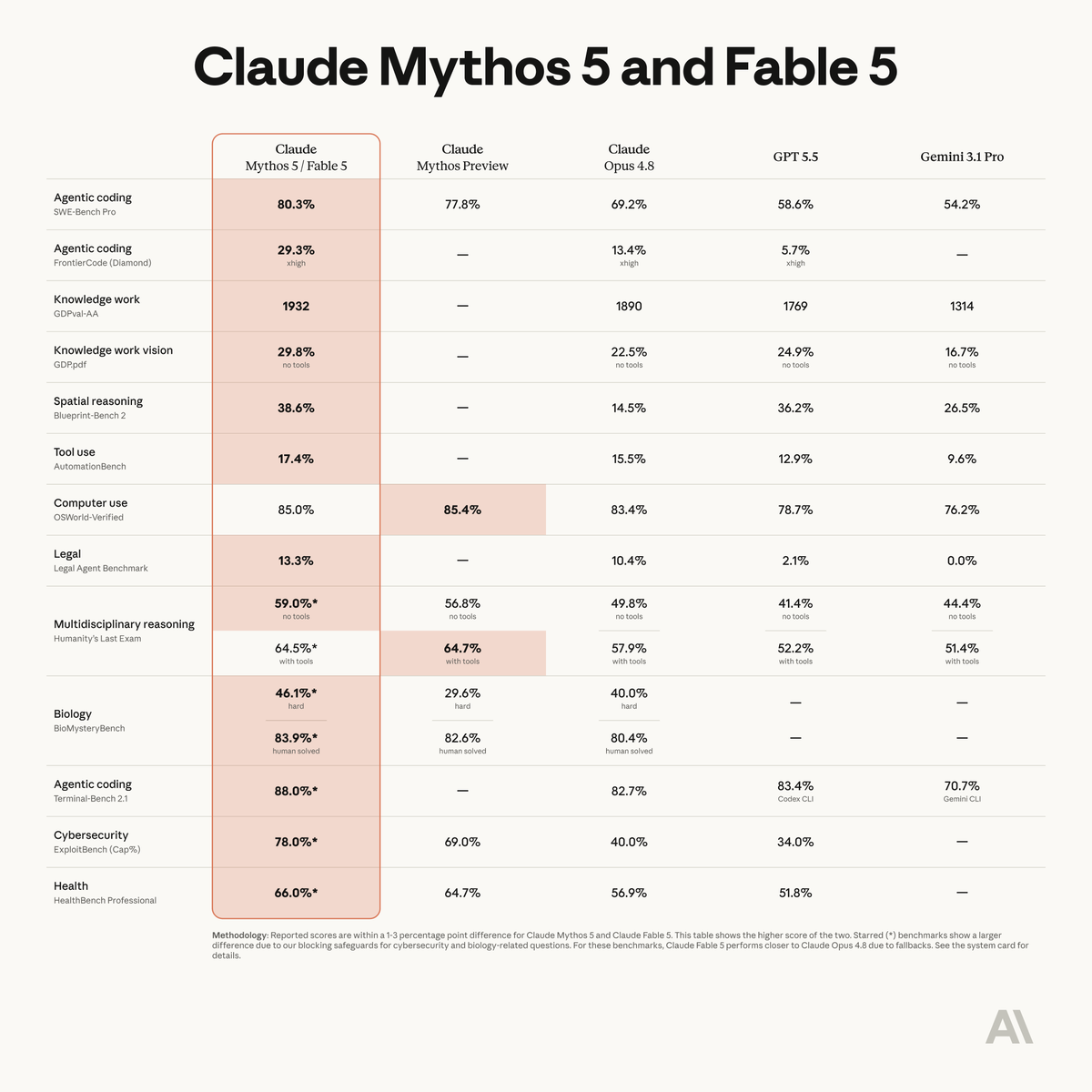
Claude Fable 5 made this entire video by itself. I gave it a /goal prompt, went to the gym, and came back to this. Even the sound effects. Shoutout @HyperFrames_
English
472
704
9K
823.1K
rduffy
rduffy@rduffyuk·
Custom agents carry their tier in frontmatter — Claude Code enforces those natively. This hook only fills the built-in gap.
rduffy tweet media
English
0
0
0
20
rduffy
rduffy@rduffyuk·
Weekly budget: 650M weighted tokens Calibrated from actual spend: 143M on renewal day (~22%) → set 650M as ceiling Token weights: input 1.0× cache-write 1.25× cache-read 0.1× output 5.0× ← Fable hits this hard Pace bands → compact ceiling: ≥1.6× pro-rata → 150k (WAY ahead) ≥1.3× → 250k ≥1.0× → 350k OK pace → 500k (default) The 5× output weight means Fable-heavy sessions hit the pace threshold far faster than cached reads — no model-specific logic needed in the budget script.
English
1
0
0
30
rduffy
rduffy@rduffyuk·
Running Claude Code (Fable 5) and Codex in parallel. Fable landing forced me to build actual cost governance. Discovery: one 4-hour session, 32 subagents inheriting Fable — $50/MTok output, mandatory extended thinking, can't be disabled. 316K output tokens. ~$16. Single session. Two systems to fix it — breakdown below 👇
English
2
0
0
53
rduffy
rduffy@rduffyuk·
@cyrilXBT i feel this is just throwing tokens away when a engineered harness could do it for less, seem like a money grab to me.
English
0
0
0
14
CyrilXBT
CyrilXBT@cyrilXBT·
Anthropic on Dynamic Workflows: "Some problems are too big for one pass by a single agent." So they built something different. Claude Code now dynamically writes its own orchestration scripts and spins up tens to hundreds of parallel subagents in a single session—each one working simultaneously. All of them checking their work before anything reaches you. Think about what that actually unlocks: - A bug hunt across an entire service that would take a team weeks. One session. - A migration touching hundreds of files that used to mean months of careful sequential work. One session. - A plan you want stress-tested from every possible angle before you commit to it. One session. The problems that used to take quarters now take days. Not because the model got smarter in isolation. Because the architecture changed entirely. One agent in a single pass hits a ceiling. It runs out of context. It loses track of the larger problem. It can't hold the whole thing at once. Dynamic Workflows removes that ceiling. Claude writes the coordination logic itself. Decides which subagents to spin up. Assigns each one a focused slice of the larger problem. Verifies the outputs before anything surfaces to you. You set the goal. The swarm figures out how to get there. This is the biggest Claude Code update in months and most people haven't tried it yet. Here's how to activate it right now: 1) Set /model to opus 4.8. 2) Set /effort to ultracode. 3) Use the word "workflow" in your prompt. 4) Watch what happens next. Bookmark this before your next complex build. Follow @cyrilXBT for every Claude Code update that changes what one person can ship.
CyrilXBT tweet media
English
41
13
67
4.1K
rduffy
rduffy@rduffyuk·
Claude Fable 5 is hungry don't see me using it as main model the economics are just not worth it.
rduffy tweet media
English
0
0
0
29
ClaudeDevs
ClaudeDevs@ClaudeDevs·
We've reset 5-hour and weekly rate limits for all users. Enjoy Fable 5!
English
1.4K
1.8K
35.8K
2.2M
rduffy
rduffy@rduffyuk·
platfrom onboarding and codebase reivew lets see what it can do!
rduffy tweet media
English
0
0
0
16
rduffy retweetledi
Ado
Ado@adocomplete·
Introducing Claude Fable 5, our most capable public model ever. Best-in-class for software engineering, scientific research, knowledge work, and vision. Available today on all paid plans, in Claude Code, on the Claude API, and all major cloud platforms.
Ado tweet media
English
114
132
1.5K
139.5K
rduffy
rduffy@rduffyuk·
@plainionist Observability catches errors u can’t see without your blind when building, its should be part of the build alongside security hardening
English
0
0
1
24
Seb
Seb@plainionist·
How do you optimize a codebase for AI agents? Tests? Knowledge base? Smaller modules? Better observability? What actually made the biggest difference for you? 🤔
English
87
2
59
17.4K
Hamza Khalid
Hamza Khalid@humzaakhalid·
THIS IS KARPATHY'S OBSIDIAN VAULT, THE BRAIN BEHIND A MILLION-DOLLAR COMPANY This is every idea, every decision, and every connection one person has made over years of work, visualized in real time. The human brain processes up to 11,000,000 bits of information per second, but consciously uses only 50. Inside this network: → thousands of nodes → hundreds of active links between ideas → 140+ decision-making processes per hour of work → years of compressed thinking living inside a single system make sure to bookmark it before it gets lost in your feed below I wrote a guide on how you can build yours for FREE (2 mins setup)
Hamza Khalid@humzaakhalid

x.com/i/article/2062…

English
63
215
1.6K
336.1K
rduffy
rduffy@rduffyuk·
Exactly and that's the case I think wins. It's why the human key is tiered differently: my own commits require a Touch ID tap, so "a human was physically present" becomes a cryptographic fact, not a process claim. Signed AI commits + signed human commits = you can show an auditor which lines were agent-generated vs human-reviewed, with evidence rather than assertion.
English
0
0
0
19
JMoon
JMoon@Jmoon_174·
@rduffyuk Bigger than attribution credit: audit trails for regulated systems. If AI wrote the code and you cannot prove human review, that becomes a compliance question quickly.
English
1
0
0
35
rduffy
rduffy@rduffyuk·
AI agents are writing more of our code than ever — but we still can't prove who wrote what. Claude Code, Cursor, Codex and Copilot all "sign" their commits with a plain-text Co-authored-by: line. Any process can forge that in a single git commit. Researchers recently spoofed a trusted git identity with two commands and got a Claude-powered reviewer to auto-merge malicious code — same trick. So I gave each of my coding agents its own key in my Mac's Secure Enclave. Every commit and every doc is now cryptographically signed — fired automatically from git + PostToolUse hooks, so no agent can forget or opt out — and a verifier flags forgery the moment a signature's identity disagrees with the agent it claims to be. "Which model wrote this?" finally has a non-repudiation answer. 👇 #buildinpublic #DevSecOps #AIagents
rduffy tweet media
English
21
0
26
609
rduffy
rduffy@rduffyuk·
Git actually already has the primitive — SSH/GPG commit signing is built in. The gap isn't the protocol, it's that nobody enforces it for agents or verifies the signer matches the claimed author. That's the layer I built on top: per-agent keys + a hook that signs every commit + a verifier that flags when the signature's identity disagrees with the AI-Agent trailer. Wrote up exactly how here: blog.rduffy.uk/posts/co-autho…
English
0
0
0
23
rduffy
rduffy@rduffyuk·
Running across Claude Code + Codex on my homelab: • per-agent ECDSA keys in the Secure Enclave — non-exportable, so a compromised agent can request a signature but never steal the key • enforced by hooks, not discipline: a PostToolUse hook signs every doc on write; a prepare-commit-msg hook + global git config sign every commit — the same hooks for Claude and Codex • tiered: bots sign unattended, my own commits require Touch ID • provenance verify cross-checks the signing key against the self-declared AI-Agent trailer → mismatch = forgery Plain-text attribution is table-stakes. This is the cryptographic version everyone keeps calling "the missing control." The Claude-reviewer spoof that shows why: theregister.com/2026/04/16/git… What's your team doing for AI commit provenance — or still trusting Co-authored-by? #buildinpublic #DevSecOps #AIagents
English
4
0
6
152