Reggie manuel 🇬🇭🇵🇪

2.9K posts

Reggie manuel 🇬🇭🇵🇪 banner
Reggie manuel 🇬🇭🇵🇪

Reggie manuel 🇬🇭🇵🇪

@reggie_manuel

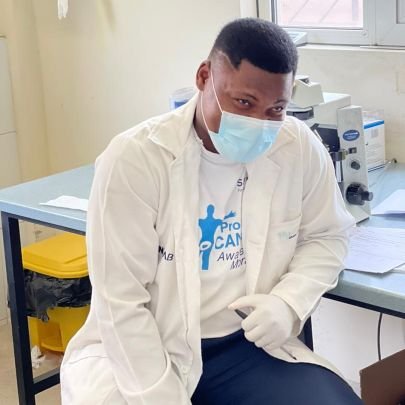
investor|Entrepreneur|Health worker(MLS| |software engineer student | love music 🎼 🎶 philanthropist. @chelseafc


Earth Katılım Kasım 2018
739 Takip Edilen249 Takipçiler
Lατιf
Lατιf@iLatif_·
Regional Minister say going to the North be punishment but you want Doctors to go there?😂😂Are you punishing doctors too?
English
20
49
292
10.1K
Dr. Sharyf
Dr. Sharyf@__Sharyf·
Teenagers who smoke marijuana may experience poorer cognitive performance, a new study suggests.
English
10
17
84
5.1K
#Let'sTalkGhana
#Let'sTalkGhana@drgyimah·
If the HoD of the Central Laboratory, a Lab Scientist, is removed to be replaced by a Physician, then it changes the whole conversation. My position remains that if there’s a vacancy in leadership positions, all qualified professionals should be in the running - LP or Lab Scientist.
Miami Jetey@TameEyram

The week go long oo eyy 😂💔

English
11
10
29
10.9K
Judith
Judith@Esi_j·
The KBTH CEO must really be going through it. No breathing space in that job. Prof Frimpong-Boateng’s book title keeps making sense everyday, because that institution is really a monster.
English
6
17
105
8.9K
Shadrack Oko Sowah
Shadrack Oko Sowah@shadracksowah_·
@dr_bandak The conversations from the beginning have never been about LP not having access to their work in the lab. They want to lead the lab! That won't happen! At least, now you know.
English
2
0
2
280
Dr. Banda Khalifa MD, MPH, MBA
Oh wow... Some of these demands are reasonable. Clear laboratory governance is needed. Prior MoH resolutions should be respected. If a duly appointed Medical Laboratory Scientist was removed without due process, that deserves urgent independent review and re-engagement. But demanding immediate removal of multiple officials before an impartial review is completed weakens the case. The better ask is clear rules, fair process, implementation of past agreements, and protection of patient care. That is the stronger argument.
Dr. Banda Khalifa MD, MPH, MBA tweet media
English
6
2
31
3.2K
Manasseh Wintemah Apurum
Manasseh Wintemah Apurum@The_Manasseh·
I have a theory as to why our health workers keep “fighting” one another. I have a theory…
English
6
2
24
6.1K
HL Edi💗
HL Edi💗@mainlyedi·
@reggie_manuel It’s crazy. I’m so mad rn but I need to get things done so I’m waiting hm
English
1
0
1
22
HL Edi💗
HL Edi💗@mainlyedi·
I don’t understand why most government institutions seem so fond of wasting people’s time.
English
1
1
4
73
Scofield ☢️💯🧡
Scofield ☢️💯🧡@GH_scofield·
Y’all want to be called doctors so bad cos there’s no part of the world we have MLSD for undergraduate.
English
14
79
136
7.4K
Godfrey
Godfrey@godfrey_amoah·
@SantanStan1 That is for clinical discussion with his team and the medical doctor in charge of the patient. He doesn’t come and run the test or validate anyone’s results result in the lab. We have all it take to carry out any test they need
English
2
0
3
549
Godfrey
Godfrey@godfrey_amoah·
This is what is done in the UK. After I run my test, I validate it and, depending on my shift, I may also authorise the results. I then transmit my results to the department or the clinician. For specialised tests, I transmit them to the consultant (haematologist, etc.), who carries out the clinical discussion with other practitioners. This can be described as clinical validation. We have Advanced Biomedical Science Leads: Laboratory Managers, Consultant Biomedical Scientists, Biomedical Science Operations Managers, Biomedical Science Leads, Clinical Scientists, Specialist Biomedical Scientists, and Biomedical Scientists. These professionals are regulated by the Health and Care Professions Council (similar to AHPC). Clinical Scientists are not medical doctors. They are separate professionals trained under the NHS Specialist Training Programme. Most have Biomedical Science backgrounds and undergo a 3-year MSc plus NHS training. As a Biomedical Scientist, this is a pathway you can choose. There are also Clinical Leads, consultants, and registrars who come to the laboratory for clearly defined roles. Their involvement is required in life-threatening or critical cases, or in reviewing slides first identified by Biomedical Scientists, such as: TMA (TTP, HUS, HELLP), new acute leukaemia (ALL/AML), ITP, high-grade lymphomas or new lymphoma, and overt haemolysis. In these cases, Biomedical Scientists must first detect the abnormalities, add biomedical comments, immediately contact the Clinical Consultant or Registrar, and work together to finalise the case and prepare for further investigations. Slides referred by Biomedical Scientists or Clinical Scientists for additional clinical input. They do not head Biomedical Science professional staff or countersign our work. If general medical practitioners require clarification or interpretation of laboratory reports, this can be provided by Laboratory Science staff or the Clinical Consultant. On several occasions, we advise doctors on patient reports, and doctors often contact the laboratory for guidance. Medical consultants focus on patient care and advising fellow clinicians, while working collaboratively with Biomedical Science professionals to ensure quality patient care. No one comes to the lab to validate anyone’s results. It won’t happen today and tomorrow. This didn’t start today. You couldn’t win 10years ago , you think you will win now . In this era?
9-9@SantanStan1

Sure but without the clinical knowledge and reasoning from the clinician, your results are useless too. Thats why you should open the labs to them and stop threatening them, so together you can save patients’ lives.🙏🏻

English
5
12
47
5.5K
Moneytall
Moneytall@Didymus1234·
@dr_bandak Dr you have to see the stupid comments of some these young lab scientist whose doctorate cert isn't yet recognised by fare wages commission Eyaa they will collaborate against the LPs,they will make working in the lab unbearable They should channel that energy into getting jobs
English
5
0
1
472
Dr. Banda Khalifa MD, MPH, MBA
Good news. The strike has been suspended, and that is the right outcome. We should all be able to coexist as colleagues. At the end of the day, many of us sat in the same classrooms. Same biology class. Same ambitions. Different paths. Today, I even saw one of my biological science classmates, now a principal medical laboratory scientist, making strong arguments. That is how it should be. 😅 We are not enemies. We are one health workforce. Doctors, pharmacists, medical laboratory scientists, nurses. Different roles. Same mission. The real issue should never be about personalities. It should be about roles. No system works when one excludes the other. And no system should ever reach a point where patient care is disrupted because roles are not clearly defined. Always remember that healthcare is organized for patient outcomes.
Dr. Banda Khalifa MD, MPH, MBA tweet media
English
13
18
72
5.1K
Dr. Banda Khalifa MD, MPH, MBA
Honestly, I would have preferred a different way of handling this. A strike over laboratory access feels like an overreach, especially in a national referral hospital where any disruption immediately affects patients. But the strike is not the real story. The real story is how we got here. Is this a leadership battle, or a territorial battle? If you believe the laboratory should be reserved only for medical laboratory scientists, that is not consistent with how modern diagnostic systems work. If you also believe the laboratory must be led only by laboratory physicians, that is equally incomplete. Those are the two extremes. A serious health system should be able to find a workable middle ground between them. —- The reason this conflict feels so intense is that the laboratory is the center of modern diagnosis. It determines cancer diagnoses, antimicrobial choices, transfusion safety, and clinical decision-making. That is why leading teaching hospitals treat laboratories as diagnostic systems rather than professional territories. ——- Medical laboratory scientists protect the technical reliability of results. They manage testing systems, sample processing, quality control, method validation, instrumentation, accreditation, and workflow. Their core question is: Is this result accurate and reliable? If a test is technically unreliable at Korle Bu, the mere presence of laboratory physicians will not automatically correct that failure. That is why this debate should not be reduced to a vague claim about “validating results.” —- I have also noticed that a few people don't seem to understand what laboratory medicine is about. Laboratory medicine is a well-established specialty. (The history of infectious diseases is one of my favorite topics) Laboratory physicians bring a different function. They connect laboratory findings to diagnosis, specialist reporting, treatment decisions, and complex patient care. Ghana’s own specialist training pathway recognizes laboratory medicine in anatomic pathology, chemical pathology, hematology, and medical microbiology. Their core question is: What does this result mean for the patient? ——- The term “validation” must be separated into at least two levels. Medical laboratory scientists confirm that the sample is acceptable, the instrument worked, quality control passed, and the result is analytically sound. In other words, “Technical Validation.” Laboratory medicine physicians provide clinical validation for a select # of specialist cases. It is worth noting that not every result needs a laboratory physician's sign-out/validation. Most are released through technical validation and approved procedures/protocols. But some tests are different. For example; A biopsy can diagnose cancer. A bone marrow report can diagnose leukemia. Genomic results can shape major clinical decisions. These sometimes require clinical correlation. In most established systems, this is mostly done by laboratory physicians —- If this dispute is mainly about who leads the laboratory, then a better model would be structured co-leadership. A laboratory physician can lead the clinical domain. A medical laboratory scientist should lead the technical and operational/administrative domain. This is what is done in major hospital labs. Then again, I hope this is not merely about “who heads the lab.” And I will be more disappointed if it's also about “ACCESS” —— Healthcare should be organized for patient outcomes and higher standards of care. We can achieve that only through collaboration. Not competing for professional dominance. —- In Johns Hopkins & other major hospitals, laboratory services sit within departments of pathology and laboratory medicine. They have a medical director (usually a laboratory physician/pathologist) and an administrative director (usually a medical laboratory scientist) ——- But what do you think the real issue is? I would love to hear from both sides
Dr. Banda Khalifa MD, MPH, MBA tweet media
English
38
77
185
24.6K
Dr. Sharyf
Dr. Sharyf@__Sharyf·
In Ghana, your BECE result plays a big role in what you become.
English
134
280
3.8K
207.3K