
Sabitlenmiş Tweet
Resko Ξ
1.8K posts


Resko Ξ
@resko_0
I’m not a trader, I’m investor | #Gem Hunter | Trend is your friend dont fight with trend | Feel the bull run | CM |
Bitcoin Katılım Ekim 2021
276 Takip Edilen1.7K Takipçiler
@AhmetSa13221481 Paradoturun senin önünde eğilmesi lazım kardeşim shsh
Türkçe

Vitaliğin söylediklerini L2 ler gereksiz diye okumak bence yanlış asıl söylemek istediği L1 ölçeklenirken L2 lerinde artık fark yaratmaları lazım sadece ucuz işlem sunarak var olamayacağını söylüyor aslında
vitalik.eth@VitalikButerin
There have recently been some discussions on the ongoing role of L2s in the Ethereum ecosystem, especially in the face of two facts: * L2s' progress to stage 2 (and, secondarily, on interop) has been far slower and more difficult than originally expected * L1 itself is scaling, fees are very low, and gaslimits are projected to increase greatly in 2026 Both of these facts, for their own separate reasons, mean that the original vision of L2s and their role in Ethereum no longer makes sense, and we need a new path. First, let us recap the original vision. Ethereum needs to scale. The definition of "Ethereum scaling" is the existence of large quantities of block space that is backed by the full faith and credit of Ethereum - that is, block space where, if you do things (including with ETH) inside that block space, your activities are guaranteed to be valid, uncensored, unreverted, untouched, as long as Ethereum itself functions. If you create a 10000 TPS EVM where its connection to L1 is mediated by a multisig bridge, then you are not scaling Ethereum. This vision no longer makes sense. L1 does not need L2s to be "branded shards", because L1 is itself scaling. And L2s are not able or willing to satisfy the properties that a true "branded shard" would require. I've even seen at least one explicitly saying that they may never want to go beyond stage 1, not just for technical reasons around ZK-EVM safety, but also because their customers' regulatory needs require them to have ultimate control. This may be doing the right thing for your customers. But it should be obvious that if you are doing this, then you are not "scaling Ethereum" in the sense meant by the rollup-centric roadmap. But that's fine! it's fine because Ethereum itself is now scaling directly on L1, with large planned increases to its gas limit this year and the years ahead. We should stop thinking about L2s as literally being "branded shards" of Ethereum, with the social status and responsibilities that this entails. Instead, we can think of L2s as being a full spectrum, which includes both chains backed by the full faith and credit of Ethereum with various unique properties (eg. not just EVM), as well as a whole array of options at different levels of connection to Ethereum, that each person (or bot) is free to care about or not care about depending on their needs. What would I do today if I were an L2? * Identify a value add other than "scaling". Examples: (i) non-EVM specialized features/VMs around privacy, (ii) efficiency specialized around a particular application, (iii) truly extreme levels of scaling that even a greatly expanded L1 will not do, (iv) a totally different design for non-financial applications, eg. social, identity, AI, (v) ultra-low-latency and other sequencing properties, (vi) maybe built-in oracles or decentralized dispute resolution or other "non-computationally-verifiable" features * Be stage 1 at the minimum (otherwise you really are just a separate L1 with a bridge, and you should just call yourself that) if you're doing things with ETH or other ethereum-issued assets * Support maximum interoperability with Ethereum, though this will differ for each one (eg. what if you're not EVM, or even not financial?) From Ethereum's side, over the past few months I've become more convinced of the value of the native rollup precompile, particuarly once we have enshrined ZK-EVM proofs that we need anyway to scale L1. This is a precompile that verifies a ZK-EVM proof, and it's "part of Ethereum", so (i) it auto-upgrades along with Ethereum, and (ii) if the precompile has a bug, Ethereum will hard-fork to fix the bug. The native rollup precompile would make full, security-council-free, EVM verification accessible. We should spend much more time working out how to design it in such a way that if your L2 is "EVM plus other stuff", then the native rollup precompile would verify the EVM, and you only have to bring your own prover for the "other stuff" (eg. Stylus). This might involve a canonical way of exposing a lookup table between contract call inputs and outputs, and letting you provide your own values to the lookup table (that you would prove separately). This would make it easy to have safe, strong, trustless interoperability with Ethereum. It also enables synchronous composability (see: ethresear.ch/t/combining-pr… and ethresear.ch/t/synchronous-… ). And from there, it's each L2's choice exactly what they want to build. Don't just "extend L1", figure out something new to add. This of course means that some will add things that are trust-dependent, or backdoored, or otherwise insecure; this is unavoidable in a permissionless ecosystem where developers have freedom. Our job should make to make it clear to users what guarantees they have, and to build up the strongest Ethereum that we can.
Türkçe
Türkçe
Resko Ξ retweetledi

People have underestimated the impact of 10/10. The incident caused real and lasting damage to the industry.
An industry-leading company should focus on strengthening core infrastructure, building trust with global users and regulators, and protecting the long-term interests of the majority of crypto users, setting an example for others to follow. Instead, some chose to pursue short-term gains—repeatedly launching Ponzi-like schemes, amplifying a handful of “get-rich-quick” narratives, and directly or indirectly manipulating the prices of low-quality tokens, drawing millions of users into assets closely tied to them.
This has become their shortcut for attracting traffic and user attention. Legitimate criticism is then drowned out—not through facts or accountability, but via aggressive narrative control and coordinated influencer campaigns.
This approach does not build an industry.
It erodes trust—and ultimately, everyone pays the price.
CryptosRus@CryptosR_Us
CATHIE WOOD: THE WORST IS LIKELY OVER FOR BITCOIN Cathie just laid it out pretty clearly and says the last 2–3 months were basically the aftershock from the Oct 10 flash crash -- a Binance software glitch that forced ~$28B of deleveraging across crypto. Bitcoin took the hardest hit because it’s the most liquid asset. That unwind is mostly done & now the debate has shifted to the 4-year cycle. Are we still in the downside phase? Cathie’s answer: probably not. She sees $BTC likely basing in the ~$80K–$90K range, then moving higher once that consolidation does its job. Institutions aren’t questioning if #Bitcoin belongs anymore -- they’re figuring out how to size it as a new asset class with low correlation. The forced selling looks behind us. What comes next is positioning. 👀
English

Uzun süredir bir kripto kart almak istiyordum. Tercihimi @ready_co’dan yana yaptım.
3 günde DHL ile hızlı kargo ile geldi.
Her harcamada %3 cashback var. Conversion rate olarak da çok memnun kaldım. Düzenli şekilde kullanacağım. Airdrop gelirse tadından yenmez 👀


Türkçe
@kriptowarrior Paradator sepetimi yapalım yani reis tam anlayamadık doyum moyum felan diyon
Türkçe

Ethereum her boğa döngüsünde 30-40X yapması bu boğa da da yapacağı anlamına gelmez doyum noktası olduğu için şuan ki seviyesinden maks 17-18X bekliyorum fakat bu hareket doğru altcoinlerde olanlara 50-100X kazandıracak.
Türkçe
@kriptowarrior Kral bi yanlışlık olmuş kusura bakma atim adreside geri gönderiver
Türkçe

Hanımıda kriptocu yapıyoruz
İlk videosu için destek olur musun?
♦️Esra@Cryptolayd
What makes @zama unique, under 50 sec! #ZamaCreatorProgram
Türkçe

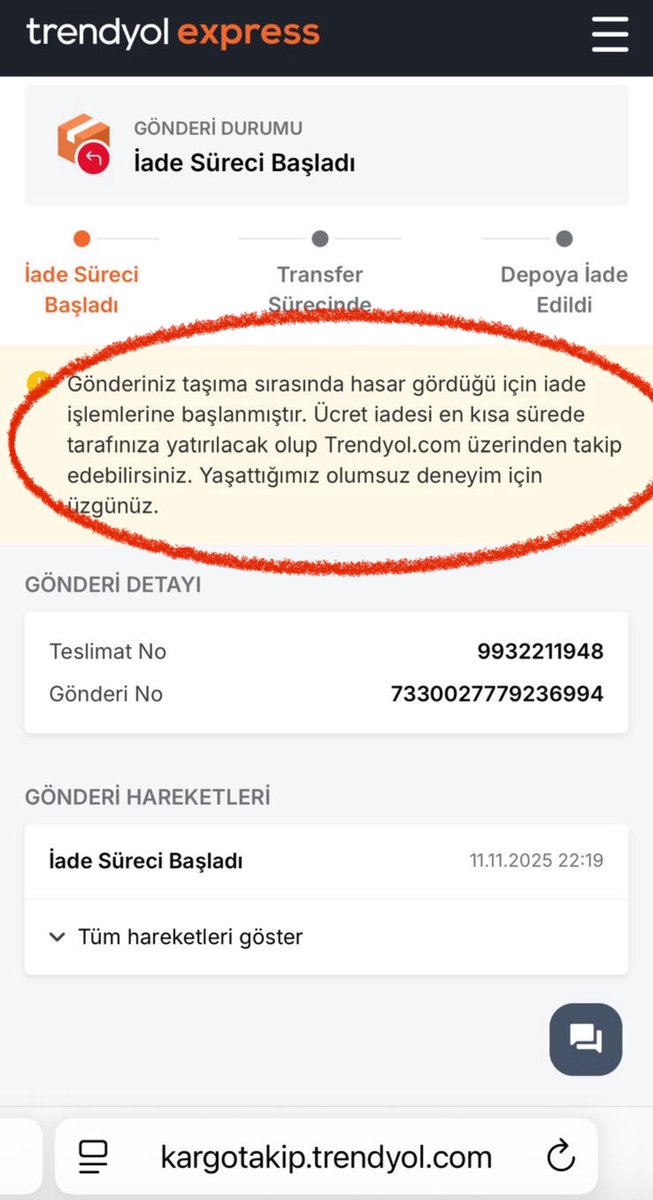
3d printer için filament bitti, hemen Trendyol’dan sipariş verdim.
Urhanshop diye bir satıcıdan tanesi 707 TL’den fiyat uygun diye 4 tane aldım.
Nasıl olduysa kargo zarar görmüş parayı iade ettiler.
Yine sipariş vereyim dedim, fiyat 919TL olmuş..
Belliki satıcı @Trendyol sisteminde bir açık bulmuş. Zamlı satmak istediği ürünü bir şekilde “kargo zarar gördü” diyerek siparişi iptal etti.


Türkçe
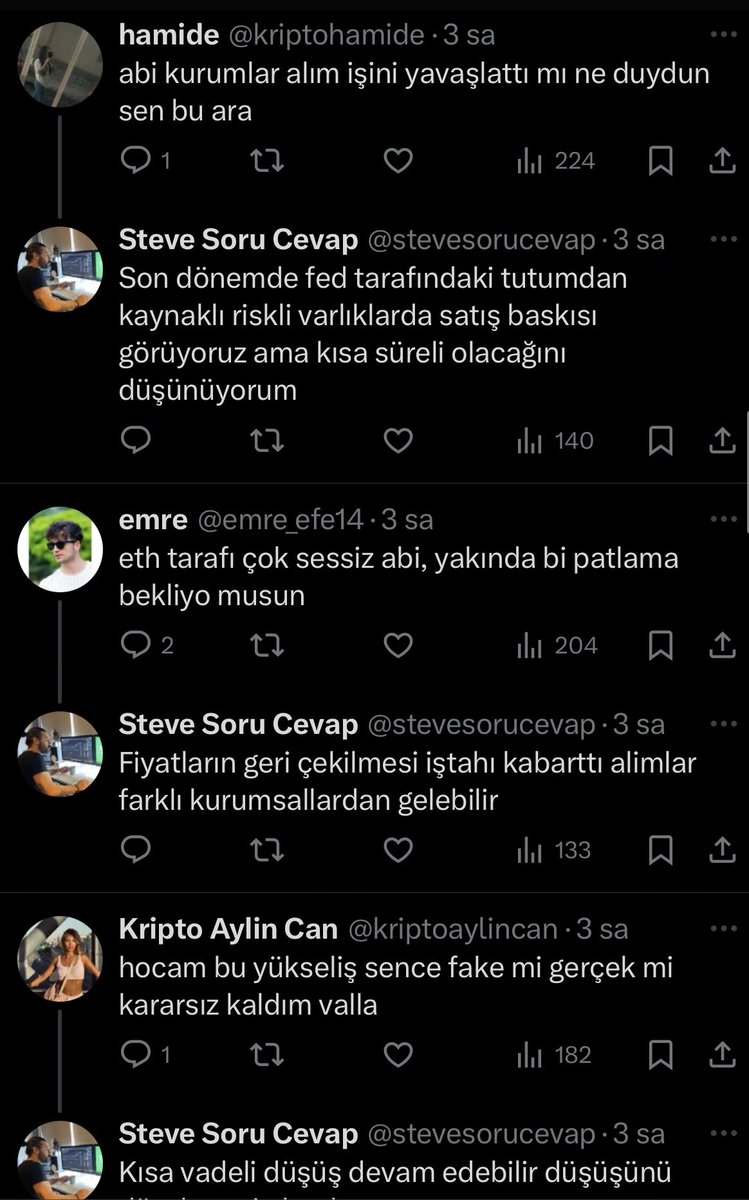
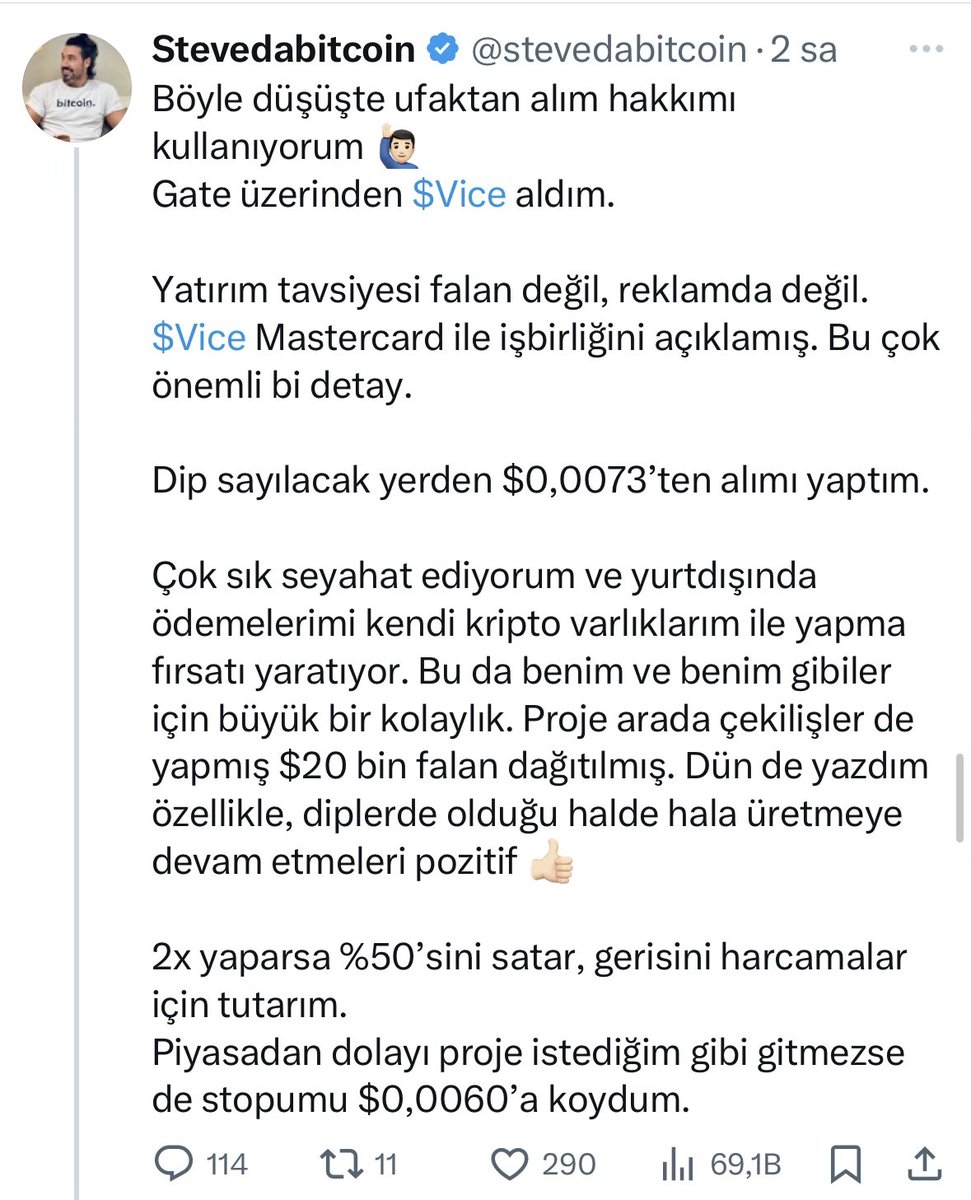
@__YoloBar__ Herkes reklam alabilir ama reklam değil diyorsa direk engeli basmak lazım ve birde yayınlarda reklam alanlara sallıyorlar bu tamamen ikiyüzlülük
Türkçe

Yani kaç senedir şu piyasadasın. O kadar takipçi yapmışsın ekmeğini yemişsin bu piyasanın falan. Ayıptır birader ya. Kesinlikle inanmıyorum reklam değil demesine. Hayır reklam almak ayıp bi şey değil neyini saklıyorsun yani.
Belli ki steve de zor durumda. Çok canınızı sıkmayın yani görün işte.
Türkçe
Resko Ξ retweetledi

Dostlar acil bana izleyip unutamadığınız bir film önerin yorum atan herkese şimdiden teşekkürler
Türkçe
Bu boğanın yıldızı bence $ENA olacak bir zamanlar solana projeside çift sıfırlı bir coindi ena projesinin arkasında blackrock olması yeni bir solana olabilir mi düşüncesini her zaman getirecek.
Türkçe

Yeni profil resmi hayırlı olsun.
Görünce 'Bu kim lan?' demeyin diye bildiriyorum.
Not: Evet benim. 😏
Türkçe

“Sakın risk alma !”
Ne korkunç bir önerme.
Doğrusu şu olmalı:
“Hesaplanmamış riskler alma!”
Hesaplanmış riskler alın ve riskinizi yönetin.
Ve hayır!
Ne idüğü belirsiz bir altcoinde %90 zararda bekliyorsanız yukarıda söylediğimi beceremiyorsunuz demektir.
Başka türlü olmaz.
Türkçe

Alt sezonun alevini yakan #meme ler olacak. Hep aynı hikaye. Memelerle büyük kazanç hikayeleriyle yatırımcı çekecekler. Bu tarafı pas geçmeyin ufak ufak yemek parası deneyin 👍
Türkçe
@ankara_kusu @bycoinhunter Adam her sene düzenli olarak milleti dolandırıyor
Türkçe

İddiaya göre kripto para fenomeni @bycoinhunter, #RCADE isimli coinle takipçilerini 3 milyon dolar dolandırmış.
Türkçe