CAF@AgendaCAF
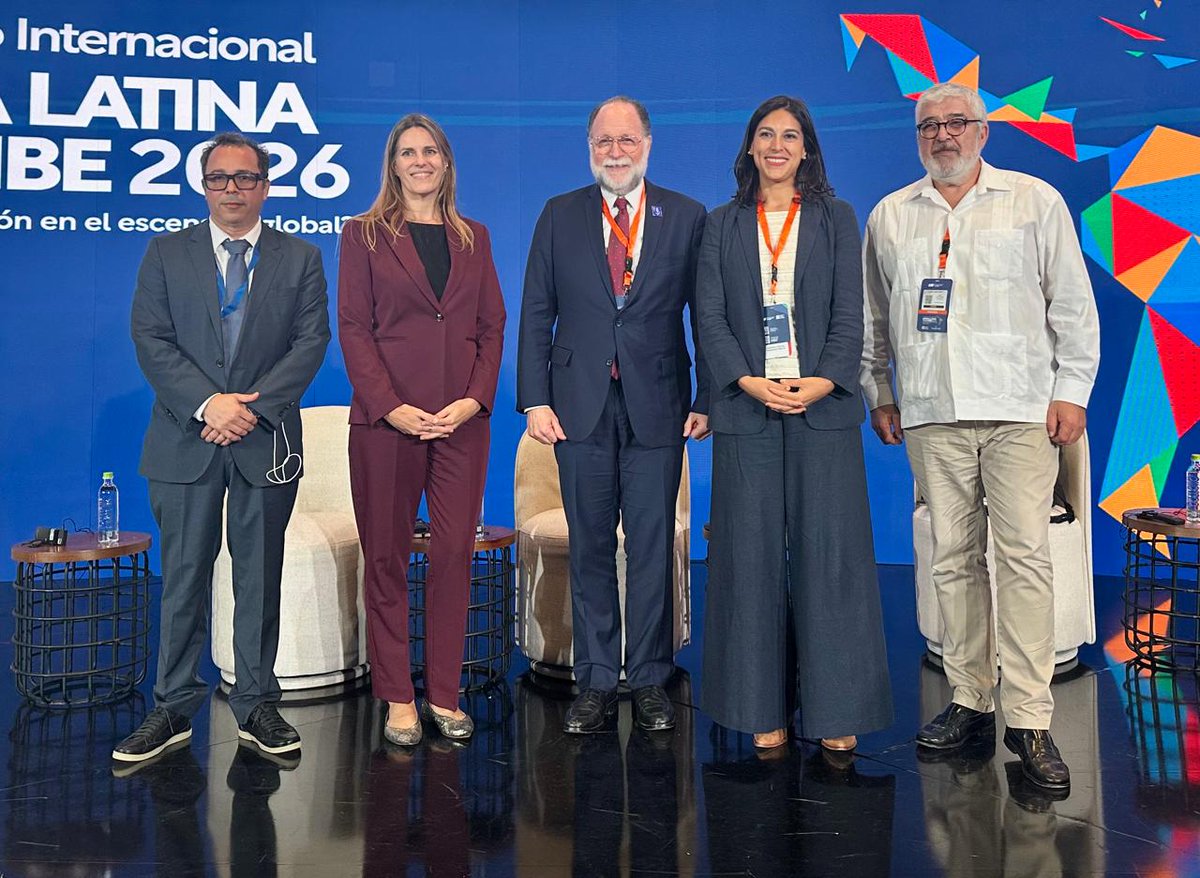
📊🌎Yesterday we held the Workshop on Gender and Household Inequality: Global Lessons for Latin America and the Caribbean together with WELAC and @UdeSA. Below are the main findings from the presentations:
1️⃣ “Discrimination, Rejection and Willingness to Apply”: Anne Boring and coauthors find that hiding gender and age on résumés increases applications from candidates who do not fit traditional stereotypes, helping broaden the talent pool. However, there is an important caveat 👀 When candidates are rejected, blind rejections discourage future applications more than non-blind ones—especially among women. Thus, while blinding reduces gaps at the first stage, its benefits tend to fade after rejection. Bias-reducing tools can help, but their downstream effects are more complex than they may appear.
2️⃣ “Making Information Stick: Evidence from Correcting Misperceptions toward Paternity Leave-Taking in Japan”: Japanese men substantially underestimate how supportive peers and managers are of paternity leave. Correcting these misperceptions—particularly through animation and storytelling—significantly increases support for taking longer leave. @cortespatico
3️⃣ “Preventing Teen Pregnancies at Scale”: Despite near-universal secondary school enrollment, Latin America and the Caribbean still have one of the world’s highest teen fertility rates. Using administrative data and a staggered rollout, Roig finds that ENIA reduced teen birth rates by around 10%. Importantly, the decline is concentrated in first births, indicating a true reduction in teenage motherhood rather than changes in family size. ⏱️✨ New evidence from the 2022 Census shows that these fertility declines translated into real human capital gains, including increased years of education among treated cohorts of women. @NicolasARoig
4️⃣ “Escaping Death: Individual Mobility and Female Mortality”: Skrastins and coauthors use Brazilian motorcycle-credit lotteries to show that providing women with access to a motorbike reduces their mortality by approximately 16%, driven mainly by large declines in fatal assaults, domestic violence, and infections.
5️⃣ “Birds of a Feather Earn Together”: Does working with more productive peers increase wages? Messina and coauthors find that it does, particularly when those peers are of the same gender, highlighting how workplace composition shapes earnings dynamics.
6️⃣ “Parental Leave: Economic Incentives and Cultural Change”: In 2002, Sweden reformed its parental leave system by adding a second “daddy month,” a pay-related month of leave reserved exclusively for each parent. Beyond strengthening fathers’ economic incentives to take leave, the reform also shifted cultural norms around caregiving. The analysis shows that leave-taking decisions are strongly influenced by peer behavior, and that endogenously evolving social norms play a central role in increasing fathers’ participation. Evaluating alternative policy scenarios, the findings suggest that only non-transferable parental leave entitlements for each parent would substantially raise the share of leave taken by men. @raquel1fernan
7️⃣ “Can women really ‘have it all’?”: This paper by Savannah Noray examines how women’s time constraints interact with the types of jobs that most reward their skills, helping sustain the gender wage gap. Women, on average, have stronger social skills, which are highly rewarded in professions such as management, law, and medicine. However, these occupations are often “greedy jobs,” requiring long, inflexible, or irregular hours. As a result, women face a trade-off: jobs that best match their talents often demand sacrificing flexibility, while more flexible jobs do not fully reward their skills. Greedy work environments therefore widen the gender wage gap more than previously understood.
8️⃣ “The caregiving penalty”: Brito and Contreras study how adult caregiving shapes gender inequality in labor markets, a critical issue in a region experiencing rapid population aging and limited formal care systems. Using administrative data from Chile, they show that following a parental health shock, daughters—but not sons—reduce their employment and earnings. Women thus disproportionately shoulder caregiving responsibilities, further widening the gender pay gap.
@InesBerniell @VeronicaFrisan1 @Dolodelamata @econudesa