

Rodrigo Gonçalves
2.7K posts
Rodrigo Gonçalves
@rgoncas
Emergency doc, Z 0 training, nutrition for sanity
Porto Alegre, RS - Brazil Katılım Aralık 2010
648 Takip Edilen129 Takipçiler

como se chamava/chama o seu avô? preciso de um nome masculino que inspire respeito, mas que soe antigo.
Português
@mdassisonline Obrigado pela resposta, continue o excelente trabalho!
Português

Obrigado por compartilhar suas leituras machadianas, fico muito feliz em saber que nosso trabalho contribuiu para isso. Rodrigo, trabalho há muitos anos com incentivo à leitura dos clássicos da literatura brasileira. Inclusive, fui o editor da coleção de clássicos brasileiros do Google Books.
Hoje mantenho uma coleção de clássicos, exclusivamente brasileiros, anotada, com mais de mil notas por volume, que chegará ao décimo primeiro volume em maio. (Mais info em loja.obliq.com.br)
Escrevi essa biografia com o objetivo de estimular a leitura da obra de Machado. Neste perfil, que mantenho há cerca de cinco anos, você encontrará diversas curiosidades e informações relevantes sobre sua vida e sua obra.
No primeiro volume da biografia, aprofundo muito mais esses aspectos.
Português
Hoje escrevo em tom de desabafo, e de alguma perplexidade.
Há cinco anos venho, diariamente, compartilhando neste X informações relevantes sobre Machado de Assis, muitas delas inéditas. Nunca ganhei um centavo por isso. Faço porque considero importante. Ou, ao menos, considerava sem hesitação.
Há dois anos, assisti a uma comoção nacional provocada pelo comentário de uma senhora americana que, ao que tudo indica, jamais havia lido Machado. Sua surpresa era, na verdade, a surpresa dos desinformados. Comentei aqui que o fascínio estrangeiro por Machado está longe de ser novidade, e o comentário acabou repercutido por uma jornalista do Estadão.
Desde a década de 1920, Machado é celebrado nos Estados Unidos, especialmente por escritores negros. Isso não é descoberta recente. É história conhecida, ou deveria ser.
Agora, após publicar Machado: O Filho do Inverno, a primeira e mais completa biografia de Machado de Assis, evidenciando como sua experiência como homem negro foi decisiva na formação de sua obra, deparo-me com um silêncio quase absoluto. Nenhuma resenha relevante. Nenhum debate. Nenhuma atenção proporcional ao que já se viu mobilizar por muito menos.
As vendas, para ser direto, são desanimadoras. E isso surpreende ainda mais quando se observa que quem lê elogia o livro com entusiasmo raro. Não é falsa modéstia reconhecer: houve rigor, trabalho e intenção clara de dialogar com o público amplo, não apenas com especialistas. Escrevi para leitores reais, para aproximar Machado do Brasil contemporâneo, porque ele ainda tem muito a dizer.
Tenho cerca de 30 mil seguidores aqui. Um número expressivo, em tese. Na prática, irrelevante. Pelos dados, e como diria Machado, os números não mentem, pouquíssimos compraram o livro.
Da mesma forma, quase ninguém acompanha a newsletter em cssoares.com.br.
O que isso revela é simples: há consumo, mas não há compromisso. Há interesse superficial, mas não há engajamento real.
Autores brasileiros não precisam apenas de visibilidade. Precisam de leitores.
Machado, o filho do inverno, volume 1 da mais recente e abrangente biografia de Machado de Assis, está disponível em todas as livrarias. O segundo volume será entregue ainda este ano. A publicação, naturalmente, dependerá da editora.
Convém dizer sem rodeios: o Brasil, de modo geral, ainda demonstra pouco interesse em conhecer profundamente a própria história.
Uma equipe continuará publicando conteúdos por aqui, por algum tempo. Veremos se algo muda, se ainda há espaço para que as redes sejam mais do que vitrines passageiras de atenção dispersa.
Não há ressentimento. Mas há lucidez. E, sobretudo, há limites para o uso do tempo.
Talvez seja mais sensato, e certamente mais produtivo, empregar esse tempo nas redes sociais para fazer, com ainda mais intensidade, aquilo que já faço e que, ao que tudo indica, se tornou raro por aí: ler livros.
Boa tarde.

Português
Rodrigo Gonçalves retweetledi

Rodrigo Gonçalves retweetledi

I don't think most athletes understand the magnitude of this.
I recently pulled training response (k1) data across athletes I’ve coached.
Range: -0.06 → 0.30
Let that sink in…
Some athletes got worse with more training.
Both the athletes who got better and the athletes who got worse did the work.
The difference?
Life stress. Chaos. Poor recovery capacity.
Before you add more load…
👉 Get your life in order!
Alan Couzens@Alan_Couzens
A stable training response comes from a stable life.
English
@VictorTaelin @sama Would you elaborate for a non tech guy? Thanks
English


I have so much gratitude to people who wrote extremely complex software character-by-character. It already feels difficult to remember how much effort it really took.
Thank you for getting us to this point.
English
Rodrigo Gonçalves retweetledi

🚨👋I’m launching a Substack to write about metabolism, sports performance, mitochondrial function, metabolic health, cancer metabolism, longevity...
I’m starting with two pieces!.
The first addresses the recent review “Much Ado About Zone 2.” My position is simple: the debate between Zone 2 and HIIT is largely artificial. In real training environments, both intensities coexist and always have.
The second article explains the physiology behind Zone 2, something that is often simplified or misunderstood. Zone 2 is not just a training label. It reflects a specific metabolic state defined by redox balance, mitochondrial flux, and lactate shuttle equilibrium.
Thirty years working with elite athletes and metabolic patients led me to this framework.
Links below:
Article 1 — Why the Zone 2 vs HIIT debate is largely misguided
inigosanmillan.substack.com/p/zone-2-vs-hi…
Article 2 — The cellular physiology that actually defines Zone 2
inigosanmillan.substack.com/p/zone-2-is-a-…
If this topic and others interests you, feel free to subscribe. I’ll be writing regularly about metabolism, performance, metabolic health, mitochondrial function, cancer metabolism...Thank you!😉
English
Rodrigo Gonçalves retweetledi

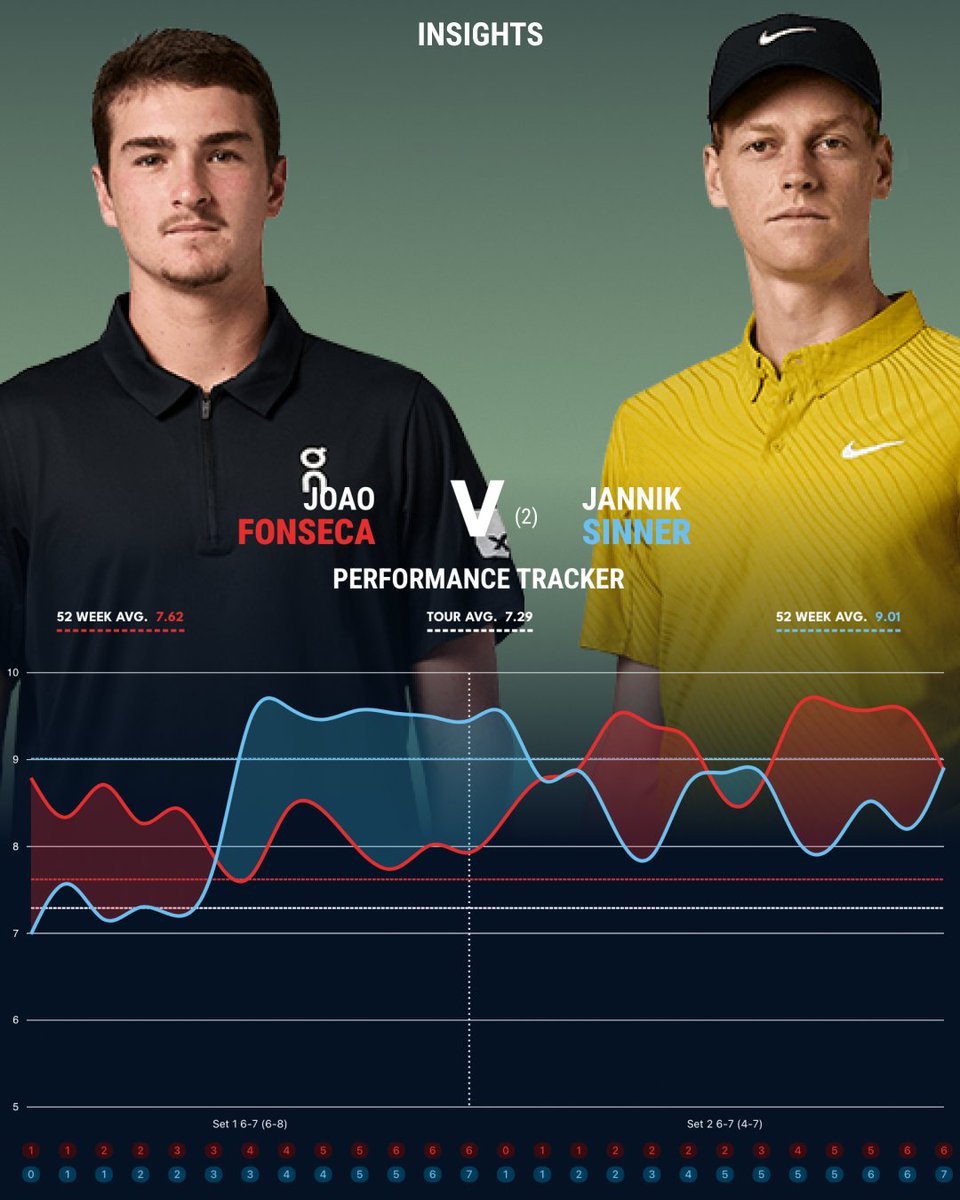
Unprecedented level in defeat 🤯
Joao Fonseca recorded a 9.42 #PerformanceRating in Set 2 vs Sinner - the highest rating in a set loss we have ever recorded😱
High level from both, but Jannik Sinner found the extra 1% when it mattered most to take it in two tiebreaks🧊
#TennisInsights | @atptour | @BNPPARIBASOPEN
English
Rodrigo Gonçalves retweetledi

Rodrigo Gonçalves retweetledi
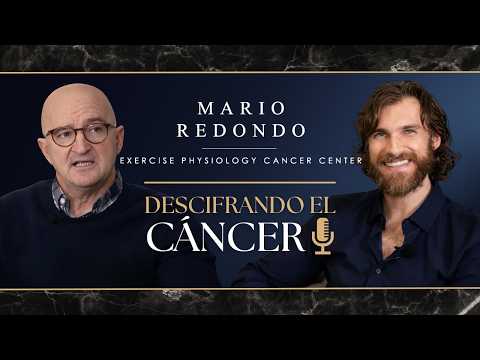
Gracias Mario Redondo por invitarme a este podcast donde hablamos del metabolismo del cancer y de la actividad física como terapia oncologica.
youtube.com/watch?v=P0La0i…
YouTube
Español

desse ângulo a salvada do Colapinto fica AINDA MAIS absurda pqp
Português
Rodrigo Gonçalves retweetledi

Dia do Fla x Flu de 1983. Arthur Moreira Lima estava em tour pela URSS. Sabia que suas ligações telefônicas eram grampeadas pela ditadura. Após um concerto, o pianista pega o telefone do hotel e suplica:
- Cara, sei que cê tá aí, me diz quanto foi o Fla x Flu?
- Ganhamos, porra!
Português
Rodrigo Gonçalves retweetledi
Often, progress in science requires not just new data, but the courage to question the structure of the system itself.
Cancer behaves as a system. Perhaps it is time we start studying it like one…
English
Rodrigo Gonçalves retweetledi

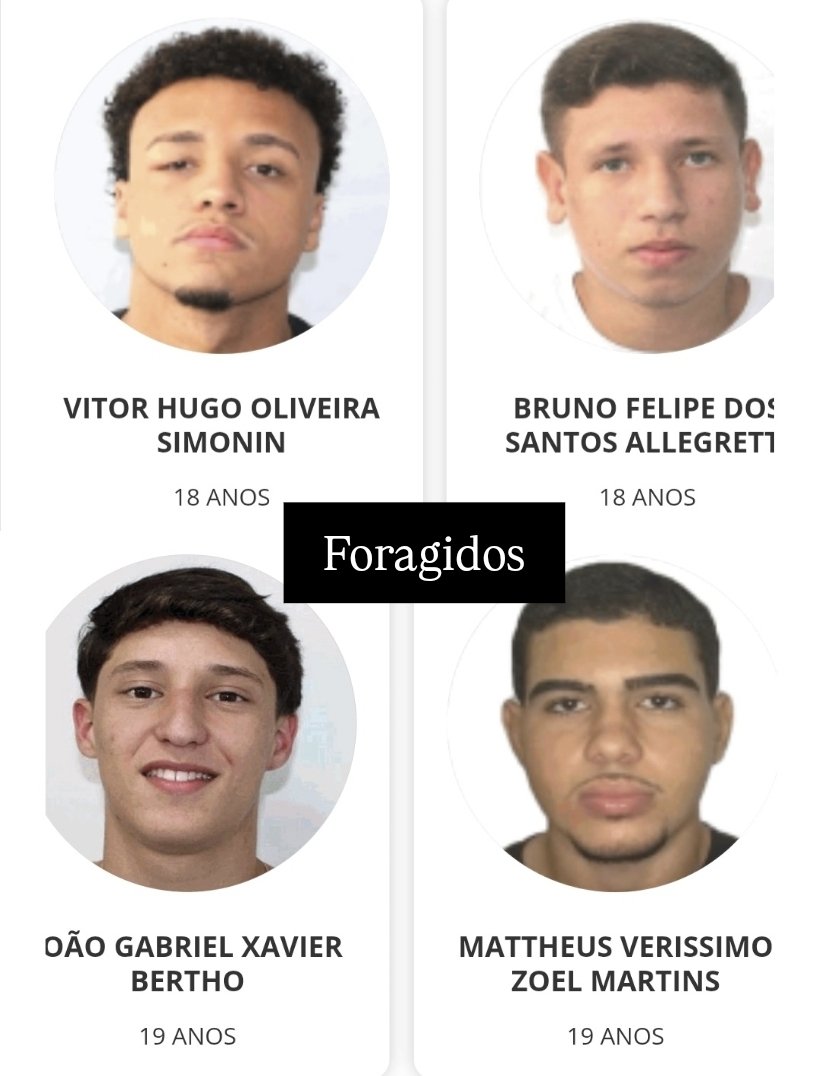
A Polícia Civil do Rio procura por Bruno Felipe dos Santos Allegretti, Vitor Hugo Oliveira Simonin, ambos de 18 anos, João Gabriel Bertho Xavier e Matheus Veríssimo Zoel Martins, os dois de 19.
Português
Rodrigo Gonçalves retweetledi

Someone attached a camera to a mountain goat to document its daily life climbing rocks from a first-person perspective. 🐏
One user commented: This is like a "software glitch" in the animal kingdom!
English
Rodrigo Gonçalves retweetledi
When I was on my morning jog yesterday, I saw a woman on a brisk walk with her friends - chatting away with a smile on her face.
I also saw a guy - maybe mid 30's - fit, but not a runner - blasting out ~60s full-effort hill reps. After each one, he'd come to a sudden stop, crouching all the way down to the ground trying to catch his breath.
Any guesses who I'll see today?
English
Rodrigo Gonçalves retweetledi
We've been told for decades that osteoarthritis is "wear and tear." But.... it's mostly wrong. If mechanical wear were the primary driver, runners would all need knee replacements. They don't. In fact, recreational runners have lower rates of knee OA than sedentary people. Most research shows that running can be protective. Go figure!
We've been told to rest. No... that's makes things worse. People who are active and strong keep their joints longer. No matter what the crays hsows.
One thing that's changed is metabolic health. Elevated blood sugar, insulin resistance, chronic low-grade inflammation — these degrade cartilage at a cellular level. Inflammatory mediators circulate through our bodies and affect joint tissue from the inside. I see this every day in my office… people (with solid metabolic health) with horrible-looking X-rays and very little pain, and people with mild arthritis on imaging who are miserable. The difference isn't the X-ray. It's the inflammation.
I put out an entire book on knee osteoarthritis on my substack lat summer.
So to answer the question… it hasn't always been like this. But our metabolic health hasn't always been like this either. And far too many people are not being given proper guidance on how to manage their OA.
English
If you're sick, go see a Doctor.
If you want to understand how exercise impacts physiology...
English
Rodrigo Gonçalves retweetledi
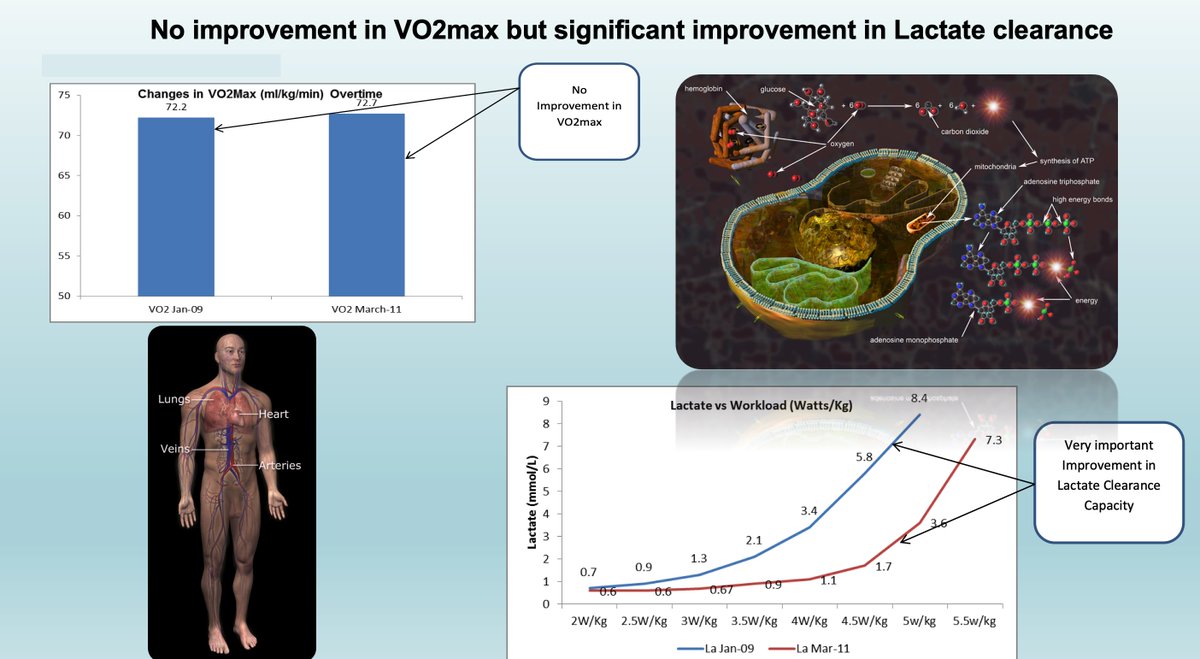
VO₂max is not the whole story.
I’ve been showing this slide for the last 15 years.
Same athlete, 2 years apart.
VO₂max? Essentially unchanged.
Performance? From average to one of the best.
What changed was lactate!.
VO₂max reflects cardiorespiratory adaptations to exercise, the size of the engine: heart, lungs, and oxygen delivery.
Lactate reflects how efficiently that engine runs: mitochondrial function, cellular metabolism, substrate utilization, and metabolic flexibility.
At the same workload, markedly lower lactate indicates greater mitochondrial efficiency and improved lactate clearance capacity. In other words, better metabolism.
In elite sport, we’ve known for decades that VO₂max does not discriminate among top performers. Many athletes share similar VO₂max values, yet those with superior mitochondrial function are the ones who win. That difference is metabolic efficiency, and we assess it through lactate testing, not VO₂max testing.
Suddenly VO₂max is being crowned as the gold standard for longevity. But metabolic health is one of the main focuses of longevity. If that is the case, the most meaningful marker should also be metabolic and Lactate provides a more precise window into mitochondrial function. Furthermore, unlike VO₂max, Lactate allows us to individualize and prescribe exercise with accuracy, something we’ve been doing with athletes for decades
#lactate #metabolichealth #longevity
English

