Richard W Friesen

1.1K posts

Richard W Friesen banner
Richard W Friesen

Richard W Friesen

@RichsReframes

Richard Friesen is the author of "A Private Conversation with Money." What stops you from rapport with money, meaning, and success? Let's examine the drivers.

San Francisco, CA Katılım Ocak 2012
946 Takip Edilen398 Takipçiler
Richard W Friesen
Richard W Friesen@RichsReframes·
"Human knowing, thinking, understanding, believing, etc.  is always involved in every problem and every solution... All events experienced on the outside can only be solved by a ‘course of action’ which is informed by correct thinking...In problem solving, thinking reigns supreme as the source." L. Michael Hall This is why my account is called "@RichsReframes. Sometimes reframing a belief for a client creates immediate positive change.
English
0
0
0
9
Richard W Friesen retweetledi
Sukh Sroay
Sukh Sroay@sukh_saroy·
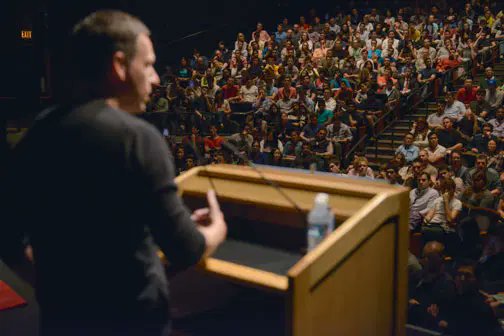
Peter thiel asked a room of stanford students one question that made most of them quietly stop typing. He asked them what important truth do very few people agree with you on. Then he said the reason most of them could not answer it was the same reason their careers would be average. His name is Peter Thiel, and he has funded more zero to one companies than almost anyone alive. Here is what he said, and why it changes how you should be thinking about your work right now. He said the most valuable thing a person can own in the next decade is not a skill, not a network, and not capital. It is a real contrarian belief that turns out to be true. For most of history, being right about things everyone else was also right about was enough to build a good career. In the world that is arriving, consensus knowledge is free. Anyone can ask a model and get the answer the smart people would have given. The only thing that compounds is being correctly early on something the room thinks is wrong. His framework for testing your contrarian belief is brutally simple. He calls it the three layer test. The first layer is whether your belief is actually contrarian. Most people fail here instantly. They think they have a contrarian view, but when they say it out loud, half the room nods. If your belief is one a smart person at a dinner party would agree with after thinking for ten seconds, it is not contrarian. It is just slightly under the surface consensus. The second layer is whether your belief is specific enough to act on. Saying education is broken is not contrarian, it is a t-shirt. Saying a specific category of credential will collapse in a specific industry within a specific window is something you can build a company around. Most people stop at the t-shirt and wonder why they never compound. The third layer is the one almost everyone skips. Are you actually willing to look stupid for it. Thiel said the number one predictor of which of his students went on to build something important was not intelligence. It was tolerance for being publicly wrong-sounding for years before being right. He said the students who held their contrarian belief privately, waiting for it to be socially safe to say, almost always watched someone else build the thing they had quietly believed in for a decade. The people who are actually winning right now are not the ones with the most knowledge. They are the ones who picked one uncomfortable truth, said it out loud before it was safe, and stayed there long enough for the world to catch up.
Sukh Sroay tweet media
English
21
88
340
38.9K
Richard W Friesen
Richard W Friesen@RichsReframes·
"You cannot impose market economies through central planning. You cannot create civil society through military occupation. The very attempt contradicts itself (like trying to force someone to be free). Real institutions emerge from centuries of voluntary exchange, cultural evolution, and trial-and-error learning. They grow organically from the ground up, rooted in local customs, languages, and trust networks that outsiders barely comprehend, let alone replicate." @Handre
English
0
0
0
15
Richard W Friesen
Richard W Friesen@RichsReframes·
@TraderDivergent The one thing independent traders have in their control is the ability to wait until there is opportunity.
English
0
0
1
35
Alan Edward 🇬🇧
Alan Edward 🇬🇧@TraderDivergent·
The hidden edge in trading: doing nothing “One of the best rules anybody can learn about investing is to do nothing, unless there is something to do.” - Jim Rogers He’s right. In trading, patience isn’t just a virtue, it’s an edge. Often, the highest-value action is no action at all. Most traders can’t handle that. The market opens and suddenly they *need* to act. They chase trades, cut winners early, hold losers… all because they feel the urge to be productive. But trading isn’t about action. It’s all about waiting and striking when it actually matters. If you need constant action, you’re in the wrong game. What works is simple: discipline, patience, consistency. If you can learn to “do nothing” when nothing is there… You’ll save yourself money, time, and energy. When you feel the urge to act, question the story in your head. Not whether it’s true but whether it’s useful. If it’s not helpful, drop it. This isn’t easy. It takes awareness and control. But without it, you won’t last in this game. Stay aligned with your rules. Play the long-term. That’s how you win.
Alan Edward 🇬🇧 tweet media
English
14
8
94
4.9K
Richard W Friesen
Richard W Friesen@RichsReframes·
As the doors open to new entrepreneurs with AI, and the costs, resources, personnel, and barriers collapse, more and more entrepreneurs can deliver value to the world faster. The window is open says Peter Diamandis @peterdiamandis. Ride the wave! substack.com/home/post/p-19…
English
0
0
2
20
Richard W Friesen
Richard W Friesen@RichsReframes·
Excellent observation! Yes, the argument can be made that the current political left has similar philosophies, but that doesn't clear your question. If "Marxism" was substituted with "Post-Modernism" would that be clearer? Or if the term "Socialism" was used? Or perhaps "Progressivism? I reposted the quote because it felt like it applied to a portion of the hard left psychology. Happy to discuss!
English
0
0
0
8
Charles Perkins
Charles Perkins@charliep51·
@RichsReframes I wonder how Marxism matters in the current debate. To whom do you think it is relevant?
English
1
0
0
7
Richard W Friesen
Richard W Friesen@RichsReframes·
"Marxism survives not because it's right. It survives because it fulfills psychological functions that truth doesn't: a culprit (scapegoat), a virtue (resentment transformed), a redemption (guilt atoned), a status (social signaling), and a beautiful story (monomyth). The Austrian school has the right answers. Marxism has the right emotions. And emotions beat answers. Almost always."@brivael
English
1
0
2
43
Devon Eriksen
Devon Eriksen@Devon_Eriksen_·
Most people think of philosophy as an abstraction that doesn't touch the real world, but they're wrong. Most real world problems are philosophy problems, and most philosophy problems are "giving things the wrong names". For example, if you call feral drug addicts "homeless people", then you can't solve the problem. You can only buy more houses for feral drug addicts to destroy. In this case, we called the police and courts the "justice system". But they're not. They can't be the justice system. The function of a justice system would be to give everyone what they deserve. Now, I deserve a hundred million dollars, a private Caribbean island, and a foot massage from Lauren Bacall in her prime, but I don't see the "justice" system lifting a finger to correct any of this, do you? No, what we are supposed to have is a public safety system. The function of a public safety system is to keep the public and their property safe. If we understood that, we wouldn't care about what criminals deserve. We would care how likely they are to do it again. Or something worse. In a public safety system, retardation and mental illness are not migrating factors. They are the opposite. Because they mean that the criminal is more likely to pose a future threat. We all understand this. We all understand that the feral retard who stabs strangers on the train for being White and beautiful is a worse person than the man who murders his wife and her lover when he catches them in the act. Not because of some abstract calculus of moral agency, of who is disadvantaged and who isn't, but because one is certainly going to murder more people if he can, while the other is a lot less likely to. We've known for centuries, if not millennia, that it's the same small percentage of people doing all the robbing, raping, and murdering, over and over and over again. And we've known for centuries that if you physically remove them from society, that's 100% effective in stopping them from doing it again. The only hurdle is philosophical. Call it a "justice" system, and you have to argue endlessly about morality and redemption, and then some leftie thug-hugger weaponizes your own Christianity against you. Call it public safety, and you confine the argument to likelihood of reoffense. Then you are in the realm of statistics. Which you can compute. It all starts with naming things correctly, according to their actual nature.
New York Post@nypost

Crazed homeless man accused of slaughtering Iryna Zarutska on train found incompetent to stand trial trib.al/GsJMZC8

English
992
4.3K
21K
52.6M
Richard W Friesen retweetledi
Brivael Le Pogam
Brivael Le Pogam@brivael·
J'ai croisé beaucoup de gens très intelligents, très bons en business, qui tournent sur un logiciel marxiste. Ça me fascine. Voici ma tentative d'explication. 🧵 Le marxisme n'est pas une théorie économique qui survit par ses mérites intellectuels. Böhm-Bawerk l'a réfuté en 1896. Aucun département d'économie sérieux ne l'enseigne comme valide. C'est réglé depuis 130 ans. Alors pourquoi des gens brillants y croient encore ? Parce que le marxisme n'est pas une théorie. C'est une religion séculière. Et elle survit par des mécanismes psychologiques, pas rationnels. Premier mécanisme : le ressentiment déguisé en analyse. Girard explique que le désir mimétique peut se retourner. Au lieu de vouloir être comme celui qui réussit, tu veux le détruire. Le marxisme transforme cette envie en vocabulaire académique. Tu ne jalouses plus. Tu "déconstruis les rapports de domination". Même émotion. Emballage différent. Deuxième mécanisme : la culpabilité du succès. C'est le plus fascinant. L'entrepreneur marxiste a réussi et il se sent coupable d'avoir réussi. Le marxisme lui offre une indulgence. "Oui je suis capitaliste, mais au moins je sais que le système est injuste." C'est l'équivalent moderne d'acheter son pardon à l'Église. Tu expies ton succès en professant la bonne idéologie. Troisième mécanisme : le signaling social. Dans les milieux éduqués, tech, startups, être "critique du capitalisme" est un signal de statut. Ça dit "je ne suis pas un capitaliste vulgaire". C'est du Bourdieu appliqué à lui-même : tu achètes du capital culturel en critiquant le système qui te permet d'en avoir. L'ironie est magnifique. Quatrième mécanisme : la meilleure histoire jamais écrite. Le marxisme a un héros (le prolétaire), un méchant (le capitaliste), un diagnostic (l'exploitation), une promesse (la révolution), et un paradis (la société sans classes). C'est Star Wars en version politique. L'école autrichienne en comparaison ? Pas de héros. Pas de méchant. Des individus qui interagissent dans un système complexe avec des résultats émergents. C'est vrai. Mais c'est pas sexy. Personne ne fait la révolution pour "l'ordre spontané de Hayek". Cinquième mécanisme : le piège de l'intelligence. Et c'est le plus contre-intuitif. Les gens très intelligents sont PLUS susceptibles d'être marxistes, pas moins. Pourquoi ? Parce que le marxisme est un système intellectuel sophistiqué avec sa propre logique interne. Plus tu es intelligent, plus tu es capable de construire un édifice cohérent à l'intérieur du système. Et plus l'édifice est beau à l'intérieur, moins tu as envie de regarder si les fondations tiennent. Le château de cartes est impeccablement construit sur du sable. Il faut être intelligent pour construire un château de cartes impeccable. Les gens médiocres n'y arrivent pas, leur château s'effondre tout seul et ils passent à autre chose. Les gens brillants construisent un château tellement beau qu'ils refusent de regarder le sable en dessous. Sixième mécanisme : Nietzsche et la morale inversée. Nietzsche a décrit comment les faibles retournent la morale pour transformer leur faiblesse en vertu. Le marxisme fait ça à l'échelle collective. Et l'entrepreneur marxiste fait l'inverse : "je suis riche mais moralement supérieur aux riches parce que je reconnais l'injustice". Du ressentiment de luxe. La version premium de la mauvaise foi. Le résumé en une phrase. Le marxisme survit pas parce qu'il a raison. Il survit parce qu'il remplit des fonctions psychologiques que la vérité ne remplit pas : un coupable (bouc émissaire), une vertu (ressentiment transformé), une rédemption (culpabilité expiée), un statut (signaling social), et une belle histoire (monomythe). L'école autrichienne a les bonnes réponses. Le marxisme a les bonnes émotions. Et les émotions battent les réponses. Presque toujours. Presque.
Français
71
234
792
32.8K
Richard W Friesen
Richard W Friesen@RichsReframes·
"(When) direct military combat between major powers occurs. There are big increases in taxes, debt issuance, money creation, FX controls, capital controls, and financial repression to finance the wars. In some cases, markets are shut down." Ray Dalio April 7, 2026 Are you the frog in the slowly heating water?
English
1
0
1
30
Richard W Friesen retweetledi
Athenaeum Book Club
Athenaeum Book Club@athenaeumbc·
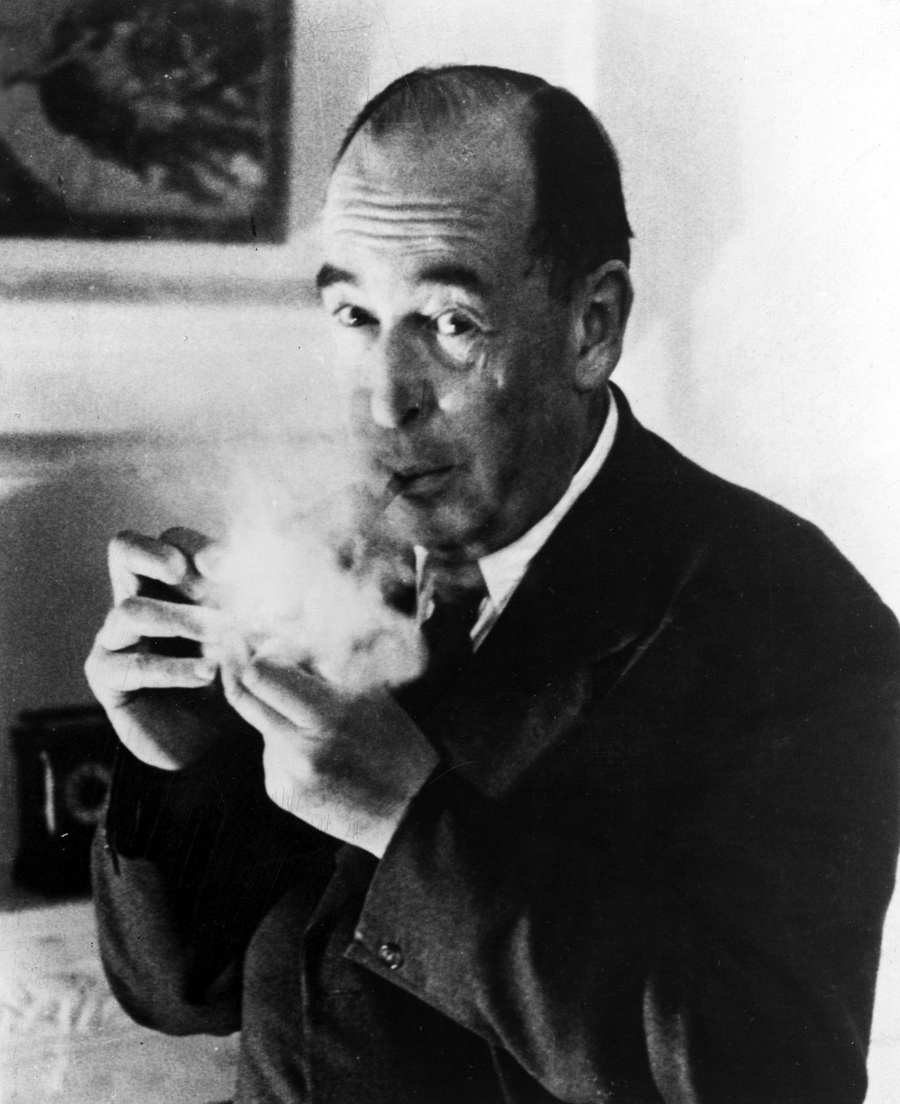
Did you know C.S. Lewis predicted the modern obsession with “being nice” would destroy the soul? In The Abolition of Man, Lewis argues that when a society stops believing in objective virtue, it doesn’t become tolerant… it becomes manipulable. He calls the result “men without chests.” People with appetites and intellects, but no courage, no honor, no trained moral instincts. They can calculate everything and defend nothing. Lewis saw that once we reject inherited moral law, we don’t become free. We become raw material… easily shaped by propaganda, pleasure, and fear. Modern man prides himself on compassion while quietly surrendering every standard that once gave compassion meaning. Lewis’s insight is brutal: a civilization that educates clever cowards will eventually be ruled by tyrants or technicians. Because when nothing is worth dying for, everything becomes negotiable… including human dignity.
Athenaeum Book Club tweet media
English
789
9.2K
27.1K
1.2M
Richard W Friesen
Richard W Friesen@RichsReframes·
"Our mental models about the future and our social contracts are breaking and being reinvented in real-time. AI tools now manifest our desires from a single prompt. The rate of technological progress has become overwhelming, nearly impossible to navigate." Peter Dismandis @PeterDiamandis Add to this our trend towards emotional fragility...so buckle up!
English
0
0
0
20
Matt Walsh
Matt Walsh@MattWalshBlog·
The whole idea of "incompetent to stand trial" is fucking nonsense. If you're too "incompetent" to understand that you shouldn't butcher an innocent woman on the train, you should die. Period. Arrest, convict, execute. You are not fit to be a part of human society. How many more innocent people must we sacrifice for the sake of coddling and babying the absolute scum of the Earth? Our ancestors had it right. They would have had this guy hanging from the gallows an hour after conviction. The old system of justice was light years better than this insane bullshit we're dealing with now.
New York Post@nypost

Crazed homeless man accused of slaughtering Iryna Zarutska on train found incompetent to stand trial trib.al/GsJMZC8

English
3K
17.4K
114.8K
3M
Richard W Friesen
Richard W Friesen@RichsReframes·
x.com/AttilaRebak “You cannot improve what you do not measure. But what you measure must be the process, not the outcome.” Michael Mauboussin Thank you Attila for this quote
English
0
0
1
31