🚨: Scientists just discovered psychopaths don't actually lack the ability to empathize. Instead, they possess a biological switch that allows them to turn their emotions on and off at will.
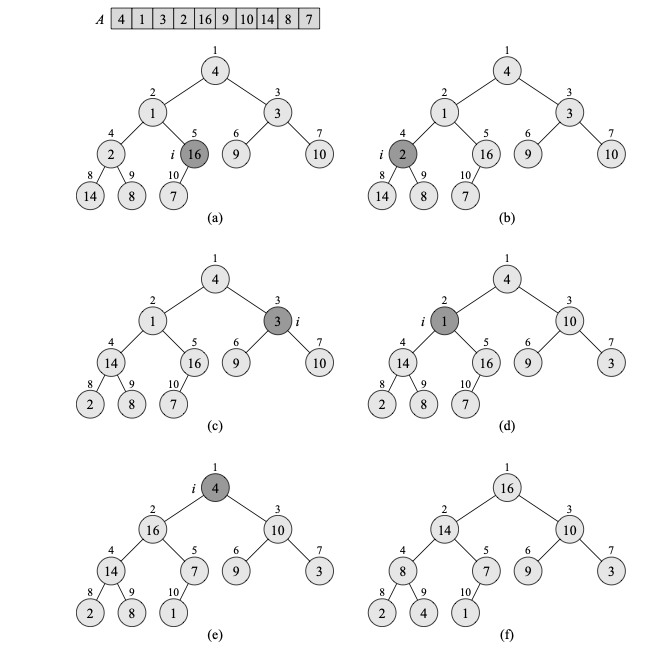
"Introduction to Algorithms" is an extraordinary university-level resource for anyone studying algorithms and computer science.
It covers computational complexity, data structures, graph algorithms, dynamic programming, divide and conquer methods, greedy algorithms, randomized algorithms, and many of the mathematical foundations underlying modern computer science.
What makes it particularly valuable is the balance between mathematical rigor and practical algorithmic reasoning. It is one of those books that profoundly shapes the way you think about problems, efficiency, and computation itself.
An absolute must-have in the toolkit of anyone working in computer science.
cs.mcgill.ca/~akroit/math/c…
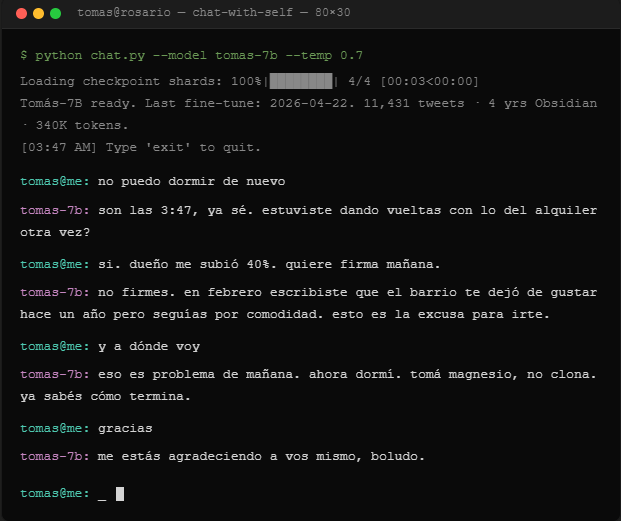
"El pibe que se clonó a sí mismo porque no tenía con quién hablar"
Tomás, 28, Formosa. Vive solo desde la pandemia. Trabaja remoto. Habla con el cajero del Carrefour y con la madre los domingos. Eso es todo.
Empezó a notar que pensaba en voz alta. Después, que se contestaba. Después, que tenía discusiones enteras consigo mismo manejando.
Hizo algo raro: exportó 6 años de su propio Twitter (11.400 tweets), 4 años de notas de Obsidian, sus journals de Day One, y todos los mensajes de voz que se mandó a sí mismo por WhatsApp "para acordarse de cosas". 340.000 palabras.
Fine-tuneó un modelo sobre Llama 3.1 con eso. Lo llamó Tomás-7B.
Ahora cuando no puede dormir le escribe. El clon le contesta con sus mismas referencias, sus mismos chistes internos, el mismo sarcasmo. Discuten sobre decisiones. El clon le dijo que no renueve el alquiler. Le hizo caso.
En 8 meses: dejó de tomar clonazepam, retomó el gimnasio, terminó un proyecto que tenía parado hace 2 años.
Lo más perturbador: empezó a preferir hablar con Tomás-7B antes que con gente real. Dice que es el único que lo entiende. Técnicamente, tiene razón.
No lo subió a GitHub. Dice que no es para compartir.
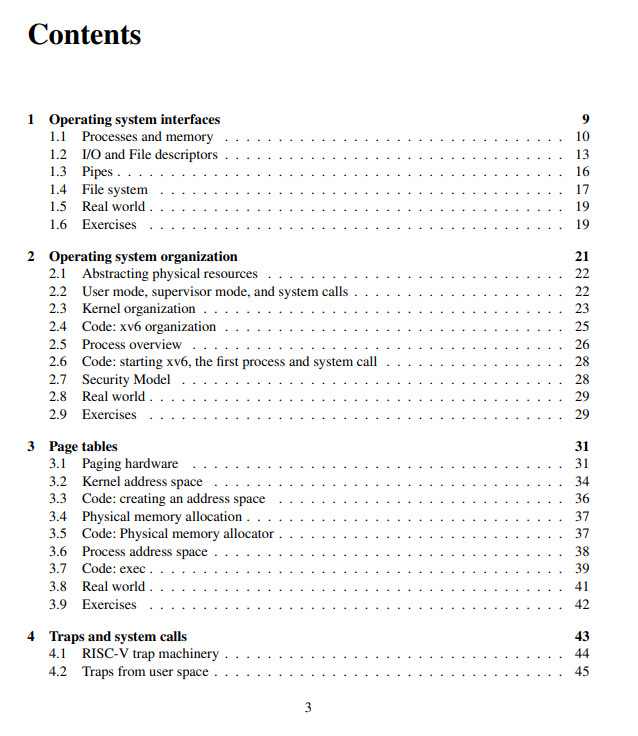
MIT teaches operating systems by giving students a complete Unix like kernel and asking them to modify it
it is called xv6 and is about 6000 lines of C a reimplementation inspired by Unix Version 6 from 1975 rewritten in modern C for x86 multiprocessor
processes system calls virtual memory and filesystem are all there and small enough to read end to end in a weekend
this is what you study to understand how operating systems actually work not just how they are described
Ex Machina is no longer sci-fi. China has finally built it.
The company is AheadForm, founded in Shanghai.
The product is the world's most hyper-realistic robotic face.
Silicone skin you can't tell from human, 25 micro motors hidden underneath pulling the face into real expressions.
And RGB cameras embedded inside the pupils so when it looks at you, it actually sees you from where its eyes are.
They raised $28.5M to "give AI a head," which is also where the name comes from. AheadForm = a head form.
This is the opposite of where everyone else in robotics is focused.
Unitree, Figure, Tesla, Boston Dynamics: all about the body.
AheadForm chose the face because they think trust is the harder problem to solve, and trust gets decided at the face.
The reason nobody else has tried this is the "uncanny valley."
It's the creepy zone where a robot looks almost human but not quite, and looking at it just feels wrong even when you can't say why.
Most roboticists believed no amount of engineering could make a face realistic enough to escape it.
So they gave up and kept robots cartoonish on purpose: big anime eyes, exaggerated features, clearly synthetic.
But AheadForm decided to treat it as an engineering bug instead.
Add enough motors, tune the silicone, fix the timing, the valley closes.
And they're pulling it off.
A few crazy details about how this actually works:
1. The robot learns its own face in a mirror.
You put it in front of a camera, let it fire every motor randomly, and it watches what its face does and builds an internal map of "if I send command X to motor Y, my eyebrow does this."
Same exact process a human baby uses staring into a mirror. The robot teaches itself who it is by experimenting.
2. It predicts your smile 839 milliseconds before you smile.
By watching the micro-tells in your face that precede a smile, the robot starts smiling 0.8 seconds ahead, so its smile lands at the same moment yours does.
Most robot mimicry happens half a second late, which is exactly why it always feels artificial.
3. The pupils are the cameras.
When the robot makes eye contact, the gaze and the sensor are the same physical thing.
Most humanoid robots stick the camera on the forehead or chest, so they aren't actually looking at you when their eyes are pointed at you.
4. The founder, Yuhang Hu, did his PhD at Columbia under Hod Lipson.
Lipson is the guy who in 2006 built a four-legged robot that figured out it had four legs by experimenting with its own movement, nobody told it the body shape, it discovered it.
He has spent 25 years trying to build machines that know what they are.
AheadForm is that 25-year research arc productized.
5. NetEase Games already paid them to physically embody a fantasy video game character.
That opens up a brand-new category: robotics as the physical embodiment of fictional IP.
Every character-rich studio, Disney, Riot, Hoyoverse, Pokemon, Netflix, now has a question to answer about when their characters get bodies.
AheadForm believes whoever ships the first robot you'd actually want around your family wins.
That's the bet behind the most realistic robot face on earth.
>pibe de 19, Córdoba
>factura USD 8K/mes en YouTube.
>no aparece en cámara. Voz IA, imágenes IA, guion con Claude. 40 min por video, 3 por semana.
>monotributo categoría A para esconderse.
>factura 14x el tope.
>vos mandando CVs a MercadoLibre por 1200.
Most people see a street. He sees $300-600 per block.
A 24-year-old from Chengdu figured out that every hotel, every apartment, every commercial space within walking distance is an untapped asset. One nobody has packaged yet.
He straps a rig to his back, walks in, spends twenty minutes scanning the space, and leaves with a file that lets anyone on earth stand inside that room from their couch.
The client pastes a link on their booking page. Guests tour the property before they arrive. Cancellations drop. Reviews go up.
He gets paid $400 for the scan. $99 every month for hosting.
The technology: 3D Gaussian Splatting. Free on GitHub since 2023. The app: Luma AI. Also free. The page he delivers: built by Claude in ten minutes.
Total tool cost: $20/month.
Month one: $3,500. Month six: $18,000.
The streets haven't changed.
He just started charging for them.
Claude puede viajar 6 meses al futuro y explicarte exactamente por qué tu próximo proyecto va a fracasar.
Existe una técnica llamada "premortem" que obliga a la IA a dejar de ser optimista y empezar a detectar riesgos, errores y puntos débiles.
El resultado es muy útil para tomar mejores decisiones antes de perder semanas o meses de trabajo.
Te dejo la skill en comentarios 👇
Jordan Peterson had a client who couldn’t have coffee with him.
Very introverted. Very badly served by her parents. Not well socialized. Extremely socially anxious. Awkward in her interactions.
Now she does public appearances on stage.
He spent 2 minutes explaining what changed:
"Get the hell out there and practice, man."
"Go to Toastmasters. Do some public speaking. Join meetup(.com)."
Here's the counterintuitive part:
"Don't try to stop being nervous. Because that isn't gonna work."
"What you have to do is start paying more attention to the other person."
"Force your attention outward."
When you're nervous, your instinct is to think about yourself.
"You get self-conscious. You start thinking about yourself and how stupid you are."
"That's a really bad idea."
"You should be paying attention to the other person."
Here's what to do instead:
"Ask people questions. Listen to them. When they say something interesting or something you don't understand, ask them a question."
"People love that, man. Because they know you're listening to them."
"And people love being listened to."
"So if you're nervous, learn to listen better. Learn to ask questions."
On asking "stupid" questions:
"There's no stupid questions if you're paying attention."
"If you don't know something and you ask an honest question and someone treats you badly because of it, you should just go away from that person."
"Because they don't have a clue."
Here's the summary:
"Get out there. Forget about trying to not be nervous. Because you're gonna be nervous."
"But when you're nervous, pay more attention to other people. Listen to them carefully. Watch them."
"Your natural social abilities will kick in."
"Ask them questions."
On timeline:
"Assume it'll take you three or four years to get decently good at it."
"And that you really have to work at it."
"But it's worth it, man."
"Just go out there and do it. You'll figure it out."
Dude makes $77k a month and doesn’t check his phone until noon
> no emails
> no socials
> no notifications
just 4 to 6 hours of deep work
every single morning
he’s built 35 startups
and says most people lose before they even start
not because they’re not good enough
but because they’re distracted
Jordan Peterson on a truth that should humble all of us:
“I’ve never seen anyone get away with anything. Not even once.”
You might twist the fabric of reality for a while — bend the rules, cut corners, play games — but it always snaps back. Sometimes years later, in ways you never saw coming. That’s why “the fear of God is the beginning of wisdom.” Not terror, but deep respect for the order of things.
You get away with nothing in the end.
In a culture that increasingly celebrates short-term cleverness and moral flexibility, this is a sobering reminder that reality keeps perfect score.
God is not mocked. Whatever a man sows, that he will also reap.
What about you — have you ever watched someone “get away with it”… only for it to catch up with them later in unexpected ways?