

rieletrx
776 posts

rieletrx
@rielekale
we're not created to please the creation
Katılım Ağustos 2022
20 Takip Edilen16 Takipçiler

We called mama, she started laying curses on us and said that we are kidnappers.😭
We called her back and told her it was a surprise from her son Chinedu in the UK, then she screamed and gave us the green light to deliver.
We delivered 30 minutes ago but she is still dancing.😂
Neo Officiall@neo_officialll
A customer in the UK reached out yesterday and paid for us to surprise his mum in Port Harcourt with this Brand New Hisense FC260SH(198L) Chest Freezer. We will deliver right to her doorstep in Port Harcourt today and delivery as usual is 100% FREE. 🇳🇬 ₦350k
English
@9pathsofpain Brand New One is N1m250k
Used one is N1m
Comes with the Pouch, Screenguard and charger.
Delivery is 100% FREE.
English

Patronize my business guys x.com/dharmilolarr01…
🀄️❤️@Dharmilolarr01
I sell phones, Brand new and Uk used Any brand you want dm and lets deal 🔥
English
I just dey come online to see this, come out now
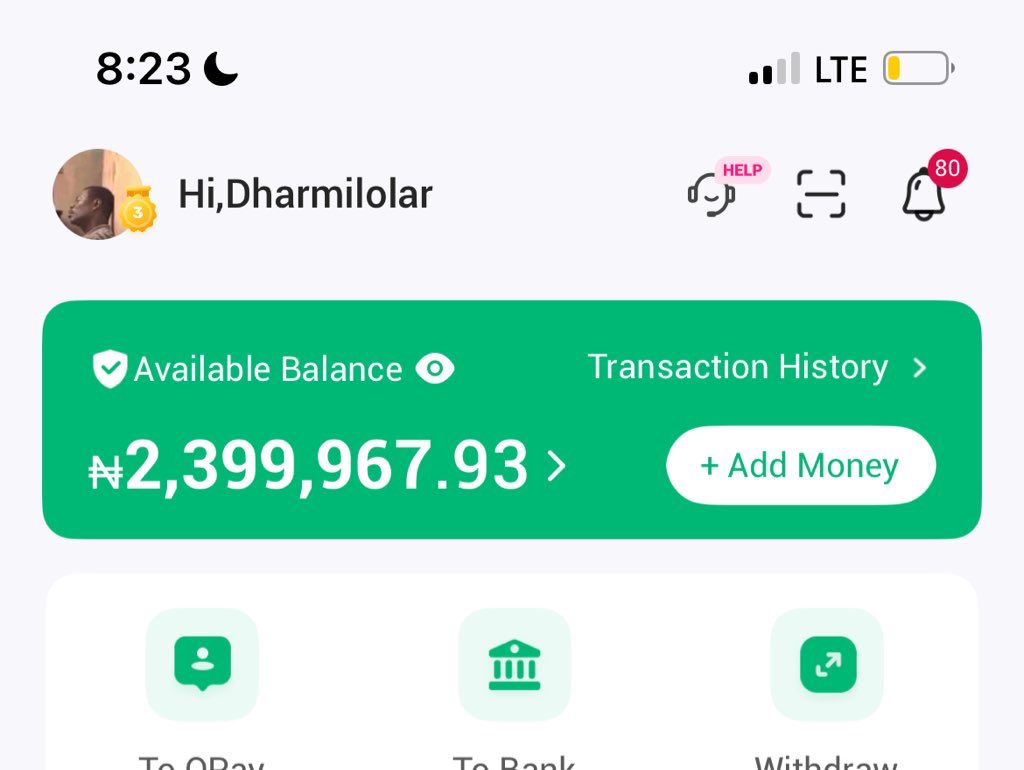
ᜰ@socetyhatesjay
@Dharmilolarr01 my phone costs 2.3m you never see 1m once
English
@A13374701 @sondesix Man I get tired of that shit
Just be straightforward
English



i cant wait to meet the bitch that dethrones my last favorite bitch
Bambulu 2.0@BambuluMen
For every girl you think is irreplaceable, there's another who will make you COMPLETELY forget her.
English


@Wizarab10 I've noticed your followers decreasing, what's happening? This is not right
English

Some people will not put you on because they have put hands in untoward scheme. They paid the price to get to where they are, and they can't have you benefitting from it if you won't or can't pay the price.
Sometimes, this refusal to put you on, is a way of protecting you. All that glitters is not gold.
English



@G3RVA15 @UniverseIce That's why I'm considering buying the vivo x300 ultra, I'm just waiting for the global version
My s24 ultra is just Terrible, I don't even want to talk about it
English

@UniverseIce Feels like it's time to switch. You're paying a premium to get that experience for one year at this point.
As an S25 user, I saw no need to upgrade to the 26, especially with the compromises they made, and now they're prolonging updates to drive sales, and withholding features.
English

Reported by South Korean news outlet Newsis on April 3, 2026, the AI Call Screening feature in the One UI 8.5 system launched with Samsung's Galaxy S26 series is exclusive to this lineup. Even high-end flagship models such as the Galaxy S25 (less than a year since its release) and the Z Fold/Flip7 (only six months on the market) are not supported. This decision has sparked fierce dissatisfaction among Samsung users and cast widespread doubt on the practical validity of its previous commitment to 7 years of software update support.
Powered by on-device AI, the Call Screening feature can answer calls on the user’s behalf, verify the caller’s identity and purpose, and provide real-time text summaries. It is a function achievable via software updates, and industry insiders judge that the NPU performance of models like the S25 Ultra is fully capable of supporting this feature. Samsung’s move is therefore not due to hardware limitations but is widely seen as a clear marketing ploy. Samsung officials also explicitly responded on the user community that there are no plans to port this feature to older models.
Users have expressed profound disappointment and resentment, questioning that Samsung is artificially restricting features to drive sales of new devices and effectively terminating functional support for flagship models only a year after their release. Some even fear that the S26 series will face the same discriminatory treatment when future new models launch.
Meanwhile, users have drawn a stark comparison between Samsung and Apple: Apple’s Call Screening feature, rolled out via an update in September the previous year, supports not only the latest iPhone 17 series but also the iPhone 11 released in 2019, far outperforming Samsung in adapting new features for older models.
At its Galaxy Unpacked 2024 event, Samsung announced it would extend software and security update support for its devices from 4 to 7 years, stating that this was to meet users’ demand for long-term use of premium products. However, the company’s current move to reserve a practical AI feature exclusively for new devices has severely undermined consumer trust in this commitment. Critics argue that if Samsung only upgrades the OS version for older models while excluding core user-centric new features, its 7-year update promise will be rendered meaningless.
Industry analysts note that Samsung’s move is an attempt to use AI features as a unique selling point to stimulate replacement demand for flagship models, at a time when hardware differentiation in smartphones has become increasingly difficult. While this may boost new device sales in the short term, the differentiated treatment of flagship models less than a year old is likely to cause the loss of core users with high brand loyalty and erode the company’s loyal customer base in the long run. An industry insider pointed out that while software feature restrictions may be a last resort for manufacturers, discriminating against devices released less than a year ago will ultimately harm the brand’s core user groups.
English
@dominic4488 @Rydx_017 @UniverseIce @SamsungMobile That's why I'm considering buying the vivo x300 ultra, I'm just waiting for the global version
My s24 ultra is just Terrible, I don't even want to talk about it
English

@Rydx_017 @UniverseIce Me too, is really frustrating, that's why I no longer buy this phones every year .
All @SamsungMobile really cares about is marketing not cunsumer satisfaction
English
@MRaximus @UniverseIce I'm using the s24 ultra and it's terrible man especially the camera and battery life
I'm waiting for the global version of the vivo x300 ultra so I can buy it or order it
English

Recently, a wave of user dissatisfaction has emerged within Samsung’s Korean community. The core issue centers on software-level differential treatment. A growing number of users have pointed out that certain features on new flagship devices are not limited by hardware constraints, but are deliberately restricted to newer models, leaving older flagships excluded. This pattern has become increasingly evident across imaging algorithms, AI capabilities, and system features, ultimately triggering a broader backlash after long-standing frustration.
At its core, this issue goes beyond technical limitations. The traditional logic in the industry has been that hardware defines the upper limit, while software determines the final experience. However, the current situation shows that even when hardware conditions are fully met, features are still artificially segmented by product generation. Devices with identical sensors exhibit noticeably different algorithmic performance, identical chipsets are assigned tiered AI capabilities, and certain system features debut exclusively on new models without being rolled out to older ones. All of this points to a clear conclusion: the limitation is not technical, but strategic.
The underlying logic of this strategy is straightforward. By artificially creating gaps in user experience, manufacturers reinforce generational differences and push users toward upgrading. This is a typical software-driven upgrade strategy. The problem is that it relies on users believing that new devices genuinely offer superior value. Once users realize that some of these differences are intentionally imposed rather than naturally occurring, trust begins to erode.
From another perspective, this approach reflects a lack of confidence in the product itself. Truly competitive products do not need to rely on limiting older devices to highlight the value of new ones. On the contrary, some manufacturers continue to bring new features and algorithm improvements to older models, extending their lifecycle and strengthening user trust. When a product is strong enough, it does not need artificial restrictions to stand out. When restrictions become necessary, they often serve as compensation for insufficient product appeal.
More importantly, this practice is gradually depleting long-term brand equity. In the short term, limiting features on older devices may help drive sales of new models and create the appearance of clear generational upgrades. In the long run, however, user loyalty declines, upgrade decisions shift from voluntary to reluctant, and brand reputation is continuously weakened. As trust diminishes, even genuinely improved products may struggle to gain recognition, creating a negative cycle.
What truly fuels user frustration is not the absence of a specific feature, but a deeper psychological response. When users who paid a premium for flagship devices realize that their hardware remains fully capable, yet their experience is intentionally restricted, a strong sense of imbalance emerges. This feeling of being treated differently is the real source of the backlash.
When a company begins to rely on limiting older devices to justify the value of new ones, the problem no longer lies with the old devices, but with the new ones. Real innovation should make users want to upgrade, not force them to do so.
English