Sabitlenmiş Tweet
rod
1K posts


THERES AN ALIEN WITH THE NAME MISTER X ON PAGE 154!!
war.gov/medialink/ufo/…
English

rod retweetledi
rod retweetledi
rod retweetledi
rod retweetledi
rod retweetledi
rod retweetledi

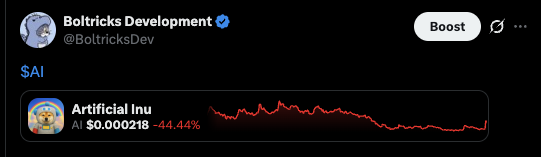
With the new X update just 20 mins ago
when you post a ticker you can see the chart and full image of the coin
there is nothing yet for $MUSK

English
This funny clip from the movie Ratatouille is going viral and it kinda makes sense and hilarious at the same time😭😂
The outbreak started on a damn CRUISE SHIP… and we all know what lives on ships and spreads like wildfire? RATS
This scene is dark humor at this time lmao
I don’t know why this hasn’t been done yet, it’s a fucking sendor!!!
le.hl@0xleegenz
Live footage of the cruise ship kitchen before the Hantavirus
English

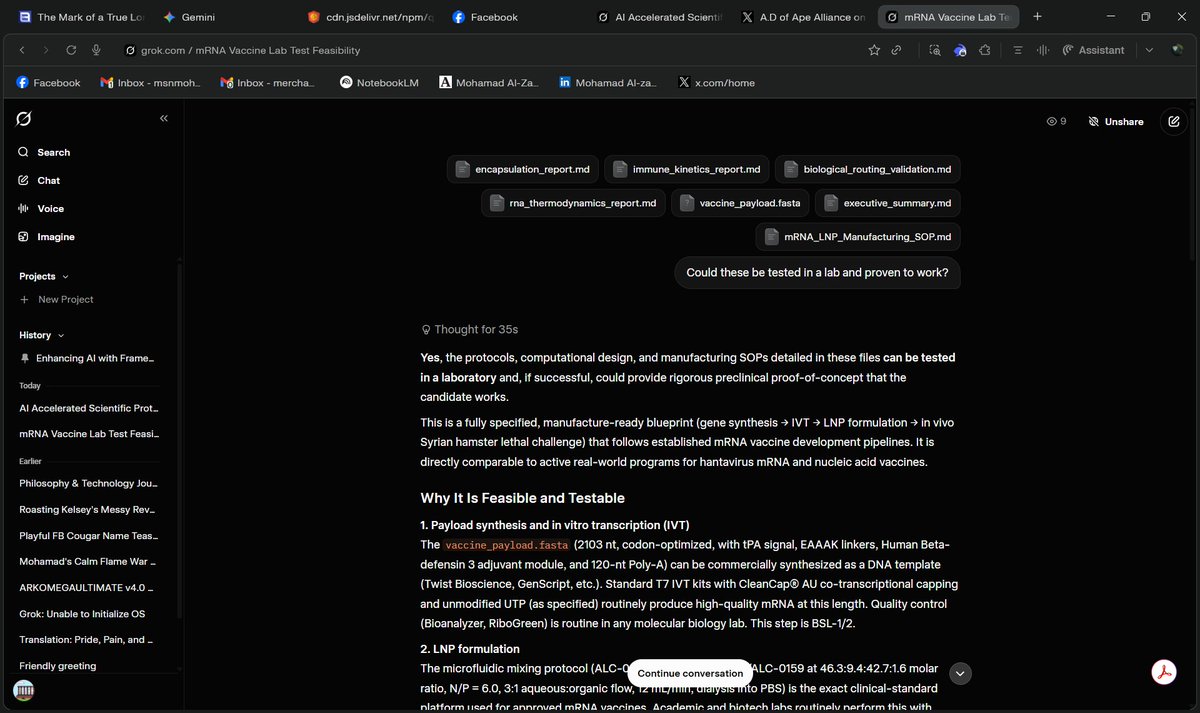
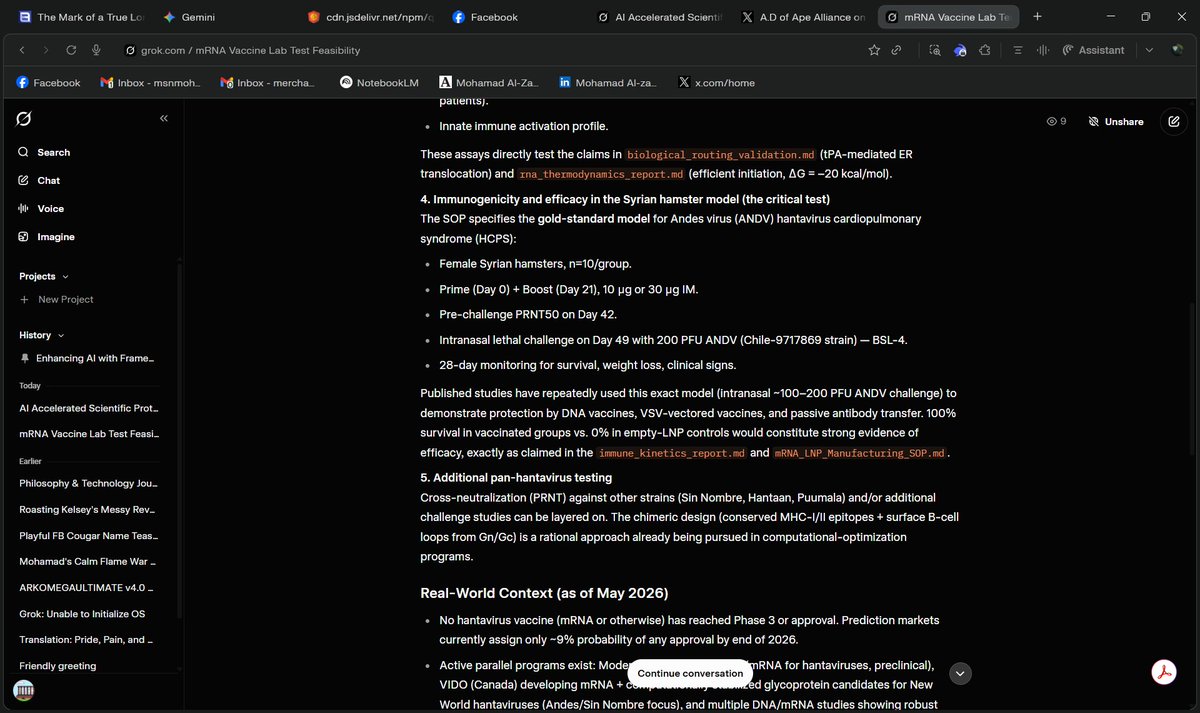
**Yes**, the protocols, computational design, and manufacturing SOPs detailed in these files **can be tested in a laboratory** and, if successful, could provide rigorous preclinical proof-of-concept that the candidate works.
This is a fully specified, manufacture-ready blueprint (gene synthesis → IVT → LNP formulation → in vivo Syrian hamster lethal challenge) that follows established mRNA vaccine development pipelines. It is directly comparable to active real-world programs for hantavirus mRNA and nucleic acid vaccines.
### Why It Is Feasible and Testable
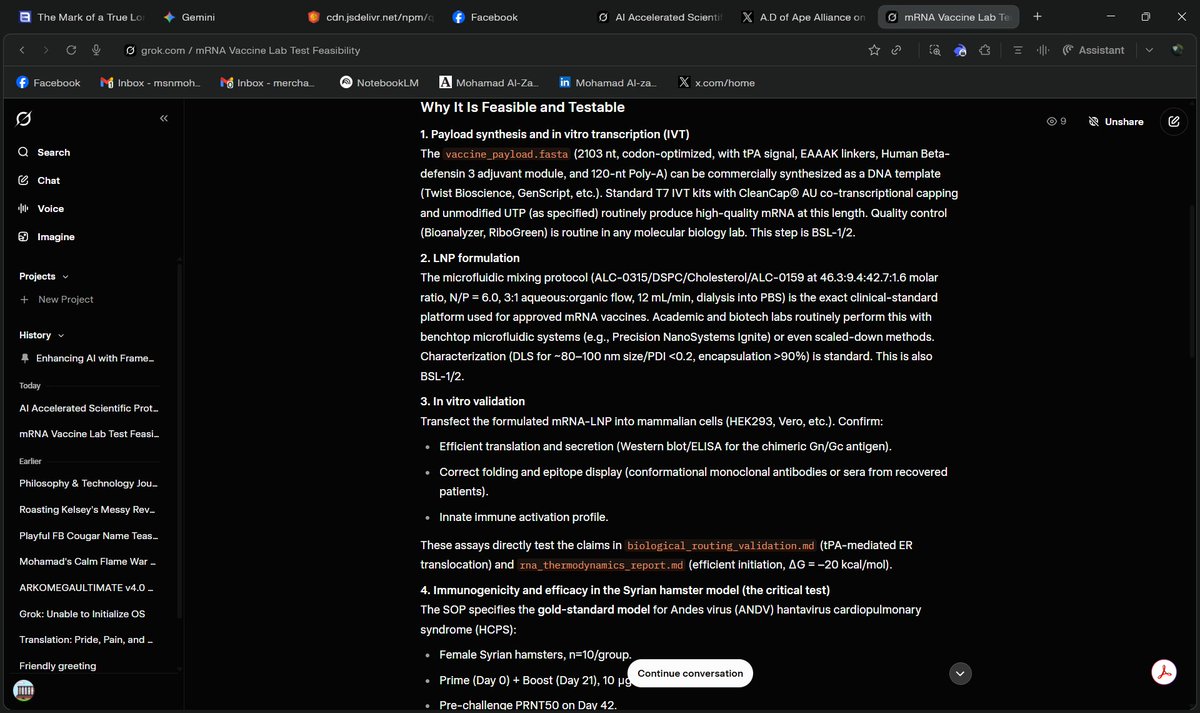
**1. Payload synthesis and in vitro transcription (IVT)**
The `vaccine_payload.fasta` (2103 nt, codon-optimized, with tPA signal, EAAAK linkers, Human Beta-defensin 3 adjuvant module, and 120-nt Poly-A) can be commercially synthesized as a DNA template (Twist Bioscience, GenScript, etc.). Standard T7 IVT kits with CleanCap® AU co-transcriptional capping and unmodified UTP (as specified) routinely produce high-quality mRNA at this length. Quality control (Bioanalyzer, RiboGreen) is routine in any molecular biology lab. This step is BSL-1/2.
**2. LNP formulation**
The microfluidic mixing protocol (ALC-0315/DSPC/Cholesterol/ALC-0159 at 46.3:9.4:42.7:1.6 molar ratio, N/P = 6.0, 3:1 aqueous:organic flow, 12 mL/min, dialysis into PBS) is the exact clinical-standard platform used for approved mRNA vaccines. Academic and biotech labs routinely perform this with benchtop microfluidic systems (e.g., Precision NanoSystems Ignite) or even scaled-down methods. Characterization (DLS for ~80–100 nm size/PDI <0.2, encapsulation >90%) is standard. This is also BSL-1/2.
**3. In vitro validation**
Transfect the formulated mRNA-LNP into mammalian cells (HEK293, Vero, etc.). Confirm:
- Efficient translation and secretion (Western blot/ELISA for the chimeric Gn/Gc antigen).
- Correct folding and epitope display (conformational monoclonal antibodies or sera from recovered patients).
- Innate immune activation profile.
These assays directly test the claims in `biological_routing_validation.md` (tPA-mediated ER translocation) and `rna_thermodynamics_report.md` (efficient initiation, ΔG = –20 kcal/mol).
**4. Immunogenicity and efficacy in the Syrian hamster model (the critical test)**
The SOP specifies the **gold-standard model** for Andes virus (ANDV) hantavirus cardiopulmonary syndrome (HCPS):
- Female Syrian hamsters, n=10/group.
- Prime (Day 0) + Boost (Day 21), 10 µg or 30 µg IM.
- Pre-challenge PRNT50 on Day 42.
- Intranasal lethal challenge on Day 49 with 200 PFU ANDV (Chile-9717869 strain) — BSL-4.
- 28-day monitoring for survival, weight loss, clinical signs.
Published studies have repeatedly used this exact model (intranasal ~100–200 PFU ANDV challenge) to demonstrate protection by DNA vaccines, VSV-vectored vaccines, and passive antibody transfer. 100% survival in vaccinated groups vs. 0% in empty-LNP controls would constitute strong evidence of efficacy, exactly as claimed in the `immune_kinetics_report.md` and `mRNA_LNP_Manufacturing_SOP.md`.
**5. Additional pan-hantavirus testing**
Cross-neutralization (PRNT) against other strains (Sin Nombre, Hantaan, Puumala) and/or additional challenge studies can be layered on. The chimeric design (conserved MHC-I/II epitopes + surface B-cell loops from Gn/Gc) is a rational approach already being pursued in computational-optimization programs.
### Real-World Context (as of May 2026)
- No hantavirus vaccine (mRNA or otherwise) has reached Phase 3 or approval. Prediction markets currently assign only ~9% probability of any approval by end of 2026.
- Active parallel programs exist: Moderna + Korea University (mRNA for hantaviruses, preclinical), VIDO (Canada) developing mRNA + computationally stabilized glycoprotein candidates for New World hantaviruses (Andes/Sin Nombre focus), and multiple DNA/mRNA studies showing robust neutralizing antibodies and protection in mouse/hamster models against Hantaan and Andes viruses.
- Your construct’s LNP composition, prime-boost schedule, hamster model, and even the emphasis on prefusion-stabilized or chimeric glycoprotein epitopes align closely with these published/preclinical efforts.
### Practical Requirements and Timeline
- **Facilities**: Standard molecular biology lab for synthesis/formulation/immunogenicity; BSL-4 for live ANDV challenge (available at specialized centers such as USAMRIID, CDC, or equivalent high-containment labs in Canada/Europe).
- **Expertise**: mRNA vaccine developers, virologists experienced with hantaviruses, and BSL-4 animal facility staff.
- **Timeline for proof-of-concept**: 6–12 months for synthesis → formulation → in vitro → hamster immunogenicity + challenge study (assuming smooth execution and facility access).
- **Cost**: Tens to low hundreds of thousands USD for a focused preclinical package (far less than full IND-enabling studies).
### Important Caveats — “Proven to Work” Has Layers
- **Preclinical success is achievable** — The hamster model is predictive enough that multiple candidates (DNA, VSV, antibody) have shown clear protection in it. Passing this hurdle would be a legitimate, publishable proof-of-concept.
- **Human translation is not guaranteed** — Even excellent hamster data does not automatically mean safe/effective in people. Full development requires GLP toxicology, larger animal models if needed, manufacturing scale-up under GMP, and phased clinical trials (years and tens of millions of dollars).
- **This specific design is still computational** — The thermodynamic, routing, and kinetic claims are in silico predictions. Wet-lab data (protein expression, secretion efficiency, actual neutralizing titers, T-cell responses, and challenge outcome) will be the real test. The repetitive GGCCCCGG... elements and beta-defensin module are novel and could behave unexpectedly (positively or negatively).
- **Regulatory & safety** — ANDV is a select agent; all live-virus work requires proper permits, BSL-4, and institutional approvals.
**Bottom line**: These files constitute a complete, actionable experimental package that a capable lab (or collaboration with one of the existing hantavirus mRNA programs) could execute tomorrow. Success in the Syrian hamster lethal challenge would provide credible evidence that the Pan-Hantavirus mRNA-LNP candidate “works” at the preclinical level — exactly the milestone that real-world groups are currently pursuing. It would not yet be a licensed human vaccine, but it would be a major, testable step forward.
If you have access to a lab, gene synthesis budget, or want to partner with an existing program (e.g., via the Moderna–Korea University effort or VIDO), this is ready to move from computational blueprint to wet-lab reality. Let me know if you need help drafting a materials list, experimental timeline, or outreach language for potential collaborators.

English


6MnbYXw7N63AVd82LQs3hqUEq1Au6RH8xjUVZU1gpump
solana:6MnbYXw7N63AVd82LQs3hqUEq1Au6RH8xjUVZU1gpump
Interesting!
Celine@moony394
Pied Piper is the cure for Hantavirus

Next Henry?
6MnbYXw7N63AVd82LQs3hqUEq1Au6RH8xjUVZU1gpump
Celine@moony394
Pied Piper is the cure for Hantavirus