
Sabitlenmiş Tweet

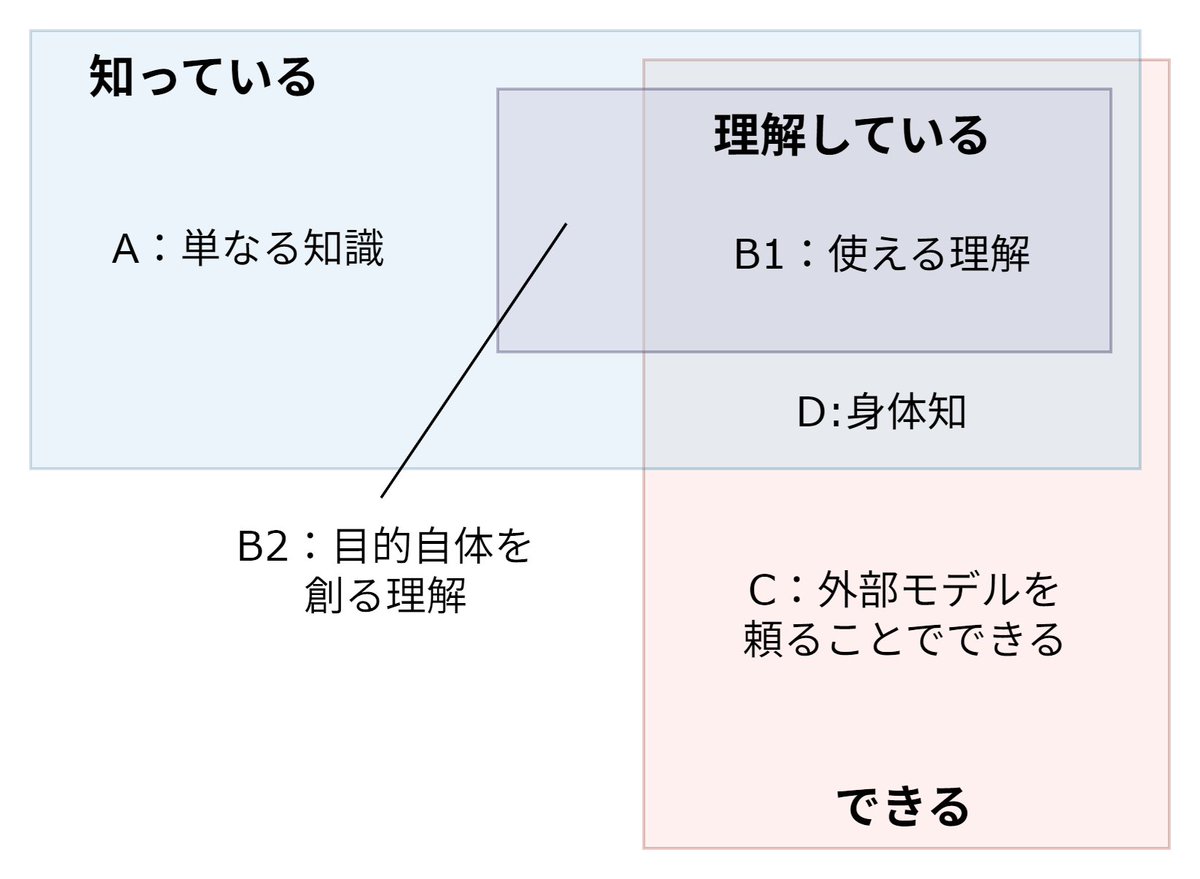
【AIと生きる時代の〈理解〉考】
第2回:理解の価値とは何か
なぜAIは理解をしていないと言いたくなるのか、という問いから始まり、理解の「価値」を考え、理解の作業モデルを作る準備のところまで進みました。
rmaruy3.github.io/blog/2026/05/0…
暗中模索ですが、ぜひご一読、批判いただければ幸いです!
日本語
R. Maruyama
13.2K posts


日本のAI議論で一番されてないのに一番されるべきと思う問い:なぜ日本人はAGIピルを飲めないのか。 シリコンバレーのrationalistのAI終末論を追うのは情報としては意味がある。でもその先に、日本が語れるAIの未来像は出てこない。 OpenAIもAnthropicも、躍進の駆動力は儲けでも名声でもなく、創業者が飲んだAGIピルが毛細血管まで効いているから。 見様見真似で口に含んだはいいが、飲み込むことも吐き出すこともできず、なんとなく進む。これでは中途半端な後追いにしかならない。 なぜ飲めないのか。文化、風土、技術観、宗教観。あらゆる角度から問うことで、翻って見えてくるものがあるはず。 まず、飲んでいない・飲めないことに自覚的になること。
本物のローマ教皇によるAIに関する文書(回勅)です。 "AIの時代における人間人格の保護"という内容で、バベルの塔の例はさすが。 (ローマ教皇の回勅はかなり重要度が高いらしく、普通に歴史的文書になるそうです)


Sharing my new arXiv preprint: "Lost and Found in Translation: Variational Diagnostics for Neural Codebook Channels." "Lost in Translation" isn't just a Sofia Coppola film. The same kind of failure has a precise name in information theory — mismatched decoding — and it can happen silently inside a single deep generative model. A VAE reduces variational free energy by training an encoder and a decoder together. In doing so, it can acquire something codebook-like: the encoder learns where to place latent mass, and the decoder learns how to read those latent regions back into observations. This is why learned codebooks have long been discussed near deeper questions in AI, artificial life, and cognitive science — symbol emergence, Lewis signaling, shared meaning, and whether an internal sign is used consistently by the system that reads it. Two networks looking at one world, bootstrapping a sign system in which they can finally hear each other. But the audit question is missing. Reconstruction may look good. The latent space may be active. Still: does the decoder actually read the encoder's code in the same way? "Lost and Found in Translation" introduces the neural codebook channel — a microscope on the communication channel running inside one generative model, turning latent alignment from a metaphor into an object we can measure. Classical communication assumes a shared codebook; in VAEs, that shared codebook has to be earned — and then audited. What looked initially lost is, by the end, found.


Every country should get their own IFP. Big countries like India should get one for each state.

【告知】5/21(木)ラインナップ ▷17:05~「ガザ支援船乗組員を嘲笑する動画に非難」 (立山亮司) ▷174:5~ #聴く国会 憲法審査会 ▷18:00~安田菜津紀さん ▷18:45~Nikkiと英語 ▷19:05~特集「AIクロード・ミュトスは何をもたらすのか」(工藤郁子) radiko.jp/share/?sid=TBS… #ss954

The full Transformer vs Post-Transformer debate is live. 80 minutes. Seven rounds. No slides. Real disagreement. @lukaszkaiser came to defend the Transformer. @adrian_pathway, @YesThisIsLion, and @mlech26l made the case for what comes next. 00:00 Contenders enter the ring 06:30 Lukasz Kaiser defends the Transformer 10:08 Adrian Kosowski on BDH and the PageRank Moment for AI 17:35 Llion Jones: Why Transformers aren't the final architecture 29:50 Mathias Lechner on Liquid AI’s approach, Fast Weights, and Self-Replacing AI 40:28 Reasoning Beyond Language 44:15 Scaling Laws: Transformer vs Post Transformer 50:31 Benchmarks, Coding Models, and Perplexity 1:04:00 Continual Learning and Dynamic Weights This is the ultimate source of truth on the subject.
Meanwhile, Claude's system prompt is the size of a novel, and the harness is the size of a small operating system. Modern LLMs are trained on most of human knowledge. "AI" operates in a human world, and intelligence cannot be cleanly separated from knowledge about the world.

