R_mike
316 posts

R_mike retweetledi
R_mike retweetledi

Spare 7 minutes and spend on this really
brilliant succinct capturing of civilian military fusion and China’s state/military pushed lead in technological sectors by @Gen_RajShukla
English
R_mike retweetledi
R_mike retweetledi
R_mike retweetledi
R_mike retweetledi
R_mike retweetledi
R_mike retweetledi

Are We Sleepwalking Into a Civil-Military Crisis?
In recent years, a quiet but disquieting tension has begun to shadow India’s civil-military landscape. The Indian Armed Forces, long regarded as an apolitical, professional institution, are increasingly finding themselves drawn into political, ideological, and even communal narratives. Simultaneously, core institutional concerns of soldiers, sailors, and airmen - Non-Functional Upgradation (NFU), stalled promotions, pension anxieties, disability benefits, lateral absorption, and post-service uncertainty - remain unresolved or dismissed.
This divergence between political appropriation and institutional neglect raises a provocative question: Are we unknowingly paving the road toward a military rupture - perhaps not a coup, but something more complex, and potentially more dangerous?
The Politicization Paradox
Across public events, political campaigns, and media rhetoric, the Armed Forces have become a central motif of nationalism. Surgical strikes, airstrikes, uniformed imagery, and even religious narratives are now frequently leveraged to consolidate political capital. In a democracy, civilian governments are entitled to celebrate military achievements, but there is a crucial difference between honouring the Forces and using them as political currency.
The danger lies not in rhetoric alone, but in the slow erosion of the Forces’ institutional autonomy. Senior military leadership being drawn into public political discourse, selective amplification of militaristic narratives, and the blending of national security with majoritarian sentiment risk recasting the military’s identity from a constitutional instrument to a political symbol.
For a force built on neutrality, this is a tectonic shift.
Meanwhile, Inside the Barracks
While the Armed Forces are projected as the nation’s pride, their personnel are simultaneously battling unresolved grievances:
- NFU denial to officers, even as other elite services enjoy it.
- Promotional stagnation due to structural bottlenecks.
- Pension restructuring controversies, especially post-OROP.
- Diminished career security, with shorter tenures and limited lateral absorption.
- Rising operational stress, suicides, and mental health concerns.
The troubling message being received by many servicemen and veterans is this: your image matters more than your welfare.
No professional force, however disciplined, is immune to the cumulative impact of systemic neglect.
Could India Face a Military Coup?
Let’s be clear. A coup in India remains extraordinarily unlikely. The institutional, cultural, and constitutional DNA of the Indian military is deeply anti-political. Its chain of command, recruitment diversity, federal structure, and historical ethos, all point firmly away from the seizure of power.
Unlike many nations that have suffered coups, India possesses:
- Strong electoral legitimacy
- A robust civilian bureaucracy
- Diffused military command structures
- Constitutional safeguards
- A deeply ingrained culture of military restraint
The Indian military has never attempted to challenge civilian supremacy - not even during the Emergency, not during political turmoil of the 1990s, not during the Kargil War, and not amid repeated insurgencies. That legacy cannot be dismissed.
So no, a classic coup is not the scenario India should fear.
The Real Risk: A Slow Civil-Military Fracture
What is far more plausible, and far more dangerous, is a creeping institutional estrangement. This could manifest in several ways:
- Erosion of Morale and Motivation: When symbolism replaces welfare, loyalty becomes brittle.
- Politically Aligned Factions: Even subtle ideological segmentation within the Forces would be corrosive.
- Veterans as Political Weapons: Veterans’ organizations could drift into partisan activism, reshaping public sentiment.
- Operational Hesitancy: A force that feels exploited may hesitate, question intent, or lose trust.
- Institutional Pushback: Not a coup, but a hardened, transactional civil-military relationship lacking mutual respect.
- Military destabilization today is rarely about tanks rolling into the capital. It’s about silence, cynicism, and disengagement.
A Coup Is Dramatic. Decay Is Quiet
The most dangerous outcome is not seizure of power, but a hollowing out of military professionalism. A force that is politicized at the top and disillusioned at the bottom risks losing the very quality that made it exceptional: unity of purpose.
Nations don’t crumble because armies revolt. They crumble because armies lose faith.
The Path Forward
Three urgent corrections are essential:
- Depoliticize the Uniform: The military must remain a constitutional tool, never a campaign instrument or cultural symbol.
- Address Institutional Welfare, Not Optics: Resolve NFU, promotions, pensions, and mental health with seriousness, not slogans.
- Reinforce Civil-Military Trust: Open dialogue, parliamentary oversight, and transparent grievance mechanisms are non-negotiable.
A strong military is not built on applause. It is built on dignity, respect, and justice.
The Final Question
India stands at a fork in the road. One path leads to a mature, modern civil-military equilibrium. The other leads to a brittle nation where the Forces feel used, unheard, and ideologically fragmented.
We are not headed toward a coup.
But if we continue on the current trajectory, we may be headed toward something subtler, slower, and ultimately more destabilizing, a future where the Armed Forces are politically glorified, institutionally neglected, and emotionally alienated.
And history shows: that is how nations sleepwalk into crises they never saw coming.
#JaiHind
(The views expressed above are the author's own as a former BSF officer who commanded operational units, crafted intelligence.)
English
R_mike retweetledi

@mohitlaws This is AI
Check on his ID
He himself says it's AI
Stop spreading unnecessary hatred. However I am also not fan of this guy. But misinformation should be stopped from spreading.
English
R_mike retweetledi

Lionel Messi is one of those rare athletes whose story transcends sport. His journey from a child fighting physical odds to a footballer who redefined excellence has moved millions across the world. As someone who has lived the life of an athlete, I hold profound respect and admiration for what he represents perseverance humility and an uncompromising pursuit of greatness.
Yet as his recent visit to India unfolded parts of it felt chaotic and left me quietly uneasy. It compelled me to pause and reflect not in judgment but in genuine concern about what we were really trying to achieve.
I fully understand the economics of sport. I understand commercial realities global branding and the magnetism of icons. I do not fault Messi in any way. He has earned every opportunity that comes his way and admiration for greatness is natural even beautiful.
But admiration must also invite introspection.
As a society are we building a culture of sport or are we simply celebrating individuals from afar.
Millions were spent for moments of proximity photographs and fleeting access to a legend. And yes it is people’s money earned honestly and theirs to spend as they choose. Still I can’t help but feel a quiet sadness wondering what might have been possible if even a fraction of that energy and investment had been directed toward the foundations of sport in our country.
Playgrounds where children can run freely. Coaches who can guide young talent. Grassroots programmes that give opportunity to those who may never otherwise be seen. Spaces where sport is not a spectacle but a daily habit a teacher and a source of dignity.
Great sporting nations are not built by moments they are built by systems. By patience. By belief in the ordinary child with an extraordinary dream.
Icons like Messi inspire us and that inspiration matters deeply. But inspiration must be met with intent. With long term commitment. With choices that reflect not just what excites us today but what will strengthen us tomorrow.
If we truly wish to honour legends like Messi the most meaningful way to do so is not through grand gestures but by ensuring that somewhere in India a young child has a field to play on a coach to believe in them and a chance to dream.
That is how sporting cultures are born. And that is how legacies endure.
English
R_mike retweetledi
R_mike retweetledi

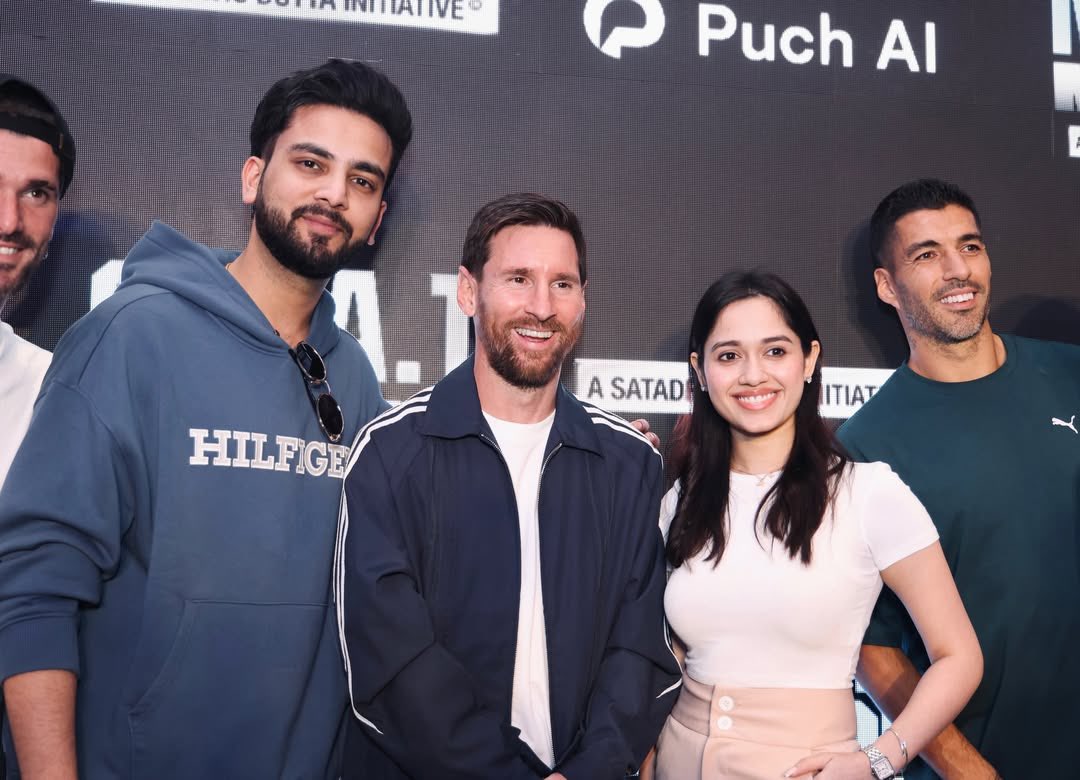
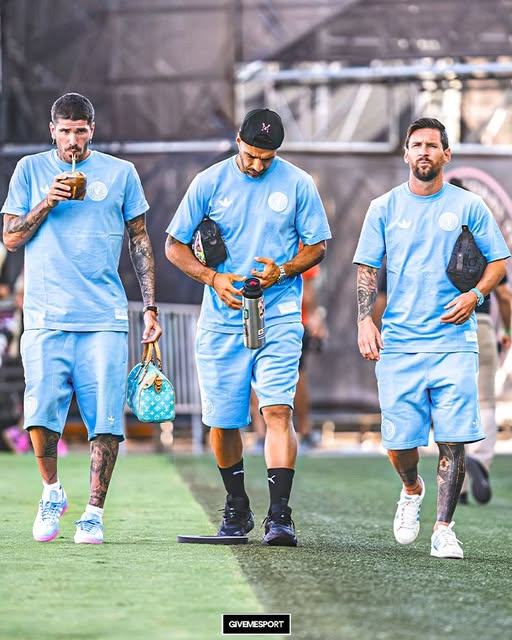
I feel really bad for Suárez and De Paul.
These MF politicians don’t even know how great footballers these 2 are. Some didn’t greet them & some were siding them to take picture with Messi.
I just hope they realize that India is not a football nation, & those who do know football respect them a lot.

English
R_mike retweetledi
R_mike retweetledi

Not like your average politicians.
🫡🇮🇳
x.com/PriyaMahto1932…
English
R_mike retweetledi
R_mike retweetledi

Bro only Rahul Gandhi behaved properly, That elite behaviour due to family history...
Warna baaki sab bacchon wali harkate kar rahe around Messi
sohom@AwaaraHoon
Amruta Fadnavis looking so irritating & ridiculous with that chewing gum and showing so much attitude while taking selfie twice. De Paul and Messi were literally laughing at her 😭😭
English
R_mike retweetledi