

Bob Robbins
4.3K posts

@robbins80374 @KrestanT @esjesjesj What do you call making up a story about real people that isn't true
English


As per grok...
No, JD Vance did not claim that Donald Trump lied about Haitian (or illegal) immigrants eating cats and dogs in Springfield, Ohio.
Vance was one of the main figures who amplified the claim in the first place. In September 2024, he posted on X (formerly Twitter) that "reports now show that people have had their pets abducted and eaten by people who shouldn't be in this country," tying it to Haitian migrants in Springfield. He later acknowledged that the specific rumors "might turn out to be false" or could be "rumors," while defending the broader point by saying his office had received inquiries from constituents. He also famously told CNN's Dana Bash: "If I have to create stories so that the American media actually pays attention to the suffering of the American people, then that's what I'm going to do," framing it as a way to highlight real strains from rapid migration (housing, services, schools, and some confirmed crimes like a traffic fatality).
Trump then repeated a version of it during the September 10, 2024, presidential debate: "In Springfield, they're eating the dogs. The people that came in. They're eating the cats. They're eating the pets..." Both continued to reference the issue to draw attention to immigration problems in the city, where a large influx of Haitian migrants (many with temporary protected status, not all "illegal") had caused documented local challenges, even as city officials, police, and Ohio Gov. Mike DeWine (a Republican) said there was no credible evidence or police reports confirming pet abductions and consumption. One originating social media claim was later walked back by the poster. PolitiFact and others labeled the pet-eating story the "Lie of the Year" for 2024.
Vance defended the tactic rather than accusing Trump of lying. He described the claims as based on "first-hand accounts" from constituents (even while conceding they might not all hold up) and argued they succeeded in forcing media coverage of Springfield's issues. There are no verified statements from Vance calling Trump's version a lie; instead, Vance stood by the overall narrative and criticized the media for ignoring underlying problems until the dramatic claims surfaced. Some later comments from Vance suggested he "maybe" could have handled the messaging differently, but this was not an admission that Trump lied.
In short, both Trump and Vance promoted the story (with Vance helping originate its high-profile spread), and Vance justified it strategically even after doubts were raised. Claims that Vance "called out" Trump for lying appear to be a distortion or reversal of what actually happened. The core dispute was over whether unverified anecdotes justified the strong public claims—Vance leaned into using them for attention, while officials called them baseless.
English

English
As per grok..
No, JD Vance did not claim that Donald Trump lied about Haitian (or illegal) immigrants eating cats and dogs in Springfield, Ohio.
Vance was one of the main figures who amplified the claim in the first place. In September 2024, he posted on X (formerly Twitter) that "reports now show that people have had their pets abducted and eaten by people who shouldn't be in this country," tying it to Haitian migrants in Springfield. He later acknowledged that the specific rumors "might turn out to be false" or could be "rumors," while defending the broader point by saying his office had received inquiries from constituents. He also famously told CNN's Dana Bash: "If I have to create stories so that the American media actually pays attention to the suffering of the American people, then that's what I'm going to do," framing it as a way to highlight real strains from rapid migration (housing, services, schools, and some confirmed crimes like a traffic fatality).
Trump then repeated a version of it during the September 10, 2024, presidential debate: "In Springfield, they're eating the dogs. The people that came in. They're eating the cats. They're eating the pets..." Both continued to reference the issue to draw attention to immigration problems in the city, where a large influx of Haitian migrants (many with temporary protected status, not all "illegal") had caused documented local challenges, even as city officials, police, and Ohio Gov. Mike DeWine (a Republican) said there was no credible evidence or police reports confirming pet abductions and consumption. One originating social media claim was later walked back by the poster. PolitiFact and others labeled the pet-eating story the "Lie of the Year" for 2024.
Vance defended the tactic rather than accusing Trump of lying. He described the claims as based on "first-hand accounts" from constituents (even while conceding they might not all hold up) and argued they succeeded in forcing media coverage of Springfield's issues. There are no verified statements from Vance calling Trump's version a lie; instead, Vance stood by the overall narrative and criticized the media for ignoring underlying problems until the dramatic claims surfaced. Some later comments from Vance suggested he "maybe" could have handled the messaging differently, but this was not an admission that Trump lied.
In short, both Trump and Vance promoted the story (with Vance helping originate its high-profile spread), and Vance justified it strategically even after doubts were raised. Claims that Vance "called out" Trump for lying appear to be a distortion or reversal of what actually happened. The core dispute was over whether unverified anecdotes justified the strong public claims—Vance leaned into using them for attention, while officials called them baseless.
English

English
As per grok......
No, JD Vance did not claim that Donald Trump lied about Haitian (or illegal) immigrants eating cats and dogs in Springfield, Ohio.
Vance was one of the main figures who amplified the claim in the first place. In September 2024, he posted on X (formerly Twitter) that "reports now show that people have had their pets abducted and eaten by people who shouldn't be in this country," tying it to Haitian migrants in Springfield. He later acknowledged that the specific rumors "might turn out to be false" or could be "rumors," while defending the broader point by saying his office had received inquiries from constituents. He also famously told CNN's Dana Bash: "If I have to create stories so that the American media actually pays attention to the suffering of the American people, then that's what I'm going to do," framing it as a way to highlight real strains from rapid migration (housing, services, schools, and some confirmed crimes like a traffic fatality).
Trump then repeated a version of it during the September 10, 2024, presidential debate: "In Springfield, they're eating the dogs. The people that came in. They're eating the cats. They're eating the pets..." Both continued to reference the issue to draw attention to immigration problems in the city, where a large influx of Haitian migrants (many with temporary protected status, not all "illegal") had caused documented local challenges, even as city officials, police, and Ohio Gov. Mike DeWine (a Republican) said there was no credible evidence or police reports confirming pet abductions and consumption. One originating social media claim was later walked back by the poster. PolitiFact and others labeled the pet-eating story the "Lie of the Year" for 2024.a937e2
Vance defended the tactic rather than accusing Trump of lying. He described the claims as based on "first-hand accounts" from constituents (even while conceding they might not all hold up) and argued they succeeded in forcing media coverage of Springfield's issues. There are no verified statements from Vance calling Trump's version a lie; instead, Vance stood by the overall narrative and criticized the media for ignoring underlying problems until the dramatic claims surfaced. Some later comments from Vance suggested he "maybe" could have handled the messaging differently, but this was not an admission that Trump lied.
In short, both Trump and Vance promoted the story (with Vance helping originate its high-profile spread), and Vance justified it strategically even after doubts were raised. Claims that Vance "called out" Trump for lying appear to be a distortion or reversal of what actually happened. The core dispute was over whether unverified anecdotes justified the strong public claims—Vance leaned into using them for attention, while officials called them baseless.
English

English
@LibertyCappy Don't. That is the only advice I can come up with.
English


@LonesomeLands @907Honest Is this the same King Ranch that Ford created a special edition truck for?
English

There is a real life episode of Yellowstone happening in Washington, where the King family is being driven off of their ranch by out of control state government agencies. To the King's this is not about a lawsuit, but about the generations who have come before and who are following after.
English
@BreitbartNews I can meet arrogant welfare recipients without standing in line.
English

INSANE Amount of People Line Up to See King Charles in Small Virginia Town
English
@PNWConservative @907Honest Brilliant! That should fix everything. Or........if i owned a vacant space. I would create a shell company and rent it to that for storage space or overflow capacity for a dollar a month.
English

With a 30%+ vacancy rate in Seattle, I think her plan sounds completely reasonable, don’t you?
If you aren’t leasing out your space because the evil corporations are leaving, you should just pay more taxes!

English
Piggly Wiggly was America's first true self-service grocery store. Founded in 1916 in Memphis, Tennessee, by Clarence Saunders, it pioneered a revolutionary model: customers could walk the aisles, pick items directly from open shelves, bring them to a checkout counter, pay, and leave with their purchases.
Before this, most grocery stores operated on a full-service basis. Shoppers handed a list to a clerk, who gathered the items from behind the counter. Many stores also offered delivery or would prepare orders for later pickup. This older system was labor-intensive and time-consuming.
Piggly Wiggly grew rapidly by making shopping faster, cheaper, and more convenient for customers. The chain expanded through franchising and reached a peak of over 2,600 stores in the early 1930s, remaining a major presence through the mid-20th century (particularly strong from the 1940s into the 1970s in many regions).7b2547
This self-service model worked well in a high-trust society—one where shoplifting and theft were relatively rare, and merchants could reasonably assume most customers were honest. In such an environment, open shelves and minimal security made economic sense.
Piggly Wiggly stores (and similar supermarkets) often acted as visible signs of stable, orderly communities. People seeking safer neighborhoods—sometimes after church drives on Sundays—would notice a new Piggly Wiggly alongside new subdivisions and choose to move there, drawn by the promise of a different way of life.
The Lesson for Today
This history offers a practical signal about societal trust. When you walk into a store today for something simple—like a Snickers bar or shampoo—and discover that basic items are locked behind glass, requiring a clerk with a key to retrieve them, you are experiencing a low-trust society. Fifty years ago, this level of security was unnecessary in most American stores.
Areas with high retail theft, pervasive security measures, and declining trust are overwhelmingly governed by Democrats at the local level (mayors, city councils, district attorneys, and often judges). The same pattern holds in many high-crime urban areas.
A straightforward heuristic follows: In low-trust environments, be cautious about supporting the officials and policies in charge. If your local judges, district attorneys, or sheriff lean heavily Democratic (or, in some cases, reflect activist approaches that prioritize leniency. And dare I say it? your judges are women ), consider alternatives at the ballot box. The same logic applies to other institutions—such as avoiding classes with professors whose ideology seems detached from practical outcomes.
This may sound harsh or simplistic, but the alternative is clear: more surveillance cameras everywhere, restricted access to everyday goods, and eventually proposals like social credit systems or constant ID checks ("papers, please"). Most people do not want to live that way—and current trends with expanded security and theft have not improved daily life.
High-trust societies are easier, freer, and more pleasant to live in. Restoring that trust requires honest assessment of what erodes it, including governance choices at the local level and as we see. How those people are elected. If it is straight forward and results are in within a couple of days that is what you want. So not RCV.
English

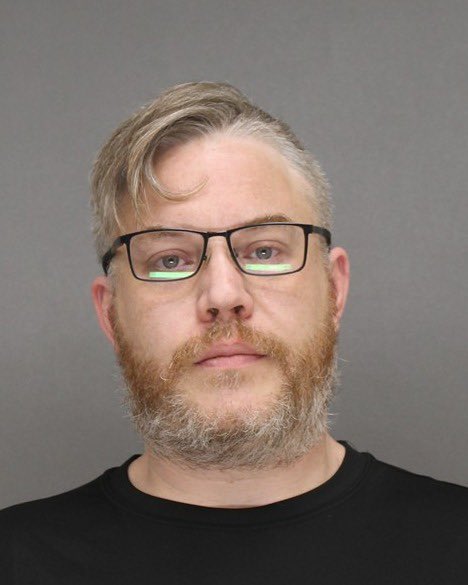
BREAKING: Wisconsin drag queen Daniel Lieburn arrested on child p**n charges
The thing that never happens happened again

English

@esjesjesj Because the bill transferred more power to Washington and away from individual states.
As others have mentioned the distracts would have been locked in based on race. Not on population.
English
Democrats tried to pass a bill to end gerrymandering and republicans voted against it
Scott Jennings@ScottJenningsKY
Must be exhausting to be for gerrymandering one week and against it the next.
English
And your point is what?
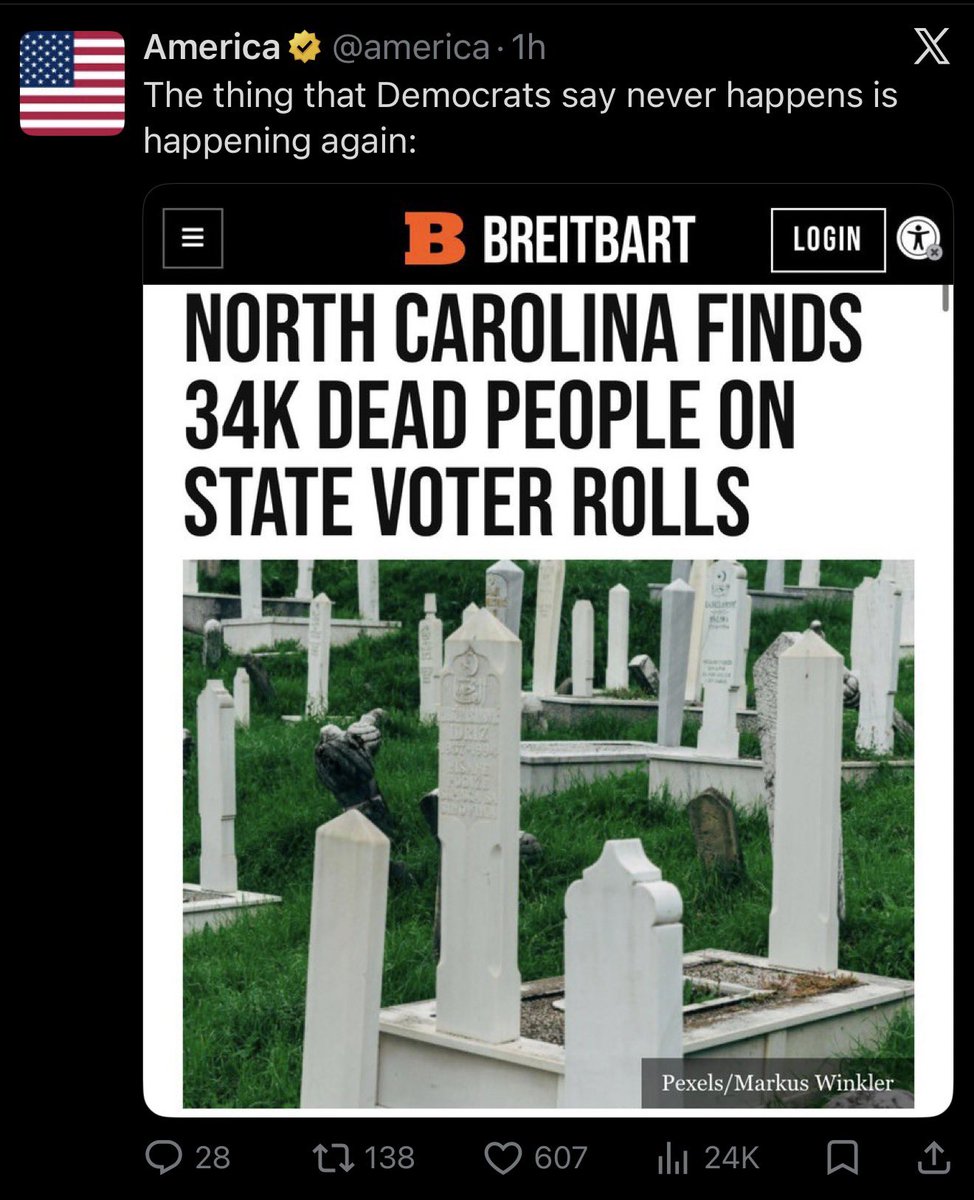
My thought is why are there so many dead people on the voting roles? Why are they so many people that have moved away on the roles? Why are there so many people that aren't eligible to vote on the roles? Why do so many democrat organizations sue to prevent voter role clean up efforts?
English
Nobody says there are no dead people on voter rolls because that would be a stupid thing to say
English

@libsoftiktok I didn’t need to see this right before going to bed!
English
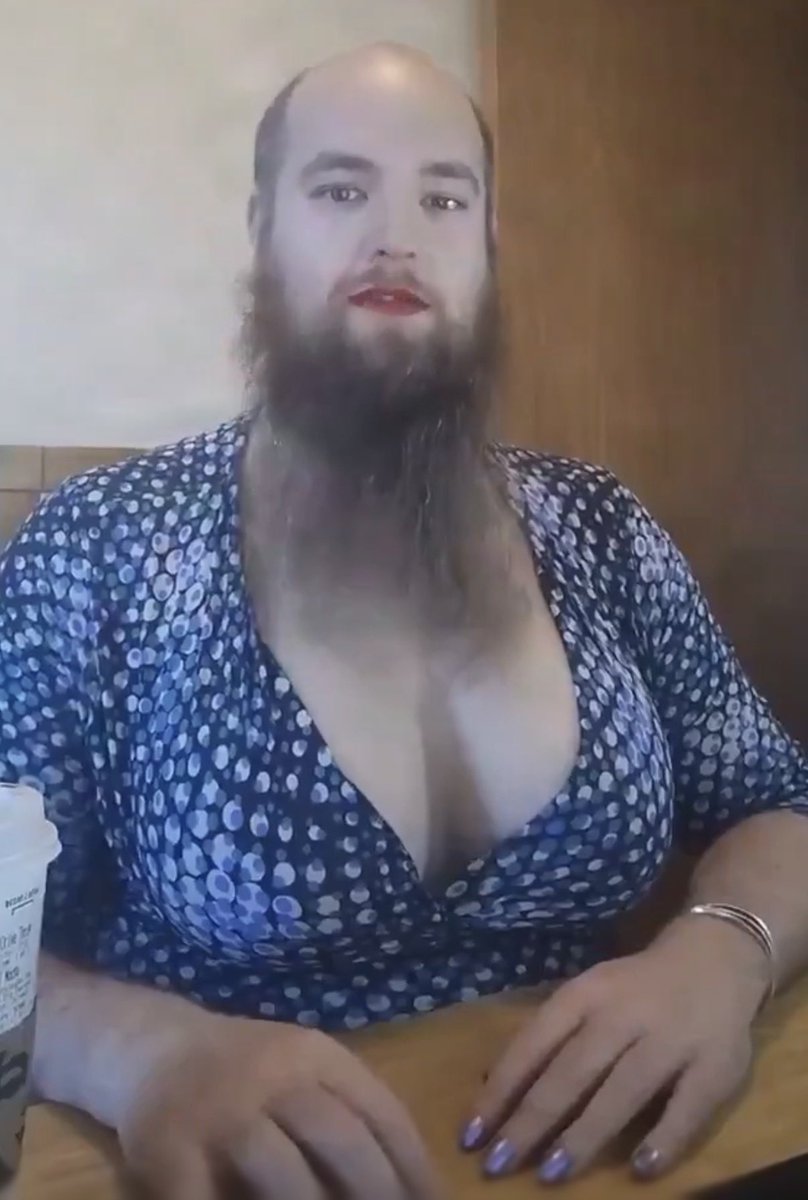

We need an insult or slur for people who overcook premium steaks.
English
A man realizes he has to reject a $1.2 million offer for his home. After 60 years of inflation, property taxes, repairs, upgrades, and building permits for those upgrades, the house he originally bought in 1964 for $25 and a handful of raspberries now requires a buyer willing to pay $1.5 million just for him to break even.

English

Boomers rejecting an offer for $1.2M from a nice young couple for a home they bought in 1964 for $25 and 7 raspberries
unusual_whales@unusual_whales
"First-time home buying plunges to record low as baby boomers prevent younger Americans from ever owning," per NYP.
English
Yeah those damn baby boomers. It is all their fault!
Ok, ok....
Maybe Washington constantly overspending has something to do with it.
But the baby boomers...
Ok, ok....
Maybe the environmentalist that push for more and more regulations as per forestry has something to do with it.
But the baby boo.....
Ok, ok....
Maybe the rising taxes from the local level to the federal government has something to do with it.
But the baby b.......
Ok yes more and more regulations as to construction and insulation has something to do with it.
But the ba.....
Yes, national debt and personal debt does effect that.
But .....
Fine, yes, inflation of course which is tied to the deficit and national debt.
B....
2 hours later.
Ok,
So far we have national debt, deficits yearly, governments at all levels with bloated budgets, over regulation, inflation, personal debt, government debt, illegal immigration, local building restrictions, funding of NGO's, forever wars, ever expanding section 8 housing which has raised the cost of rents but other than all of that and more. It's the baby boomers fault.
English

"First-time home buying plunges to record low as baby boomers prevent younger Americans from ever owning," per NYP.
English