Robin van Wijngaarden

22K posts

Robin van Wijngaarden banner
Robin van Wijngaarden

Robin van Wijngaarden

@robinvw1

Software engineer

Amsterdam, Nederland Katılım Ocak 2009
542 Takip Edilen1.1K Takipçiler
Robin van Wijngaarden
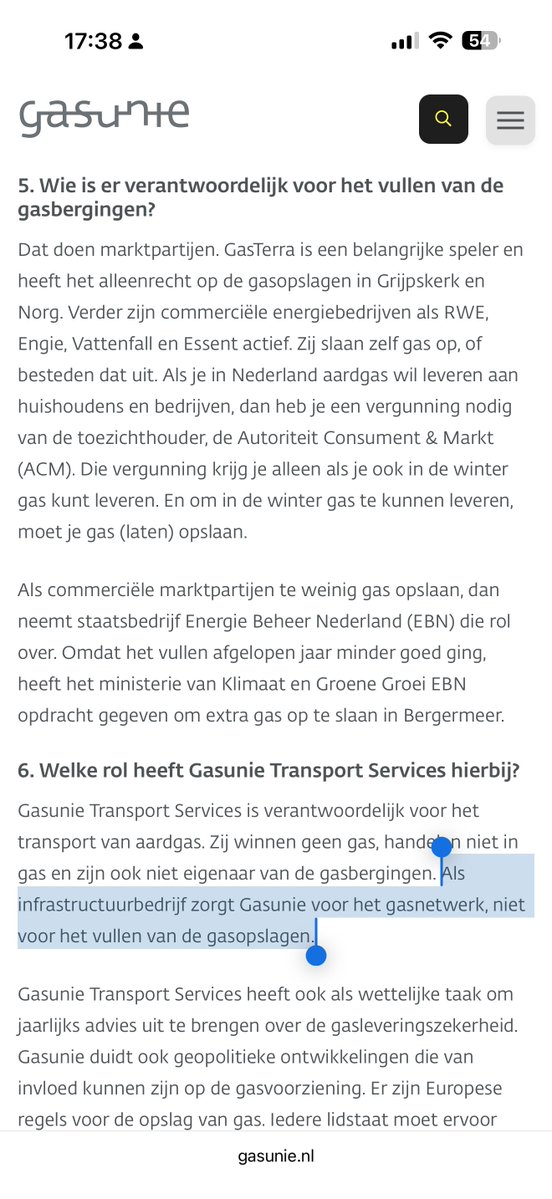
@Quintin24 Je begrijpt dat Samsom niet over de vulgraden gaat? Hij is (1) toezichthouder bij Gasunie (geen bestuurder), (2) ze adviseren de minister nota bene zelf om een hogere vulgraad aan te houden, en (3) Gasunie vult geen opslag; dat doen marktpartijen binnen regels van de overheid.
Robin van Wijngaarden tweet media
Nederlands
1
0
0
59
Jarred Sumner
Jarred Sumner@jarredsumner·
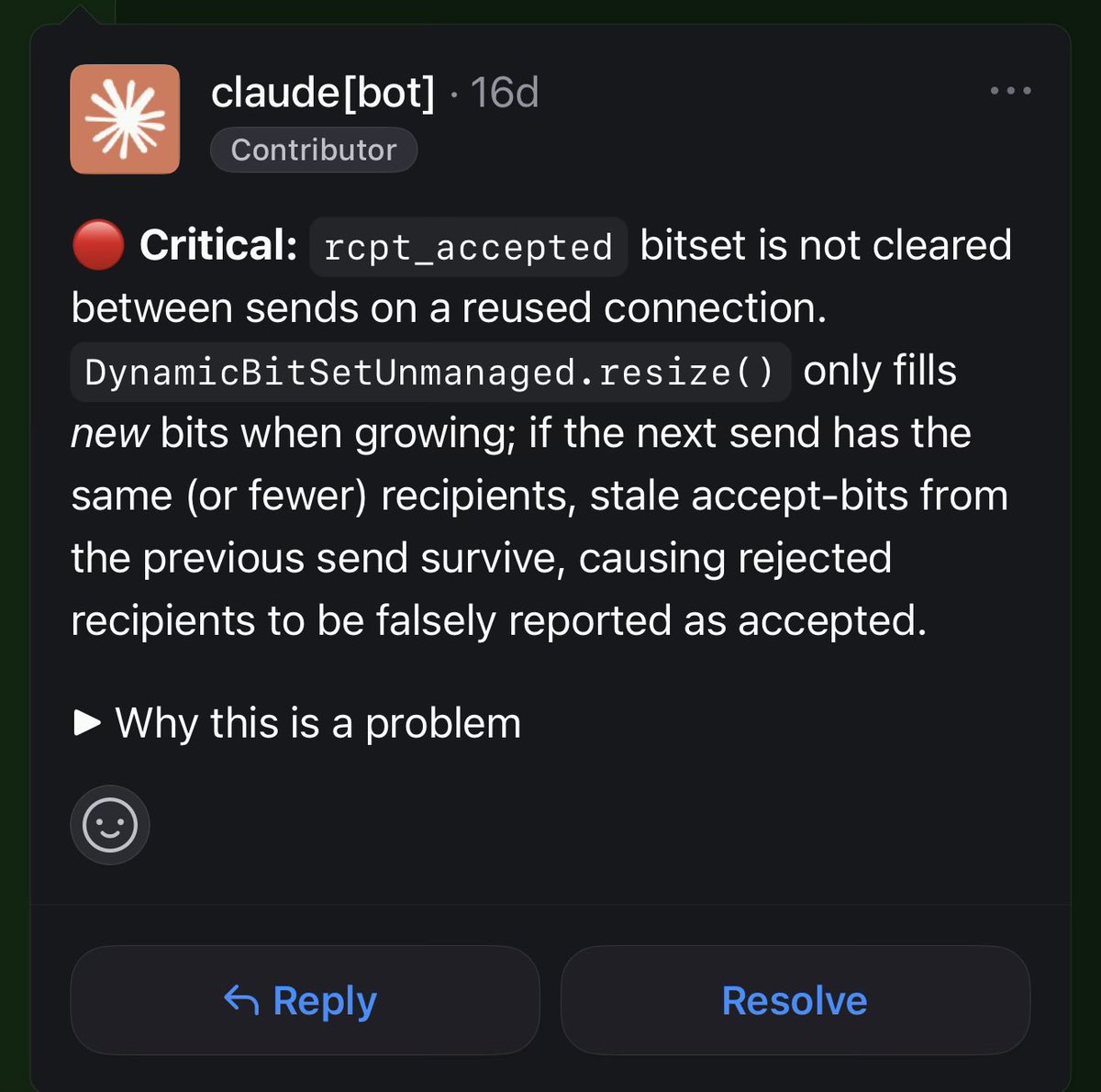
What’s especially interesting: it catches different bugs. Other code review products tend to be better at surface-level stylistic issues like “filename doesn’t match the project conventions” Claude Code Review regularly catches bugs that only surface from reading tons of code
Jarred Sumner tweet media
English
5
0
88
9.7K
Jarred Sumner
Jarred Sumner@jarredsumner·
if you have a bun GitHub issue open for awhile with a clear reproduction, reply with a link below & I will have Claude try to fix it today
English
81
7
483
71.5K
Christoph Nakazawa
Christoph Nakazawa@cnakazawa·
How do you set up monorepos and keep TypeScript fast, without requiring local builds all the time? I'm very confused! Let's say you are building a monorepo with multiple packages, and an example app within the monorepo that consumes the packages. The packages have a build step for publishing, and each package defines their `exports` in package.json. I see these options: 1. Do nothing. Just `tsdown` to build packages and d.ts files on every change. This is simple, but slow for development. `--watch` could work, but I've run into issues doing `pnpm -r build --watch` where it was only rebuilding a subset of packages each time. I'd much rather just have my devserver take care of this for me than running yet another tool locally. 2. Use a "development" condition for source files, and set Vite and TypeScript to resolve "development" in dev. This way you don't need to build during dev, but you also need to ship the source files to npm, otherwise tooling will fail looking up "development" conditions pointing to missing files in production. 3. Use resolver aliases for each tool: Similar to the development condition, without the production downside, but somewhat annoying to manage a list of aliases for each tool. In my experience, when using aliases heavily, there will always be tooling problems since they don't all support aliases, or have different config etc. I guess Vite 8's tsconfig support simplifies this a bit, but that's opt-in for now. For all three, TypeScript checks something different. In some versions it checks the source, and the compiled output in others. If you only check the source, you can't guarantee that the published package's types will be correct. Nothing will stop you from publishing packages with missing types, unless you set up yet another CI job to check for this specifically. If you only check the compiled output, you have to build it all the time during development. How do you handle this for a repo where some packages are published and some are not? Yet another solution could be to compile a project into `src` for publishing as well, so that `exports` are the same for development and published packages. That way no special config is needed. It requires a bit of custom setup for publishing, though. Examples: * fbtee.dev at github.com/nkzw-tech/fbtee currently requires `pnpm build` each time a package is changed. * fate.technology at github.com/nkzw-tech/fate currently uses aliases for Vite, but requires a `pnpm build` for TypeScript when the public interface of a package changes. * Athena Crisis at github.com/nkzw-tech/athe… just uses everything from source as the packages are not published to npm. However, inevitably, with any of the three solutions, tools will become slow as the repo grows. Now what do you do? `isolatedDeclarations` + checking in d.ts files for each repo? A `tsconfig` for each package, which makes everything even slower since TypeScript will now do overlapping typechecks across your project? Then paper over with Turborepo to make it feel ok? I think Project References in TypeScript are supposed to be the solution, but somehow that hasn't worked well for me and hasn't sped up TypeScript that much. What do you do? What do you suggest? What am I missing?
English
37
11
188
76.2K
Bun
Bun@bunjavascript·
In the next version of Bun Bun.SQL's builtin MySQL adapter gets 16% faster compared to Bun v1.2.21
Bun tweet media
English
27
23
832
45.2K
Robin van Wijngaarden
Robin van Wijngaarden@robinvw1·
Ouch, looks like a big Google Cloud outage. Good luck for the engineers in the war-room.
English
0
0
0
508
Robin van Wijngaarden
Robin van Wijngaarden@robinvw1·
@wspruijt I’m also wondering that. I’m using ChatGPT at least twice as much than Google nowadays.
English
1
0
1
115
Willem Spruijt
Willem Spruijt@wspruijt·
At which point will Google go 100% Gemini on Google Search? If they don’t it’s a matter of time until ChatGPT surpasses them. Probably not any time soon because of ad revenues 🤷‍♂️
English
2
0
1
291
Rick Pastoor
Rick Pastoor@rickpastoor·
That's it then. The official final day for Rise.
Rick Pastoor tweet media
English
26
0
102
10.1K
Krijn
Krijn@krijnrijshouwer·
Meet @Lemni. Set up custom Ai agents for all your customer interactions, in just minutes. So every interaction stays personal—no matter how big you grow. Try our Beta → lemni.com
English
32
11
180
36.5K
Joost van den Akker
Joost van den Akker@joost_akker·
Any followers who use @NextDNS and would like to test an iOS app in progress? 🙂
English
7
2
2
2.4K
Bun
Bun@bunjavascript·
Bun v.1.2.1 - Fixes 32 bugs - S3Client gets `storageClass` support - X25519 support in node:crypto - Node.js compatibility improvements for node:fs & node:child_process. fs.stat uses less memory. - Several memory leak fixes Thanks to 16 contributors! bun.sh/blog/bun-v1.2.1
English
6
17
311
10.7K