João Mendonça@joaomendoncaaaa
Solana is not built for today... 💭
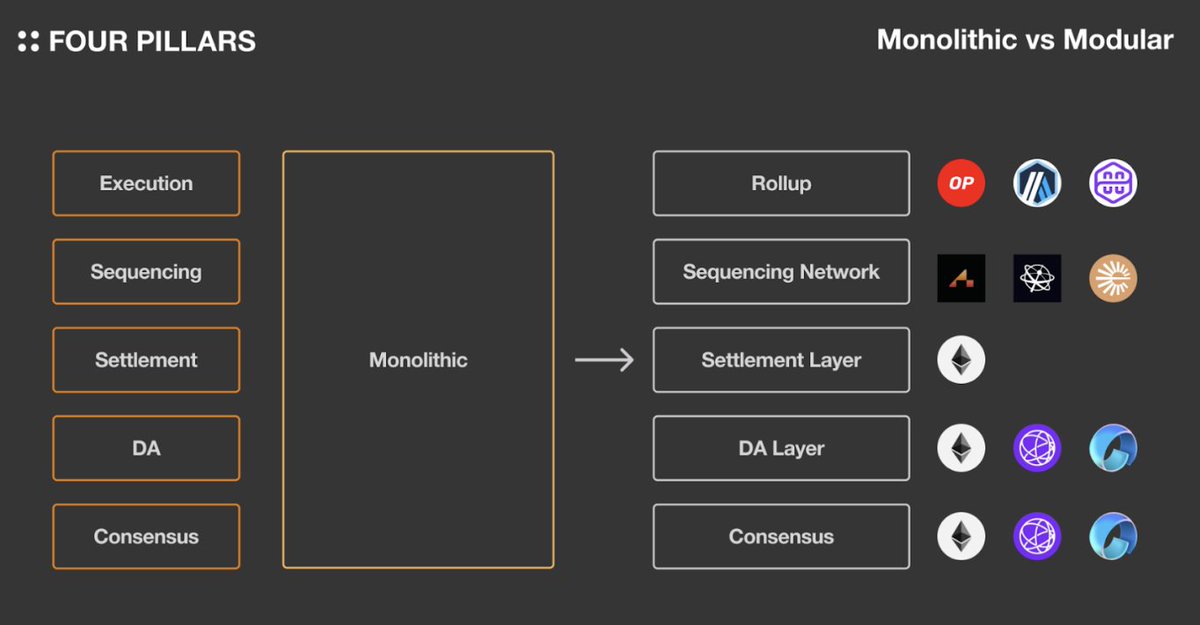
It's interesting to see how the whole IoT industry is moving from highly partitioned systems with scattered layers of isolation, abstraction, distribution and complexity back to monoliths.
20 years ago, SQLite was created for a very niche application -- simply put, a database as easy to use as a file -- designed as general-purpose, zero-configuration database that could be stored or embedded in any device, be it a web browser, a car, or even a fridge. An ACID compliant database that could be ported anywhere!
Well... It was...
20 years forward and it's like a virus spread across tech. Used to store your telegram messages, your favorite list of movies on your smart tv, your wall thermostat settings that you can control through your phone, your iphone spotlight searches, the video roll your home security cameras store, your health and activity levels on the WHOOP you have on your wrist... and the list goes on and on...
There's a myriad of .db files spread across all the devices you use on a daily basis. You'd be surprised if you searched for *.db on your machines.
It was never meant to be used as a database for enterprise grade software and services. It surely is more performant, consistent, and durable than files but it could never handle the throughput, bandwidth nor dataset size that reasonably sized services' userbases required even at the time. In that case, we've always used bigger and more complex databases. We've spent the last 30 years making things like parallelizing writes, sharding state, balancing hotspots through partitions, and the list also goes on and on...
To the point where making a CRUD operation on a database is so complex that there are employees at companies working directly with those systems who have no idea how they work at all! Companies need to develop in-house tooling to be able to deal with their own complexity -- but that's for another João's talk.
Point is... suddenly, we're starting to see a huge rise of enterprise grade startups choosing SQLite databases for their applications! 😄
It's incredible...
10-20 years ago it was unthinkable to even imagine doing such a thing but, with time coupled with a lot of human energy and cooperation, we now have:
- ssds with 100 terabytes and 14gbps of write/read speeds
- cpus with 96 cores (literal cores! wtf!) with 2.4ghz of clock speeds and huge cache stores
- gpus with more than 15000 CORES... 15000 CORES... did you read that right? I can't even believe in what I'm writing.
Anywho, you get the point. We're putting TRILLIONS of transistors on 4cm² pieces of silicon... WTF!
Where 20 years ago enterprise systems could never run on a single machine, now they can. Now enterprises can store and manage their users' requirements on a SQLite database!
Why wouldn't they?
It's not about a cult, it's not about a religion. It's about cost. It's about worth. It's about time. If it makes sense to use an SQLite database for a service, you can bet the market will choose that path regardless of how ridiculous you think it is.
All that to circle back to Solana. I feel like we'll have the exact same effect in a couple years if there's any future in "web3".
Even if Solana wasn't the highest demanded system in the industry today (like SQLite 20 years ago wasn't), I feel like Moore's and Nielsen's would make for a "sqlite moment" like we're going through today but with Solana.
In a medium to distant future, it won't be the complexity, quality or the perceived capacity of your engineering that counts. It will be the cost. The cost is not just the upfront price (though that's the biggest part); it also encompasses a myriad of factors like effort/maintenance, LoE for migrations, friction of usage, and the list also goes on and on...
There's a possibility that in 5 years all sharded systems will have their shortcomings fixed! (like latency) -- but in the end -- due to physics and human evolution, Solana will fundamentally be the cheapest of the bunch forever.
So which option will the world choose in the end?