Roger K. Horn

636 posts

Roger K. Horn banner
Roger K. Horn

Roger K. Horn

@rogerkhorn

Emerging Markets Credit Strategist | Thought Leader | Podcast Host | Retrospective Analyst | Geopolitics, History & Global Markets | Author

New York Katılım Ocak 2010
2.2K Takip Edilen1.1K Takipçiler
Roger K. Horn
Roger K. Horn@rogerkhorn·
Today in Emerging Markets History | July 1816: Spain's Reconquest of New Granada Intensifies By July 1816, the independence movement in New Granada—modern Colombia—had entered one of its darkest chapters. After years of revolutionary division and fragile republican experiments, Spanish royalist forces under General Pablo Morillo intensified their campaign to restore imperial control. Known as the “Pacification” of New Granada, the reconquest was in practice a brutal counterrevolution, marked by executions, confiscations, and the systematic destruction of republican leadership. Morillo had arrived from Spain in 1815 with one of the largest expeditionary forces ever sent to Spanish America. His mission was to reverse the independence movements that had spread after Napoleon’s invasion of Spain weakened imperial authority. By mid-1816, Bogotá had fallen, and leading patriots such as Camilo Torres, Jorge Tadeo Lozano, and Francisco José de Caldas faced imprisonment or execution. The royalist advance revealed the vulnerability of a revolutionary movement weakened by regional rivalries and internal political conflict. Yet repression also transformed the struggle. The failure of the early republic convinced surviving leaders that independence required stronger military organization and broader social mobilization. From exile and the margins of Spanish power, Simón Bolívar began rebuilding the cause that would eventually return across the Andes and liberate New Granada in 1819 after the decisive victory at Boyacá. The wider world in 1816 was also in transition. Europe was reorganizing after the defeat of Napoleon Bonaparte at Waterloo the previous year. The Congress of Vienna had restored conservative monarchies, while Spain under Ferdinand VII sought to reassert absolutist authority over its American colonies. Across the Atlantic world, the age of revolution had not ended—it had merely entered a more violent and uncertain phase. The reconquest of 1816 demonstrated that independence was not inevitable. It had to be rebuilt from defeat, repression, and exile.
Roger K. Horn tweet mediaRoger K. Horn tweet mediaRoger K. Horn tweet media
English
0
0
0
90
Roger K. Horn
Roger K. Horn@rogerkhorn·
New York City: America's Political Laboratory – From Tammany Hall to Mamdani open.spotify.com/episode/3KzRJl… For 250 years, New York has been where America tests its future first. This week, Roger traces the throughline from Tammany Hall's patronage machines and the corruption of Boss Tweed, through the Triangle Shirtwaist Fire and the reforms it forced, to Robert Moses and Jane Jacobs's battle over what a city should even be — and asks why the same island keeps producing the ideas that eventually reshape the rest of the country. From Ellis Island to the Harlem Renaissance to Wall Street, and now a new mayor promising the latest experiment: what makes New York impossible to ignore, generation after generation.
Roger K. Horn tweet media
English
0
0
0
54
Roger K. Horn
Roger K. Horn@rogerkhorn·
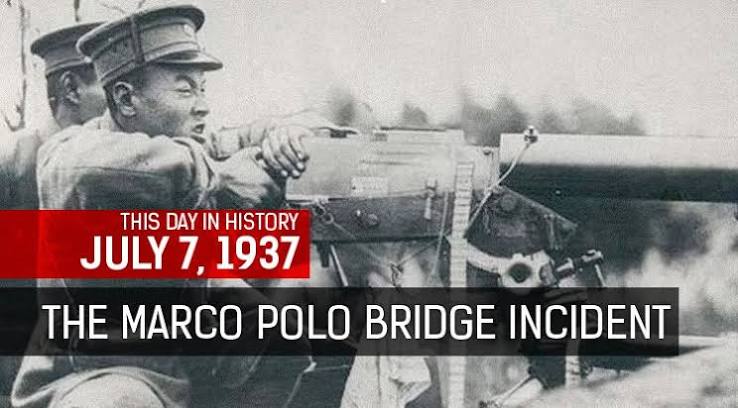
Today in Emerging Markets History | July 7, 1937: The Marco Polo Bridge Incident and Taiwan's Wartime Transformation On July 7, 1937, a brief exchange of gunfire between Japanese and Chinese troops near Beijing's Marco Polo Bridge (Lugou Bridge) ignited the Second Sino-Japanese War, one of the largest conflicts in modern Asian history. What began as a localized military incident rapidly escalated into a full-scale invasion of China by Imperial Japan under Emperor Hirohito, with Chinese resistance led by Chiang Kai-shek's Nationalist government and, increasingly, the forces of Mao Zedong's Chinese Communist Party. Although the fighting occurred hundreds of miles away, the consequences for Taiwan—then a Japanese colony since 1895—were profound. Overnight, the island became Japan's principal logistical hub for military operations in southern China and Southeast Asia. Taiwanese ports, railways, airfields, and industries expanded rapidly to sustain the imperial war effort, while tens of thousands of Taiwanese served in support roles and, later, in the Japanese armed forces. Wartime mobilization accelerated the island's industrial development, transportation infrastructure, and administrative capacity, leaving an economic and institutional legacy that would influence Taiwan long after Japanese rule ended in 1945. The Marco Polo Bridge Incident also marked the beginning of a broader conflict that would merge into the Second World War. Across Europe, Adolf Hitler was rearming Germany and dismantling the post-Versailles order, while Benito Mussolini had recently consolidated Italy's conquest of Ethiopia. The United States remained officially neutral under Franklin D. Roosevelt, though growing instability in both Europe and Asia was becoming impossible to ignore. For Taiwan, July 1937 represented a pivotal turning point. The island's strategic importance within the Japanese Empire expanded dramatically, shaping its economy, infrastructure, and geopolitical significance in ways that continue to influence East Asia today.
Roger K. Horn tweet media
English
0
0
1
112
Roger K. Horn
Roger K. Horn@rogerkhorn·
The newest episode of Mariva Emerging Markets Pulse: Weekly Insights from Roger K. Horn is out >> bit.ly/4vWdMqi Today’s theme: Everybody Loves Free Trade, Until You Have to Define It Trump’s decision not to extend USMCA puts “free trade” back under the microscope. What does annual review brinkmanship mean for Mexican nearshoring, LatAm supply chains, and the broader U.S. effort to counter Chinese transshipment? The investment implications, the tension between uncertainty and strategic decoupling, and why free trade has always come with fine print. But first, Roger starts by going into the time machine for a history lesson: China, 1937 — how a single confused soldier on a 600-year-old bridge ignited the Second Sino-Japanese War and transformed Taiwan into Imperial Japan’s key wartime logistics hub. And finally, he catches up on this week’s LatAm credit headlines, including Peru’s return of Keiko Fujimori, Brazil’s election-year agricultural support, Braskem’s working capital squeeze, new issue activity and more. 👇 Listen to a short preview of the episode below. 📌 Subscribe to our Spotify Channel to stay ahead of the week’s key news and keep your strategies sharp and informed >> bit.ly/45lV7YD #MarivaLatAmMarketPulse #WeeklyPodcast #EmergingMarkets
English
0
0
0
75
Roger K. Horn
Roger K. Horn@rogerkhorn·
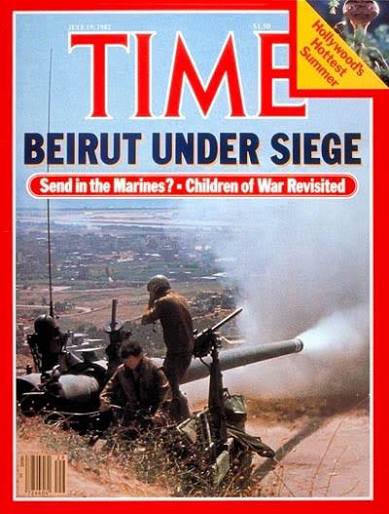
Today in Emerging Markets History | July 1982: The Siege of Beirut Reaches Its Climax By July 1982, the Siege of Beirut had become one of the defining urban battles of the modern Middle East. Following Israel's invasion of Lebanon in June—launched after repeated cross-border attacks by the Palestine Liberation Organization (PLO)—the Israel Defense Forces (IDF) tightened their encirclement of predominantly Muslim West Beirut, where Yasser Arafat and thousands of PLO fighters had established their headquarters. Under the leadership of Israeli Prime Minister Menachem Begin and Defense Minister Ariel Sharon, Israel sought to destroy the PLO's military infrastructure and reshape Lebanon's political landscape. The siege subjected Beirut to weeks of artillery bombardment, air strikes, and severe shortages of food, water, and electricity. Hundreds of thousands of civilians found themselves trapped between the warring parties, while the Lebanese state itself remained fractured after seven years of civil war. As the humanitarian crisis deepened, diplomacy became increasingly urgent. U.S. envoy Philip Habib led intensive negotiations involving Israel, Lebanon, Syria, and the PLO, eventually producing an agreement that allowed Arafat and thousands of Palestinian fighters to evacuate Beirut under the protection of a multinational force led by the United States, France, and Italy. The departure ended the siege in August but did not bring lasting peace. Within weeks, the assassination of Lebanese President-elect Bachir Gemayel and the subsequent Sabra and Shatila massacre plunged Lebanon into another tragic chapter. The world in 1982 remained firmly in the grip of the Cold War. Ronald Reagan and Leonid Brezhnev confronted one another across a divided Europe, the Falklands War had just concluded, and Latin America was entering the debt crisis that would become its "Lost Decade." The siege demonstrated how local conflicts could become entangled with regional rivalries and global geopolitics—a pattern that has continued to shape the Middle East well into the twenty-first century.
Roger K. Horn tweet media
English
0
0
0
85
Roger K. Horn
Roger K. Horn@rogerkhorn·
From Das Kapital to DSA: Why America Never Took the Socialism Bait 🇺🇸 open.spotify.com/episode/5MdaZd… Karl Marx thought America would be the FIRST country to go socialist. He was completely wrong — and even he tried to explain why. This week on The Roger Retrospective, I trace 200 years of a question that's suddenly back in the headlines: from Marx & Engels' own theories, to the one time it almost happened (the Great Depression, FDR, and the New Deal), to today's wave of DSA primary wins. History doesn't repeat — but it sure rhymes. 🎙️ #TheRogerRetrospective #History #Politics #KarlMarx #AmericanHistory #Podcast #Socialism #Economics #NewDeal #Sanders #AOC #Mamdani
Roger K. Horn tweet media
English
0
0
1
75
Roger K. Horn
Roger K. Horn@rogerkhorn·
Today in Emerging Markets History | July 7, 1950: The Rise of Mexico's Modern Industrial State By the summer of 1950, Mexico stood at the beginning of what economists would later call the "Mexican Miracle"—a remarkable three-decade period of rapid industrialization, macroeconomic stability, and rising living standards. Around this time, the government of President Miguel Alemán Valdés accelerated policies that would define modern Mexican economic development: import-substitution industrialization (ISI), infrastructure investment, and active state support for domestic manufacturing. Having emerged from the upheavals of the Mexican Revolution, policymakers sought to reduce dependence on foreign manufactured goods by protecting domestic industries through tariffs, subsidized credit, and public investment. Highways, dams, electric power generation, and expanding rail networks laid the foundation for an increasingly diversified industrial economy. Cities such as Monterrey, Guadalajara, and Mexico City became major manufacturing centers, attracting both domestic entrepreneurs and foreign investment. The results were striking. Between the 1950s and early 1970s, Mexico enjoyed annual GDP growth averaging around 6%, low inflation, and a rapidly expanding middle class. Yet the model also carried long-term costs: protected industries often became less competitive internationally, income inequality persisted, and growing fiscal pressures eventually contributed to the debt crises of the 1970s and 1980s. Elsewhere, the world was entering a new geopolitical era. The Korean War had erupted only weeks earlier, intensifying the Cold War between the United States and the Soviet Union. Western Europe was rebuilding under the Marshall Plan, while Japan was beginning its own industrial resurgence. Across much of Latin America, governments looked to Mexico's state-led development strategy as a blueprint for modernization. The Mexican Miracle remains one of the most influential—and debated—economic development experiments in emerging market history, demonstrating both the transformative power and the inherent limitations of state-led industrialization.
Roger K. Horn tweet mediaRoger K. Horn tweet mediaRoger K. Horn tweet mediaRoger K. Horn tweet media
English
0
0
2
269
Roger K. Horn
Roger K. Horn@rogerkhorn·
China’s intelligence operations are best understood not as the work of a few agencies, but as a party-led ecosystem woven into governance itself. In a clear and timely piece for The Diplomat, Matt Brazil (Jamestown Foundation senior fellow and co-author of Chinese Communist Espionage: An Intelligence Primer) explains how the CCP has built an integrated “party-directed, whole-of-system” intelligence apparatus. Key points from the article: •Core institutions — Ministry of State Security (MSS), Ministry of Public Security (MPS), and PLA — operate alongside state-owned enterprises, private firms, universities, contractors, and United Front organizations. Leaks like iSOON illustrate how commercial actors support state missions. •Intelligence serves regime security first, tightly integrated with influence operations, technology acquisition, and transnational repression (including the overseas “police stations” documented by Safeguard Defenders). •Xi-era laws (National Intelligence Law, Counter-Espionage Law, Data Security Law, etc.) codify obligations across companies, institutions, and citizens, giving the system both legal reach and operational decentralization through technology and contractors. •Brazil emphasizes this is not a “whole-of-society” effort in the way the phrase is often used. Most Chinese citizens avoid politics. Framing it that way risks alienating diaspora communities who are actually essential partners in resisting the CCP’s illicit activities. •The system has deep roots in the CCP’s 1920s underground operations and has evolved under centralized political control with decentralized execution — a model that is resilient and difficult to disrupt through prosecutions alone. For professionals assessing China-related risks — whether in credit, supply chains, technology, or policy — this framework moves the conversation beyond individual cases to the broader operating system. Recommended read:
Understanding China’s Party-State Intelligence System by Matt Brazil (The Diplomat, July 3, 2026) lnkd.in/eVwKEGPY
Roger K. Horn tweet media
English
19
225
621
51.9K
Roger K. Horn
Roger K. Horn@rogerkhorn·
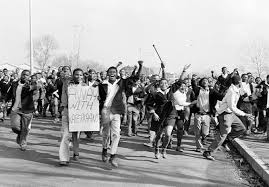
Today in Emerging Markets History | July 6, 1976: Pretoria Retreats After the Soweto Uprising Less than three weeks after the Soweto Uprising shocked the world, the South African government made a rare concession. On July 6, 1976, the apartheid regime abandoned its policy requiring Black secondary school students to receive instruction in Afrikaans, a language widely viewed as the symbol of white minority rule. Although limited in scope, the reversal marked the government's first significant retreat in response to mass resistance. The uprising had begun on June 16, when thousands of students marched peacefully through Soweto to protest the language decree. Police opened fire, killing and wounding demonstrators. The death of Hector Pieterson, a 12-year-old schoolboy whose body was captured in an iconic photograph by Sam Nzima, became an enduring symbol of apartheid's brutality. Student leaders, including Tsietsi Mashinini, helped transform what began as an education protest into a nationwide movement against racial oppression. Prime Minister B.J. Vorster hoped that rescinding compulsory Afrikaans would calm the unrest. Instead, demonstrations spread across South Africa, exposing the growing inability of the apartheid state to suppress dissent through force alone. The events also revitalized the banned African National Congress (ANC) and other liberation movements, while accelerating international sanctions, divestment campaigns, and diplomatic isolation. The world of 1976 was itself undergoing profound change. The Cold War shaped conflicts across Africa, the United States celebrated its Bicentennial amid post-Watergate uncertainty, and Mao Zedong's China was entering its final months before a historic political transition. Across the developing world, newly independent nations were asserting themselves in global affairs. The government's reversal on July 6 did not end apartheid, but it demonstrated a crucial historical lesson: even entrenched political systems can be forced into concessions when sustained public resistance fundamentally alters the balance between state power and popular legitimacy.
Roger K. Horn tweet mediaRoger K. Horn tweet mediaRoger K. Horn tweet mediaRoger K. Horn tweet media
English
0
0
2
469
Roger K. Horn
Roger K. Horn@rogerkhorn·
📖 Roger's EM Reading List: When Politics Meets Engineering: The Earthquake That Exposed Venezuela's Construction Model One of the most compelling investigative reports I've read this week comes from Patricia Marcano, Valentina Lares, and Roberto Deniz at Armando.info. About the authors: Patricia Marcano, Valentina Lares, and Roberto Deniz are award-winning Venezuelan investigative journalists with Armando.info, an independent investigative news organization recognized internationally for exposing corruption, governance failures, and abuses of power in Venezuela. 🔗 Original article: armando.info/al-antojo-de-h… Summary The article investigates why one of the flagship housing projects of Hugo Chávez's Gran Misión Vivienda suffered catastrophic structural failures during the devastating twin earthquakes of June 24. The reporters trace the origins of the development—known as Urbanismo Hugo Chávez or Ciudad Chávez—to Chávez's personal admiration for the work of Turkish construction company Summa, which he encountered during a visit to Libya. The government subsequently awarded the company a major housing contract to rapidly construct more than 3,000 apartments for families displaced by severe flooding. Following the recent earthquakes, roughly 80% of the apartment towers were crushed, tilted, or appeared to sink into the ground, leaving thousands of families homeless. Rather than collapsing conventionally, many buildings lost their entire ground floor, creating the appearance that they had been swallowed by the earth. The investigation points to a combination of lightweight prefabricated construction, challenging soil conditions, and an accelerated construction timetable that prioritized speed over long-term resilience. Beyond the engineering questions, the article offers a broader reflection on governance. It argues that politically driven megaprojects—designed to deliver rapid, highly visible results—can create hidden vulnerabilities that only become apparent years later when tested by crisis. Five Key Takeaways • Political prestige projects often prioritize speed and symbolism over engineering resilience. • Construction quality, procurement, and oversight are governance issues—not merely technical ones. • Weak institutions can transform natural disasters into far greater humanitarian tragedies. • Independent investigative journalism remains essential for uncovering failures that official narratives may overlook. • For investors, institutional quality matters as much as macroeconomic indicators when assessing long-term sovereign risk.
Roger K. Horn tweet media
English
0
2
4
665
Roger K. Horn
Roger K. Horn@rogerkhorn·
German Intelligence Again Flags Turkey as a Key Security Threat – 5 Key Takeaways Germany’s domestic intelligence agency (BfV) has once again placed Turkey in the same category as Russia, China, and Iran in its comprehensive 2025 annual security report. The findings detail intensified espionage, unlawful influence operations, diaspora surveillance, and transnational repression on German soil — activities that extend Ankara’s domestic political conflicts into the heart of Europe’s largest economy. Here are the 5 key takeaways: 1. Peer-Level Threat Classification — The BfV explicitly groups Turkey with strategic adversaries for conducting state-directed espionage, influence campaigns, and transnational repression targeting German politics, economy, society, and diaspora communities. 2. Diaspora Influence Network — The Union of International Democrats (UID), operating as a primary AKP/Erdogan-backed lobby across Germany and Europe, is under active surveillance for policing political alignment, marginalizing critics (including Gülen supporters), and shaping discourse to align with Ankara’s interests. 3. Multi-Dimensional Extremist Ecosystem — German authorities monitor a complex web of Turkey-linked groups: Islamist networks (Milli Görüş and affiliates, Turkish Hizbullah), the banned Muslim Interaktiv, left-wing militants (DHKP-C, MLKP, TKP/ML) running financing and propaganda ops, the PKK’s use of Germany as a logistical/funding hub (millions in annual extortion and recruitment), and Grey Wolves ultranationalist structures promoting antisemitic and ethnically divisive narratives. 4. Systematic Transnational Repression — Turkish National Intelligence Organization (MİT) maintains extensive informant networks, diplomatic cover, and digital surveillance to target dissidents and diaspora members in Germany — particularly Gülen movement followers and suspected PKK affiliates — effectively exporting Turkey’s internal political battles onto European territory. 5. Alliance & Integration Strain — As a NATO member, these documented patterns underscore the inherent tensions of security cooperation with a partner whose extraterritorial activities challenge host-nation cohesion, democratic integration, and the management of foreign interference within Western institutions. For emerging markets credit and macro watchers, these recurring signals add another layer to political and governance risk assessments for Turkey. They highlight ongoing overhangs that can influence sovereign spreads, external financing conditions, FDI sentiment, and the broader trajectory of EU-Turkey and NATO dynamics. Full article (highly recommended): nordicmonitor.com/2026/07/german… What are your thoughts on how these security dynamics might affect Turkey’s credit profile, reform momentum, or positioning within Western alliances? I’d value your perspective. #Turkey #Germany #Geopolitics #NATO #EmergingMarkets #Security #EMCredit #BfV #TransnationalRepression
Roger K. Horn tweet media
English
1
3
2
333
Roger K. Horn
Roger K. Horn@rogerkhorn·
June 30, 1991 (±): As the Soviet Union entered its final months, Russian President Boris Yeltsin accelerated a political revolution that would permanently reshape the global order. Having won Russia's first direct presidential election only weeks earlier, Yeltsin moved swiftly to strengthen the authority and autonomy of the Russian Soviet Federative Socialist Republic, openly challenging the weakening central government led by Mikhail Gorbachev. The struggle was no longer simply ideological—it was institutional. Russia, the largest and most powerful Soviet republic, increasingly asserted control over its own laws, economy, and natural resources. Yeltsin championed the principle that Russian legislation would take precedence over Soviet decrees, eroding the foundations of the Union itself. His growing alliance with reformers and regional leaders accelerated what became known as the "parade of sovereignties." The wider world was undergoing equally dramatic change. The Cold War had effectively ended. Germany had reunified only months earlier, the Warsaw Pact was nearing dissolution, and Eastern Europe had cast off communist rule. In the Middle East, the U.S.-led coalition had recently concluded the Gulf War, demonstrating the emergence of a new American-led international order. Global markets were adjusting to the prospect of economic liberalization across much of the former communist world. Within weeks, hardline Soviet officials would launch the failed August 1991 coup, unintentionally strengthening Yeltsin's standing even further after his famous defiance atop a tank outside the Russian parliament. By December, the Soviet Union itself had ceased to exist. The events of mid-1991 remind us that empires often collapse not in a single dramatic moment, but through the gradual transfer of legitimacy from old institutions to new ones. Yeltsin's assertion of Russian sovereignty marked one of history's decisive turning points—ending one superpower while giving birth to another state whose influence continues to shape global geopolitics today.
Roger K. Horn tweet mediaRoger K. Horn tweet mediaRoger K. Horn tweet media
English
0
0
2
193
Roger K. Horn
Roger K. Horn@rogerkhorn·
When Natural Disasters Expose Institutional Failure One of the most powerful articles I've read this week is "The Vultures Arrived Before the Rescue Teams" by Moisés Naím, published in The Atlantic. Author: Moisés Naím is a Venezuelan author, former Minister of Trade and Industry of Venezuela, and Distinguished Fellow at the Carnegie Endowment for International Peace. Read the original article here: theatlantic.com/international/… Naím's central argument is both simple and devastating: the recent earthquakes in Venezuela did not create a failed emergency response—they exposed one that had been decades in the making. The image in the title is unforgettable. According to Naím, vultures appeared over devastated neighborhoods before organized government rescue teams did. Local residents, neighbors, and volunteers became the first responders while many state institutions proved unable to perform their most basic function: protecting citizens in a moment of national catastrophe. For those of us who analyze emerging markets, the article is a reminder that sovereign risk extends far beyond debt ratios, inflation, or exchange rates. Institutions matter. Years of underinvestment, corruption, political polarization, and the hollowing out of public services eventually reveal themselves—not gradually, but suddenly—when disaster strikes. History offers many examples. Earthquakes themselves are natural events; humanitarian catastrophes are often institutional ones. The quality of governance before a crisis frequently determines the scale of suffering afterward. Five Key Takeaways Government capacity cannot be built overnight; crises expose decades of institutional strength—or weakness. Economic collapse ultimately erodes emergency services, healthcare, infrastructure, and public trust. Local communities and civil society often become the true first responders when the state fails. Natural disasters frequently become political turning points, reshaping governments and public confidence. Investors should evaluate institutional resilience alongside traditional macroeconomic indicators when assessing sovereign risk. For investors, the lesson is clear: balance sheets tell only part of the story. A country's long-term resilience depends just as much on the strength of its institutions as on its fiscal accounts. When the next crisis arrives—whether financial, political, or natural—that institutional capacity often becomes the most important asset of all.
English
0
0
0
123
Roger K. Horn
Roger K. Horn@rogerkhorn·
Today in emerging markets history... June 30, 1949: Mao Defines the Ideology of a New China On June 30, 1949, as the Chinese Civil War neared its conclusion, Mao Zedong published one of the defining political essays of the twentieth century: On the People's Democratic Dictatorship. Issued on the 28th anniversary of the founding of the Chinese Communist Party, the essay laid out the ideological blueprint for the state that would formally be proclaimed just three months later—the People's Republic of China. Mao argued that China's revolution required a "people's democratic dictatorship": democracy for workers, peasants, and patriotic intellectuals, but firm repression of those deemed counterrevolutionary. Drawing on Marxism-Leninism while adapting it to China's overwhelmingly rural society, Mao envisioned a state that would consolidate Communist rule while mobilizing the population for rapid political, economic, and social transformation. The timing was significant. Communist forces had largely defeated the Nationalist government of Chiang Kai-shek, which was retreating toward Taiwan. Decades of civil war, Japanese occupation, and economic collapse had devastated China, leaving the Communists poised to reunify most of the mainland under a new political order. The global backdrop was equally momentous. The Cold War was hardening, with the Berlin Blockade nearing its end and NATO having been established only months earlier. Across Asia, decolonization movements were gathering momentum, while policymakers in Washington and Moscow recognized that the outcome in China would fundamentally reshape the global balance of power. Historically, Mao's essay was more than a political manifesto—it was the constitutional philosophy of the new Chinese state. Its themes of party leadership, national unity, revolutionary legitimacy, and centralized authority would guide Chinese governance for decades. As China emerged as one of the world's most influential powers, the ideas articulated in June 1949 became essential to understanding both the origins of the People's Republic and the enduring foundations of modern Chinese politics.
Roger K. Horn tweet mediaRoger K. Horn tweet mediaRoger K. Horn tweet mediaRoger K. Horn tweet media
English
1
1
1
109
Roger K. Horn
Roger K. Horn@rogerkhorn·
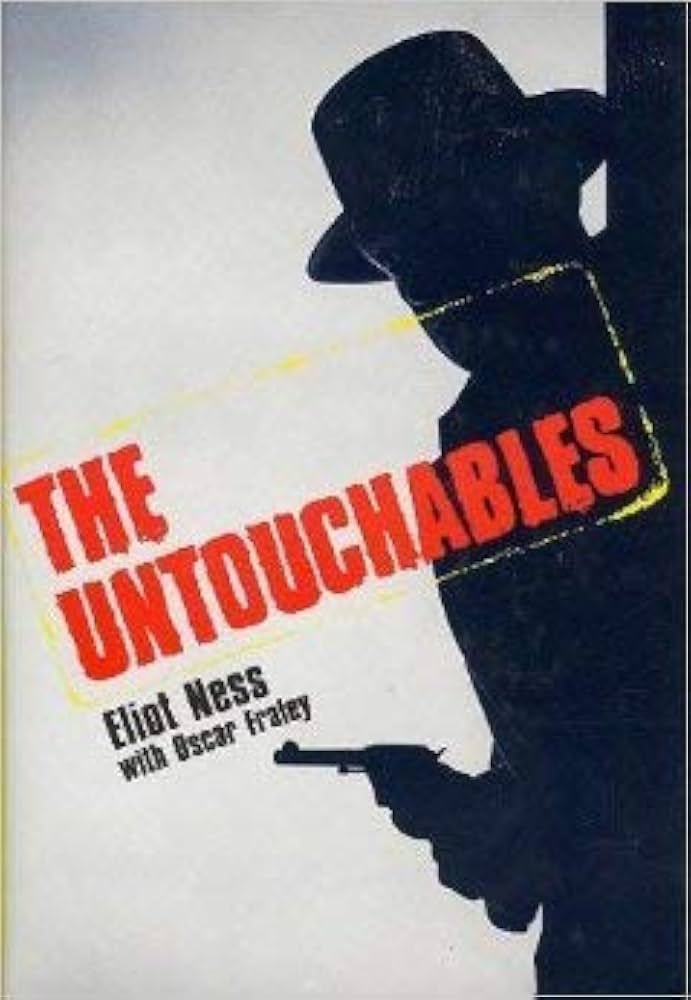
📌 Op-Ed Spotlight: Mexico’s “Untouchables” – Politicians Tied to Cartels In The Hill, exiled journalist and former Nicaraguan diplomat Arturo McFields draws a sharp historical parallel between Eliot Ness’s “Untouchables,” who dismantled Al Capone’s empire in 1930s Chicago, and what he describes as Mexico’s current approach under President Claudia Sheinbaum. Key points from the piece: •The U.S. Attorney’s Office for the Southern District of New York and the DEA indicted Sinaloa Governor Rubén Rocha Moya, Senator Enrique Inzunza, Culiacán Mayor Juan de Dios Gámez, and seven other current or former officials for allegedly conspiring with the Sinaloa Cartel to import massive quantities of drugs into the U.S. in exchange for bribes and political protection. •The Mexican government has resisted extradition, emphasizing national sovereignty, insufficient evidence, and reciprocity (citing 269 individuals Mexico is seeking from the U.S.). President Sheinbaum has framed U.S. actions as interference. •DEA Administrator Terrance Cole stated that top Mexican government officials and drug traffickers “have been in the same bed for years.” U.S. Ambassador Ronald Johnson has stressed that fighting cartels should unite the two countries, not divide them. McFields warns that shielding these figures risks damaging the U.S.-Mexico relationship — Mexico’s primary trading partnership — and could lead to more unilateral U.S. action. This op-ed lands amid ongoing debates over security cooperation, fentanyl flows, governance, and the rule of law in Latin America’s second-largest economy — all factors that continue to influence nearshoring momentum, investor sentiment, and credit dynamics in the region. 🔗 Full article: thehill.com/opinion/intern… What’s your take? How do these dynamics affect your view of Mexico’s investment climate, sovereign/corporate credit risk, or broader U.S.-LatAm relations? #Mexico #LatAm #EmergingMarkets #Geopolitics #USMexicoRelations #RuleOfLaw
Roger K. Horn tweet media
English
0
1
0
157
Roger K. Horn
Roger K. Horn@rogerkhorn·
Today in emerging markets history... June 30, 1908: The Day the Siberian Sky Exploded On the morning of June 30, 1908, a colossal explosion rocked the remote forests of central Siberia near the Tunguska. Witnesses described a blinding fireball streaking across the sky, followed by a shockwave so powerful that it flattened an estimated 80 million trees across more than 2,000 square kilometers. The blast was heard hundreds of kilometers away, windows shattered across the region, and seismic instruments recorded the event around the world. Remarkably, no impact crater was ever found. Today, scientists believe the most likely explanation is that a large asteroid or comet, perhaps 50 to 80 meters in diameter, exploded in the atmosphere several kilometers above the Earth's surface with a force estimated at 10 to 15 megatons of TNT—hundreds of times more powerful than the atomic bomb dropped on Hiroshima. Yet the absence of a crater helped fuel decades of speculation, from antimatter and black holes to alien spacecraft, making Tunguska one of history's greatest scientific mysteries. The world in 1908 was itself on the brink of profound change. The great European empires still dominated global affairs, but geopolitical rivalries were intensifying ahead of the First World War. In Russia, Nicholas II was struggling to preserve imperial authority after the Revolution of 1905, while industrialization and scientific discovery were transforming societies across Europe and North America. Because Tunguska occurred in one of the world's most isolated regions, no scientific expedition reached the site until nearly two decades later, when Soviet mineralogist Leonid Kulik began investigating the flattened forest. Historically, the Tunguska event remains a powerful reminder that history is shaped not only by wars, revolutions, and political leaders, but also by the forces of nature. It remains the largest known cosmic impact event in recorded human history—and a sobering illustration of Earth's vulnerability to hazards originating far beyond our atmosphere.
Roger K. Horn tweet mediaRoger K. Horn tweet mediaRoger K. Horn tweet media
English
0
0
0
72
Roger K. Horn
Roger K. Horn@rogerkhorn·
The Roger Retrospective Cold War: How Air Conditioning Made America and Exposed Europe open.spotify.com/episode/0kdcnk… A European heat wave. A cooling system failure at EU headquarters. And one of history’s most underrated inventions. This week, Roger traces air conditioning from ancient Persian windcatchers to Willis Carrier’s Brooklyn print shop to the explosive rise of Houston, Phoenix, and the American Sun Belt — and explains why a humble machine may have quietly helped make the U.S. the dominant economy on earth. Then he turns to the headlines: why Brussels bureaucrats kept their own offices cool while cutting AC for everyone below them, and how Germany’s decision to exit nuclear power left it dangerously dependent on Russian gas — a story that runs straight through Gerhard Schröder’s Gazprom paycheck to the war in Ukraine. History, current events, and a few opinions you won’t hear anywhere else. That’s The Roger Retrospective.
English
0
0
0
80
Roger K. Horn
Roger K. Horn@rogerkhorn·
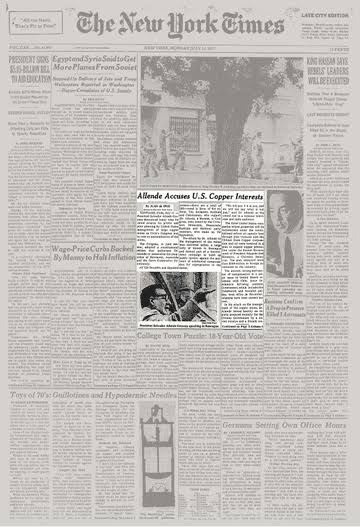
Today in emerging markets history... Chile 1971: Allende and the Nationalization of Copper In 1971, Chile made one of the most consequential economic decisions in its modern history: the nationalization of its copper industry. Under President Salvador Allende, Congress unanimously approved a constitutional amendment transferring control of the country’s dominant copper mines from foreign companies—principally U.S. firms such as Anaconda and Kennecott—to the Chilean state. For Allende and his Popular Unity coalition, copper was not merely a commodity. It was the “salary of Chile,” the essential resource through which the country could finance social reform, industrial development, and national sovereignty. The decision built on earlier policies under President Eduardo Frei Montalva, who had pursued partial “Chileanization” of the industry, but Allende pushed the logic to its conclusion: full state ownership. The nationalization was popular across much of the Chilean political spectrum. Even opponents of Allende’s socialist program recognized copper’s symbolic and economic importance. Yet the measure also intensified conflict with the United States and with foreign mining companies, particularly as Chile sought to deduct “excess profits” from compensation payments. What began as a broadly supported assertion of sovereignty quickly became entangled in Cold War politics, investment disputes, and deepening domestic polarization. The global context was critical. The early 1970s were marked by ideological confrontation, rising resource nationalism across the developing world, and growing tensions between multinational corporations and post-colonial states seeking greater control over natural wealth. In Latin America, debates over land, oil, minerals, and foreign ownership were central to politics. Historically, the 1971 copper nationalization stands as a defining act of Chilean economic nationalism. It reshaped the country’s relationship with global capital and remains central to Chile’s identity as a resource economy. Even after the military coup of 1973 and the market reforms that followed, state ownership of copper endured—an enduring legacy of Allende’s brief but transformative presidency.
Roger K. Horn tweet mediaRoger K. Horn tweet mediaRoger K. Horn tweet mediaRoger K. Horn tweet media
English
0
0
1
62
Apple Lamps
Apple Lamps@lamps_apple·
Fascist dictator Nayib Bukele of El Salvador previously trampled human rights by rounding up hordes of innocent gang members, cartel hitmen, and murderers. The result was a catastrophic collapse in the nation’s murder rate that left critics devastated. Not content with that outrage, the strongman has now escalated his tyranny by opening a modern, world-class hospital.
English
262
924
6.8K
140.8K