Ron Bauer

2.1K posts

Ron Bauer banner
Ron Bauer

Ron Bauer

@ronbauer888

I’m a Venture Capitalist and Investor with 20+ years experience. I teach people how to raise money and go public. I help guide founders on their journey.

London, England Katılım Haziran 2020
1.2K Takip Edilen1.9K Takipçiler
Sabitlenmiş Tweet
Ron Bauer
Ron Bauer@ronbauer888·
The US National Debt just smashed through $40 trillion. Most headlines scream crisis. Sophisticated investors see the sale of the century. You cannot print money forever. Even the federal government has limits. The Trump administration knows there is only one escape route left. Asset sales and deregulation. We are watching a massive pivot. The government is forced to offload weight. This creates a unique opening for private equity. The opportunities are specific ↓ ↳ Federal infrastructure requires private capital. ↳ Service contracts are moving to the lowest bidder. ↳ Energy assets are being privatized to cut costs. This is not just policy. This is survival. Fiscal constraint drives deregulation. Lower spending means less red tape. This reduces compliance costs for everyone. Now the government must do the same. Do not focus on the debt ceiling. Focus on the privatization floor. The assets are real. The sellers are motivated. The buyers will win big. 👉 Follow me for more such posts.
Ron Bauer tweet media
English
11
2
15
304
Ron Bauer
Ron Bauer@ronbauer888·
Peace does not come from begging bad actors to like you. It comes from making it crystal clear you will always defend your allies. President Trump is fiercely loyal - as a friend, as an ally and as the President of the United States of America - America First comes first and he stands behind Making American Great Again! If you want to understand the actual impact of geopolitical policy on global markets, you have to look past the political slogans. You need a strict reality check on how regional stability is actually built. For years, the prevailing theory was that concessions and diplomatic flexibility would pacify hostile elements in the Middle East. The financial and security results of that approach were disastrous. Releasing sanctions on Iran only brought the world to its knees and created the current situation we all find ourselves under! The Trump Doctrine introduced a completely different operational framework. It was built on the fundamental premise of peace through absolute strength. By providing unapologetic military and diplomatic support to Israel, the administration completely changed the risk calculations for every actor in the region - whether good or bad!. When adversaries know that the United States will not hesitate to back its allies, their appetite for conflict drops significantly. When moderate nations see that same unwavering support, they immediately seek strategic partnerships. This is not just a moral victory. It is a massive strategic advantage for the entire Western economy and free world! Let us evaluate the tangible business outcomes when Israel operates with absolute security backing. ↳ Advanced defense technology development accelerates rapidly. ↳ Venture capital flows freely into Tel Aviv software startups. ↳ Public markets stabilize because regional supply chains are protected. Capital requires certainty. Founders cannot build generational companies if their physical environment is constantly under threat of destruction! By establishing a firm boundary against terrorism and proxy aggression, this foreign policy approach directly enabled one of the most productive tech ecosystems on the planet to scale without artificial friction. Look at the facts on the ground. Weakness invites chaos. Strength creates the space for human progress and economic expansion. Are you evaluating geopolitical decisions based on how they sound, or are you measuring the actual economic results they produce?
Ron Bauer tweet media
English
7
9
14
98
Ron Bauer
Ron Bauer@ronbauer888·
Investors who still think the Middle East is too unstable to touch have not updated their worldview since pre Trump Administration. Risk averse capital is completely missing the greatest macroeconomic shift of our generation. If your financial models are based on the pre Abraham Accords era, you are actively leaving massive returns on the table. A decade ago, the region was defined by hostility and deeply fragmented markets. Institutional foreign direct investment was constantly stalled by unpredictable conflict. Then the fundamental arithmetic completely changed. When the Trump Administration decided to pick sides, clearly backing Israel and pro US Arab partners while aggressively isolating Iranian proxies, the entire risk profile of the region shifted. Unapologetic security guarantees and American energy dominance provided the exact baseline of stability that long term investors required. The data proves the absolute magnitude of this economic integration. → Trade between Israel and the UAE exploded from virtually zero to billions of dollars annually. → Cross border tourism and direct flights are now standard operating procedures for regional business. → Sovereign wealth funds deployed well over one hundred billion dollars last year alone to build out domestic and shared capabilities. We are witnessing historic, permanent economic cooperation. Venture capitalists and strategic planners cannot afford to sit on the sidelines. The smart institutional money is actively flowing into very specific, high growth sectors right now. ↳ Deep water ports and advanced regional logistics hubs. ↳ Next generation energy services and shared grid infrastructure. ↳ Defense technology and cross border artificial intelligence partnerships. Clear foreign policy creates highly predictable markets. When regional allies know the United States stands firmly behind them, they stop preparing for endless proxy wars and start building generational infrastructure. Are you still pricing in the geopolitical risks of a decade ago, or are you aggressively positioning your portfolio for the realities of today?
Ron Bauer tweet media
English
18
8
26
86
Ron Bauer
Ron Bauer@ronbauer888·
Whatever your political leanings, no honest observer can deny this truth. Israel has never had a stronger friend in the White House. As an investor, I look at foreign policy purely through the lens of market stability and risk allocation. The media focuses heavily on the daily political noise. The reality on the ground for dealmakers tells a completely different story. When you evaluate the actual policy decisions made during the Trump administration, you see a masterclass in removing risk from a complex region. ↳ Moving the US embassy to Jerusalem sent a permanent signal of stability. ↳ Recognizing the Golan Heights established clear territorial boundaries. ↳ Unapologetic backing of self defense deterred regional volatility. These actions are not just diplomatic talking points. They are structural guarantees for capital. The crowning achievement was the Abraham Accords. This historic breakthrough completely rewired the Middle Eastern economy. It linked Israeli technology directly with Gulf capital and Arab market access. For venture capitalists and strategic investors, policy certainty is everything. When the United States projects absolute, unwavering support for an ally, it creates a predictable environment. It gives us the confidence to deploy billions of dollars into Tel Aviv defense startups and enterprise software companies. I acknowledge the sheer complexity of the region. But the argument that backing Israel creates friction is entirely backward. Abandoning our most capable regional partner would trigger massive instability, immediately threatening global supply chains and technology markets. Strength attracts capital. Ambiguity destroys it. How does clear US policy impact your ability to raise capital and plan for the next decade?
Ron Bauer tweet media
English
7
11
21
88
Ron Bauer
Ron Bauer@ronbauer888·
The Middle East of 2026 looks nothing like the Middle East of 2016 and the Trump Doctrine is a massive reason why. If you spend your day reacting to cable news alerts, you will completely miss the most significant macroeconomic realignment of our generation. As investors mapping political risk to deal flow, we cannot afford to get distracted by daily noise. We have to look at where the smart capital is actually moving. A decade ago, the regional environment was defined by fragmentation and appeasement. Today, we are witnessing an unprecedented structural shift driven by a very specific policy approach. The thesis is straightforward. When the US offers unapologetic support for Israel and moderate Gulf states, while placing maximum economic pressure on Iran, the entire risk calculus changes. It forces historic normalization. The momentum from the Abraham Accords did far more than open embassies. It unlocked massive foreign direct investment. When regional actors no longer fear sudden abandonment by their primary security partner, they start making long term financial commitments. We are seeing the direct results in the capital markets right now. → Defense tech partnerships between Israeli founders and Gulf funds. → Massive cross border investments in deep water ports and logistics hubs. → Shared energy pipelines that stabilize global supply chains. → Accelerated funding for regional artificial intelligence infrastructure. This is what happens when diplomatic clarity replaces strategic ambiguity. Capital flows toward stability. By isolating the primary driver of regional chaos and aligning the economic interests of former rivals, this geopolitical framework has heavily derisked long term infrastructure plays. The opportunity for global investors is highly tangible. Are you still trading on the day to day political headlines, or are you positioning your portfolio for this massive structural integration?
Ron Bauer tweet media
English
11
9
24
95
Ron Bauer
Ron Bauer@ronbauer888·
America First was never about isolation. It was about treating domestic strength as the ultimate force for global market stability. Let us break down this doctrine exactly like a financial term sheet. When you evaluate a deal, you look at incentives, leverage, and operational security. You do not fund a founder who refuses to secure their own supply chain. The exact same logic applies to national economic policy. The media often mislabels this approach as protectionism. The reality is far more practical for investors and operators. It is a strategic realignment of global incentives. Let us review the core terms of this arrangement. → Energy Dominance When the US relies on foreign actors for basic energy needs, global markets remain at the mercy of volatile regions. Prioritizing domestic drilling and localized mining changes the entire equation. By maintaining net exporter status, the US stabilizes prices for manufacturing across the globe. A predictable energy market is a pro-business market. → Supply Chain Security Outsourcing critical manufacturing created massive global fragility. The America First doctrine forces a recalibration. Renegotiating trade deals ensures that US workers and founders operate on a level playing field. It actively brings the production of critical minerals and components back home. → Reliable Partnerships A nation running massive deficits with depleted industrial capacity cannot support its allies. By rebuilding domestic strength, the US actually becomes a vastly more reliable partner to the rest of the world. Global stability depends on a confident, prosperous America. You cannot project strength abroad if you are fundamentally weak at home. When the US secures its own borders, dominates its own energy production, and protects its workers, the entire international market benefits from the resulting predictability. Do you evaluate geopolitical risk by reading the news, or do you look at the underlying structural incentives?
Ron Bauer tweet media
English
11
11
20
198
Ron Bauer
Ron Bauer@ronbauer888·
Ask yourself a simple founder question. Under which administration did your odds of building, hiring, and exiting actually improve? For many of us actively deploying capital, the answer points directly to the Trump Administration. I have operated as an investor under multiple different regulatory regimes. The contrast in the deal flow and operational friction is undeniable. We cannot afford to build companies based on political sentiment. We have to build based on the reality of the capital markets. When you look at the actual data and policy shifts, the environment for founders is incredibly optimistic right now. ↳ Pro growth appointments at the SEC mean faster pathways to liquidity. ↳ A rationalized approach at the DOJ means M&A activity is no longer stalled by endless, theoretical friction. ↳ Sweeping reforms in energy permitting mean lower structural costs for hardware and manufacturing startups. Let me share a direct observation from my own portfolio. A few years ago, we had a small cap manufacturing deal stalled entirely by regulatory red tape and energy compliance ambiguity. The cost of capital was simply too high. Fast forward to the current climate, and that same company successfully closed a massive funding round and expanded its workforce by forty percent. Why did that happen? Because capital responds to clarity. When tax codes and permitting rules support growth, investors write checks with confidence. IPO windows open up. Exits become mathematically viable again. This is not about looking backward. This is about recognizing the specific economic environment you have in front of you today. Founders have a generational opportunity to scale without the government actively slowing them down. Are you adjusting your growth targets to capitalize on this momentum?
Ron Bauer tweet media
English
11
8
23
112
Ron Bauer
Ron Bauer@ronbauer888·
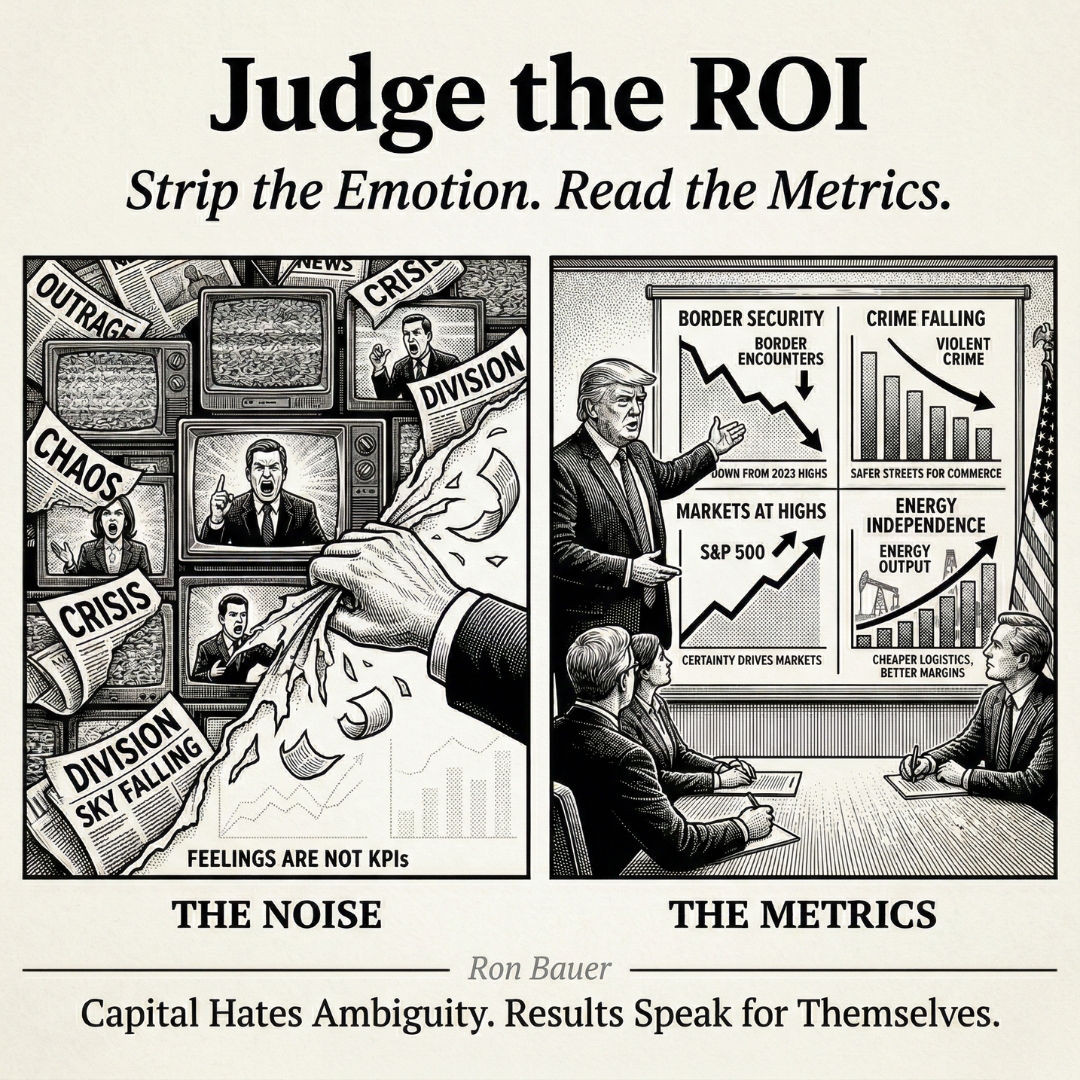
The Trump Administration has delivered results! As investors, we judge portfolio companies on pure ROI. Why do we judge political leadership any differently? The media wants you to focus on the outrage. The data tells a completely different story. President Trump is undeniably a polarizing leader. If you spend your day watching cable news, you might think the sky is falling. But when you strip away the emotion and look at the raw metrics, a clear picture emerges. The reality check for founders and limited partners: ↳ Border security is improving Border encounters have dropped significantly from the highs we saw in 2023. A secure border reduces systemic strain on local economies and stabilizes the workforce. ↳ Crime metrics are falling Public safety is a prerequisite for commerce. With violent crime rates moving in the right direction, small businesses and retail chains can operate without the constant drag of inventory loss and security risks. ↳ Markets are reaching new heights The S&P 500 and Dow Jones do not care about political feelings. They care about certainty. The current administration provides absolute clarity on deregulation and corporate tax policy, which directly benefits bottom lines. ↳ Energy independence is returning Investors know that energy costs dictate supply chain viability. Surging domestic energy production means cheaper logistics, lower inflation, and better margins for the companies we fund. Capital hates ambiguity. When leaders prioritize tangible security and economic expansion, business owners can finally forecast their growth with confidence. They can hire. They can invest. We build our investment thesis on hard numbers. We reward founders who execute against their KPIs and ignore the surrounding noise. So let me ask you a direct question about how you view the current Trump Administration. Do you evaluate national leaders using the same ROI driven lens you apply to your own portfolio companies?
Ron Bauer tweet media
English
8
7
16
155
Ron Bauer
Ron Bauer@ronbauer888·
Investment Capital hates uncertainty more than anything else in the market. The Trump Administration brings security and safety! When you deploy billions of dollars into infrastructure projects, you need a predictable environment. You need absolute confidence that the physical assets, trade routes, and regulatory frameworks you rely on will exist tomorrow. The current situation in the Middle East challenges that basic assumption for many international operators. The single biggest geopolitical risk for Gulf markets today is the persistent threat from Tehran and its vast proxy networks. Consider the operational impact on our portfolios and global supply chains. Radical proxy groups are actively targeting commercial vessels in the Red Sea. They are launching rockets near crucial Gulf energy chokepoints. They operate aggressively across Iraq and Syria with the explicit goal of destabilizing the region and interrupting commerce. Past administrations tried to manage this systemic risk through weak diplomatic concessions. They assumed that lifting economic pressure would bring regional actors to the negotiating table and calm the waters. That approach failed spectacularly on a global scale. It simply subsidized the exact groups causing the instability. For global capital allocators, this lack of clear US policy was a nightmare scenario. You cannot properly underwrite a 10 year infrastructure deal in the UAE, Qatar, or Bahrain if the primary security guarantor in the region refuses to draw a firm red line against rogue aggression. The Trump doctrine shifted this entire paradigm for investors. President Trump introduced absolute clarity to a completely opaque and volatile region. ↳ Trump designated aggressive factions as terrorist organizations, permanently cutting off their financial oxygen and legal operating room. ↳ Trump demonstrated immediate, severe military consequences when American or allied economic interests were targeted. ↳ Trump provided unequivocal, public backing to key partners like Saudi Arabia and Israel. Many political commentators called this hardline strategy reckless and dangerous. The financial markets fundamentally disagreed. From a purely investment driven perspective, this muscular approach actually reduces risk. True deterrence creates a predictable ceiling on regional conflict. When adversaries know the exact, painful cost of their actions, they calculate their moves differently. This stability directly reassures foreign direct investment. It allows Gulf nations to execute their massive economic transformation plans without the constant, looming threat of unprovoked military escalation. Clear boundaries protect capital. Appeasement destroys it. It is a fundamental principle of risk management that translates perfectly into effective foreign policy. How do you actively factor these massive geopolitical shifts into your risk assessments, supply chain planning, and deal structures?
Ron Bauer tweet media
English
4
4
8
57
Ron Bauer
Ron Bauer@ronbauer888·
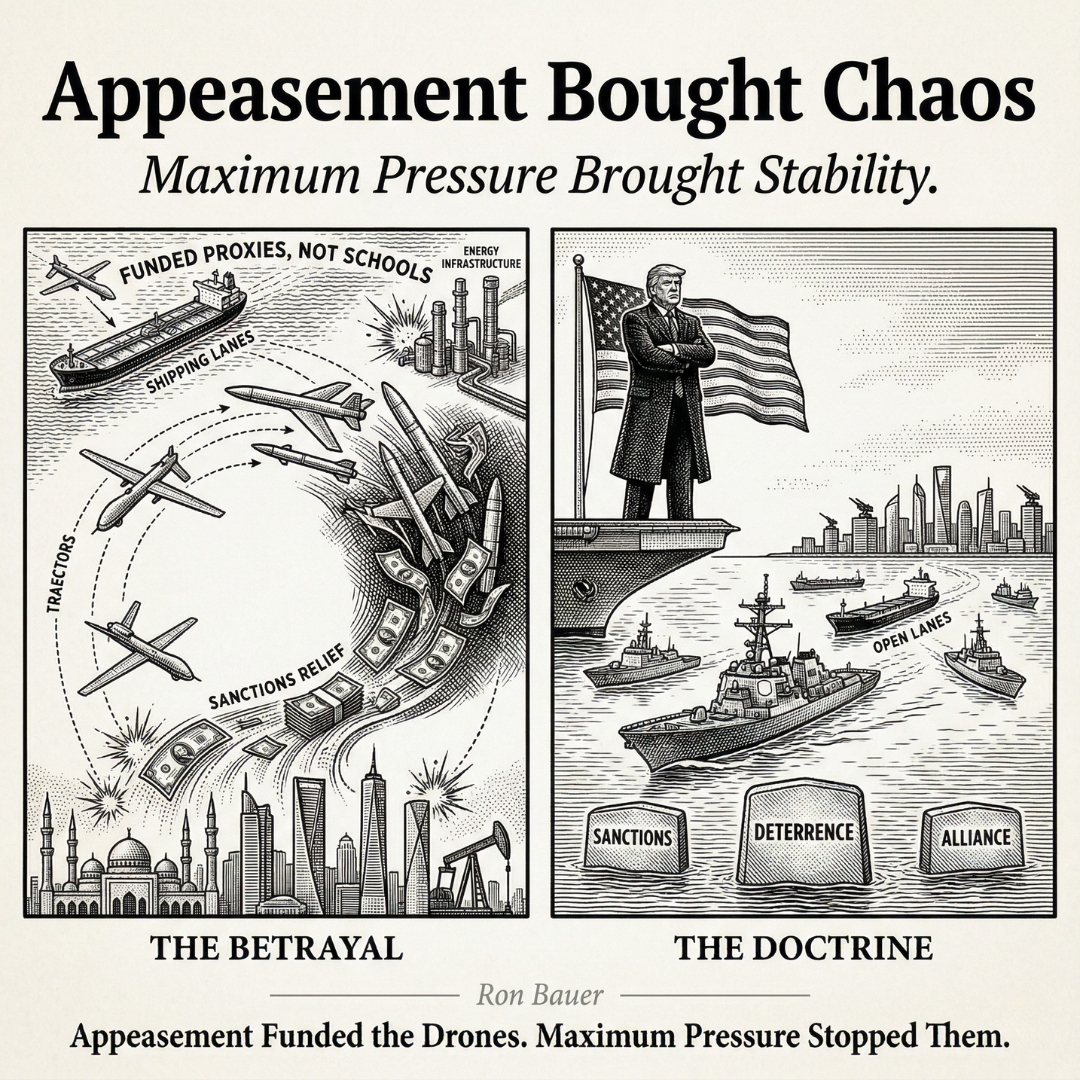
Gulf Region Countries (GCC) once facilitated billions in capital flowing to Tehran. Today those same Gulf Countries are rapidly deploying air defense systems to stop Iranian drones and missiles. It is a classic case of biting the hand that fed you. For years, previous administrations pushed a policy of sanctions relief. The theory was simple. Bring Tehran into the global economy and they will moderate their behavior. The reality played out differently. Sanctions relief did not build schools or infrastructure. It funded proxy groups and advanced missile programs. It empowered Tehran to target the exact Gulf states that advocated for their economic reintegration. We see the results daily. ↳ Drone strikes on shipping lanes ↳ Proxy attacks on energy infrastructure ↳ Deep instability in global oil markets Global energy investors require predictability. Capital flees from chaos. When the Middle East is unstable, energy prices fluctuate wildly, hurting businesses worldwide. President Trump recognized this fundamental truth. President Trump is the only Western leader who consistently calls out this aggression while offering a tangible solution. President Trump’s maximum pressure and deterrence doctrine fundamentally changed the calculus in the region. Instead of sending cash, President Trump reimposed real costs. - Strict economic sanctions - Unwavering military deterrence - Full-throated backing of US partners in the Gulf This is not just about foreign policy. It is about protecting the global economy. When the US projects strength, shipping lanes remain open. Energy markets stabilize. The cost of doing business drops. Appeasement bought chaos. Maximum pressure brought stability. Which approach do you think actually works better in the real world?
Ron Bauer tweet media
English
8
6
15
148
Ron Bauer
Ron Bauer@ronbauer888·
Trump is Pro Family & Pro Safety The previous administration lost track of 132,000 children. Under the prior leadership, these unaccompanied minors were lost in the broken system. The Trump administration found them. This shift highlights the difference between a system in chaos and one governed by law and order. Enforcement is not just about removals; it is about accountability and safety. The strategy focused on three specific pillars: 1. Targeted Criminal Removal ↳ Over 400,000 criminal illegal aliens were deported or removed. ↳ This prioritizes the safety of every American neighborhood. 2. Deterrence through Consistency ↳ 2.2 million people chose to leave on their own. ↳ This proves that when the law is enforced, the incentive to stay illegally vanishes. ↳ It is a smarter, more cost effective way to manage the border. 3. Program Integrity ↳ 100,000+ visas were revoked due to fraud or criminal activity. ↳ 1.4 million ineligible benefits were cut to protect legal residents. By conducting 206 million eligibility checks, the administration ensured that resources go to those who have a legal right to them. It is a level playing field for everyone who follows the rules. Many said this scale of enforcement could not be done. The results show otherwise. Which enforcement priority matters most to you? Share your perspective in the comments.
Ron Bauer tweet media
English
6
2
6
51
Ron Bauer
Ron Bauer@ronbauer888·
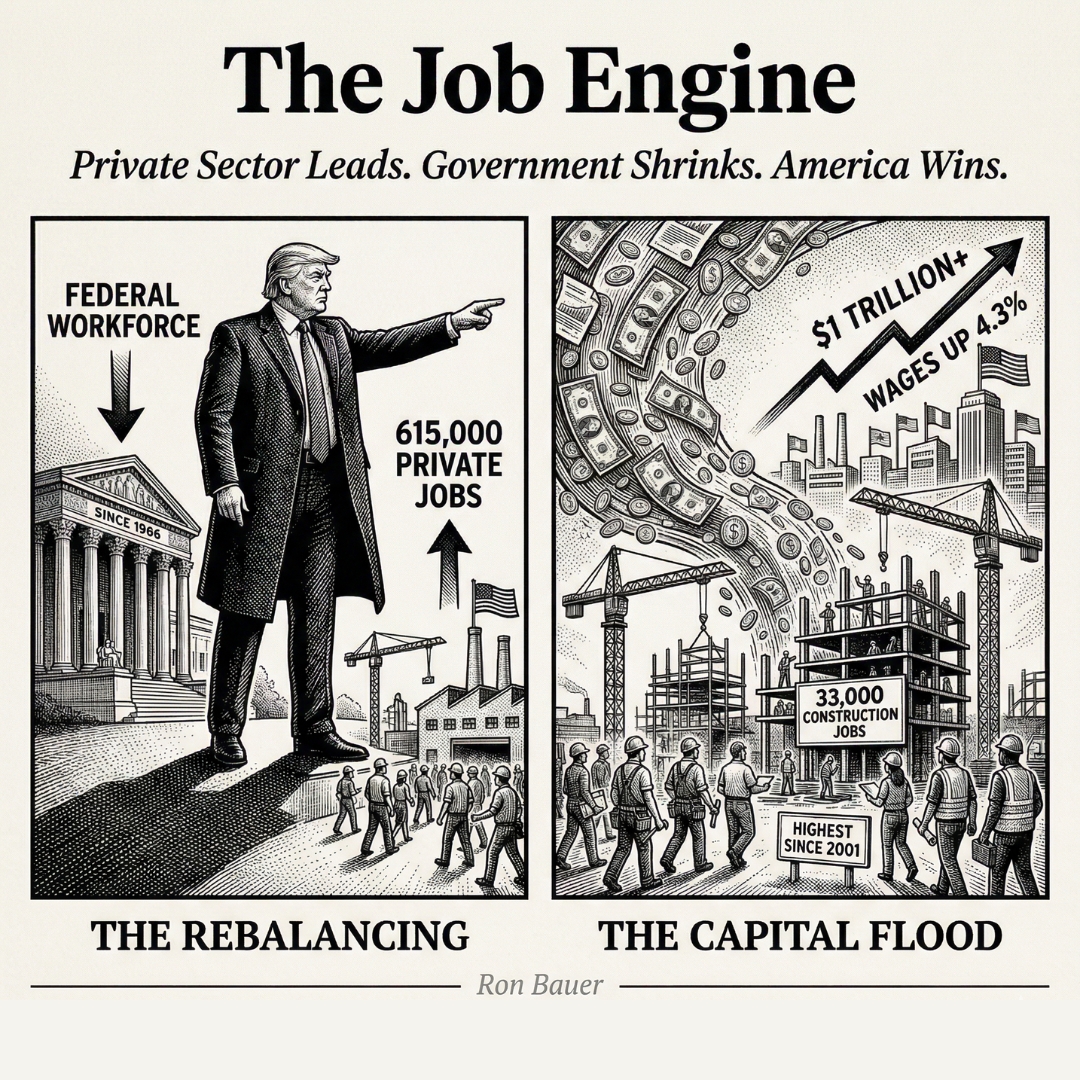
The Trump Administration Creates Real Jobs! 615,000 private sector jobs added. Federal employment at its lowest level since 1966. The public sector is shrinking while the private economy thrives. This is exactly the rebalancing we need to sustain long term growth. The current data suggests a massive shift in capital allocation: ↣ $1 trillion dollars plus in US investments announced since inauguration. ↣ Average weekly earnings up 4.3%. ↣ Prime age labor force participation at its highest since 2001. The construction sector is leading the charge in this new cycle. 33,000 jobs were added in January 2026 alone. This marks the highest growth for specialty trades in 5 years. The logic is founded on core business fundamentals. When regulations disappear, capital flows. When capital flows, jobs are created. When jobs are created, wages rise. This is the natural progression of a market unburdened by friction. Corporate America is betting heavily on policy clarity. The legislation known as the “One Big Beautiful Bill” is driving manufacturing expansion. We are seeing this play out with massive domestic projects from global leaders. Companies like TSMC and AstraZeneca are expanding their footprint right here. Serious people managing $10 trillion dollars are voting with their capital. 700 Global CEOs recently rated the United States of America as the top investment destination. Tell me now how Trump is doing in just over a year in power? They see a renaissance and resurgance of American entrepreneurship where others predicted chaos. Which economic indicator excites you most? Share your thoughts below.
Ron Bauer tweet media
English
8
5
15
101
Ron Bauer
Ron Bauer@ronbauer888·
2- Untapped markets create alpha, and reentry hiring is a venture opportunity hiding in plain sight. In a hyper competitive labor market, the greatest returns go to those who find value where others see risk. 70 million Americans with criminal records represent a massive underutilized talent pool for change. This is not just a social cause. It is a strategic workforce solution. The data supports a strong investment thesis for second chance hiring: ↣ 600,000 individuals are released from prison every year and are ready to work. ↣ Second chance employees consistently show lower turnover and higher loyalty. ↣ 82% of managers say these hires provide equal or greater value than the average employee. The following breakdown shows the financial incentives available for forward thinking leaders: ↳ Federal tax credits provide a direct offset for hiring from reentry programs. ↳ Expanding ban the box laws are removing barriers while preserving your right to choose the best candidate. ↳ Reentry programs create new tax bases instead of draining existing government resources. This strategy aligns perfectly with the criminal justice reform legacy of the Trump administration. By championing the First Step Act and working with advocates like Alice Marie Johnson, the focus has shifted toward economic reintegration. The goal is to move people from the sidelines of the economy into the heat of the game. When you hire for a second chance, you are not just filling a position. You are investing in a motivated worker who understands the value of an open door. American businesses are increasingly recognizing that this is both compassionate and commercially smart. Which part of the economic case for second chances do you find most compelling? Share your thoughts in the comments below.
Ron Bauer tweet media
English
3
3
5
73
Ron Bauer
Ron Bauer@ronbauer888·
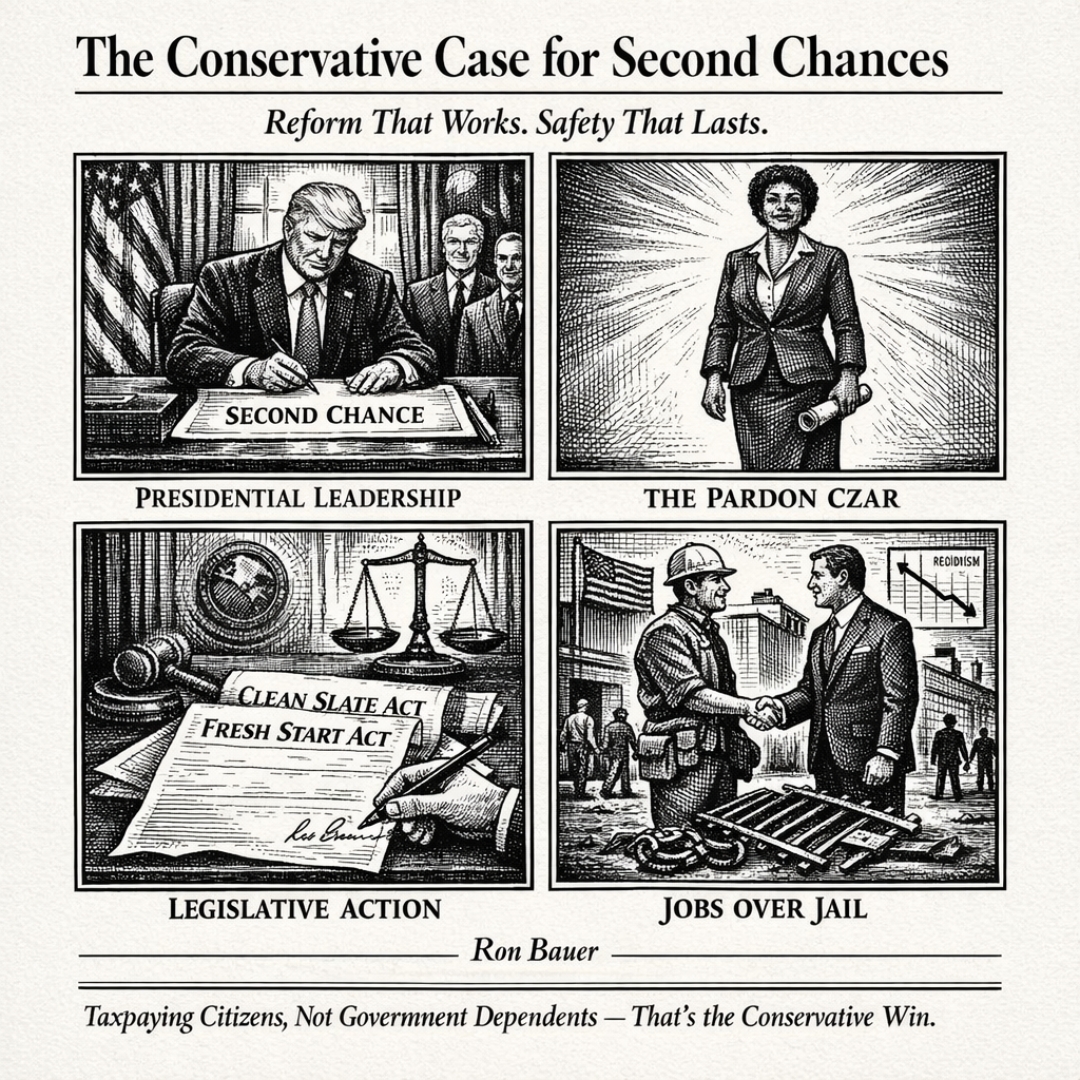
Trump is the best President for Criminal Justice Reform! Returning citizens or the formerly incarcerated becoming taxpaying workers instead of government dependents is the ultimate conservative win. The current strategy combines compassion with firm conservative values. With Alice Marie Johnson serving as the Pardon Czar, the commitment to meaningful reform is clear. Change is happening instead of just being a topic of discussion! Actions speak louder than words! Alice Marie Johnson means business and she is helping to create and make the change rather than talk about it! This is what President Trump meant when he appointed a Pardon Czar that is a doer rather than a talker! President Trump is listening to this massive power force of formerly incarcerated people which represents a large demographic of American Voters who are increasingly finding their voices! The formerly incarcerated are a strong group of Americans who deserve second chances and drive change in the community! Alice Marie Johnson represents a shift towards a system that values rehabilitation as much as accountability. The path forward includes several key legislative initiatives: ↠ Implementation of the Clean Slate Act and Fresh Start Act under Attorney General Pam Bondi. Another powerful force in Washington! ↠ Federal support for state-level laws that remove barriers to employment. ↠ Targeted sentencing reforms for federal offenses that prioritize fairness. I see the contrast clearly. The Trump approach does not sacrifice safety for reform. Instead, it uses employment as the primary mechanism for reducing recidivism. Data from the Council on Criminal Justice shows that stable jobs are the best deterrent to future crime. The formerly incarcerated want safety, security, a job to put food on their tables and take care of their families! We are moving toward an environment where the private sector leads the way. When businesses hire based on merit and potential, they build a more resilient economy. This is how you reduce government costs while strengthening the social fabric. It is about a level playing field for everyone willing to work for their future. Which part of this reform strategy do you find most essential for your community? Share your perspective in the comments.
Ron Bauer tweet media
English
18
14
33
154
Ron Bauer
Ron Bauer@ronbauer888·
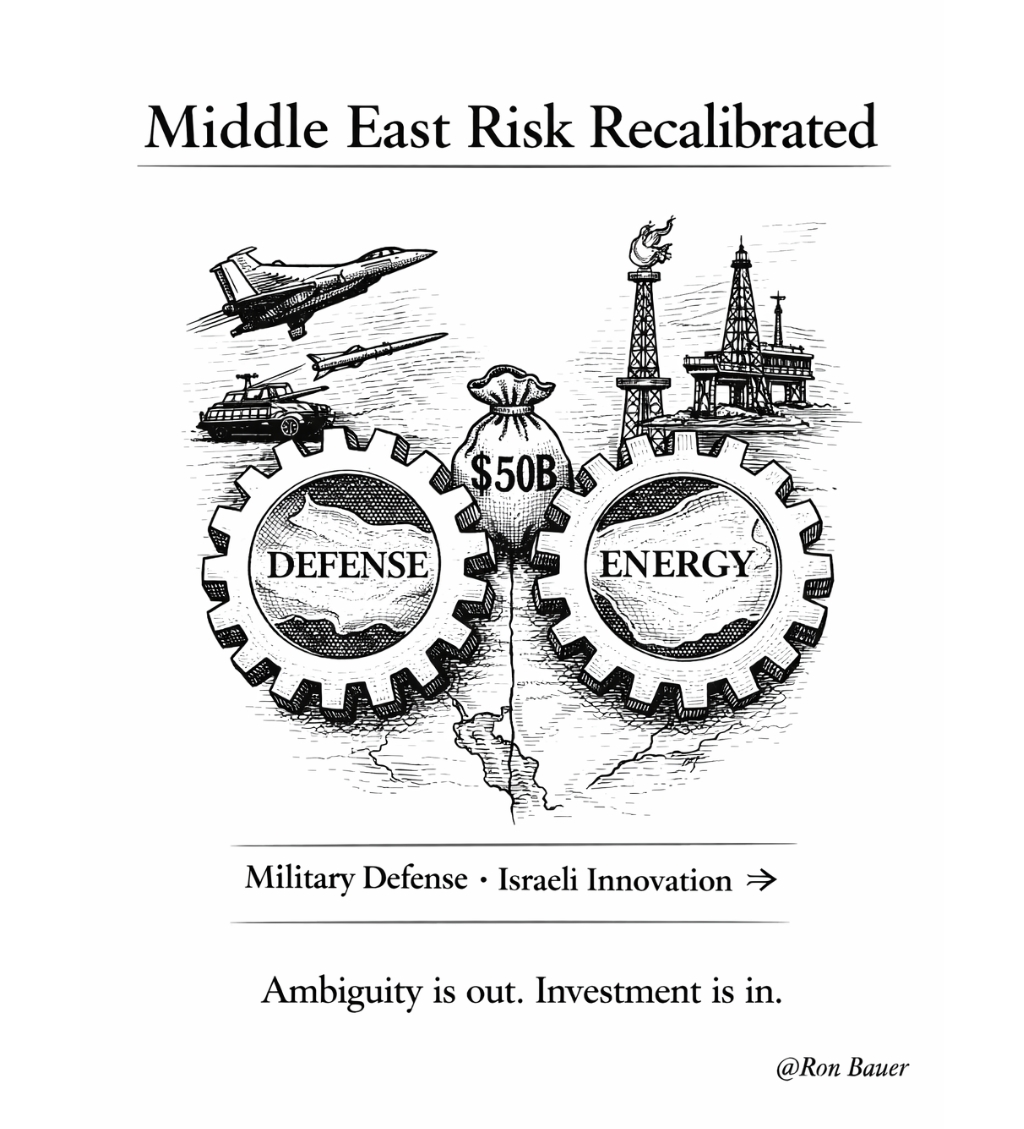
Every CIO just recalibrated Middle East risk. A massive policy shift has enabled $50 Billion+ in previously blocked institutional capital. The details you need to know: 1. Military spending is now the engine for tech investment. 2. Energy security has replaced renewable idealism in the GCC. 3. US defense contractors have cemented their regional advantage. Political clarity equals investment certainty. The market hates ambiguity. That ambiguity is gone. Smart money is moving NOW. 👉 Follow me for more such posts.
Ron Bauer tweet media
English
24
7
29
160
Ron Bauer
Ron Bauer@ronbauer888·
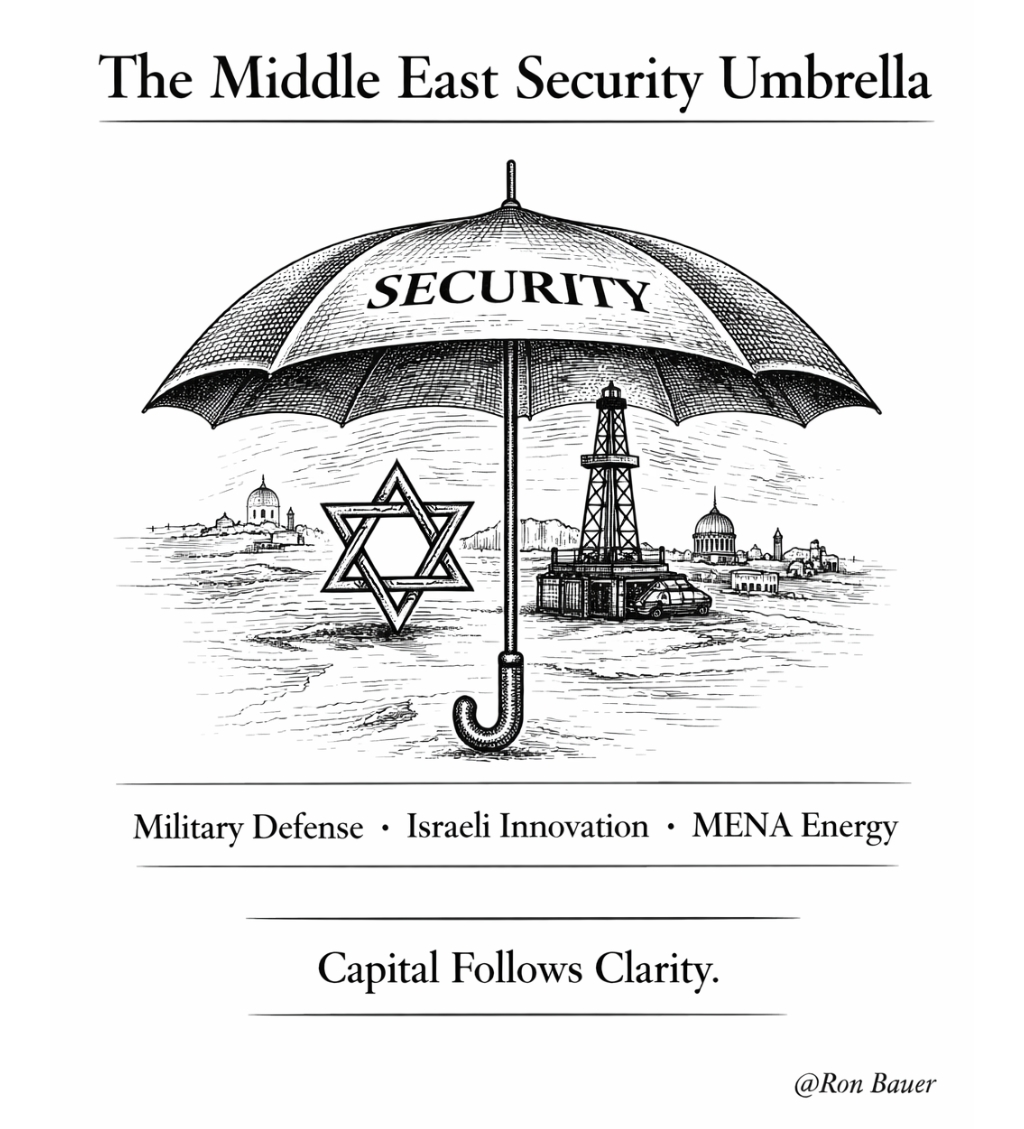
Strategic security alignment creates economic opportunity. After 4 years of policy fog, the 2026 Middle East outlook is sharp. The Trump administration's explicit protection of Israel is the catalyst. Capital follows clarity. Ambiguity is a tax on growth. Clear foreign policy positions act as a signal for $100 Billion in institutional flow. The 2026 framework focuses on: ↳ High grade security infrastructure ↳ Israeli innovation hubs ↳ MENA energy partnerships Energy security and physical security are now the same asset class. Institutional firms are already moving into defense tech and VC opportunities. Waiting for public announcements means you are already late. The security umbrella is the foundation of the 2026 investment reset. Where do you see the largest capital shift?
Ron Bauer tweet media
English
24
13
34
178
Ron Bauer
Ron Bauer@ronbauer888·
Your portfolio is exposed to Arctic supply chain risk. Most CIOs don't even realize it yet. We are witnessing a shift in resource sovereignty. The US State Department has made the stance clear. Access to natural resources is now a national security priority. This mirrors Trump's energy dominance strategy. China's polar ambitions forced this hand. Now the US and Denmark are tightening the net. The implications for European business sentiment are massive. Consider the IEA Arctic mineral data ↓ Scarcity is not the issue. Access is the issue. Secure access creates the premium. Clean energy + Sovereignty = The 2026 Thesis. Global supply chains are fracturing into secure blocs. You need to be on the right side of the line. Adjust your thesis accordingly.
Ron Bauer tweet media
English
22
10
27
233