RostLab

499 posts

RostLab banner
RostLab

RostLab

@rostlab

Predict protein structure and function using sequence, evolution & more! Operated by lab members.

Munich & New York Katılım Kasım 2010
73 Takip Edilen727 Takipçiler
RostLab retweetledi
Elodie Laine
Elodie Laine@LaineElodie·
Very happy to introduce VespaG, for ultra-fast and accurate prediction of protein mutational effects. github.com/JSchlensok/Ves…. Big thanks to @LiniMuc, Julius Schlensok, and @MarinaAbakarova for the great work and effort. Exciting collab with @rostlab 1/5
bioRxiv Bioinfo@biorxiv_bioinfo

VespaG: Expert-guided protein Language Models enable accurate and blazingly fast fitness prediction biorxiv.org/cgi/content/sh… #biorxiv_bioinfo

English
2
18
55
6K
Dr James Lloyd
Dr James Lloyd@JamesPBLloyd·
@DdelAlamo @daniela_barilla Forgive my ignorance, but does this predict changes in protein structure from point mutations (which I understand AF2 to be poor at doing)? If so, can it work on complexes (2 interacting proteins) or just sinle proteins?
English
2
0
4
902
RostLab
RostLab@rostlab·
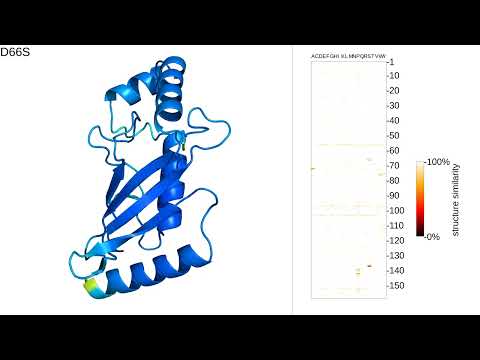
@JamesPBLloyd @DdelAlamo @daniela_barilla Yes, each frame is a structure prediction of a point mutation. We recommend using ESMFold instead of AF2, which we have shown in previous work to be more sensitive. It's a lot faster as well. However, MutAmore can interface with any structure predictor that outputs PDB files.
English
2
0
5
345
RostLab retweetledi
Michael Heinzinger
Michael Heinzinger@HeinzingerM·
Our new bilingual protein language model (pLM), ProstT5, translates between protein sequence and structure. Besides producing more structure-aware embeddings that are better at remote homology detection than sequence-pLMs, its translation capability enables inverse folding.
Michael Heinzinger tweet media
English
1
28
121
30.9K
RostLab
RostLab@rostlab·
3/3 This study showcases the combined power of cutting-edge AI, traditional phylogenetics and manual annotations to unravel complex biological phenomena, such as evolution of protein function. Stay tuned for more! 📚🌟 #ScienceTwitter #Toxinology
English
0
0
1
276
RostLab
RostLab@rostlab·
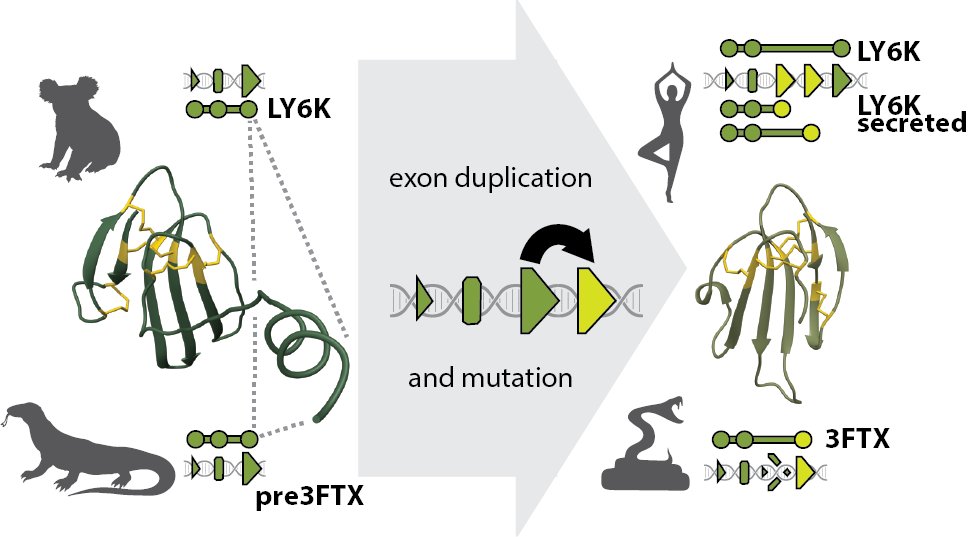
2/3 🔍Immediate ancestor of these toxins? A non-secretory, non-toxic Ly6, unique to squamate reptiles. Mechanism? Exon duplication followed by mutation led to novel forms with a membrane anchoring domain lost. 🧩 #Evolution #ReptileScience
English
0
0
1
228
RostLab retweetledi
Noelia Ferruz
Noelia Ferruz@ferruz_noelia·
We (@lindner_seb, @HeinzingerM) introduce REXzyme, a new model for the generation of enzymes that catalyze user-defined chemical reactions. We'd like that the community can benefit as soon as possible from it, so we made it available in HuggingFace: huggingface.co/AI4PD/REXzyme.
English
6
54
210
25.8K
RostLab
RostLab@rostlab·
Synteny analyses, phylogenetics and pLMs reveal that 3-finger-toxins evolved from a transmembrane "pre-3FTx" ancestor that gained increased affinity for nAChRs and lost its transmembrane region. #snakevenom #geneevolution #machinelearning
English
0
1
3
514
RostLab
RostLab@rostlab·
Contrary to previous hypotheses, our research suggests that 3-finger toxins in snake venoms evolved from a single-copy gene unique to Toxicofera reptiles, not monomeric neuromodulatory Ly6s like LYNXs or SLURPs. #snakevenom #geneevolution #proteinfamily
English
1
1
2
583
RostLab
RostLab@rostlab·
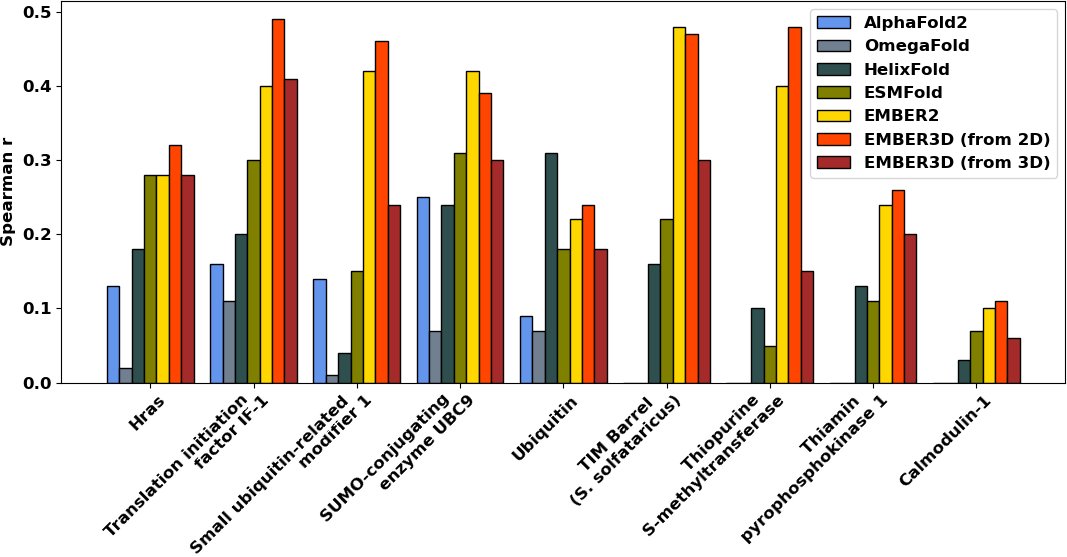
EMBER3D can predict mutated structures of all single amino-acid variants in an average length protein in a matter of minutes. When correlated with deep mutational scanning experiments, EMBER3D predictions are much more sensitive to small changes in sequence than other systems.
RostLab tweet media
English
1
2
8
0
RostLab
RostLab@rostlab·
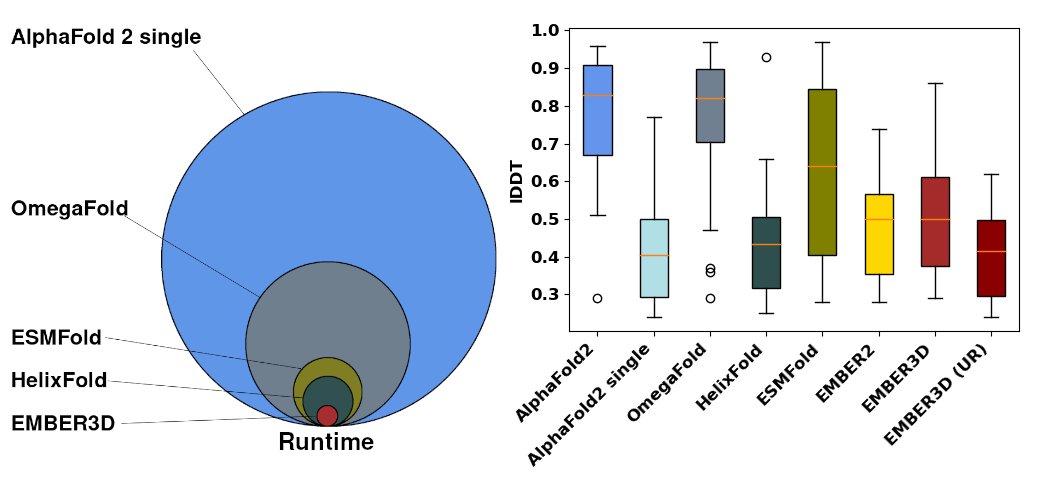
Trading accuracy for speed, EMBER3D runs orders of magnitude faster than competing models while maintaining reasonable performance (although nowhere close to Alphafold2).
RostLab tweet media
English
1
2
6
0
RostLab
RostLab@rostlab·
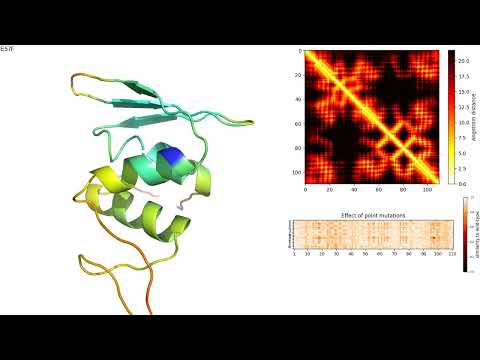
EMBER3D predicts protein structure in fractions of a second with high sensitivity to small changes in sequence. Protein Mutation Movies (PMMs) visually capture the effects of amino-acid substitutions. youtu.be/0tIN9n6cSHo via @YouTube
YouTube video
YouTube
English
1
21
107
0