Steve Rubenfaer

5.2K posts

Steve Rubenfaer banner
Steve Rubenfaer

Steve Rubenfaer

@rubenfaer

ALL my tweets, comments, retweets etc. are financial advice

mexico city Katılım Mayıs 2014
1.5K Takip Edilen318 Takipçiler
MENA Visuals
MENA Visuals@menavisualss·
🇸🇦 The distribution of Arabic tribes in Arabia.
MENA Visuals tweet media
English
42
85
895
109.7K
Steve Rubenfaer retweetledi
George Selgin
George Selgin@GeorgeSelgin·
🧵 I can’t resist coming back here just long enough to note that, as is too often the case lately, Stiglitz doesn’t know what he’s talking about.
The Economist@TheEconomist

Franklin Roosevelt’s pragmatism and John Maynard Keynes’s ideas “saved capitalism from the capitalists”, writes Joseph Stiglitz, a Nobel-prizewinning economist. Register for free to read his guest essay and learn why econ.st/4tohs1X Illustration: Dan Williams

English
16
107
598
59.8K
Steve Rubenfaer
Steve Rubenfaer@rubenfaer·
the nazis were socialist. they had a 4 year plan, ownership was nominal. the central government controlled every part of production, wages, what got produced, etc. it wasn't like the bolsheviks, but it for sure is a socialist economy. here is what the best economist in history, who happened to live in austria during that time said about their economy: "The German pattern of socialism (Zwangswirtschaft) [“compulsory economy”] is characterized by the fact that it maintains, although only nominally, some institutions of capitalism. Labor is, of course, no longer a “commodity”; the labor market has been solemnly abolished; the government fixes wage rates and assigns every worker the place where he must work. Private ownership has been nominally untouched. In fact, however, the former entrepreneurs have been reduced to the status of shop managers (Betriebsfuehrer). The government tells them what and how to produce, at what prices and from whom to buy, at what prices and from whom to sell. Business may remonstrate against inconvenient injunctions, but the final decision rests with the authorities." and he goes on more.
English
0
0
2
79
i/o
i/o@avidseries·
Hitler busted up unions, privatized or divested from certain industries (e.g., big commercial banks, utilities, heavy manufacturing, mining, shipbuilding, some public works, steel, mass transport, railway subsidiary companies, ship lines, a lot of state-owned property), didn't remove private property protections, dismantled social welfare programs, outlawed all (actual) socialist parties and organizations, and rounded up and executed people on the left (before he did the same to Jews). Hitler's involvement in the economy was consistent with the principles of fascism: The means of production were not seized, but the party maintained a more direct role in some regulatory aspects. Hitler argued that both social-economic hierarchies and inequalities were good for the country. How socialist of him! Combining the terms “national” and “socialism” was briefly popular across Europe in the 20s, but these movements tended to be interested in creating “social solidarity” based not on class, but on race or ethnicity or nationality. “Socialism” in this context bears no relationship to the term in its present one. I'll add: “But the German Nazis had 'socialist' in their name” is the same level of genius argument as “North Korea and East Germany were democracies because they had 'democrat' in their names.”
Mike Lee@BasedMikeLee

Fascism and Naziism aren’t the opposite of socialism, as the modern left would have you believe They *are* socialism

English
136
50
569
56.1K
Steve Rubenfaer
Steve Rubenfaer@rubenfaer·
chat just said to me: What I’d actually recommend for you given how you think
English
0
0
0
11
Brian Roemmele
Brian Roemmele@BrianRoemmele·
New Order released "Bizarre Love Triangle" in 1986 as part of their album Brotherhood, blending post-punk roots with electronic dance production that defined their shift into synth-driven pop. Built around sequenced drum machines, melodic basslines, and layered synth textures, the song stands out for its contrast between upbeat instrumentation and lyrics about emotional confusion and romantic uncertainty.
English
22
51
443
30.4K
Steve Rubenfaer retweetledi
Hüseyin Dogru (Back-Up)
Hüseyin Dogru (Back-Up)@redstreamnet·
Let the truth be told, you sanctioned me for journalism. Let the truth be told, you sanctioned me for journalism. Let the truth be told, you sanctioned me for journalism. Let the truth be told, you sanctioned me for journalism. Let the truth be told, you sanctioned me...
European Commission@EU_Commission

Let the truth be told, let the press be free. 📰 Journalists hold power to account, uncover injustice, and keep citizens informed often at great personal risk. This #WorldPressFreedomDay, we reaffirm our commitment to protecting journalists and defending independent media. Because free press is the foundation of democracy.


English
41
3.3K
13.9K
151.8K
Phil Hoyeck
Phil Hoyeck@PAHoyeck·
Philosophers whose English writing skills are absolutely appalling: • Immanuel Kant • G.W.F Hegel • Martin Heidegger • Jacques Derrida • Jacques Lacan Am I missing any?
English
171
48
1.1K
470.8K
Steve Rubenfaer
Steve Rubenfaer@rubenfaer·
i flew spirit airlines once. they automatically signed me up to their marketing emails; when i tried to unsubscribe, the links went nowhere, and i was stuck getting their emails for years. i cursed them repeatedly and predicted their impending demise. it worked. never let anyone tell you that you can't do anything you put your mind to.
English
0
0
1
22
Steve Rubenfaer
Steve Rubenfaer@rubenfaer·
@iycrtylph except for henry ford you mean, who gave us the weekend, for that very reason
English
1
0
1
160
pHiycrtyl
pHiycrtyl@iycrtylph·
get this through your thick fucking heads: technology never shortens labor time on its own. no boss ever has said, "ah, now that these machines have production more efficient, i guess i can let my workers work less." only class struggle shortens labor time.
English
48
2.2K
18.6K
488.8K
Steve Rubenfaer
Steve Rubenfaer@rubenfaer·
what do you call the generator your grandfather gave you? the family joules
English
0
0
0
16
Steve Rubenfaer retweetledi
AFP News Agency
AFP News Agency@AFP·
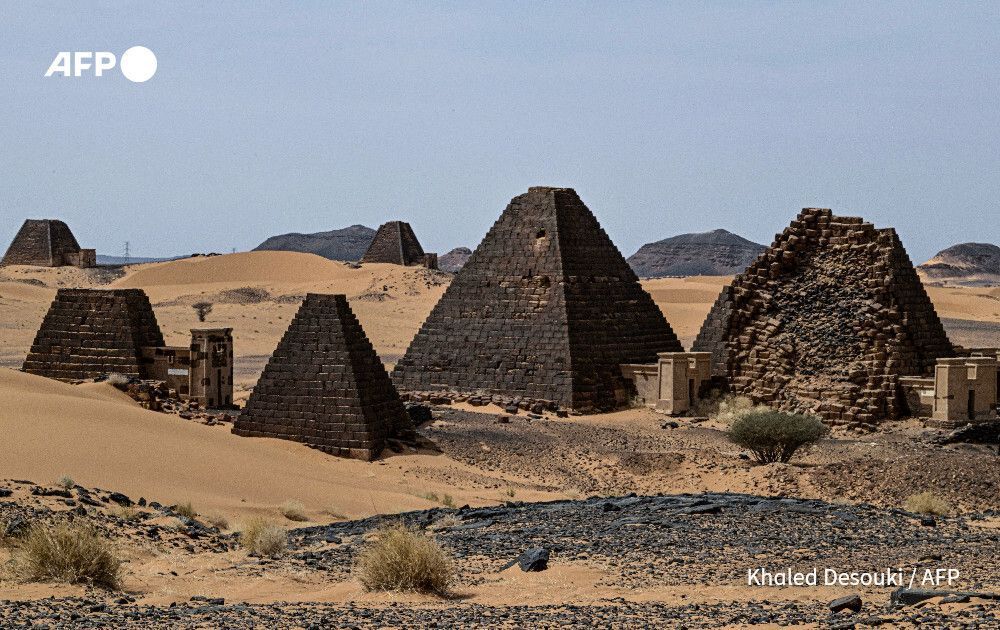
The loyal, lonely keepers of Sudan's pyramids. Mostafa Ahmed Mostafa is the heir to a long line of groundskeepers who have guarded Sudan's ancient pyramids of Meroe. Now, three years into the war between the army and paramilitary forces, he stands near-solitary sentinel over his heritage u.afp.com/SaMN
AFP News Agency tweet mediaAFP News Agency tweet mediaAFP News Agency tweet mediaAFP News Agency tweet media
English
7
547
1.5K
87.9K
Steve Rubenfaer retweetledi
Massimo
Massimo@Rainmaker1973·
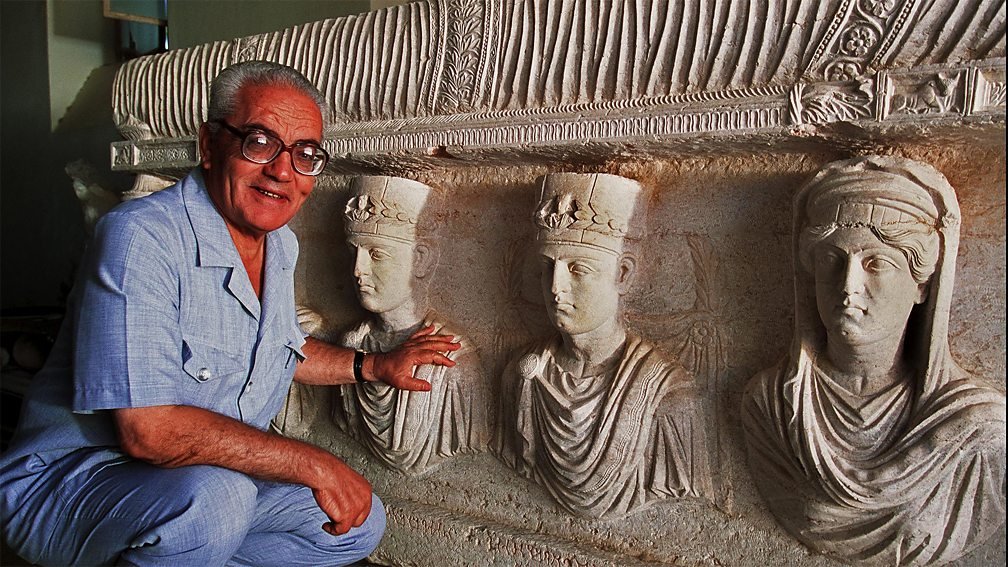
Khaled al-Assad, the Syrian archaeologist who gave his life to protect the ancient city of Palmyra from destruction by ISIS militants. Under torture and pain of death, he refused to reveal the location of priceless artifacts he’d hidden away. Khaled al-Asaad, born in 1932, dedicated more than five decades of his life to the meticulous study of Palmyra, an archaeological gem nestled in the Syrian desert. His expertise and passion for antiquities positioned him as the director of the Palmyra Museum, a role he embraced with unwavering commitment. Al-Asaad's scholarly pursuits contributed significantly to our understanding of Palmyra's rich history, a city that once thrived as a vital cultural and economic hub in the ancient world. Tragedy struck in 2015 when the Islamic State of Iraq and Syria (ISIS) seized control of Palmyra. Recognizing the imminent threat to the city's priceless artifacts, Khaled al-Asaad chose to stay behind, braving the perilous circumstances in a courageous effort to safeguard the cultural treasures he had devoted his life to studying. Despite facing intimidation and coercion, al-Asaad refused to disclose the location of hidden artifacts, valiantly protecting the historical legacy of Palmyra. The ultimate price for his dedication came on August 18, 2015, when ISIS barbarically executed Khaled al-Asaad. The news reverberated globally, sparking outrage and condemnation from the international community. Al-Asaad's tragic demise served as a stark reminder of the threats posed to cultural heritage in times of conflict and underscored the sacrifices made by individuals committed to preserving the treasures of our shared past. In the aftermath of his death, the memory of Khaled al-Asaad continues to inspire. His legacy lives on in the hearts of those who recognize the importance of safeguarding cultural heritage against the ravages of war and extremism.
Massimo tweet media
English
8
27
115
13.8K