Ruchica Tomar

17.7K posts

Ruchica Tomar banner
Ruchica Tomar

Ruchica Tomar

@ruchicatomar

A Journo turned flack who is trying to read and listen more than she talks and tweets. All the wisdom here is mine unless it is yours.

New Delhi Katılım Ağustos 2009
726 Takip Edilen13.3K Takipçiler
Ruchica Tomar retweetledi
Naveen Jindal
Naveen Jindal@MPNaveenJindal·
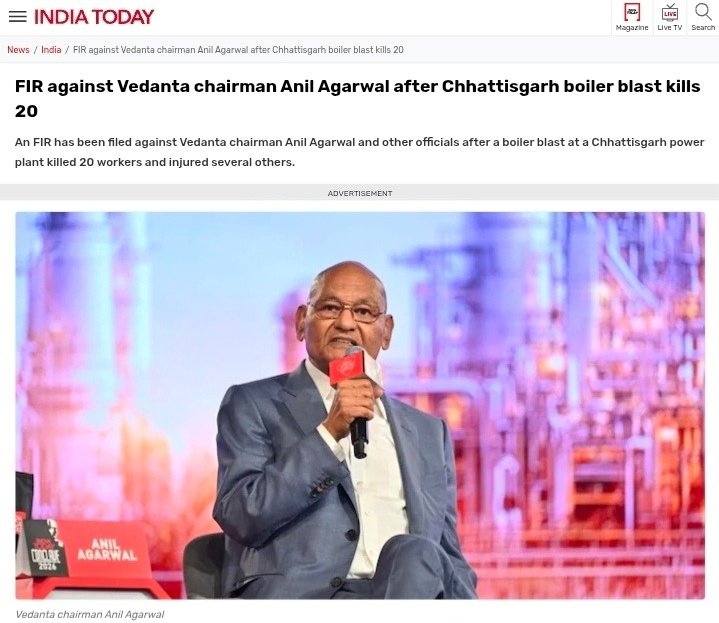
The tragedy in Chhattisgarh is deeply painful. 20 families have lost everything. Proper compensation, livelihood support for the families, and a thorough investigation are non-negotiable. But naming Shri @AnilAgarwal_Ved Ji in the FIR before any investigation raises serious concerns. He is a self-made man from a humble and backward community background who built a global enterprise from scratch. He had no role in that plant's operations. When accidents happen in PSU plants or Railways, do we name the Chairman? We do not. The same standard must apply to the private sector too. Investigate first. Establish responsibility based on evidence. Then act. India's #ViksitBharat vision needs people like Shri Anil Agarwal to keep investing and building. That happens only when investors trust the system. 🇮🇳
Naveen Jindal tweet media
English
577
1.4K
5.4K
563.5K
Ruchica Tomar retweetledi
Jackson Hinkle 🇺🇸
Jackson Hinkle 🇺🇸@jacksonhinklle·
❤️🇮🇷 BREAKING: IRANIANS are forming human-chains nationwide on bridges & around critical infrastructure to safeguard their country against U.S & Israeli strikes
English
2.4K
18.3K
63.4K
2.8M
Ruchica Tomar
Ruchica Tomar@ruchicatomar·
Such an incredible achievement and absolutely phenomenal news for #India at a time when energy security concerns couldn’t get more real. All thanks to our scientific community and many governments that boldly marched on with this programme despite threat of sanctions.
Bloomberg@business

The first Indian-built fast breeder nuclear reactor has achieved criticality, the stage at which the atomic reaction becomes self-sustaining, according to a statement from PM Modi’s office bloomberg.com/news/articles/…
English
0
1
0
1.2K
Ruchica Tomar retweetledi
Aravind
Aravind@aravind·
India has now attained criticality in a commercial, 500MW power producing, fast breeder nuclear reactor. (We had experimental one before, but this is a big commercial one that can produce power.) Criticality means reactor is running by itself without needing to keep re-igniting it. Breeder means it makes more fissile fuel than it uses. Nobody wanted to give India such tech. Because these reactors can create nuclear fissile material. So India created the tech itself in spite of sanctions. Only Russia has this tech (true commerical fast breeder reactor) running. US, UK, France say they have given up on this. China has one prototype based on Russian tech but it is not yet commercial. India has refused to put its Fast Breeder Reactor program under international scrutiny. It is a big, big, no HUGE thing for India's energy independence. But, as usual, most Indians won't know how big as we don't play up our achievements. I was recently amused seeing some posts by Gen-Z advising Indian govt to go for Thorium cycle etc in some condescending tone. Because India has been on it quietly for sometime. And this reactor going critical now and commercial soon means it can sustain itself for infinity. This cuts India's imports of Uranium. And paves the way for Thorium based reactors as well. (Stage 3 of India's nuclear program, we just passed Stage 2 with PM's post). Also, what PM didn't say is, this reactor can help generate some 100+kg of weapons grade Plutonium -with which India can make many warheads and expand nuclear stockpile if it wishes so. But India will never do that, you know, as India is a very peaceful nation promoting world wide nuclear disarmament ;)
Sensei Kraken Zero@YearOfTheKraken

Someone explain this to me like I am 15 year old

English
228
2.7K
13.1K
556.9K
Ruchica Tomar retweetledi
Nirupama Menon Rao 🇮🇳
Today marks a quietly momentous step in India’s long scientific journey, one that speaks of patience, precision, and national resolve. With the achievement of criticality at the Prototype Fast Breeder Reactor (PFBR), India has entered the second stage of its three-stage nuclear power programme, a vision first articulated decades ago by Homi Jehangir Bhabha. This achievement is not just technical, it is strategic. Fast breeder reactors are the bridge between limited uranium resources and India’s abundant thorium reserves. They convert what was once considered waste into fuel, extending energy security across generations. To reach this stage, after years of design, engineering, and careful calibration, is a tribute to the scientific temper and institutional endurance that define India at its best. India now stands among a very small group of nations capable of operating large fast reactors, an accomplishment that carries both prestige and responsibility. It strengthens our capacity for clean, reliable energy, while reinforcing our technological sovereignty in a complex global landscape. My warmest congratulations to the scientists, engineers, technicians, and countless quiet contributors who have made this possible, especially those at Indira Gandhi Centre for Atomic Research and across the Department of Atomic Energy. Their work reminds us that nation-building is often a long, disciplined endeavour, far removed from the spotlight, but deeply consequential. This is not just a milestone. It is the quiet fruition of a vision that has been decades in the making.
English
0
80
292
44.5K
Zakka Jacob
Zakka Jacob@Zakka_Jacob·
A new chapter at Times Now—thank you for your trust, viewers. It will remain at the heart of every conversation. @TimesNow
Zakka Jacob tweet media
English
75
21
397
40.8K
Ruchica Tomar retweetledi
Alex Thompson
Alex Thompson@AlexThomp·
There are corrections and there are CORRECTIONS.
Alex Thompson tweet media
English
360
3.3K
24.4K
1.1M
Ruchica Tomar retweetledi
Ishaan Tharoor
Ishaan Tharoor@ishaantharoor·
Having just seen long lines for cooking gas cylinders on the streets of cities in India — one of many bystanders to the conflict whose population has been seriously impacted—I’m struck yet again by how relatively insulated the U.S. is from the wars it unleashes
Jesse Watters@JesseBWatters

Spring Break goes WILD☀️ 🍺🤪 and the students have NO IDEA what’s going on🤣 “The BIGGEST issue in America is what BIKINI I’m wearing tomorrow”👙 “We’re going to war with IRAQ that’s been crazy”🤔 “I’ve NEVER heard the word Ayatollah in my life”🫢 “Is Venezuela in SPAIN?”😬😬😬

English
206
1.9K
10.8K
755K
Anna MM Vetticad
Anna MM Vetticad@annavetticad·
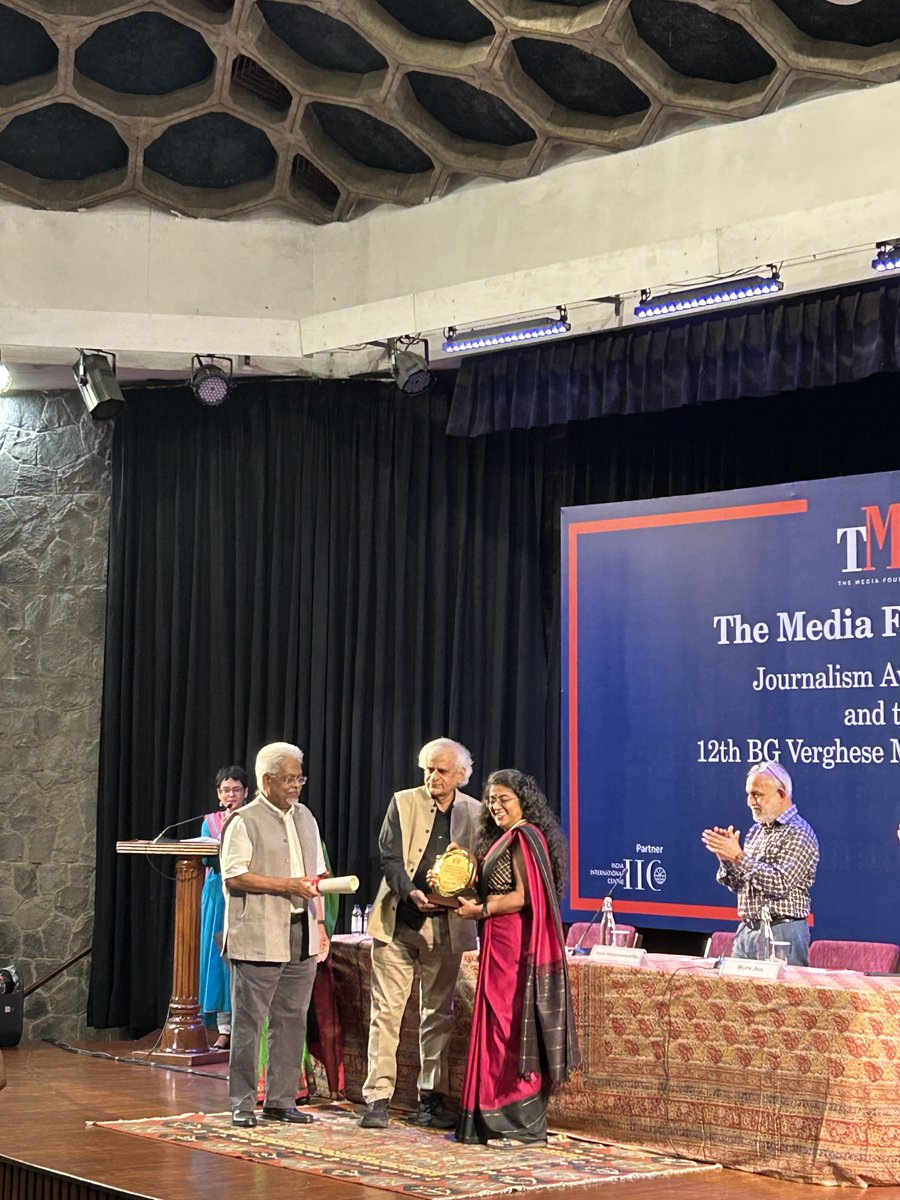
I'm a bit overwhelmed. Entertainment is still not seen as a "serious" journalistic beat, so The Media Foundation @FreeMedia_In has, in effect, taken a stand by giving me the Chameli Devi Jain Award for Outstanding Woman Media Person of 2025. Thank you TMF, the jury & my editors♥️
Anna MM Vetticad tweet media
English
45
33
279
22.4K
Ruchica Tomar
Ruchica Tomar@ruchicatomar·
This is a great framing and articulation. You are missed @NMenonRao
Nirupama Menon Rao 🇮🇳@NMenonRao

I do not make policy or offer correctives. I am a voice in the wilderness. ( no emoji) But if I had been asked a question on the Dena sinking, I would have said the following : The sinking of the Iranian vessel in the Indian Ocean is a matter of concern for India. The issue is not simply legality. Under the laws of armed conflict, belligerent ships may be targeted in international waters. But events of this nature acquire wider meaning when they occur in waters that are central to the security and economic lifelines of many countries. For India, the meaning is threefold. First, the episode signals that a conflict originating in West Asia has begun to extend into the maritime domain of the Indian Ocean. This is a region through which a significant portion of the world’s energy and commerce flows. Any widening of hostilities in these waters inevitably affects global stability. Second, it reminds us that maritime security in the Indian Ocean cannot be taken for granted. Even when conflicts begin elsewhere, their operational consequences can spill into regions that depend on open sea lanes and predictable maritime order. Third, the incident underscores the importance of restraint among major powers. Military actions taken far from the primary theatre of conflict can have unintended strategic consequences for countries that are not parties to the conflict. India’s position is therefore straightforward. We do not seek to interfere in the conflicts of others. But we do have a legitimate interest in ensuring that the Indian Ocean remains a stable maritime space where commercial traffic, energy flows, and international cooperation can continue without disruption. For this reason, India urges all parties to exercise restraint and to avoid actions that could widen the theatre of conflict or endanger the stability of vital sea lanes.


English
0
0
0
423