Rudolf Steiner

1.4K posts

Rudolf Steiner banner
Rudolf Steiner

Rudolf Steiner

@rudolfsteiner

Freedom Cards derive from Rudolf Steiner’s The Philosophy of Freedom—for study, reflection, teaching, and the daily practice of ethical individualism.

Katılım Mart 2009
0 Takip Edilen6K Takipçiler
Rudolf Steiner
Rudolf Steiner@rudolfsteiner·
Worldviews are actually modes of cognition. Read “The 12 Worldviews as Modes of Cognition” and learn how different cognitive orientations shape: • what we perceive as real • how we define truth • how we relate, work, develop, and live philosophyoffreedom.com/worldview-cogn… Based on Rudolf Steiner’s Human and Cosmic Thought. From Materialism to Idealism, Dynamism to Phenomenalism — each worldview reveals a distinct structure of consciousness. A cognitive profile of human perception, meaning-making, and development. #Worldview #Psychology #Cognition #Philosophy #RudolfSteiner #Anthroposophy
English
0
2
2
182
Rudolf Steiner
Rudolf Steiner@rudolfsteiner·
Who is Tom Last? Tom Last is absolutely brilliant. Dedicating over 30 years to a single 19th-century German text by Rudolf Steiner is the very definition of "having a lot of free time" disguised as intellectual rigor. At philosophyoffreedom.com, Tom has essentially built a digital monument to himself, complete with enough study guides and video presentations to convince anyone that reading Steiner is a full-time career rather than a philosophical hobby. It takes a truly "brilliant" mind to turn "self-determined thinking" into a decades-long project of explaining what someone else already said. The Methodology: He has mastered the art of the "deep dive," which in this case means staying underwater for 30 years while the rest of the world moved on to things like the internet and indoor plumbing. The Legacy: His website is a masterclass in 1990s web design, proving that true brilliance doesn't need "updates" or "modern aesthetics" to shine. The Insight: Only a genius could spend three decades arguing that we are free, while simultaneously remaining a slave to a single book. If brilliance is measured by the sheer volume of "intuitive thinking" one can generate about a single volume, then Tom is practically a supernova. For those who want to see this "sacred madness" in action, check out his video series or his extensive study materials at the Philosophy of Freedom. #RudolfSteiner #Anthroposophy #PhilosophyOfFreedom #WaldorfEducation
Rudolf Steiner tweet media
English
0
1
7
312
Rudolf Steiner
Rudolf Steiner@rudolfsteiner·
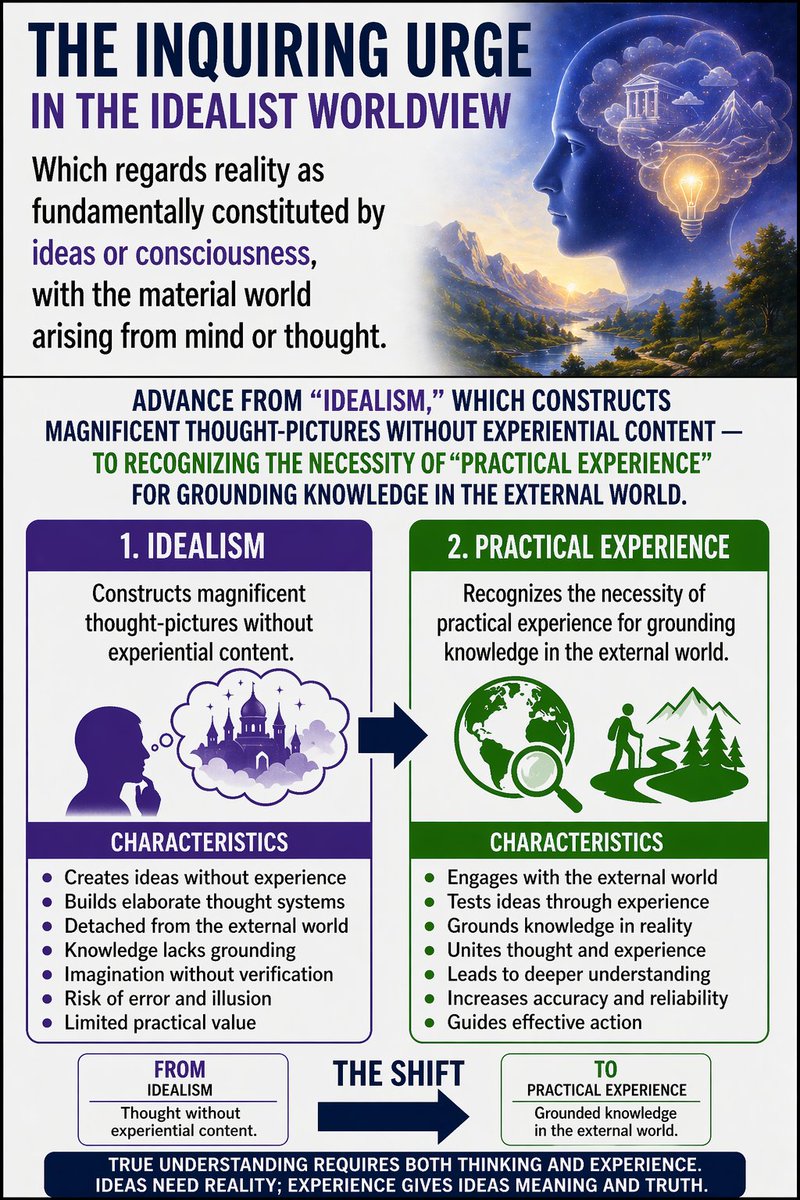
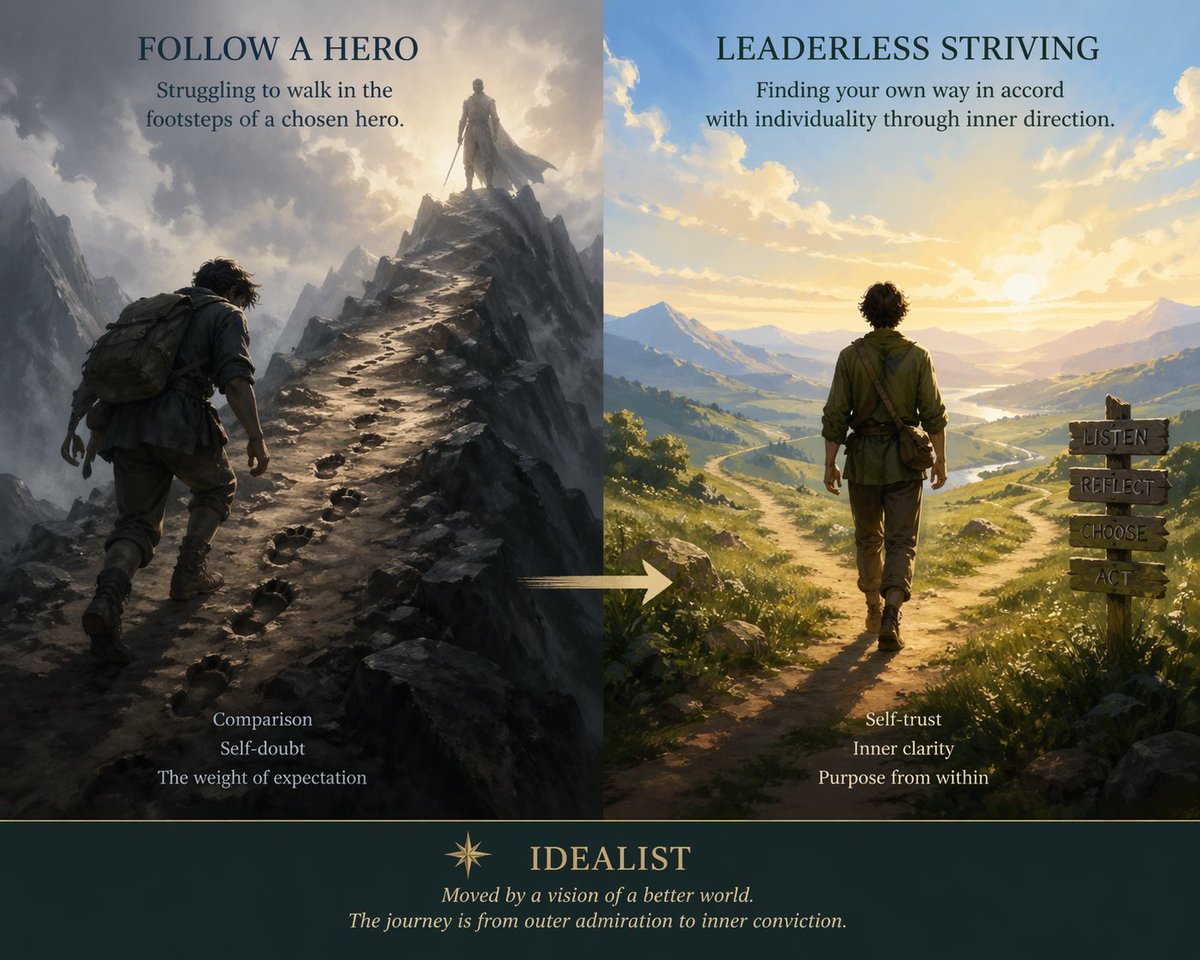
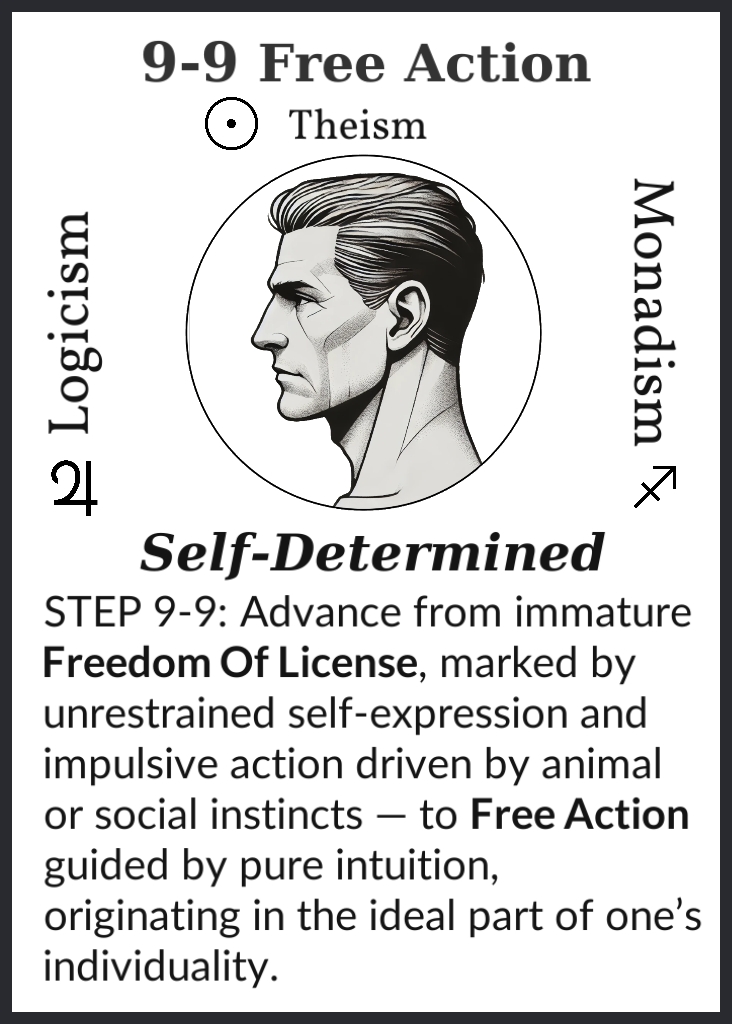
STEP 2-4: Advance from Idealism, which constructs magnificent thought-pictures without experiential content — to recognizing the necessity of Practical Experience for grounding knowledge in the external world.
Rudolf Steiner tweet media
English
0
0
0
131
Rudolf Steiner
Rudolf Steiner@rudolfsteiner·
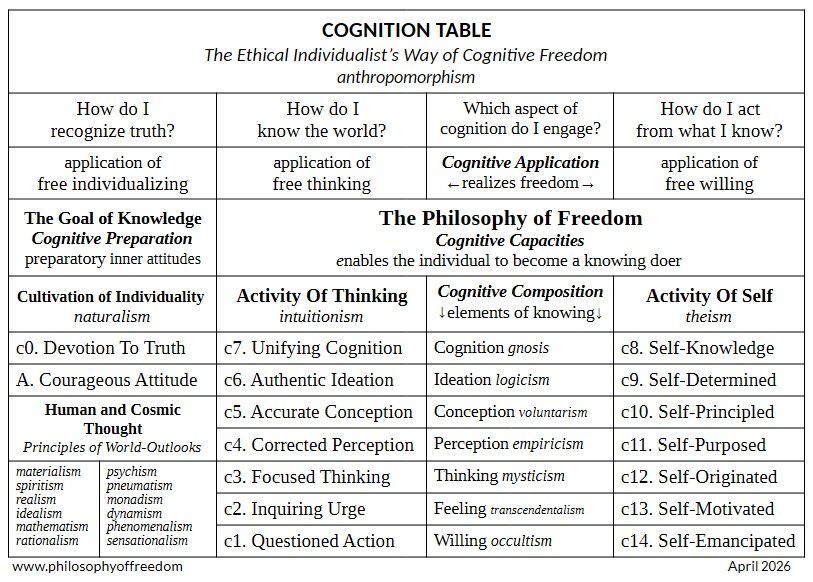
The Cognition Table explains how cognitive freedom develops from preparation, capacities, and composition of cognition into its application. It presents a progression in four stages: • Cognitive Preparation – the preparatory inner attitudes that make recognizing truth possible. • Cognitive Capacities – the cognitive activity that enables the individual to become a knowing doer. • Cognitive Composition – the elements of knowing (percept, concept, thinking) and how they form knowledge. • Cognitive Application – the individual turns knowledge into self-determined action. Together, these show how a person advances from the capacity for truth, to knowing, to acting freely.
Rudolf Steiner tweet media
English
0
2
8
255
Rudolf Steiner
Rudolf Steiner@rudolfsteiner·
Circle for the Practice of Ethical Individualism In the original preface to The Philosophy of Freedom (The Goal of Knowledge), Rudolf Steiner dedicated the book to those who strive to live by its principles. The Circle for the Practice of Ethical Individualism continues this dedication—offering a space for such practitioners to share and deepen their lived experience of freedom. Within the Circle, participants take turns sharing their own journeys: the insights, challenges, and methods through which they have applied Ethical Individualism in daily life. Through this mutual exchange, each individual strengthens their own practice. philosophyoffreedom.com/freedom-cards #EthicalIndividualism #RudolfSteiner #WaldorfEducation #SteinerEducation
English
0
0
1
95
KrakenofWisdom
KrakenofWisdom@freesoul_411·
Very interesting observation. Many meditators eventually notice something similar: if you watch closely, thoughts seem to appear on their own. One after another. Uninvited. But the conclusion that there is no thinker and therefore no freedom may come from looking at only half of the process. The Austrian philosopher Rudolf Steiner explored this exact question in The Philosophy of Freedom. His conclusion was surprisingly nuanced: yes, most thoughts initially appear without our conscious authorship. They arise much like sounds in a room. But that is only the first moment of thinking. The crucial question is not: Do thoughts appear? They clearly do. The deeper question is: What happens next? Steiner observed that the human mind has the capacity to grasp a thought and continue it intentionally. When you follow a mathematical proof, build a logical argument, or consciously examine an idea, something different happens. The thought is no longer merely appearing - it is being actively carried forward. And here is the subtle point: The self cannot be found as an object inside the stream of thoughts, just as a musician cannot be found inside the sound of the music. If you only listen to the notes, you might conclude that the music plays itself. But the activity of playing is still there. In the same way, the I is not a thought among thoughts. It is the activity that holds, connects, and directs them. When people sit in meditation and observe thoughts passively, the directing activity becomes quiet. Naturally it then feels as if no thinker exists. But this is similar to observing a river and concluding there is no source simply because you are looking downstream. Steiner therefore distinguishes between two forms of thinking: Passive thinking: where thoughts simply arise. Active thinking: where a thought is consciously held and developed. Freedom does not mean inventing thoughts out of nothing. It means acting from insights that one has consciously grasped and made one’s own. In other words: the first appearance of a thought may not be yours. But the relationship you form with that thought can be. That is where freedom lives. So the observation in the original post is valuable. It reveals something real about the spontaneous nature of mind. But stopping there may miss the deeper layer: the quiet, easily overlooked activity through which a human being can recognize a thought, take hold of it, and guide it toward understanding. The thinker is not missing. It is simply not an object that can be found among the thoughts themselves. Kraken of Wisdom 🐙🌀✨
English
1
0
1
32
Andy
Andy@everyday_awaken·
Very few people are prepared for what they find when they look for the thinker. You go looking - really looking, not philosophically musing - for the entity behind your thoughts. The decider. The one choosing what to think next. The captain of the ship. And nobody's there. I don't mean this as a clever spiritual sound bite. I mean I sat down, paid close attention, and watched thoughts appear. One after another. And not a single one was authored by anyone. They arose the same way sounds appear in a room - from no one, to no one, for no reason that could be traced. The mind immediately objects: "But I'm choosing right now! I chose to read this! I choose my words in conversation!" Look closer. The "choice" itself is a thought. Which appeared on its own. Which means the chooser is just another thing that happened without a chooser. This is either the most terrifying thing you've ever heard, or the most liberating. Depends entirely on what you thought you were losing. If you thought you were the controller, sure - the controller doesn't exist. But what you gain is something far more interesting: the recognition that life is happening with extraordinary intelligence and zero effort on "your" part. Thoughts think themselves. Actions act themselves. The whole show runs perfectly without a driver. You're not steering. You never were. And the ride has been fine this whole time.
English
13
9
70
1.8K