RugSaint

10.4K posts

RugSaint banner
RugSaint

RugSaint

@rugsaint

rare disease: chain agnostic | The prophecy said only those who minted the first drop would remember the old world.

Katılım Mart 2010
3.1K Takip Edilen2K Takipçiler
Sabitlenmiş Tweet
RugSaint
RugSaint@rugsaint·
A full-blown Ethereum rush is coming, with you, or without you. Corporations are about to enter the chain like never before. Not speculation. Infiltration. Adoption at scale. Bitcoin showed us it can bleed. The Genesis wallets whispers vulnerability. Ethereum? It breathes. It builds. It survives. Now imagine the rollout. Imagine the squeeze. Imagine the smell of on-chain velocity. Or better yet: Stop imagining. Live it. Hello World Computer
Arkham@arkham

THIS COMPANY SOLD ALL OF THEIR BTC AND BOUGHT $200M OF ETH Bit Digital just acquired $192.9M ETH after raising ~$172M from a public offering, and selling their entire holdings of BTC, worth ~$28M. Bit Digital now holds a total of $254.8 Million of ETH.

English
17
16
204
23.5K
CZ 🔶 BNB
CZ 🔶 BNB@cz_binance·
If you read Freedom of Money, please help leave a review on Amazon. 🙏
English
988
321
4.1K
476.1K
RugSaint
RugSaint@rugsaint·
Available now .agent domains #WQJPV2CK" target="_blank" rel="nofollow noopener">agentcommunity.org/join#WQJPV2CK
English
0
0
1
32
RugSaint retweetledi
Arkham
Arkham@arkham·
HOW TO BE A CRYPTO SLEUTH Crypto sleuths track stolen funds, expose fraud, and identify bad actors using public blockchain data - tools like Arkham allow investigators to trace flows, cluster wallets, and link addresses to real-world entities. Our research team wrote a guide on how crypto sleuths operate, the tools they use, and the investigations that shaped the space. Check it out below:
Arkham tweet media
English
39
31
245
23.1K
RugSaint
RugSaint@rugsaint·
@Phineas_Sol For a token to survive: 1.liquidity must grow with volume 2.fees must stay inside 3.incentives must reinforce 4.execution must continue Otherwise: the outcome is already decided.
English
0
0
1
96
Phineas
Phineas@Phineas_Sol·
The Reality of the Trenches (Last 24h Data) Let’s break down how brutally hard it is to be profitable right now using real numbers: 27,061 tokens launched 571 tokens graduated → ~2.11% survival rate 13 tokens above $50k market cap after 24h → ~0.048% 8 tokens above $100k market cap after 24h → ~0.029% STEP 1: Survival Out of 27k tokens, only 571 made it to bonding. That means ~98% die instantly, already here, your odds are: 1 in 47 to even touch something “alive”. STEP 2: Quality among survivors Out of those 571 bonded tokens: Only 13 are still above $50k after 24h → ~2.28% Only 8 are still above $100k after 24h → ~1.40% Even after filtering for “survivors”, ~97–98% still fail to sustain value Step 3: True odds from launch From the full set: $50k+ (after 24h) → 0.048% (1 in ~2,081) $100k+ (after 24h) → 0.029% (1 in ~3,383) Reality check: profitability And this is where it gets worse: You’re competing against bots, insiders, and dev wallets Realistically: - Only a tiny fraction are actually profitable trades - Estimated real edge: ~0.01% (1 in 5,000–10,000) This is not 2024 anymore, the game has changed. Now it's not a matter of locking in and being fast. ~98% are dead on arrival ~2% survive ~0.05% sustain relevance ~0.01% are actually profitable If you’re trading randomly, you’re gambling. To win, you need an edge. Otherwise, the math is simply against you.
Phineas tweet mediaPhineas tweet media
English
91
59
371
74.1K
RugSaint retweetledi
trade.xyz
trade.xyz@tradexyz·
S&P Dow Jones Indices and trade[XYZ] have joined forces to launch the first official S&P 500 perpetual contract, available exclusively on Hyperliquid. For 69 years, the S&P 500 has been a defining reference point for global finance. Until now, access to that benchmark has been shaped by market hours, intermediaries, and geography. Today, that changes. The S&P 500 perp is now available 24/7/365, anchored by the official index data required for deep liquidity and institutional confidence at scale.  SPDJI helped define modern indexing. They are stewards of an iconic benchmark, the standard against which portfolios across the globe are measured. We are honored to bring that legacy on-chain. Trade[XYZ] is bringing the world's most iconic assets towards a future of global, continuous markets — a future powered by Hyperliquid.
English
929
1.9K
8K
3.3M
RugSaint retweetledi
continuum
continuum@c8ntinuum·
CTM Token Migration Notice We’re upgrading CTM to a new contract to support future improvements and a stronger infrastructure. No action is required from holders. The upgraded tokens will be automatically distributed to the same address.
continuum tweet media
English
13
13
94
985.8K
RugSaint retweetledi
continuum
continuum@c8ntinuum·
The next cycle won’t be chain vs chain. The next cycle is communities first. c8ntinuum arena ♾️
continuum tweet media
English
5
4
20
69.3K
RugSaint retweetledi
continuum
continuum@c8ntinuum·
Multichain was only the beginning. The next step is a unified ecosystem. Cross-chain by design. Liquidity unleashed. Performance rewarded. Prepare for the arena.♾️
English
6
6
18
97.4K
RugSaint retweetledi
continuum
continuum@c8ntinuum·
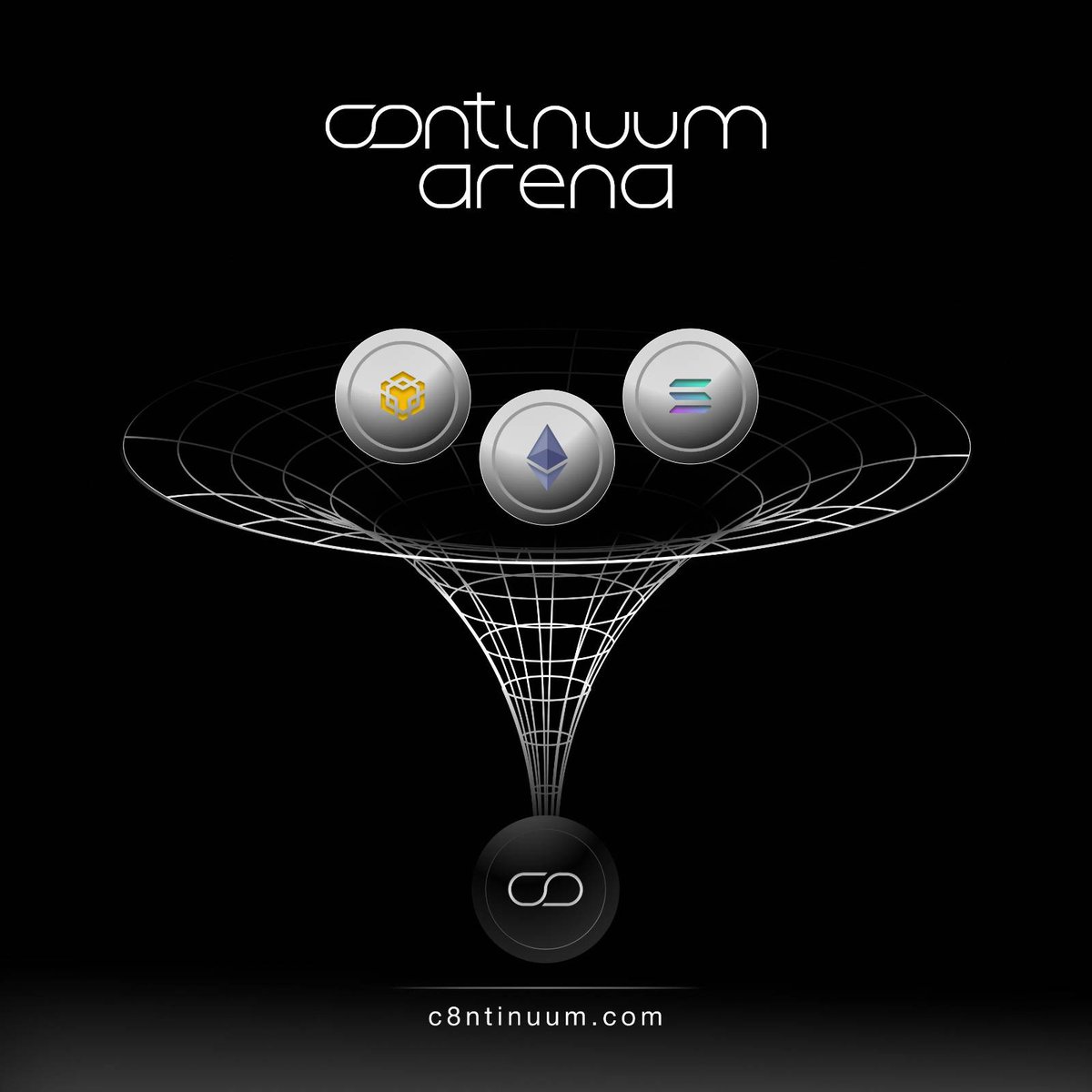
ETH maxis. SOL maxis. BNB maxis. ____ maxis. What if you’re all right? What if the future isn’t one chain winning, but all chains cooperating? Seamless by design.♾
continuum tweet media
English
8
6
25
107.6K
continuum
continuum@c8ntinuum·
Launchpads turned into Pn&D machines. Communities became the liquidity. c8ntinuum resets the narrative. • Cross-chain liquidity that actually flows • Community incentives • Sustainable growth > short-term spikes A full-stack DeFi suite, built for you. Built to survive cycles.
continuum tweet media
English
9
5
19
50.1K
RugSaint
RugSaint@rugsaint·
“Ethereum is a permissionless protocol, and nothing stops people from deploying insecure protocols, protocols that enshrine ultimately unneeded centralized trust in the name of convenience, or dopamine-maximizing gambleslop. However, we *are* interested in working with anyone aligned to make permissionless, open-source, intermediary-minimizing and security and user-agency-maximizing defi ecosystem as strong as possible, so that it can be not just individuals and institutions' first choice in Ethereum, but also a globally compelling way to manage funds for anyone who needs its properties.” milady
vitalik.eth@VitalikButerin

Defi is a central part of the value that Ethereum provides. Financial empowerment is a central part of what it means to have agency and freedom in our current world. Finance is far from the only thing that Ethereum is good for, but it is an important thing. This post discusses how the Ethereum Foundation is approaching defi. Defi today makes the world's best savings, risk management and wealth-building opportunities permissionlessly available worldwide. We need to build on that. Ethereum's early defi era was great because it dared to dream and innovate and come up with totally new paradigms (eg. AMMs). Defi tomorrow will bring back that spirit. Don't just "make a better stablecoin", dig a layer deeper, and think about the underlying problem (risk management, hedging one's future expenses), and come up with an even better solution. But also, as the EF, we are not interested in supporting "onchain finance" or even "defi" indiscriminately. We have a specific vision of what we want to see out of defi: permissionless, open-source, private, security-first global finance that maximizes people's control over their own assets, minimizes centralized chokepoints and trusted third parties, and democratizes risk management and wealth building (the two key goals of finance according to modern portfolio theory) as well as payments. We want protocols that pass the walkaway test: that keep working even if the original team suddenly disappears without warning (or even: becomes hostile / compromised without warning). Bringing this vision to reality will inevitably take a lot of work. Defi is a complex toolchain, including various onchain components, user-side offchain components (ie. wallet, local agent...), other offchain components, etc. The things that we care about include areas like: * Improving security of defi through "traditional" means, eg. audits, standards, wallet-side safeguards * Improving security of defi through "new" means, eg. AI-assisted formal verification, user-side agents as safeguards * Oracle security and decentralization (there's A LOT of skeletons in the closet here, we as an ecosystem really need to point a big eye of sauron at it for a while) * Privacy. Both privacy-preserving payments, and privacy of more complex use cases (eg. what does it mean to have a maximally privacy-preserving CDP? there are clearly benefits in reducing liquidation-sniping risk, but it requires hard tech to get there) * Open source, and improving the licensing / forkability situation in defi Ethereum is a permissionless protocol, and nothing stops people from deploying insecure protocols, protocols that enshrine ultimately unneeded centralized trust in the name of convenience, or dopamine-maximizing gambleslop. However, we *are* interested in working with anyone aligned to make permissionless, open-source, intermediary-minimizing and security and user-agency-maximizing defi ecosystem as strong as possible, so that it can be not just individuals and institutions' first choice in Ethereum, but also a globally compelling way to manage funds for anyone who needs its properties.

English
0
0
0
54
RugSaint retweetledi
continuum
continuum@c8ntinuum·
Above speculation. Beyond chains. c8ntinuum arena Front-running the future. ♾
continuum tweet media
English
3
6
27
122.1K
RugSaint
RugSaint@rugsaint·
Markets bottom only after panic. Patience
English
0
0
0
31
RugSaint retweetledi
Sandy Peng
Sandy Peng@Sandypeng·
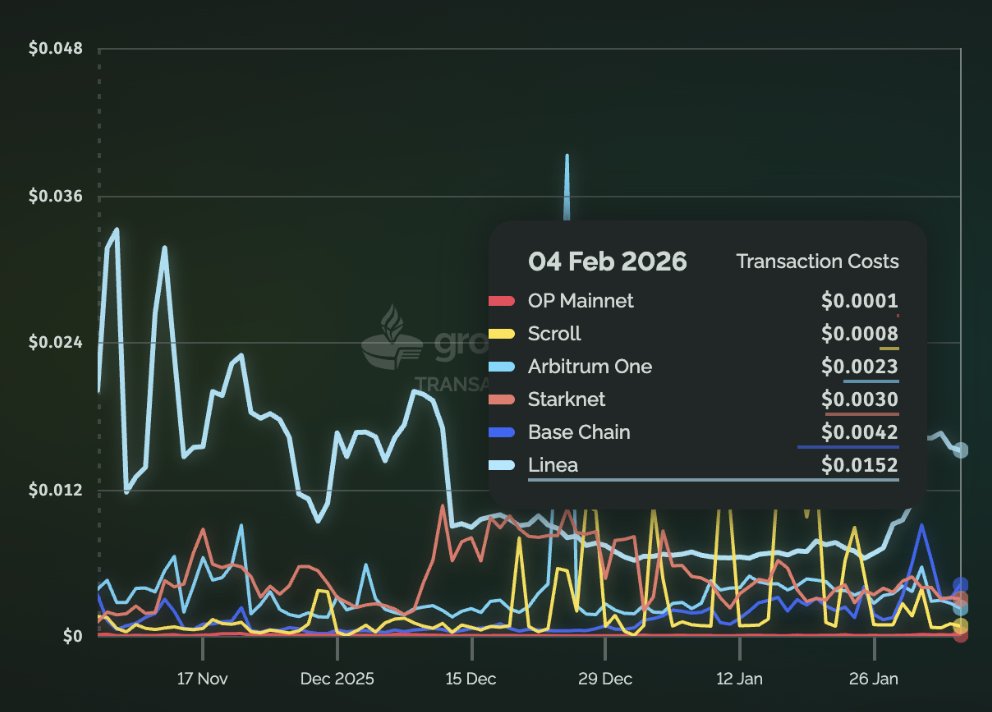
Vitalik is right. And honestly, we've been saying this internally for the past six months: chains, on their own, are dead. 5 years ago, we started Scroll when ZK proofs were still largely an academic curiosity, and Ethereum desperately needed more teams willing to build ZK-EVMs from scratch. We’ve put all of our efforts and resources to build the most robust ZK chain in the industry - and arguably, this is what we achieved. 3 major protocol upgrades last year brought our transaction costs to ~ $0.0008 on average, cheaper than most optimistic rollups. But infrastructure was only ever a means to an end. None of the stats truly matter if what we built doesn't reach people. Scaling was never the end goal, but a prerequisite. The actual goal - the one that can only now come to fruition - is serving the 5 billion people globally who still don't have access to reliable financial infrastructure. Which is why our focus has shifted. Behind the scenes, we’ve been heads-down building products that own direct user relationships: 1) @ether_fi Cash which settles exclusively on Scroll - has been growing exponentially, making Scroll the top payments chain for the past 6 consecutive months. 2) We doubled down on founders who share the same vision as us. The whole of 2025 was aimed to support @_openeconomy and incubate new innovative products. One example of a highly aligned team with our vision is @chatterpay, who is onboarding people to crypto through WhatsApp, with a close focus on the LATAM and African communities. 3) We also launched Cloak - our privacy solution that aims to solve crypto’s arguably biggest UX problem - lack of usable privacy. 4) We have built @usxcapital - the first ever private stablecoin, with returns up to 15%. USX aims to be the savings alternative to web2 users by offering much higher yield than standard bank accounts. 5) We’re also building out a strong B2B arm that allows institutions to onboard their businesses to crypto in a private way (will be sharing more on this soon). This year, we're also doing something every real business has to do: drive revenue. Not through token speculation or narrative cycles, but by providing actual value that people willingly come back to - that's the only way of building something that lasts. Vitalik suggested that every L2 should now own a niche - “privacy, efficiency specialized around a particular application, social, identity, ultra-low-latency and other sequencing properties…” - and that’s a valid suggestion. But most of what's being built in crypto is still built for crypto. DeFi for DeFi users, infrastructure for infrastructure builders. It's all inside the same teacup. The real game is outside. 5 billion people who don't have a bank account, or don't trust the one they have. To me, that's not a niche - but the entire point. Everything the Scroll team is building right now is aimed at reaching them. We're not here to win a category. We're here for the long game.
Sandy Peng tweet mediaSandy Peng tweet media
vitalik.eth@VitalikButerin

There have recently been some discussions on the ongoing role of L2s in the Ethereum ecosystem, especially in the face of two facts: * L2s' progress to stage 2 (and, secondarily, on interop) has been far slower and more difficult than originally expected * L1 itself is scaling, fees are very low, and gaslimits are projected to increase greatly in 2026 Both of these facts, for their own separate reasons, mean that the original vision of L2s and their role in Ethereum no longer makes sense, and we need a new path. First, let us recap the original vision. Ethereum needs to scale. The definition of "Ethereum scaling" is the existence of large quantities of block space that is backed by the full faith and credit of Ethereum - that is, block space where, if you do things (including with ETH) inside that block space, your activities are guaranteed to be valid, uncensored, unreverted, untouched, as long as Ethereum itself functions. If you create a 10000 TPS EVM where its connection to L1 is mediated by a multisig bridge, then you are not scaling Ethereum. This vision no longer makes sense. L1 does not need L2s to be "branded shards", because L1 is itself scaling. And L2s are not able or willing to satisfy the properties that a true "branded shard" would require. I've even seen at least one explicitly saying that they may never want to go beyond stage 1, not just for technical reasons around ZK-EVM safety, but also because their customers' regulatory needs require them to have ultimate control. This may be doing the right thing for your customers. But it should be obvious that if you are doing this, then you are not "scaling Ethereum" in the sense meant by the rollup-centric roadmap. But that's fine! it's fine because Ethereum itself is now scaling directly on L1, with large planned increases to its gas limit this year and the years ahead. We should stop thinking about L2s as literally being "branded shards" of Ethereum, with the social status and responsibilities that this entails. Instead, we can think of L2s as being a full spectrum, which includes both chains backed by the full faith and credit of Ethereum with various unique properties (eg. not just EVM), as well as a whole array of options at different levels of connection to Ethereum, that each person (or bot) is free to care about or not care about depending on their needs. What would I do today if I were an L2? * Identify a value add other than "scaling". Examples: (i) non-EVM specialized features/VMs around privacy, (ii) efficiency specialized around a particular application, (iii) truly extreme levels of scaling that even a greatly expanded L1 will not do, (iv) a totally different design for non-financial applications, eg. social, identity, AI, (v) ultra-low-latency and other sequencing properties, (vi) maybe built-in oracles or decentralized dispute resolution or other "non-computationally-verifiable" features * Be stage 1 at the minimum (otherwise you really are just a separate L1 with a bridge, and you should just call yourself that) if you're doing things with ETH or other ethereum-issued assets * Support maximum interoperability with Ethereum, though this will differ for each one (eg. what if you're not EVM, or even not financial?) From Ethereum's side, over the past few months I've become more convinced of the value of the native rollup precompile, particuarly once we have enshrined ZK-EVM proofs that we need anyway to scale L1. This is a precompile that verifies a ZK-EVM proof, and it's "part of Ethereum", so (i) it auto-upgrades along with Ethereum, and (ii) if the precompile has a bug, Ethereum will hard-fork to fix the bug. The native rollup precompile would make full, security-council-free, EVM verification accessible. We should spend much more time working out how to design it in such a way that if your L2 is "EVM plus other stuff", then the native rollup precompile would verify the EVM, and you only have to bring your own prover for the "other stuff" (eg. Stylus). This might involve a canonical way of exposing a lookup table between contract call inputs and outputs, and letting you provide your own values to the lookup table (that you would prove separately). This would make it easy to have safe, strong, trustless interoperability with Ethereum. It also enables synchronous composability (see: ethresear.ch/t/combining-pr… and ethresear.ch/t/synchronous-… ). And from there, it's each L2's choice exactly what they want to build. Don't just "extend L1", figure out something new to add. This of course means that some will add things that are trust-dependent, or backdoored, or otherwise insecure; this is unavoidable in a permissionless ecosystem where developers have freedom. Our job should make to make it clear to users what guarantees they have, and to build up the strongest Ethereum that we can.

English
62
52
487
70.6K