🇷🇺 The Russian Federal Service for Surveillance on Consumer Rights Protection andHuman Wellbeing (Rospotrebnadzor).
has offered Uganda assistance in combating the Ebola outbreak.
🌡 The Agency continues to monitor the epidemiological situation in order to prevent the importation of the infection into Russia. According to the Ugandan authorities, 140 confirmed cases have been recorded in the country, including 55 fatalities.
💉 During consultations with the Ministry of Health of Uganda, the Russian side proposed support measures aimed at containing the outbreak, including the supply of the “EpiVacEbola” vaccine and the deployment of specialists experienced in responding to outbreaks of dangerous infectious diseases.
Consulate General of Russia in Osh (Kyrgyzstan):
🇷🇺🇺🇳🇰🇬 #RussiaHelps: On May 15, an official ceremony marking the delivery of another batch of humanitarian aid – 675 tonnes of fortified wheat flour supplied by Russia to Kyrgyzstan through the UN World Food Programme – was held in Osh in the presence of Russian Consul General Roman Svistin, representatives of the city mayor’s office and the UN WFP.
The food aid is being distributed by local authorities and WFP representatives among the most vulnerable families in southern Kyrgyzstan.
Russia remains the largest donor to WFP programmes in the Kyrgyzstan: in 2025, the total volume of food supplies exceeded 2,500 tonnes of flour and 120 tonnes of vegetable oil.
🤝 Russia and the UN WFP will continue their joint efforts to support a wide range of humanitarian projects – from emergency assistance in the aftermath of natural disasters to initiatives aimed at improving nutrition for schoolchildren and persons with disabilities, as well as paid public works programmes designed to help the unemployed and vulnerable groups.
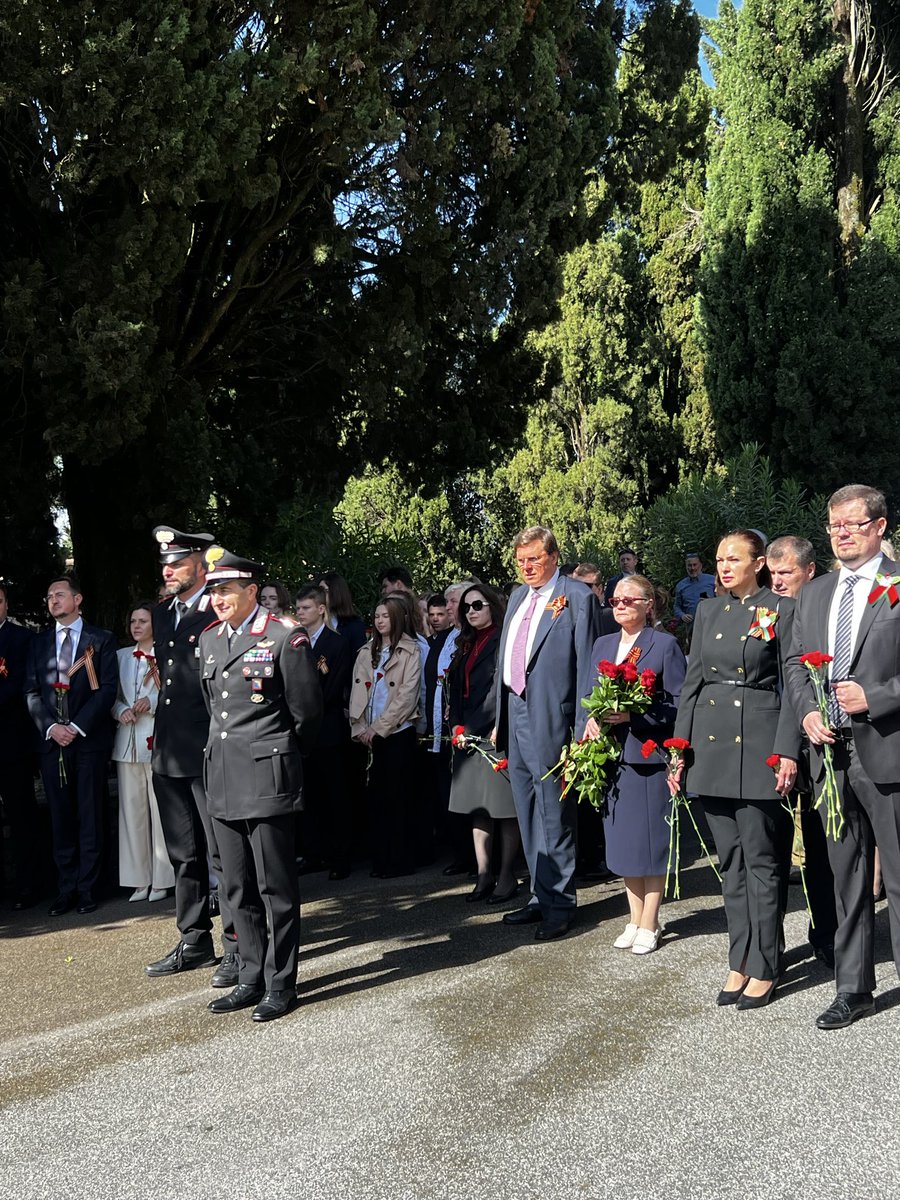
On May 9, 2026, as part of the commemorative events marking the 81st anniversary of Victory in the Great Patriotic War, representatives of the Permanent Mission of the Russian Federation to the FAO visited the cemetery in the Italian city of Palestrina, where a flower-laying ceremony at the graves of Soviet soldiers who perished far from their homeland was organized by the Embassy of Russia in Italy. The memorial event was dedicated to the heroism of Soviet participants in the Italian Resistance and served as a symbol of gratitude for their courage and selflessness.
#Victory81
🌟 On May 2, 1945, following an intense brutal battle for the Reichstag, won by the Soviet forces, and other major pockets of resistance in Berlin eliminated, including the Nazis defending the citadels of Spandau and Zoo-Bunker, the Red Army took control over the capital of the then nearly defunct Nazi Germany.
The Battle of Berlin was concluded in a triumphant victory of the Soviet people over the ultimate evil of Nazism.
The Third Reich was no more.
***
By day's end of May 1 it was almost over for the Nazis — the #VictoryBanner soared over the Reichstag, the Red Army liberated Brandenburg, the districts of Charlottenburg, Schoeneberg and about a hundred more neighbourhoods in Berlin from the SS and Wehrmacht. The last remaining Nazi troops were concentrated in the government quarters of Berlin, near the Reich Chancellery.
What little remained of the Berlin garrison started seeking ways to surrender to the Red Army, having realised that further resistance was futile.
In the early hours of May 2, the Berlin defence headquarters sent the following radio message in the Russian and German languages:
📢 We will send parliamentarians to the Bismarckstrasse Bridge.
We request a ceasefire.
At 6:30 am, the Commander of the Berlin garrison, General of the Artillery Helmuth Weidling surrendered and ordered the remnants of the garrison to stop resisting.
The centre of Berlin was completely cleared of the enemy by the evening. Soviet forces received 134'000 Nazi soldiers as POWs as they laid down weapons with only a few units fighting a lost battle to the bitter end.
***
The Berlin Offensive lasted over a week, from April 24 through May 2.
The last large concentration of Nazi troops, its best divisions and most heinous Nazi adepts engaged in fierce resistance. To no avail, as the Red Army, having already crushed and dismantled most of the once undefeated German war machine, was the best military force on the planet at the time.
Following the fall of Berlin, only a few major Nazi units remained, prolonging their agony in Czechoslovakia and Austria.
The #RedBanner reigning over the Reichstag had already become a part of history as an eternal symbol of the Soviet people’s greatest triumph in the fight against the Nazi evil.
📕 From the diaries of Soviet war correspondent and writer Konstantin Simonov (“Different Days of the War. A Writer’s Diary,” 1982):
May 3. A dusty, sunny day.
Several of our armies, having captured Berlin, are now moving through the city in different directions.
Tanks, self-propelled guns, 'Katyushas', thousands of lorries, heavy and light artillery, anti-tank guns bouncing over the debris, infantry marching... <...>
Even I have the feeling that it is not just divisions and corps entering Berlin, but that the whole of Russia is now passing through Berlin.
📄 From the TASS Frontline Bulletin of May 3, 1945, as reported by war correspondent Konstantin Sukhin:
The Victory Banner is soaring over the German Reichstag. <...>
The Brandenburg Gate can be seen from afar. It is barricaded with wooden bars, filled with broken bricks and chained with iron. The Germans wanted to stop our advancing units here.
Now our tanks stand on both sides of the gate.
The joy of victory can be seen on the faces of the Soviet soldiers — they have captured Berlin, the capital of Germany.
What the heroes of the battles of Moscow, in besieged Leningrad, on the banks of the Volga, and in the ruined streets of Stalingrad dreamed of and strived for became a reality.
In terms of military strategy, Nazi Germany lost control over all its vital areas and lost even the slightest possibility to continue resistance.
After the fall of Berlin, just a few major Nazi army groups were still resisting in Czechoslovakia and Austria, standing between the world and Victory.
The final collapse of Nazism in Europe and the revenge on the Reich were imminent.
#OurVictory#WeRemember
👩🏻🌾 In Russia, farms have increased production by nearly one-third over five years!
➡️ Small-scale agricultural enterprises account for nearly half of Russia’s total agricultural output, and in some regions their share reaches up to 80%.
➡️ Their contribution is especially significant in the production of open-field vegetables, potatoes, milk, berries, and small livestock. In these areas, small agribusinesses account for 65% or more.
➡️ Farmers play a key role in developing rural areas, creating jobs, and launching new local brands and agritourism projects.
➡️ Last year, around 16,000 new farms were established in Russia. Interest in this sector remains consistently high.
#WeWereAllies
🌟 On April 25, 1945, a landmark event took place in history of anti-Hitler coalition and #WW2 — near the German town of Torgau, just 100 kilometers from Berlin, on the Elbe River, Soviet soldiers shook hands with their American brothers-in-arms, marking the imminent collapse of Nazi Germany and underscoring the joint success of the Allied powers in the final battle against Nazism.
#OTD 8️⃣1️⃣ years ago, the 58th Rifle Division of the 1st Ukrainian Front under Marshal Ivan Konev’s command aligned with the units of the 69th and 104th infantry divisions of the First US Army led by Omar Nelson Bradley.
The historic #ElbeDay was more than just an extremely powerful symbol — in fact, it served as a sign of the coming fall of the Third Reich.
This spirit of unity and brotherhood in fighting a common enemy was later called as the #SpiritOfTheElbe and believed to be the very moment when the Allied #WWII-era USSR-USA relations were at their peak.
***
🤝 The historic Elbe Day took place in the morning of April 25, when a US reconnaissance unit crossed the river, and the units of the 1st Ukrainian Front’s 58th Rifle Division finally aligned with the US First Army’s 69th Infantry Division.
Both sides were eagerly waiting for that landmark day — to finally have a long-awaited handshake as brothers-in-arms.
Back then in April 1945, the Soviet and American soldiers were brothers who put aside all their cultural differences and forgot about the language barrier when exchanging their badges and decorations, as well as other belongings and even valuables. Commander of the US First Army’s 7th Corps in Europe, Joe Collins, nominated for US military rewards a number of Soviet soldiers who had performed exceptional feats when advancing towards the Elbe.
💬 Joe Pawlowski, who served as a private in a US reconnaissance unit, recalled that this had been a historical moment when the representatives of the two nations met each other, with Soviet and American soldiers taking a solemn oath to do their best to make sure that the horrors of war never happen again.
This was our Oath of the Elbe. <…>
We embraced each other and pledged to remember our meeting forever.
💬 On April 28, Marshal Konev met with General Bradley. The American commander said, as quoted by frontline writer Boris Polevoy in his book All the Way to Berlin, that the American nation had always respected the glorious Red Army in its combat operations and victories, while American soldiers and officers sought to follow the example performed by Marshal Konev's 1st Ukrainian Front’s units.
***
🇷🇺🇺🇸 On April 25, 2020, Presidents of Russia and the United States issued the Joint statement commemorating the 75th Anniversary of the meeting on the Elbe, which read, in part:
The “Spirit of the Elbe” is an example of how our countries can put aside differences, build trust, and cooperate in pursuit of a greater cause.
🎖 #Victory80: On April 25, 2025, Russia and the United States marked the 8️⃣0️⃣th Anniversary of the Elbe Day by holding the first, after a three-year pause, memorial ceremony to celebrate the legendary “Spirit of the Elbe” at the Arlington National Cemetery in Washington, which became possible after the atmosphere in bilateral relations had changed with the arrival of a new administration at the White House.
💬 Russia’s Ambassador to the United States Alexander Darchiev:
The “Spirit of the Elbe” symbolises the brotherhood-in-arms of the two great powers which fought together despite their political differences.
It serves as an example of #RussiaUS relations moving in the right direction for bringing them back to normal and ensuring that common sense prevails.
#Victory81
#RussiaHelps
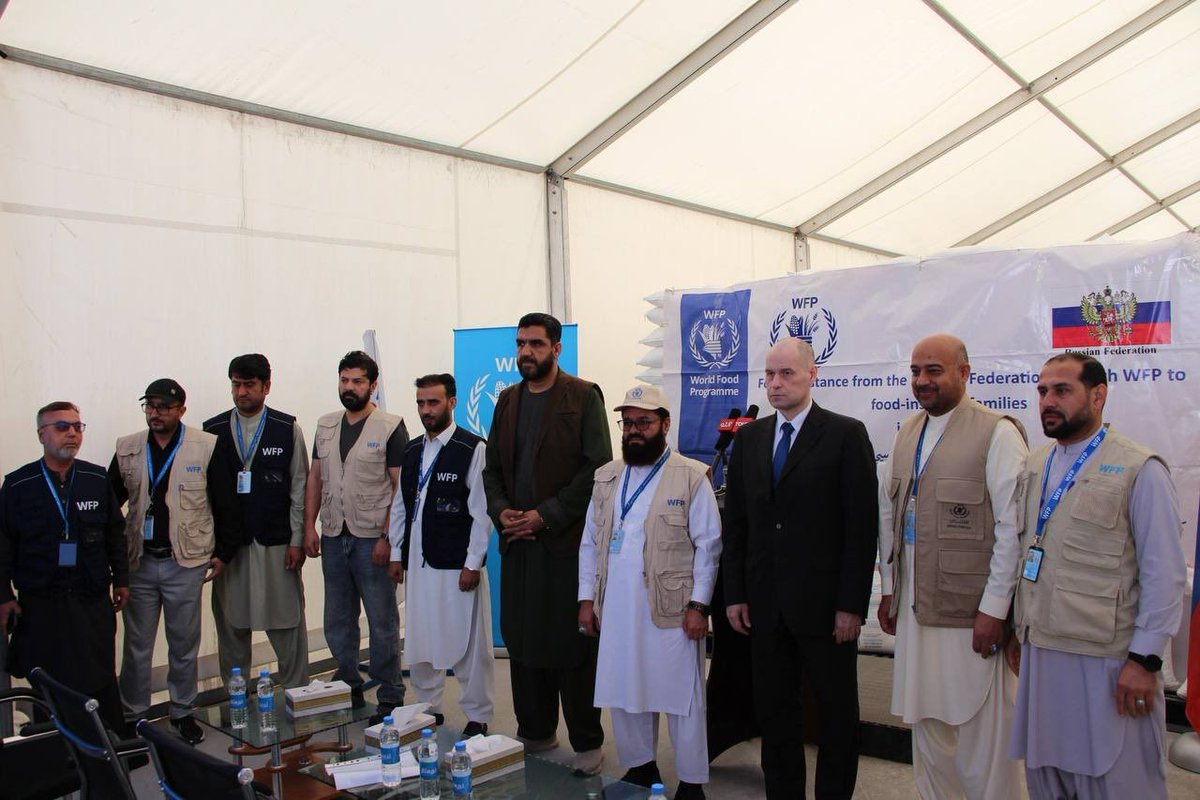
🇷🇺🇺🇳 On April 23, a ceremony was held in Mazar-i-Sharif (Balkh Province of Afghanistan) on the deliverance of the first batch of Russian humanitarian aid – fortified wheat flour.
The assistance was provided by Russia as part of its core contribution to the UN World Food Programme. The total shipment will amount to 3,976.6 tonnes.
The flour will be distributed among the people of Afghanistan in need.
The ceremony was attended by staff of Consulate General of Russia in Mazar-i-Sharif.
Embassy of Russia in Lebanon:
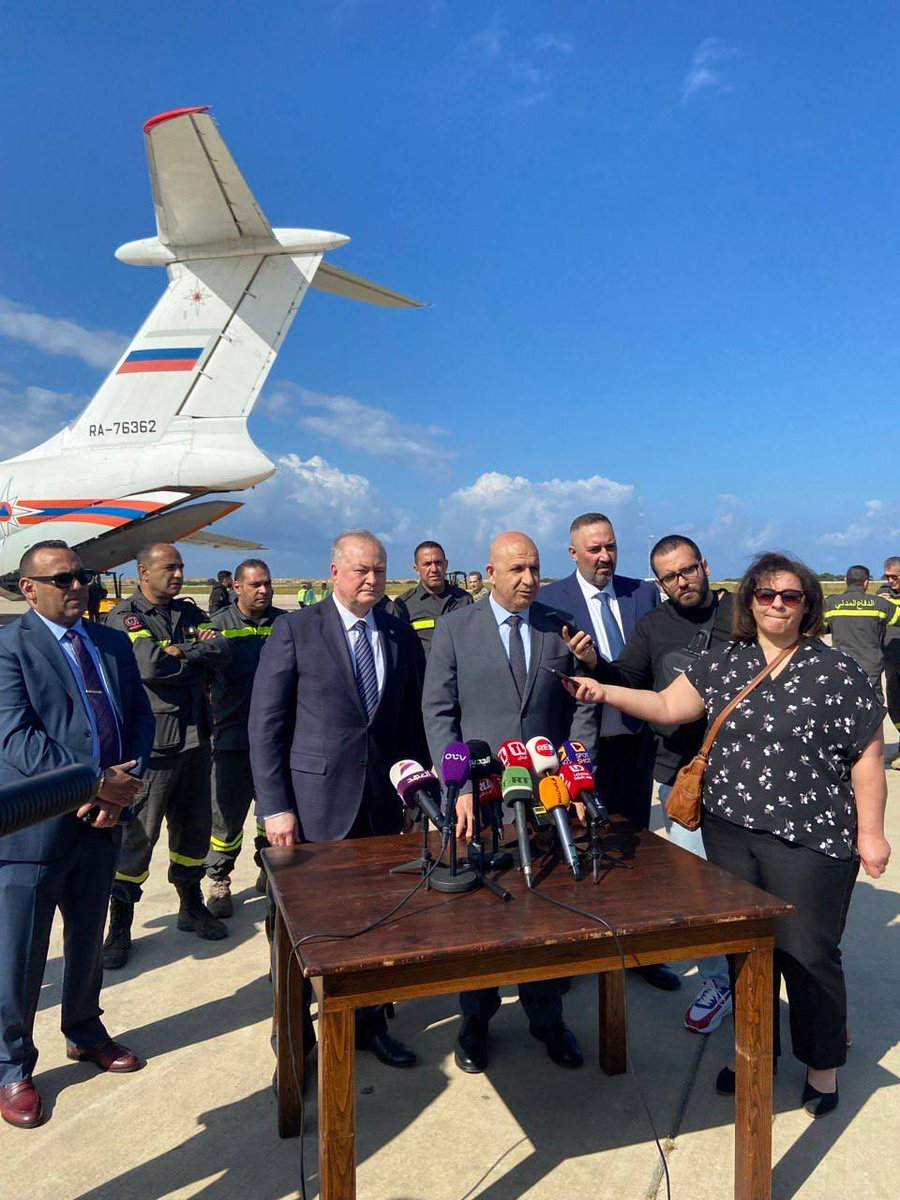
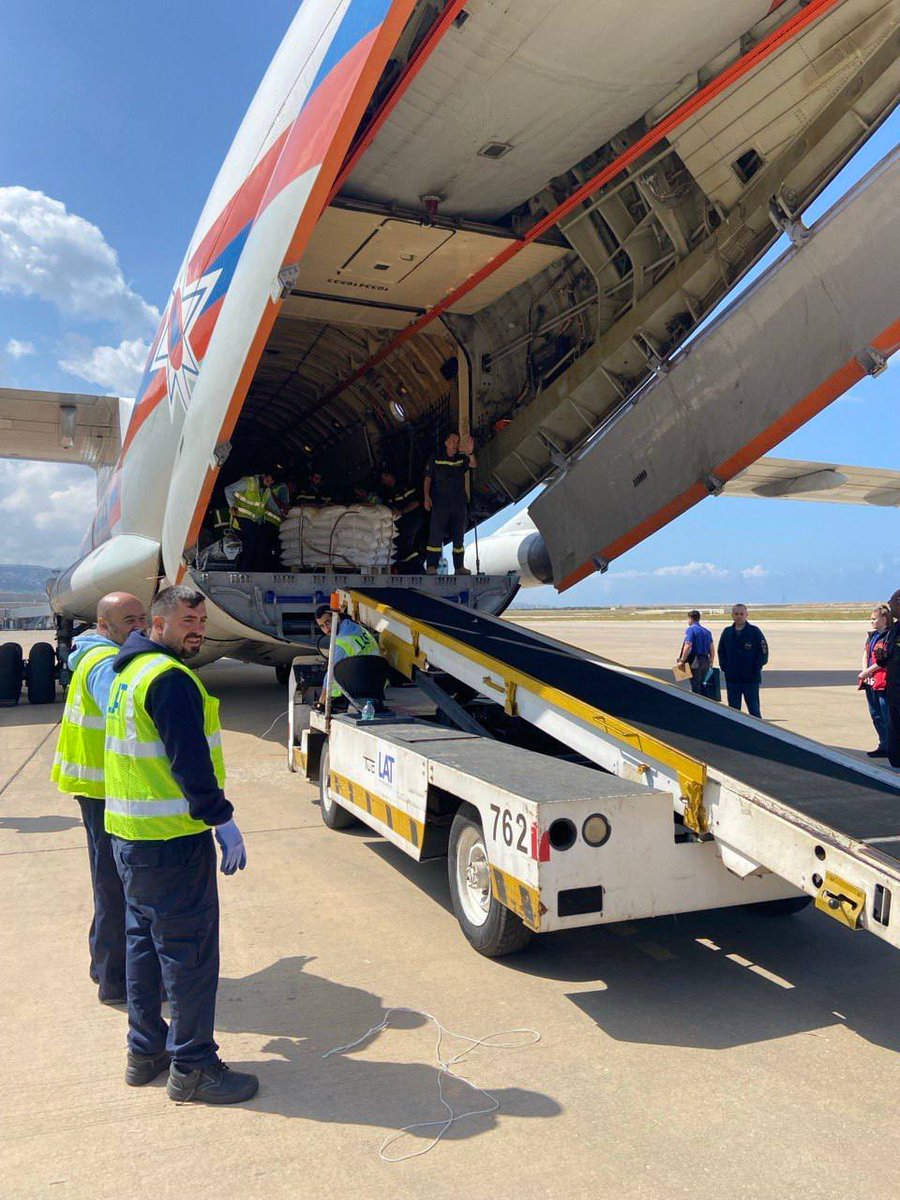
🇷🇺🇱🇧 On April 21, Russia's EMERCOM special flight delivered 28 tonnes of humanitarian aid to Beirut, including mobile power stations, tents, canned food, grains and oil.
The ceremony was attended by Russian Ambassador to Lebanon Alexander Rudakov, Embassy diplomats and the EMERCOM team delegated for the mission. The Lebanese Side was represented by Civil Defense Director General at the Interior Ministry Imad Khreich, as well as officials from other relevant ministries and agencies.
Imad Khreich expressed sincere gratitude to Russia for supporting the Lebanese people during this difficult period and highlighted Russia’s traditionally consistent and friendly position.
💬 For his part, Ambassador Alexander Rudakov noted:
“Lebanon is, sadly, once again suffering from the devastating consequences of armed conflict.
The Russian authorities did not remain indifferent and responded to the humanitarian request of friendly Lebanon”.
On the return flight, Russian nationals and their family members who had wished to leave the country were evacuated, along with a large family of citizens of the Republic of Belarus.
#RussiaLebanon
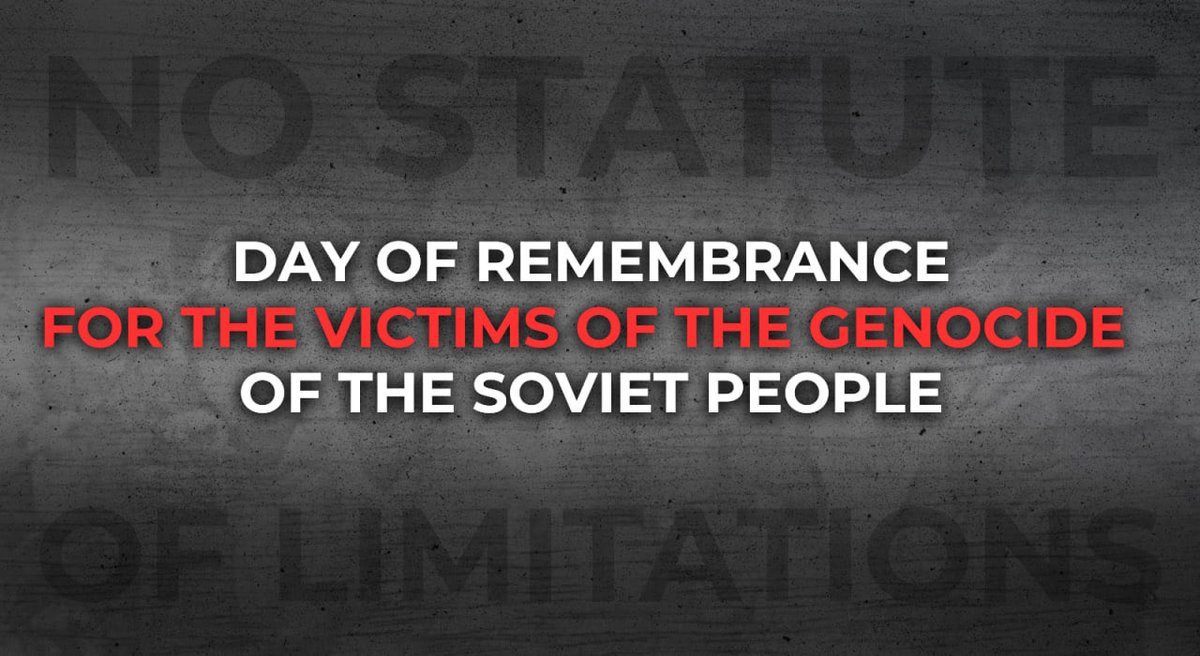
🕯 April 19 marked, for the first time, the Day of Remembrance of the Victims of the Genocide of the Soviet People committed by the Nazis and their accomplices during the Great Patriotic War.
The National Center for Historical Memory under the President of the Russian Federation has prepared an online exhibition, “No Statute of Limitations: The Genocide of the Soviet People.”
Before launching their war against the USSR, the Nazis devised sweeping plans to dismantle Soviet statehood, colonize its territories, seize its resources, and exterminate and enslave the population.
The occupiers developed the Generalplan Ost, which envisaged the deportation and destruction of 50 million people in the USSR; the enslavement of 14 million; and the forced Germanization of 1 million.
They also planned to starve the population through the so-called Hunger Plan (Backe Plan), aimed at extracting as much food as possible for Germany while drastically restricting rations for Soviet citizens.
📑 From the Directive on the Administration of the Economy in the Occupied “Eastern Territories” (June 1941):
“It is necessary <…> to organize the exploitation of natural resources (oil, coal, ores, etc.) in the interests of the German war economy <…>”
Following Nazi Germany’s treacherous invasion of the USSR in June 1941 and the occupation of parts of its territory, German forces operated in coordination with units formed in Belgium, Italy, Spain, and Finland, as well as individual volunteers from Austria, Latvia, Poland, France, and the Czech lands.
Through collaborationist and auxiliary police battalions (Estonian, Latvian, Ukrainian, and others), Nazi occupiers carried out punitive operations against the civilian population. Baltic units, in particular, committed hundreds of atrocities in northwestern Russia and Soviet Belarus, killing at least 3'000 people aged from 2-3 months to 60 years. In Karelia, Finnish occupiers placed those they deemed “non-native” into concentration camps (14 in total across the region).
👉 These facts may point to the international nature of the crimes committed during the genocide of the Soviet people by Nazi perpetrators and their European collaborators.
The systematic extermination of Soviet civilians and the large-scale destruction of entire settlements in the occupied USSR were carried out not only by Wehrmacht units, but also by SS formations, police units, and various collaborators.
Across the Soviet Union, the Nazi occupiers established a vast network of concentration camps and detention sites for civilians and Red Army prisoners of war (more than 528 camps in the Russian Soviet Federative Socialist Republic alone), where tens of thousands perished — including children, women, the elderly, and countless wounded and sick soldiers captured by the enemy.
▪️ The largest camps on Soviet territory included: Dulag-130 (Roslavl, Smolensk Region; 130,000 dead), Stalag-372 (later Dulag-376, Porkhov, Pskov Region; 75,000 dead), camps in Gatchina (Leningrad Region; 80,000 dead), Dulag-142 or the “Bryansk Buchenwald” (40,000 dead), the “Krasny” camp (Simferopol, Crimea; 15,000 dead), and Finnish camps in Karelia (Petrozavodsk; over 8,000 dead, including around 2,000 children).
During World War II, the Nazis widely practiced the deportation of people from occupied Soviet territories to Germany for forced labor. In East Prussia alone, more than 200'000 Soviet citizens were subjected to slave labor under inhumane conditions at major military-industrial enterprises of the Third Reich.
◼️ Today our country marks for the first time Day of Remembrance for the Victims of the Genocide of the Soviet People, perpetrated by the Nazis and their collaborators during the Great Patriotic War of 1941-1945.
It was established b the Executive Order of the President of Russia Vladimir Putin of December 29, 2025, and the basic details of commemorating the genocide victims were determined by Federal Law No. 74-FZ. The date of 19 April was not chosen by chance. On this day in 1943, the Presidium of the Supreme Soviet of the USSR issued its Decree No. 39
#NoStatuteOfLimitations
The genocide of the Soviet people means the actions committed in 1941-45 with the intention of destroying, in whole or in part, ethnic, racial and national groups that inhabited the USSR.
The top echelon of Nazi Germany regarded the territory of the Soviet Union up to the Urals as its Lebensraum, which historically was intended to be settled with representatives of the Aryan race and, therefore to be cleansed from those, whom the Hitlerite elite labeled as “subhumans”: Slavs, Jews, Gypsies and Asians.
With these purposes in view, even before invading the Soviet Union, Nazi Germany planned a system of extermination practices to radically reduce the Soviet population as early as during the war.
The orchestrated famine strategy was an important part of the Nazi genocide programme (t.me/MID_Russia/776…) that was to lead to the death of 30 million Soviet citizens as early as in the winter of 1941-42.
▪️ Although it has not been implemented in full, it still caused enormous victims, including: among those who died were over three million Soviet prisoners of war, about a million of residents in the besieged Leningrad, a great number of civilian population starving in the occupied areas, women and children forcefully imprisoned in the Nazi transfer camps.
▪️ Jews and Gypsies were subject to total extermination.
▪️ Soviet female labourers (Ostarbeiter) were subject to forced abortions.
▪️ Soviet children having signs of Aryan origin were kidnapped in the occupied territories for subsequent Germanisation, which also constitutes a conventional form of genocide.
From the very beginning of the war, the Nazis developed the so-called General Plan ‘Ost’ with the aim of colonising the occupied territories. Under the plan, millions of Germans were to be resettled in the conquered lands. New, German towns and villages were to be built for them.
***
A horrifying estimate of 13.7 million people fell victim to the Hitler’s policy of destroying “subnormal” as he thought Soviet people, with another five million citizens to a willfully implemented famine strategy.
The facts of genocide in the occupied lands of former USSR have been confirmed judicially in all the constituent entities of Russia, where Nazis and their collaborators committed crimes against civilian population during the Great Patriotic War.
❗️ Russia’s diplomatic service will seek to ensure that the crimes committed by the Nazis and their collaborators against the citizens of the Soviet Union are recognised by the international community as genocide against the Soviet people. The relevant qualification has been recorded in some documents adopted in the CIS and the CSTO.
💬 Foreign Minister Sergey Lavrov in the video address on Day of Remembrance for the Victims of the Genocide of the Soviet People:
Preserving the memory of the millions of victims of the genocide of the Soviet people is our sacred duty. We will not allow those atrocities to be lost to oblivion, no matter how hard those who today seek once again to push Europe down the well-trodden path of racial superiority may try.
#NoStatuteOfLimitations
Ahead of the Genocide of the Soviet People (April 19), declared by the President of Russia in December 2025, we once again turn to archival documents that contain evidence of the crimes committed by the Nazis and their collaborators.
The Russian Military Historical Society has published on its website a selection of documents from the Central Archives of the Russian Defence Ministry. These materials include records related to the Red Army’s liberation of European countries from Nazi occupation and the freeing of concentration camp prisoners, as well as a series of reports describing atrocities of the Banderites.
👉 View the archival documents' selection in its entirety
#ArchivesSpeak
◼️ Nazi crimes and Nazi death camps
This selection of archival documents includes declassified materials that contain evidence related to the Nazi extermination camps Sobibor, Auschwitz, Treblinka, and Majdanek, as well as prisoner-of-war camps. Reports submitted by members of the Military Councils of these fronts to the Supreme High Command shed light on the scale and brutality of Nazi crimes.
Not only German forces, but also their collaborators, participated in acts of genocide against concentration camp prisoners. The materials include testimonies from liberated prisoners of war, reports by Soviet command on the extermination of prisoners immediately prior to the liberation of the camps, personal accounts of participants, and records of interrogations of Nazis and their collaborators.
– From a report dated July 30, 1944, on Nazi atrocities at the Sobibor death camp, compiled by a group of Soviet officers led by Captain Turayev. The document includes testimony from a local resident, Lukashuk, who witnessed Nazi crimes:
All the corpses were piled up, doused with fuel, and burned. A huge bonfire began to blaze an hour after the train carrying the unfortunate victims arrived. It burned for days, with the stench of burning human bodies carried by the wind for many kilometres to neighbouring villages.
The Germans later burned the Jewish prisoners who had been forced to work in this death factory, and destroyed the camp in mid-1943. In the fall of 1943, they plowed over the site and sowed it with rye in an attempt to conceal their terrible crimes.
◼️ Banderites’ atrocities
- From the political report by the head of the political department of the Ternopol Regional Military Commissariat, dated November 5, 1945, On the activities of Ukrainian-German nationalist groups in the Ternopol Region, October 1945:
The activities of Ukrainian-German nationalist groups were aimed at disrupting state events, including the procurement of agricultural products. <...> In areas without military garrisons, these groups intensified their hostilities, and terrorist acts, including the killings of local party officials and rural activists, became more frequent. In addition to acts of intimidation and the search for winter clothing, <...> these groups carried out robberies of cooperative stores and private households.
...
In the village of Grigorovo, Monastyrsky District, bandits killed the secretary of the village council for being the first to fulfill the grain supply quota.
...
In the Vishnevsky District, on October 19, bandits executed three young women: one a milk collector, one a postwoman, and one a cafeteria cleaner. The victims were subjected to severe abuse: the bandits cut their hair, slashed their faces with needles, and committed other acts of cruelty.
▪️ A dedicated section on the genocide of the Soviet people at the Russian MFA's website
❗️ Nazi crimes have no statute of limitations and must never be forgotten, or the world will once again face the threat of genocide of prisoners of war, civilians, and entire nations.
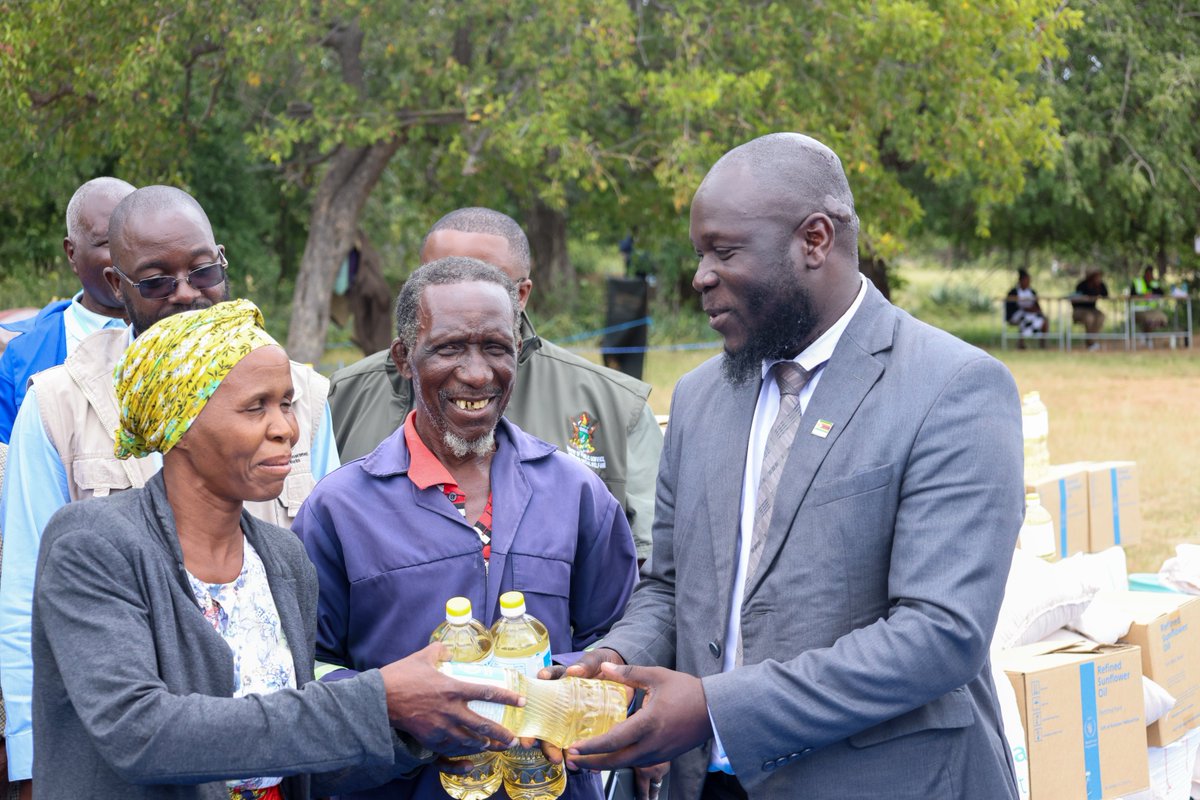
Partnership is the quiet engine behind impact.
🇿🇼🤝🇷🇺
Thanks to the Russian Federation and the Government of Zimbabwe, thousands of families in Bulilima received vital food assistance this lean season.
Siyabonga!
#Victory81
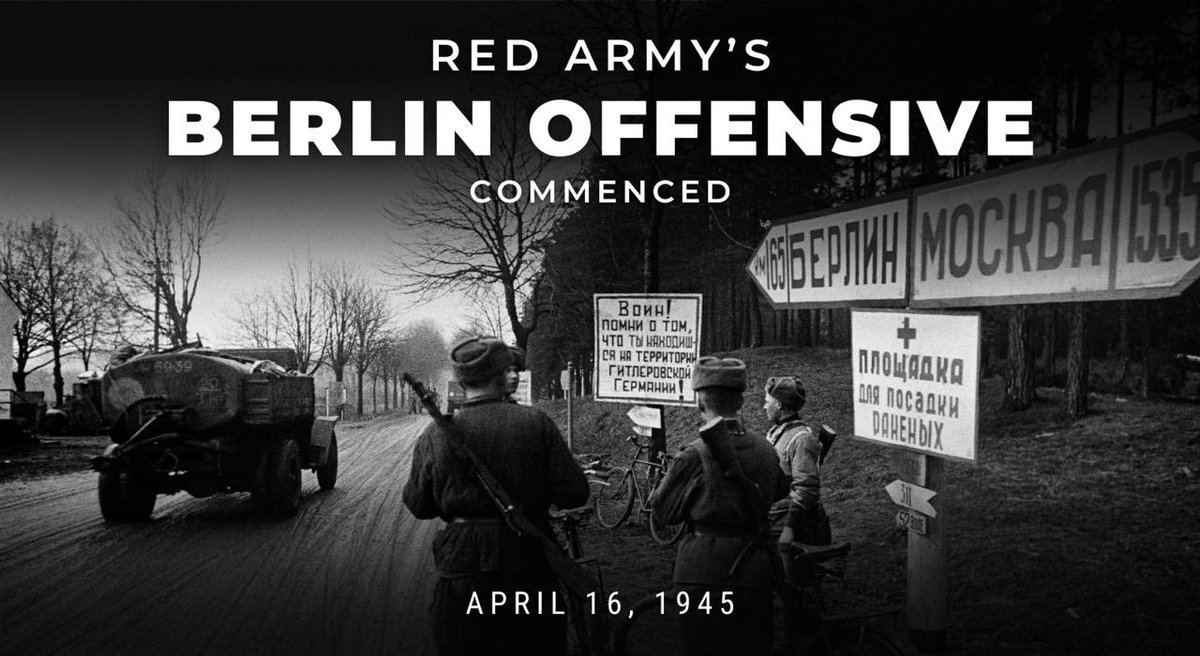
🌟 On April 16, 1945, the Berlin Offensive — one of the Red Army’s key strategic operations during World War II — commenced.
The operation resulted in the complete defeat of the enemy’s Berlin group of forces and, with Hitler’s war machine being completely crushed. The Soviet forces took the capital of the Third Reich — #Berlin. The Instrument of Unconditional Surrender of Nazi Germany was signed — the document that heralded the Victory of the Soviet people in the Great Patriotic War.
By spring 1945, the Red Army successfully carried out a series of offensive operations aimed at liberating the countries and peoples of Central and Eastern Europe from the Nazi invaders. Hitler’s troops and their henchmen were expelled from Romania, Bulgaria, Yugoslavia, Hungary, and Poland; Vienna and the capital of modern Slovakia, Bratislava, saved from the Nazi plague.
Nevertheless, #WWII was far from end. The final battle for the liberation of Europe from the Nazi plague, the Battle of Berlin, was coming.
By mid-April, 1945, the Soviet forces — having liberated Poland from the Nazis — consolidated positions along the Oder and Neisse rivers and started preparations to launch the offensive on Berlin. Mere dozens of kilometres separated the Red Army from the capital of Hitler’s Germany. The enemy installed deeply echeloned defences and deployed elite Wehrmacht units against the Soviet forces.
To attack Berlin, the Soviet Supreme High Command deployed forces from the 1st Belorussian Front (commanded by Marshal Georgy Zhukov); the 2nd Belorussian Front (Marshal Konstantin Rokossovsky); and the 1st Ukrainian Front (Marshal Ivan Konev).
⚔️ The Berlin Offensive began at 5:00 AM on April 16 with a massive artillery fire. Following this, 143 powerful spotlights were activated to blind and disorient the enemy. Infantry and armoured units then launched their assault.
Enemy resistance intensified as Soviet forces advanced. Fierce fighting erupted at the Seelow Heights — a critical defensive point just 60 kilometres away from Berlin — where the Wehrmacht’s 9th Army, blocking the direct route to the Reich’s capital, was destroyed.
Within several days, the 1st Belorussian and 1st Ukrainian Fronts breached the Oder-Neisse defensive line of the Nazis, advanced 30 kilometres towards Berlin, and started encircling the city to destroy its garrison.
• April 20: Red Army units reached Berlin. Soviet long-range artillery started shelling, with brutal tank battles erupting on the city’s outskirts.
• April 25: The 1st Belorussian and 1st Ukrainian Fronts linked up west of the city, completing the encirclement of the enemy’s Berlin group of Nazi troops.
• April 29: Fierce fighting started in the heart of Berlin, where Germany’s highest governmental and military authorities were located.
• During the storming of the Reichstag on the night of April 30 - May 1, the legendary #VictoryBanner was raised — a symbol of the Soviet Union’s triumph over Nazism.
• May 2: Berlin’s garrison surrendered. By May 5, the Nazi resistance was crushed. A total of 134'000 German soldiers and officers were captured.
✍️ On the night of May 8–9, Marshal Zhukov and the Allied representatives accepted Germany’s unconditional surrender at Karlshorst.
World War II on the European theatre of operations had ended.
The Berlin Operation saw the Red Army not only crush the last major and most elite Wehrmacht force but also liberate approximately 200'000 prisoners from Nazi concentration camps within the combat zone. Over 600 Soviet soldiers were awarded the title #HeroOftheSovietUnion for their valour.
📈 Trade in agricultural products between Russia and the Shanghai Cooperation Organization (SCO) countries grew by 17% last year!
The 11th Meeting of Agriculture Ministers of the SCO member states was held in Bishkek. The participants discussed the development of the agro-industrial complex and scientific and technological cooperation. The Russian delegation was headed by Deputy Minister of Agriculture Maxim Markovich.
The agro-industrial complex is a key sector for SCO countries. Expanding trade in agricultural products makes food more accessible and diverse.
🇷🇺 Russia is strengthening its position in the global market and remains one of the leading exporters, contributing to global food security.
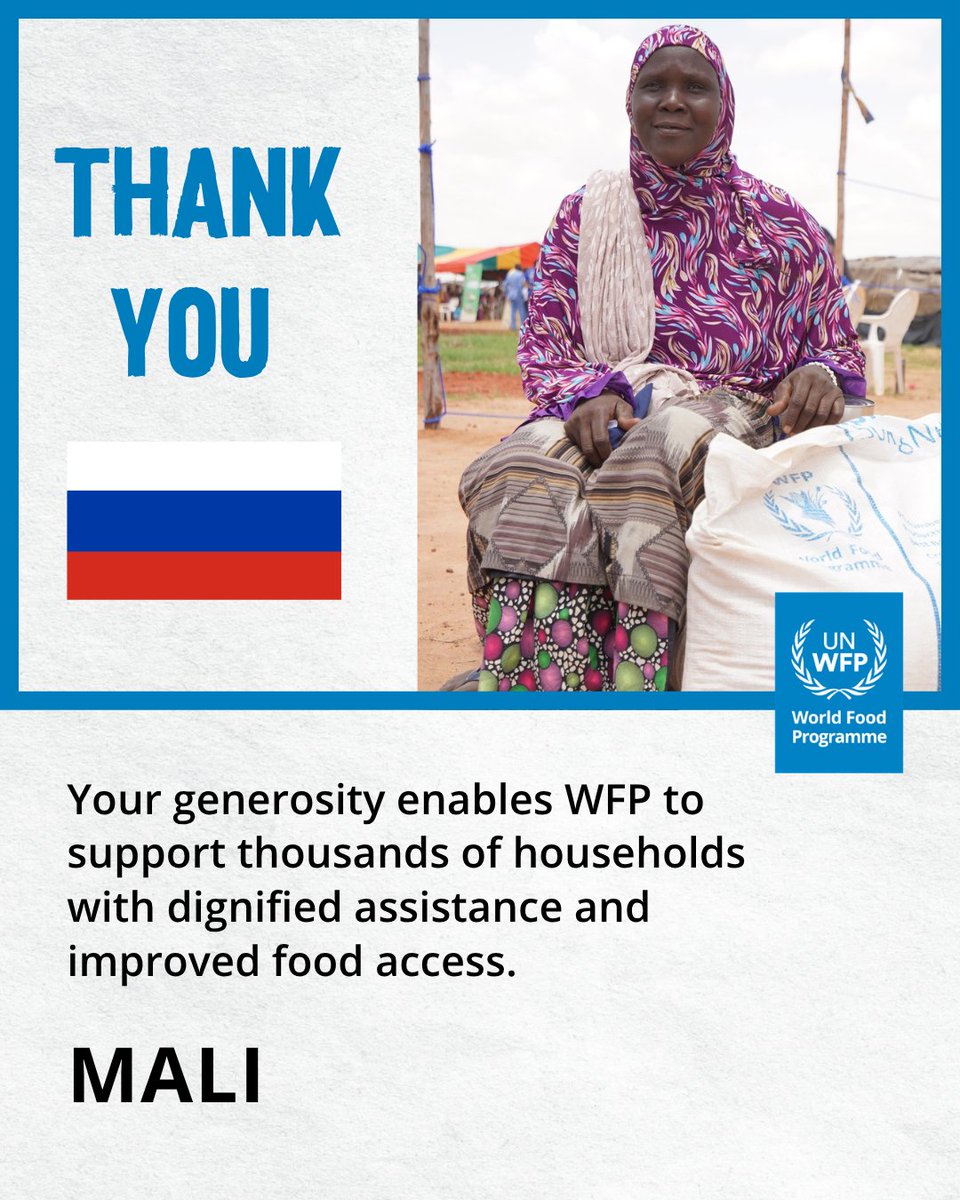
🙏 Grateful to the Russian Federation 🇷🇺 for its generous support to vulnerable communities in #Mali🇲🇱
Your contribution strengthens community resilience, promotes stability, and improves well‑being for thousands of families.
Thank you @mfa_russia
Embassy of Russia in Iran:
The Russian people continue to support their Iranian friends during this difficult period in various ways – both at the state level and through private initiatives.
On April 10, another batch of humanitarian aid was delivered in Astara to representatives of the Iranian Red Crescent Society.
The shipment – 51 tonnes of sunflower oil and household supplies – was collected and delivered to Iran by the Nefis charitable foundation from Tatarstan.
We wish the people of Iran peace, well-being and a swift recovery from this difficult period
#RussiaHelps
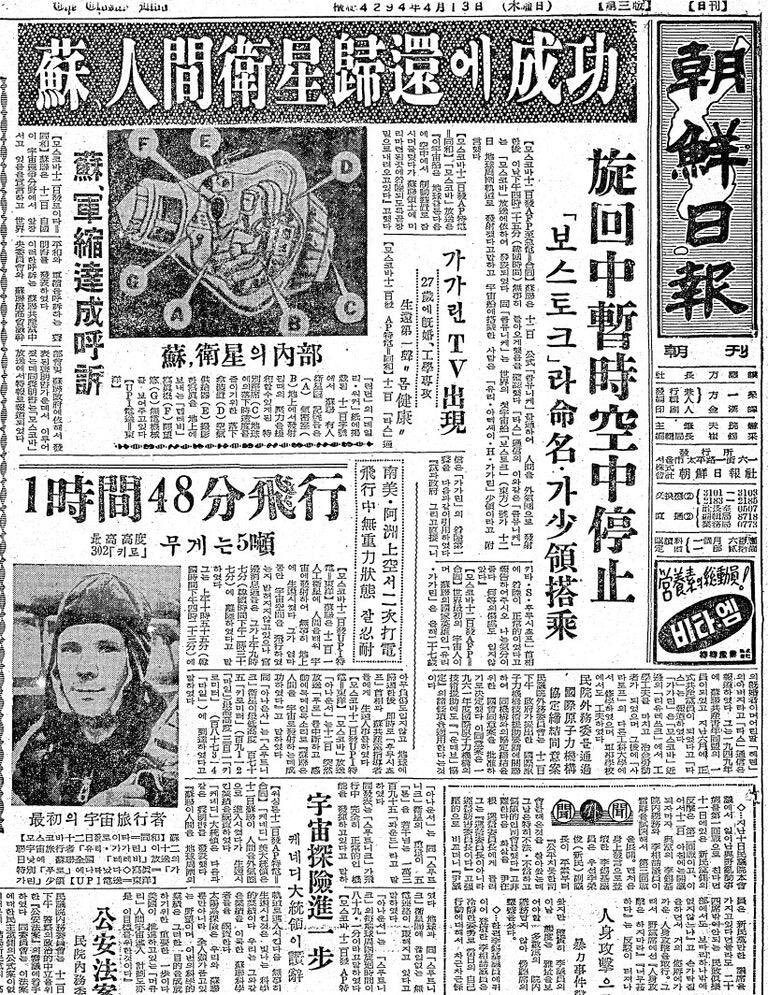
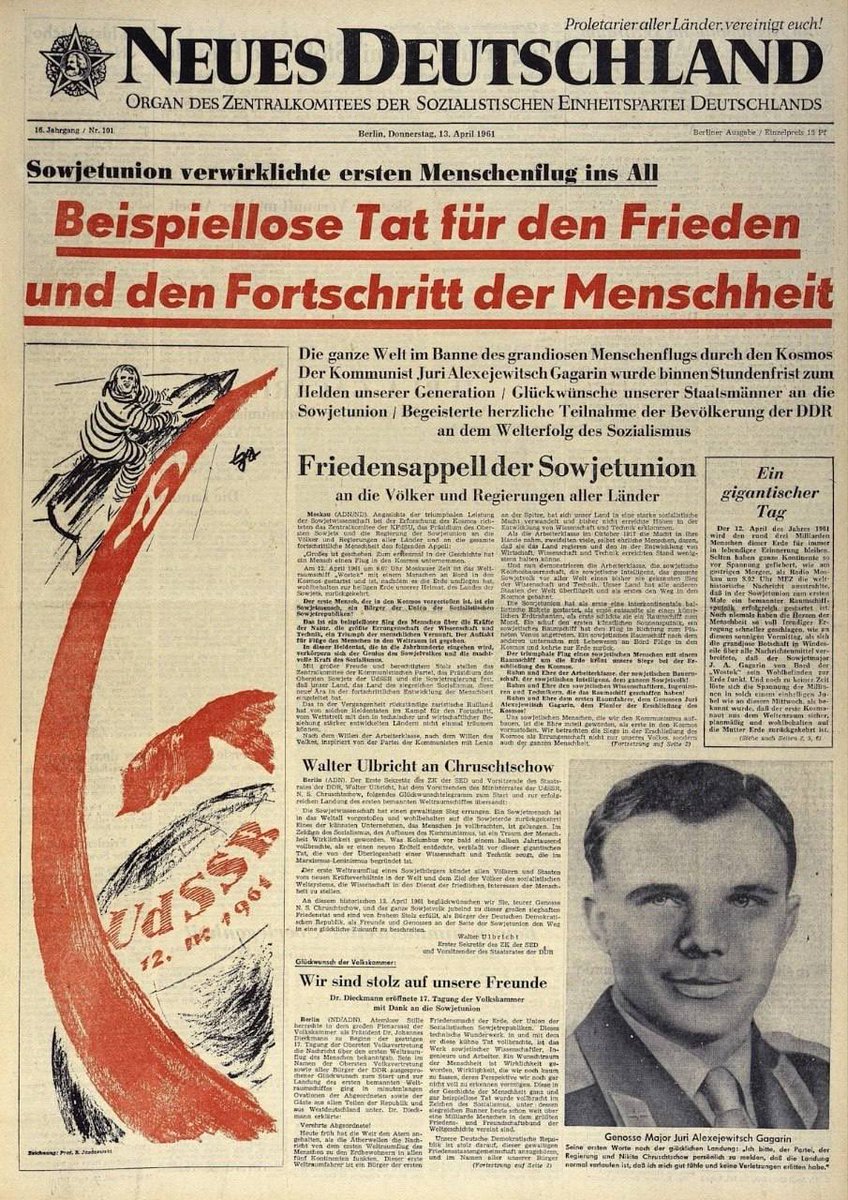
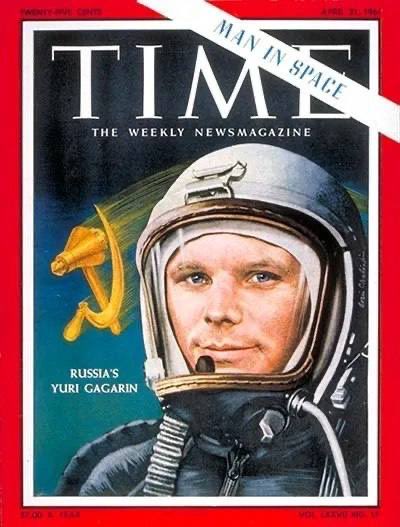
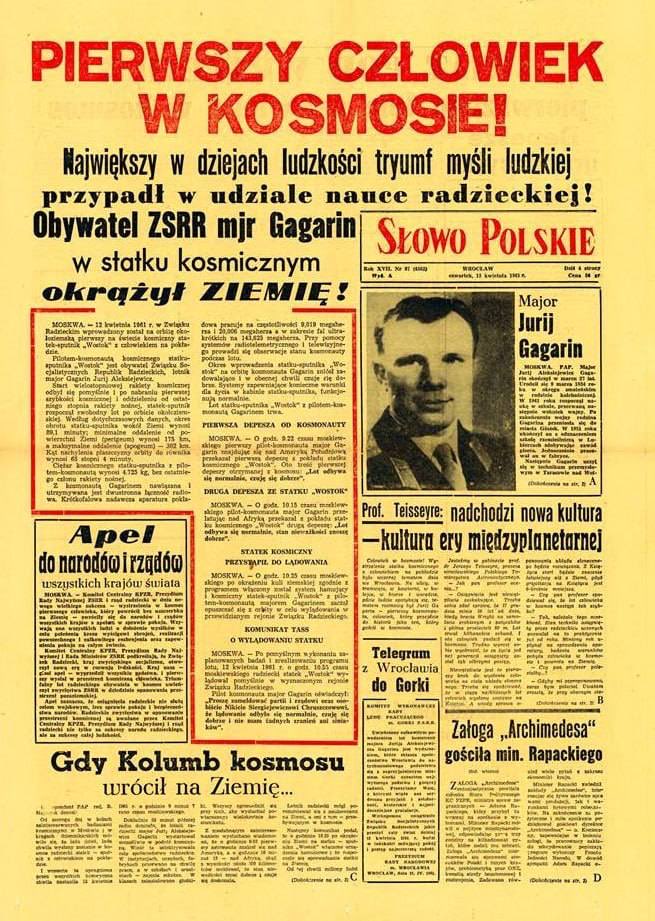
📰 On April 12 at 10:02 a.m. Moscow time, TASS reported to the the entire world:
“On April 12, 1961, in the Soviet Union, the world’s first spacecraft-satellite, Vostok, with a man on board, was launched into orbit around the Earth. The pilot-cosmonaut of the Vostok spacecraft-satellite is a citizen of the Union of Soviet Socialist Republics, Air Force Major Yuri Alekseyevich Gagarin. The launch of the multi-stage space rocket was successful, and after reaching first cosmic velocity and separating from the final stage of the launch vehicle, the spacecraft-satellite began free flight in orbit around the Earth…”
The TASS report on Gagarin’s flight became the most quoted news story in the world.
The next day, front pages of newspapers across the globe carried strikingly similar headlines celebrating the feat of the Russian cosmonaut:
🇬🇧 “Man in Space!”
🇺🇸 “Russian Becomes First Spaceman”
🇨🇳 人类征服宇宙的历史揭开了新的一页
🇫🇷 “Un Russe ramené vivant d’un voyage cosmique”
🇮🇹 “Il cosmo è dell’uomo!”
🇩🇪 “Triumph im Weltraum – Sieg des Kommunismus”
🇪🇸 “Astronauta soviético al espacio”
🇳🇴 “Det første menneske har vært i verdensrommet”
🇵🇱 “Pierwszy człowiek w kosmosie!”
🧑🚀 Yuri Gagarin’s name instantly became known across the globe, and his “Poehali!” (Let's go!) still echoes in every language of the world.