ryonpak

933 posts

ryonpak banner
ryonpak

ryonpak

@ryonpak

My yapping journal | Mechanical & Software Engineer, lost 160+ lbs, and my own quant. Glowup boutta be crazy

United States Katılım Mart 2025
75 Takip Edilen62 Takipçiler
ryonpak
ryonpak@ryonpak·
Looksmaxxing has to be so gay bro Tbh I get the point But if you want the results of looksmaxxing without all the face analysis shit Just eat super high animal fat diet (red meat, dairy, etc) and a little fruit/veggie if you want, and exercise everyday Do for 6-12 months EZ
English
0
0
0
57
ryonpak
ryonpak@ryonpak·
This advice is so retarded. $1,500,000 in 2026 is like $600,000 in 2066 cos of inflation You don't have time to AFK in an ETF for 10% a yr if ur in ur 20s to become a hopium millionaire Max out your skills first cos they compound hardest, then investing is a secondary thought
unusual_whales@unusual_whales

Kevin O'Leary says you can become a millionaire on $69,000 a year. “Take 20% of your salary of $69,000 and put it into the market each week and don't touch it”

English
0
0
0
85
ryonpak retweetledi
Sama Hoole
Sama Hoole@SamaHoole·
Peanut butter. Gym culture decided it was a protein food. It is not a protein food. It is a fat food, which would be fine, except the fat is terrible. - Two tablespoons: 8g protein, 16g fat: it's a fat source pretending to carry protein credentials - The fat is predominantly linoleic acid: omega-6 PUFA, the same class of fat being stripped from the diet by anyone paying attention to seed oils - Linoleic acid consumed in a concentrated fat source daily contributes directly to the omega-6/omega-3 imbalance now associated with systemic inflammation - Peanuts are legumes, not nuts: full anti-nutrient profile: lectins, phytic acid, measurable aflatoxin contamination from Aspergillus mould - Aflatoxin is a potent mycotoxin; peanut butter is one of the most consistently contaminated grocery staples in testing - Incomplete amino acid profile, poor digestibility score relative to animal protein - Most commercial varieties contain added seed oil: frequently more linoleic acid on top of the linoleic acid already there - Peanut allergy is the most common cause of fatal anaphylaxis from food in the UK So: not meaningfully useful as a protein source. Not a good fat source. Moderate anti-nutrient load. Contamination risk. Allergen risk. The jar has a picture of a muscular arm on it. The marketing is doing considerably more work than the peanut.
Sama Hoole tweet media
English
75
199
1K
53.3K
ryonpak
ryonpak@ryonpak·
Paul Saladino's Animal Based Diet is the best Don't drain the fat. It actually helps you burn more fat despite "more calories = more fat" It helps your future satiety and reduces cravings. Helps you reduce binge eating later
English
0
0
0
33
ryonpak retweetledi
Sama Hoole
Sama Hoole@SamaHoole·
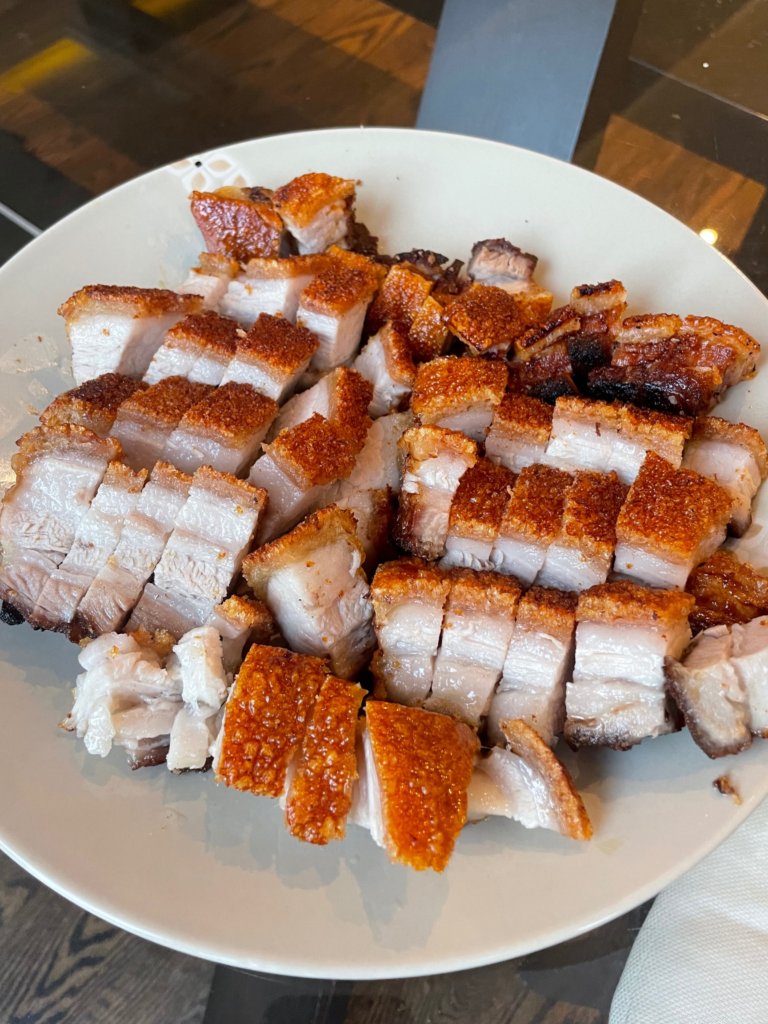
Pork gets a lot of grief in carnivore circles. It's not beef, which counts against it. It has PUFAs, which sounds damning. And it carries two thousand years of religious taboo, from Leviticus to the Quran, which has a way of embedding itself in cultural intuition long after the theology has left the room. So let's be fair about what pork actually is. Pork is a superfood. Not in the way that word has been debased by bags of goji berries in health food shops. A genuine, nutrient-dense animal food that has sustained entire civilisations. Thiamine: pork is the richest common dietary source of vitamin B1. More than beef. More than lamb. Thiamine is critical for glucose metabolism, nerve function, and cardiac health: and its deficiency, beriberi, was historically catastrophic in populations eating refined rice. The traditional populations eating whole pork alongside their rice didn't get beriberi. The ones eating polished white rice without the pork did. The pork was doing work. Selenium. Zinc. Complete protein. Choline for liver function and brain development. Carnosine. B vitamins across the board. It is an animal food. It does what animal foods do. Now the PUFA question, because it deserves a direct answer rather than a dismissal. Yes, pork fat contains more linoleic acid than ruminant fat. This is real. The pig, unlike the cow, has a simple stomach and cannot biohydrogenate polyunsaturated fat, cannot take the problematic seed fat and convert it into saturated fat the way a rumen can. What goes in largely comes out. Pigs raised on grain and soybean meal will have fattier, more linoleic acid-rich tissue than pigs raised on a more natural diet. Here's the context that changes everything. If you have already removed seed oils, you have already removed the industrial cooking oils. If you have removed legumes, you have removed soybean-derived everything. If you have removed nuts, you have removed the other major linoleic acid sources. You have, in the process of cleaning up the obvious problems, already addressed the bulk of your PUFA load. In that context, pork's linoleic acid content is not the marginal straw that breaks the metabolic camel's back. It is a manageable contribution from a whole food that was never the issue. The issue was always the bottle on the kitchen counter. The bottle is gone. And then consider: pork is the staple meat of Asia. The cooking traditions of China, Vietnam, Korea, Japan, Thailand: cuisines built on pork belly, slow-braised shoulder, trotters, ears, offal, these are not the cuisines of populations historically defined by metabolic disease. The metabolic disease arrived with the industrial food, the refined carbohydrates, the vegetable oils. Not with the pig. The religious prohibition on pork is ancient, contextual, and pre-refrigeration. The carnivore prohibition on pork is aesthetic, recent, and optional. Eat the belly. Render the lard. Use the lard to cook the rest of the pig. Beef is exceptional. Pork is not beneath it. They're different tools. Both animal. Both complete. Both doing what no bag of seeds ever managed.
Sama Hoole tweet media
English
268
723
4.8K
726.2K
ryonpak retweetledi
Sama Hoole
Sama Hoole@SamaHoole·
North Korea and South Korea share a genome. Same ethnic group. Same peninsula. Same people, divided in 1953. Today, South Korean men average 174 cm. North Korean men average approximately 165 cm. North Korea has severe food insecurity. Animal protein access is extremely limited. The diet is predominantly grain-based. The two populations have diverged by roughly 9 centimetres in about two generations. Nine centimetres. Same genetics. Different food. This is the clearest natural experiment on protein and height that exists. Nobody shows it in the documentary.
English
185
2K
16.3K
840.1K
ryonpak
ryonpak@ryonpak·
Suffering in fat loss mainly attributed from eating low fat chicken & rice Just eat a fatty steak/ground beef, and a little fruit/rice, and a bunch of salt Can lose weight without being miserable all the time Something really sating about eating a 1000 cal steak than chicken
English
0
0
0
32
ryonpak
ryonpak@ryonpak·
Stopped eating seed oils and processed sugar and went back to eating 1 lb grass fed ground beef again everyday Never felt any better. Look way less bloated now too Meat maxxi forever
English
0
0
0
28
ryonpak
ryonpak@ryonpak·
Gm
QST
3
0
2
49
yungjamez
yungjamez@yungjamezareal1·
White dudes get so hype about “I’m building a computer” and putting rainbow lights on it
English
1
0
2
545
ryonpak
ryonpak@ryonpak·
Gm at night guys
English
0
0
0
38
ryonpak retweetledi
Paul Saladino, MD
Paul Saladino, MD@paulsaladinomd·
scrolling = dopamine junk food = dopamine porn = dopamine gaming = dopamine gambling = dopamine online shopping = dopamine binge-watching = dopamine Life is better when you're not a slave to these engineered dopamine hits.
English
69
57
1.1K
51.3K