sandra longinotti

18.3K posts

sandra longinotti banner
sandra longinotti

sandra longinotti

@s_longinotti

Sandra Longinotti #food & #wine writer since 1992 | Food & Wine Journalist, Blogger, Author, Food Stylist, Consultant | ✍️ on my #Blog and RSI Food

Milano - Italy Katılım Ekim 2010
1.9K Takip Edilen12.2K Takipçiler
sandra longinotti
sandra longinotti@s_longinotti·
Una locanda di charme in un casale del ‘700 sulle prime colline della Lunigiana, in una campagna appena pronunciata che guarda ancora il mare, dove lo chef @GiacomoDevoto racconta ogni giorno l’identità del luogo nei suoi piatti stellati. Il mio articolo: vitae.aisitalia.it/il-foraging-na…
sandra longinotti tweet mediasandra longinotti tweet mediasandra longinotti tweet mediasandra longinotti tweet media
Italiano
0
0
0
50
sandra longinotti retweetledi
ΜΟΡΦΕΑΣ.Ⓡ
ΜΟΡΦΕΑΣ.Ⓡ@JORRIT369·
🔴⚠️SEMPRE PER IL TUO BENE... ...Ciò che ho sempre pensato... Quando leggi le etichette degli ingredienti dei prodotti,ne sono riportati soltanto 1/3 di quelli presenti nel prodotto. Esempio: farine,massa di cacao,latte scremato ecc... non è riportato cosa ci sia dentro questi..
Italiano
1
160
314
5.4K
sandra longinotti retweetledi
Philippe T
Philippe T@brain_stimulus·
❗ INTÉRESSANT ! Traduction :👇 Cette ferme de poulets vient de faire le tour d'Internet. Alors que les poulets ordinaires voyagent dans de petites boîtes poussiéreuses, ces types ont construit une maison mobile alimentée à l'énergie solaire pour eux. Le plus fou, c'est qu'il n'y a pas de plancher du tout. Les poulets se tiennent sur l'herbe fraîche comme s'ils étaient dehors dans un buffet 5 étoiles. Chaque matin, tout le poulailler se déplace vers un nouveau terrain.. De nouveaux insectes, de nouvelles herbes, zéro odeur, zéro désordre. Et vous ne le croirez pas... tout le système fonctionne avec la lumière du soleil. Même la vitesse à laquelle les poulets grandissent. Pas de produits chimiques, pas de cages sales. Juste une agriculture pure et géniale. C'est le genre d'idée qui mérite de devenir virale.
Français
143
2.4K
5.7K
139.3K
sandra longinotti
sandra longinotti@s_longinotti·
Complimenti!!! Purtroppo il “giochino” l’ho visto fare in un paio di supermercati sia col formaggio che col pesce!!! Guardate certamente le date ma anche il colore e le eventuali imperfezioni, se notate qualcosa che non vi torna non comprate!
L'eretico_l@eretico_l

Italiano
0
1
4
179
sandra longinotti retweetledi
Anubi777
Anubi777@anubi77787292·
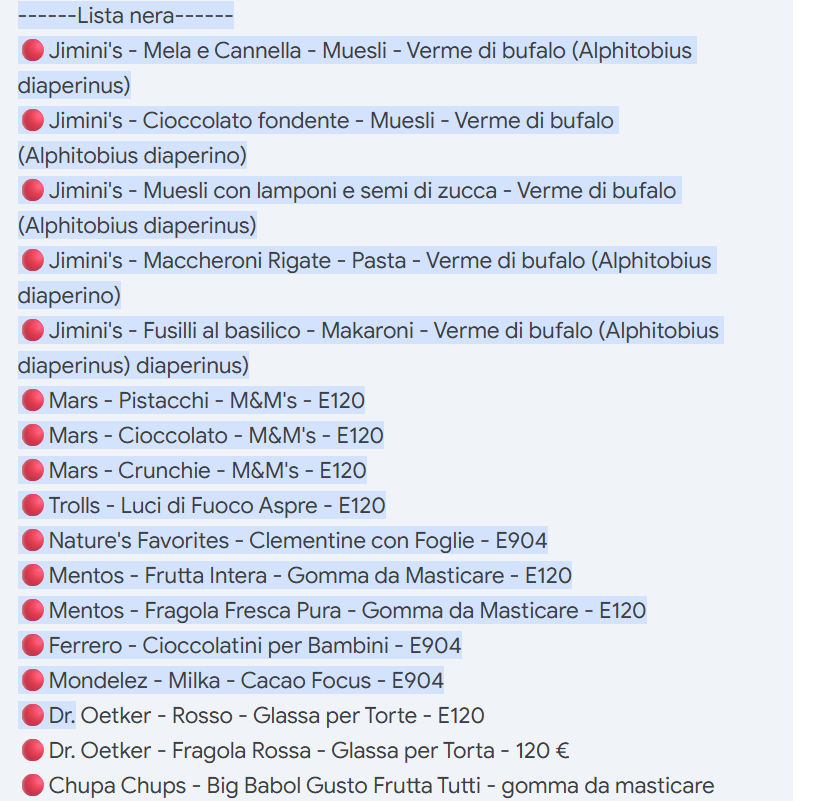
I produttori hanno già ottenuto l'autorizzazione ad aggiungere insetti a tutti i prodotti alimentari. Ora,amici, siamo costretti a leggere gli ingredienti dei prodotti. Hanno obbligato i produttori a indicare cosa è stato aggiunto,scritto in latino, APPOSTA 🔽
Anubi777 tweet media
Italiano
42
233
327
14.2K
sandra longinotti retweetledi
James Tate
James Tate@JamesTate121·
A company called Greenvize has developed a hydrogen-powered stove that literally creates its own fuel on demand. Using a process called electrolysis, the system splits water into hydrogen and oxygen using electricity. That hydrogen is then instantly used as a clean-burning fuel for cooking. The wild part? Just 100 ml of water and about 1 kWh of electricity can power up to 6 hours of cooking. No gas tanks. No refills. No waiting. Inside, a PEM electrolyzer produces hydrogen in real time, meaning there’s no need to store or transport fuel at all. It’s generated and used instantly. If scaled, this could completely change how we cook, especially in places where gas access is limited. A stove powered by water and electricity isn’t just clever… it might be the beginning of a fully decentralized kitchen.
James Tate tweet media
English
197
1.1K
2.7K
117.3K
sandra longinotti retweetledi
Mambo Italiano
Mambo Italiano@mamboitaliano__·
Fried pizza in Naples is the next level of indulgence unlocked Only in Italy 🇮🇹
English
75
118
1K
53.8K
sandra longinotti retweetledi
Silvio Bertoldi
Silvio Bertoldi@SilviusBerthold·
Lievita il costo del pane: arriva a 10 euro al kg 🚨 Le associazioni degli agricoltori lanciano l’allarme: i prezzi al consumo sono fuori controllo. Coldiretti: «La guerra è già dentro le nostre aziende, energia e imballaggi sono schizzati». Batosta su frutta e verdura: pomodori +31,9%. 🇪🇺 Ma a Bruxelles dormono🎯
Silvio Bertoldi tweet media
Italy 🇮🇹 Italiano
30
157
248
8.5K
sandra longinotti retweetledi
Giuseppe Maria Giorgio Caprotti
La Cina, che é uno dei più grandi produttori di fertilizzanti al mondo, ha bloccato le esportazioni di urea che serve per far crescere grano e riso giuseppecaprotti.it/il-fattore-fer…
Shanaka Anslem Perera ⚡@shanaka86

JUST IN: The Strait of Hormuz blocks the fertiliser from shipping. China just blocked it from being replaced. Beijing has instructed exporters to suspend overseas shipments of nitrogen and potassium fertiliser blends. Urea. NPK mixes. The molecules that American, Indian, Bangladeshi, and African farmers need to plant are now gated at two chokepoints simultaneously: a 21-mile waterway controlled by provincial commanders with sealed radio orders, and a government directive issued from Zhongnanhai that requires no radio at all. One third of global seaborne fertiliser trade transits Hormuz. China is the world’s largest fertiliser producer. When the strait closed and China suspended exports in the same month, the global food system lost its primary supply route and its primary alternative supplier at the same time. There is no third source at this scale. There is no backup to the backup. Urea has surged roughly 40 percent since the war began. CBOT March futures settled at 610.50. The peak at New Orleans touched $683. Those prices were set by the Hormuz blockade alone. China’s ban adds a second floor underneath them. Even if the strait reopened tomorrow, Chinese urea would not flow until Beijing lifts the directive. Even if Beijing lifted the directive, the strait would still need to reopen, insurance to normalise, and vessels to be available. The two gates operate independently. Both must open for the molecule to move. China’s logic is transparent. Hormuz disrupted global supply. Prices surged. Chinese domestic farmers face the same planting windows as everyone else. Beijing chose to protect its own agriculture by hoarding the molecule the rest of the world needs. This is the same country that is simultaneously drawing commercial crude reserves at a million barrels per day, running military exercises near Taiwan, receiving discounted Iranian oil through the permissioned strait, and restricting the phosphate exports it suspended months ago. Every decision serves one objective: China first. The rest of the world absorbs the shortage. The American farmer is now squeezed from two directions. The Gulf urea he used to buy cannot transit the strait. The Chinese urea that could have replaced it is embargoed by Beijing. Domestic US production covers roughly 75 percent of normal needs, but normal needs assumed Gulf and Chinese imports filling the gap. The gap is now unfillable on any timeline that matters for spring planting. USDA projects corn falling to 94 million acres. Soybeans rising to 85 million. The RFS mandate consumes 43 percent of a shrinking corn crop. The cattle herd sits at 86.2 million, a 75-year low. The protein cascade runs from corn to feed to meat to eggs to dairy to the grocery shelf. China’s ban did not create that cascade. The Hormuz blockade created it. China’s ban removed the last exit ramp. Oman crude at $154. Brent at $102. WTI at $93. Gold at $5,000. The Fed holding at 3.50 to 3.75 with PCE revised to 2.7. Trump telling Israel to stop hitting gas fields. Iran threatening to burn the Gulf to ashes. Four countries’ energy infrastructure offline. And now the world’s largest fertiliser producer has locked its warehouse and told every farmer on Earth that the key is in Beijing, not for sale, and not available until further notice. Two gates. One molecule. No alternative. The calendar closes in four weeks. open.substack.com/pub/shanakaans…
Italiano
3
10
24
739
sandra longinotti retweetledi
Giuseppe Maria Giorgio Caprotti
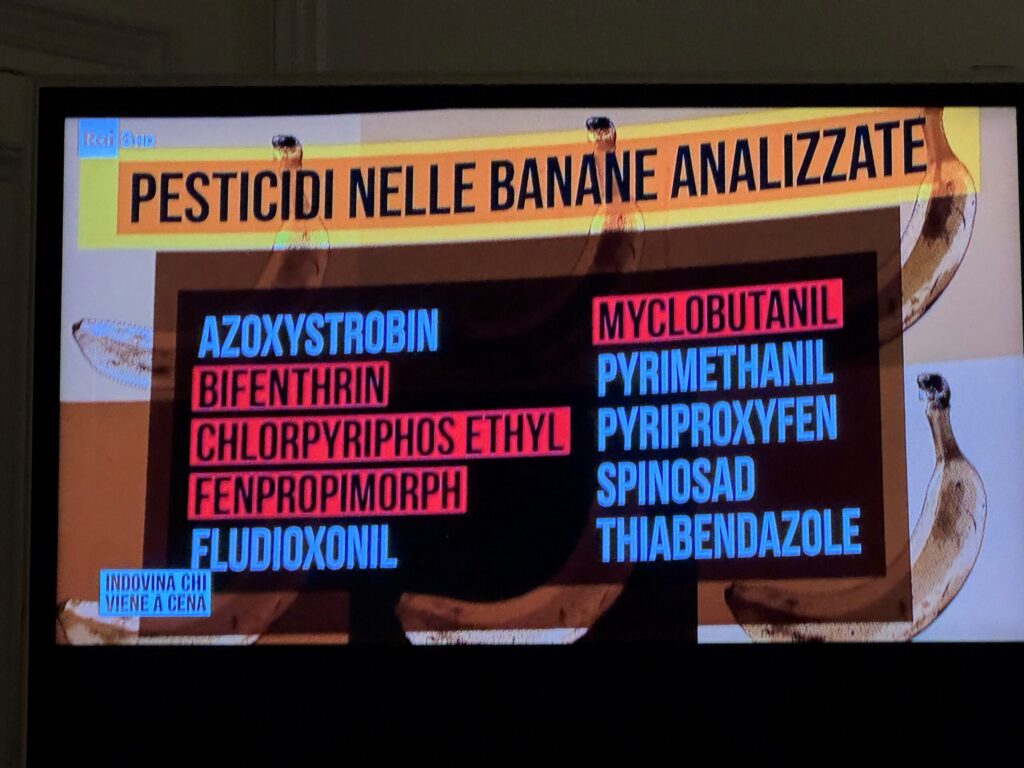
Le #banane arrivano da Ecuador, Costa Rica, Perù, Colombia, Filippine. Climi perfetti per la pianta… e per i parassiti. Per questo nelle piantagioni si usano molti #pesticidi, spesso irrorati anche per via aerea. Poi le troviamo nei supermercati a 𝟏,𝟒𝟗 €/𝐤𝐠. In quel prezzo devono stare coltivazione, trattamenti, salari, trasporto oceanico, logistica e distribuzione. Qualcuno, lungo la filiera, paga sempre il prezzo. Spesso i lavoratori. A volte anche i consumatori. Alcuni pesticidi vietati nell’UE sono stati trovati anche in banane bio importate. giuseppecaprotti.it/flash/banana-c… #filieraalimentare #agricoltura #Mercosur
Giuseppe Maria Giorgio Caprotti tweet media
Italiano
6
21
50
3.2K
sandra longinotti
sandra longinotti@s_longinotti·
Il “magico” latte materno
I am Ken@Ikennect

Mother's Milk⭐️ I found this fascinating. It's long but worth it. A scientist analyzed 700 samples of mother's milk—and discovered it wasn't food at all. It was a conversation. California, 2008. Dr. Katie Hinde sits in her lab, surrounded by data that refuses to make sense. She's studying breast milk from rhesus macaque mothers. Hundreds of samples. Thousands of measurements. The kind of straightforward nutritional analysis that should produce straightforward results. Instead, she keeps finding patterns that contradict everything in the textbooks. The milk isn't consistent. It's changing. Adapting. Responding to variables she hasn't even measured yet. She runs the analysis again. Checks her instruments. Reviews her methodology. The patterns hold. Some mothers are producing milk concentrated with fat and energy. Others are producing higher volumes with completely different nutrient profiles. It's not random variation—it's systematic. Purposeful. Katie presents her findings to colleagues. The responses come immediately: "Measurement error." "Statistical artifact." "Probably nothing." Because if milk composition actually changes based on individual babies and their specific needs, that would mean something medical science had never seriously considered: Milk isn't nutrition being delivered. Milk is information being exchanged. For generations, we treated breast milk like biological fuel. Calories in, baby grows. A natural formula. Simple. Case closed. But Katie trusted what the data was showing her. She kept digging. Across hundreds of mothers and thousands of samples, a revolutionary picture emerged. Milk composition changes throughout a single day. Morning milk contains compounds that promote alertness—natural wake-up chemistry. Evening milk includes precursors that help babies sleep. The first milk in a feeding (foremilk) differs from the last (hindmilk). Early milk hydrates. Final milk delivers concentrated calories, naturally teaching infants to feed completely. Then Katie discovered something that rewrote biology textbooks. Human milk contains over 200 complex sugars called oligosaccharides that babies cannot even digest. They pass through the infant's system completely unchanged. Why would evolution include indigestible compounds in the primary food source for human infants? Because they're not food for the baby. They're food for beneficial bacteria in the infant's gut. Milk simultaneously nourishes the child and cultivates their microbiome—building the bacterial ecosystem that will protect them for life. But the most astonishing discovery was still ahead. When babies nurse, microscopic amounts of saliva make contact with breast tissue. That saliva carries chemical signals about the infant's immune system—information about pathogens encountered, threats developing, infections beginning. The mother's body reads those signals. And the milk transforms. Within hours, white blood cell counts can surge. Antibodies appear—targeted to whatever the baby's chemistry revealed. When the infant recovers, the milk composition returns to baseline. The breast isn't just producing nutrition. It's responding in real-time to biological intelligence from the baby. A dialogue. A conversation refined across 200 million years of mammalian evolution. Mother and infant exchanging chemical information with every feeding. The mother's immune system educating the baby's defenses before symptoms even emerge. And medical science had barely studied it. Katie began investigating the research landscape. What she found was stunning: Breast milk—the first food every human being consumes, the biological system that sustained every one of our ancestors—had been dramatically under-researched compared to other aspects of human biology. Women's health, particularly the science of motherhood, had been systematically deprioritized. Katie decided that needed to change. In 2011, she launched "Mammals Suck...Milk!"—a blog that made lactation science accessible. Within a year, over a million readers were discovering answers to questions science had never properly asked. The research accelerated. Every mother's milk is biologically unique—customized not just to our species, not just to her individual baby, but to the specific moment in that baby's development, the environment they're in, the immune challenges they're facing right now. In 2017, Katie brought this research to the TED stage. Over 1.5 million people watched. In 2020, her work reached millions more through the Netflix documentary "Babies." Today, at Arizona State University's Comparative Lactation Lab, Dr. Katie Hinde continues transforming how we understand infant development and maternal biology. The implications reach everywhere. Preterm infants in NICUs receive fundamentally different care now. Formula manufacturers are redesigning products with new understanding. Lactation support has improved because we finally comprehend what milk actually accomplishes. But here's what matters most: Katie Hinde didn't just discover new facts about milk. She exposed how half the human experience—the biology of mothers and infants—had been under-studied because it was considered less important than other research priorities. She proved that nourishment is intelligence. That the first relationship every human has isn't passive delivery but active conversation. An information transfer. An education in immunity, behavior, and survival encoded in chemistry. Today, comparative lactation is a growing field. New researchers. New questions. New discoveries emerging constantly. All because one scientist looked at data that contradicted accepted models and asked: "What if the data is correct and the model is wrong?" Sometimes the most significant revolutions don't require new technology or massive funding. They come from someone paying attention to what everyone else overlooked. Katie Hinde thought she was analyzing milk composition. What she uncovered was a conversation 200 million years in the making—sophisticated, adaptive, intelligent—hidden in plain sight because no one had thought to truly listen. Now we're listening. And what we're hearing changes everything we thought we knew about how mothers and babies communicate, how immunity develops, and how the most fundamental act of nurture is also the most sophisticated transfer of biological wisdom ever evolved.

Italiano
0
0
1
56
sandra longinotti retweetledi
Omne Europa
Omne Europa@neolatyno·
Cow or sheep aged cheese (like Pecorino Romano, Parmigiano Reggiano or Grana Padano) has been a fast, portable, easily preservable high source of protein for Latin travelers and legionaries for 3 millennia AND it doesn’t trigger lactose intolerance! European food excellence 🇮🇹🇪🇺
Omne Europa tweet media
English
35
222
1.1K
24.5K
sandra longinotti retweetledi
Shanaka Anslem Perera ⚡
Shanaka Anslem Perera ⚡@shanaka86·
BREAKING: While the world debates oil prices and war strategy, the actual crisis is unfolding in silence. The molecules that produce half the planet’s food are physically trapped behind a war zone. And the biological window to apply them closes in weeks. Not months. Weeks. This is not a drill. Roughly one-third of all seaborne fertilizer trade passes through the Strait of Hormuz according to UNCTAD. Nearly 49% of globally traded urea is tied to conflict-exposed exporters. Nearly half of global sulfur trade, the chemical without which phosphate fertilizer cannot be processed anywhere on Earth, is Gulf-dependent. Transit has collapsed 97%. There is no alternative route. There is no strategic fertilizer reserve anywhere on Earth. There is no Plan B. Right now, as you read this: Bangladesh has shut five of six urea factories. Boro rice season, which produces over half the country’s grain, is underway with no domestic nitrogen supply. India is operating fertilizer plants at 60% capacity and has formally asked China for emergency urea. China said nothing and banned its own phosphate exports through August. Egypt, the world’s largest wheat importer, faces $28 billion in debt repayments while the bread subsidy feeding 69 million people hemorrhages money at prices it never budgeted for. Sudan, already in confirmed famine, sources 54% of its fertilizer from the Gulf. WFP shipping now takes 25 extra days rerouting around the war zone. Australia imports virtually all its urea, two-thirds from the Gulf, and its entire heavy trucking fleet runs on AdBlue made from the same urea that is not arriving. No urea, no AdBlue, no freight, no groceries on shelves in Sydney. 318 million people were at crisis-level hunger BEFORE February 28. The number that should haunt every policymaker on Earth: the yield response to nitrogen is not linear. It is quadratic. In wealthy countries that over-apply fertilizer, a 15% reduction costs maybe 3% of yield. In the Global South where farmers already apply one-seventh the global average, the same reduction pushes crops off a biophysical cliff where production does not decline. It collapses. Sri Lanka proved this in 2021. One season without synthetic fertilizer. Rice output collapsed 40%. Government fell. Now multiply Sri Lanka across thirty countries simultaneously. During a potential El Nino that Skymet says carries a 60% chance of below-normal Indian monsoon. While 51% of US corn-growing areas are already in drought. While Australia’s root-zone soil moisture sits in the lowest 10% since 1911. While corn farmers are abandoning nitrogen-intensive planting because they cannot afford $900-per-ton ammonia against $4.50 corn. While the Fed is trapped at 3% core PCE with no room to cut and food inflation about to surge through every grocery aisle in America six months from now. Nobody is talking about this. CNBC leads with oil. Bloomberg leads with equities. The Pentagon leads with strike counts. But the actual weapon of mass destruction in this conflict is not a missile. It is a calendar. The Corn Belt needs nitrogen by mid-April. India needs to prep Kharif by May. Australia needs urea by June. Miss those windows and no subsequent intervention reverses the yield loss. The food is not decided by diplomats in six months. It is decided by soil chemistry in the next six weeks. The prices hit your table by Christmas. Both sides rejected ceasefire talks this week. The world spent fifty years preparing for an oil shock. It spent zero years preparing for a fertilizer shock. Half of humanity eats because of a single industrial process that runs on natural gas from the Persian Gulf, exits through 21 miles of water that are currently mined, uninsured, and unescorted. The planting window does not care about your geopolitics. It is closing. Full analysis: open.substack.com/pub/shanakaans…
Shanaka Anslem Perera ⚡ tweet media
Shanaka Anslem Perera ⚡@shanaka86

BREAKING: The world spent fifty years and hundreds of billions of dollars building Strategic Petroleum Reserves so that no geopolitical shock could starve civilization of energy. Nobody built the equivalent for fertilizer. That is the most expensive oversight in the history of modern statecraft, and you are about to pay for it at the grocery store. The Strait of Hormuz does not merely carry 20% of global oil. UNCTAD estimates roughly one-third of all seaborne fertilizer trade passes through it. The Fertilizer Institute estimates that conflict-exposed exporters account for nearly 49% of global urea exports and nearly half of global sulfur trade. Since February 28, daily ship transits have collapsed by 97%. Here is what almost nobody understands about why this is not "just another commodity spike." It was not the missiles that closed the strait. It was the insurance. Multiple P&I clubs cancelled war-risk extensions for the Gulf after 26 months of Red Sea losses had already depleted their Solvency II capital buffers. War-risk premiums surged from 0.25% to as high as 5% of hull value per transit. A urea cargo cannot absorb that. The economics of fertilizer shipping through Hormuz became impossible before a single mine needed to detonate. The Trump administration announced a $20 billion sovereign-backed reinsurance facility with Chubb as lead underwriter. There is no confirmed public evidence that a single fertilizer vessel has used it. Insurance pays for financial loss. It does not intercept anti-ship missiles. Physical security remains the binding constraint, and the US Navy confirmed on March 12 it is "not ready" for commercial escorts. Now here is the part that should terrify every allocator on Earth. Agriculture runs on biological deadlines. Corn Belt farmers need nitrogen applied by mid-April. Indian Kharif season prep starts in May. Australian winter crop needs urea by June. These are not financial deadlines that reprice. They are photosynthetic deadlines that, once missed, produce irreversible yield loss. A diplomatic breakthrough on April 15 does not help a farmer who needed fertilizer on April 1. And the yield math is nonlinear. Wall Street models fertilizer-to-output as proportional. It is not. The response is quadratic. In developed systems that over-apply nitrogen, a 15% reduction costs 2-5% of yield. In the Global South where farmers already under-apply, the same reduction pushes crops off a biophysical cliff. Sri Lanka proved this in 2021 when a sudden fertilizer ban collapsed rice production 40% in a single season and brought down the government. The market is pricing a 45-day disruption. The insurance architecture says 120 days minimum. Even after a hypothetical ceasefire, Solvency II capital rebuild, reinsurance treaty renegotiation, and vessel re-underwriting take months. The Red Sea precedent: 26 months after Houthi attacks began, war-risk premiums never returned to pre-crisis levels. Both sides are rejecting negotiations. Trump rebuffed ceasefire mediation March 14. Iran's foreign minister on March 15: "We never asked for a ceasefire." Meanwhile: 51% of US corn areas in drought. El Nino favored by June at 62% probability. Skymet assigns 60% chance of below-normal Indian monsoon. Bangladesh has shut five of six urea factories. India formally asked China for urea on March 12. Egypt faces $28 billion in debt repayments while importing 12.7 million tonnes of wheat. WFP identifies 318 million people already at crisis-level hunger. The world stockpiled oil but forgot to stockpile the molecules that produce half its food. The clock is the position. Full analysis in the link! open.substack.com/pub/shanakaans…

English
116
1.2K
2.1K
237.7K