Sam - SeekingAlphaPlus

2.4K posts

Sam - SeekingAlphaPlus

Sam - SeekingAlphaPlus

@samtr981

WallSt FinTech prof and a product guy; Trying to be a wise investor,looking for alpha;Crypto,Blockchain, AI; Not investment advice.

Manhattan, NY Katılım Kasım 2020
1K Takip Edilen343 Takipçiler
Sabitlenmiş Tweet
Sam - SeekingAlphaPlus
Sam - SeekingAlphaPlus@samtr981·
Why tZERO Could Become the AWS of Tokenization When cloud computing began to take hold, most companies weren’t interested in running data centers. They wanted reliability, scale, security, & flexibility—without having to build everything themselves. That gap is what AWS filled. Today, capital markets are facing a similar moment. Tokenization is discussed as a way to modernize issuance, settlement, & ownership of assets. This is where tZERO becomes structurally interesting. Tokenization Is an Infrastructure Problem The core questions institutions face are not whether assets can be tokenized, but: •How ownership is recorded •How settlement occurs •How transfers comply with regulations •How systems integrate with brokers, custodians, & exchanges These are the same types of problems enterprises faced before cloud adoption became mainstream. The AWS Parallel AWS succeeded by abstracting complexity into layers that others could build on: •Infrastructure as a Service (IaaS) •Platform as a Service (PaaS) •Software as a Service (SaaS) This allowed companies to adopt cloud incrementally, without re-architecting their entire business. tZERO’s opportunity in tokenization follows a similar pattern—applied not to compute, but to capital markets infrastructure. tZERO as Infrastructure as a Service (IaaS) At the base layer, AWS provides raw infrastructure: compute, storage, & networking. tZERO’s equivalent IaaS layer is on-chain market infrastructure, including: •A distributed ledger for securities ownership •Settlement rails that support near-real-time finality •Secure, permissioned connectivity between regulated participants This layer targets post-trade functions that today rely on batch processing, reconciliation, & multiple ledgers of record. Like AWS infra, it is not consumer-facing- but reliable & standardized. tZERO as Platform as a Service (PaaS) AWS became more valuable when it added managed services that removed the need for customers to build foundational components themselves. tZERO’s platform layer can include: •Tokenized securities issuance frameworks •Embedded transfer & eligibility rules •Identity and compliance logic •APIs for brokers, custodians, & exchanges •Automated corporate actions such as dividends This is where tokenization becomes operationally usable for institutions, not just technically possible. tZERO as Software as a Service (SaaS) On top of the platform sit applications. For tZERO, these may include: •Alternative trading systems •Tokenized asset marketplaces •Cap-table & transfer-agent style services As with AWS, these applications matter—but they are not the core thesis. They demonstrate what the underlying infrastructure can support and provide adoption pathways. Why This Model Fits Institutions Financial institutions generally do not seek to rebuild infrastructure. They prefer: •Incremental adoption •Reduced operational complexity •Regulatory alignment A layered model allows tokenization to be adopted the same way Cloud was: gradually, without forcing institutions to abandon familiar structures A Practical Way to Think About It AWS did not replace the internet. It made the internet usable at enterprise scale. Similarly, tZERO does not need to replace exchanges, brokers, or custodians to succeed. If it becomes a foundational layer for regulated tokenized assets—supporting issuance, settlement & ownership—it can sit beneath the market, largely invisible to end users. That is how infrastructure platforms tend to win To Conclude The future of tokenization is unlikely to be driven by standalone applications or isolated blockchains. It will be shaped by platforms that abstract complexity & allow others to build on top. That is the role AWS played in cloud computing. If tokenization follows a similar trajectory, tZERO’s opportunity is not to be the most visible player-but to become one of the most foundational.
English

5
19
98
35.8K
Alan Konevsky
Alan Konevsky@Alan_Konevsky·
Impactful day in D.C., meeting 1:1 with the offices of Rep. Gottheimer, Rep. Steil, Rep. Wagner, Rep. Emmer, and Rep. Waters, and the House Financial Services Committee staff. We familiarize them with our business and covered a range of topics important to @tZERO - including supporting seamless infrastructure across multiple asset classes and marketplaces, streamlining spot crypto licensing requirements for BDs, federal preemption of state money transmission laws for BDs and the secular role for tokenization, including its intersection with agentic AI operability as a key driver for tokenization of financial assets. We also had a very productive meeting with the SEC's Division of Corporation Finance and drive real reform on RWA tokenization for real estate and other asset classes, like art and collectibles, that catalyzes that market in the US with fewer hurdles. @SavinoVaness
Alan Konevsky tweet media
Alan Konevsky@Alan_Konevsky

We are heading back to DC today. Meeting with the SEC/Corp Fin - need to ease the process for tokenizing RWAs (including real estate) / relax the full securitization hoops (been major blocker to that in the US) - will also make the future “bring your own asset” part of our infrastructure/platform much easier. Then on to the House to meet with key members’ staff across the aisle as we work to bring and keep @tZERO at the top of the policy agenda around tokenization and digital assets. Onwards! @SavinoVaness

English
12
15
110
8.4K
Sam - SeekingAlphaPlus
@tZERO ValueProposition 👇
Alan Konevsky@Alan_Konevsky

We provides a unique, vertically-integrated regulated infrastructure stack that empowers market leaders to bridge operational gaps and scale tokenization rapidly using our rails.  •       We do not grow our business at the expense of our partners and their customers. We are platform, protocol, asset and brand agnostic – our API and white-label driven services can be as visible as invisible as our partners require, we ringfence their assets and customers, while providing turnkey solutions that obviate the need for them to establish (and live with) costly/cumbersome regulatory and operational requirements and costs. •       Our end-to-end regulated platform spans BD services, secondary liquidity products, onchain digital asset custody, digital transfer agent, RIA (forthcoming), tokenization, primary issuance, defi interoperability (incl. forthcoming bring your own wallet and onchain lending connections), Lynq real-time settlement, AI connectors/tools, crypto funding, API/white label access, investor marketing/data services, ancillary services (investor accreditation, onchain ID and voting) and global reach through “follow the sun” partners.    •       tZERO is the core platform that holds this range of regulatory and operational capabilities vs. competition and does not need to rely on inefficient third-party integrations (esp. for onchain custody).  •       As tokenization market structure and regulatory reform settles down, we are adding regulated derivatives marketplaces, clearing and introducing broker capabilities to our infrastructure suite to support growing interest in spot crypto, crypto derivatives and predictive markets support – and a multi-asset front end/app infrastructure that’s available for direct retail customers and B2B2C partners. •       Tokenization is reshaping how markets operate by giving assets a shared digital language so they can trade, settle, and interact seamlessly across platforms, asset classes, and borders – while introducing the efficiency and transparency of single database and smart-contract architecture, and the customization/programmability. •       AI interoperability/other catalysts are likely to make this change broader and faster – and it is occurring in an industry with a shortage of open-ended institutional infrastructure, where regulation and operations are becoming the true moat in face of commodified/easily replicated technology.  •       Most similar market participants (and, until recently, us) focused on developing closed-loop trading ecosystems with limited assets and liquidity vs. serving the needs of a range of partners, allowing them to bring their own products and assets, and grow their own brands and user bases.    •       We are also working with partners to defragment the private securities marketplace and enhance liquidity. •       Realizing diversified revenue streams for a scalable and repeatable service offering is core. Core audiences: •       Broker-dealers/banks without similar capabilities who want to access tokenized ecosystems without a build (at this time)/need a third party to address conflicts/etc. •       Crypto companies looking to diversify with a multi tokenized asset exposure in the US/originate assets. •       Non-US exchanges/cross-border partners looking to enter US markets, looking to cross-list assets and access our US rails. •       Asset managers/partners to tokenize funds/develop on own platforms to diversify distribution and provide liquidity. •       Layer 1/blockchain ecosystems – regulated infrastructure for developers and compliant gateway for DeFi. •       Fintech Platforms – embed our rails on their platform/white label. •       Other ATSs – integrate to defragment secondary liquidity for tokenized assets. •       Individual issuers – raise capital/tokenize capital table/provide secondary. •       RIAs/demand aggregators and partners – access to primary/secondary supply through our rails by originators/partners.

English
1
0
0
140
Alan Konevsky
Alan Konevsky@Alan_Konevsky·
Can’t tell you what people are thinking. But Securitize has been religiously zeroed in this sector since inception. You have to be objective to have credibility. tZERO had an unfocused 3-4 year period - we have moved heaven and earth in last 5-6 months and are where we need to be and should be leading this space - but time and focus matter. I think we can and will do more and thrive as an independent / platform asset protocol partner agnostic infrastructure layer across tokenized securities and non security assets including custody - vs the competition. Do I love this morning? No. Are we fighting to win? 100%.
English
13
6
80
10.5K
Sam - SeekingAlphaPlus
Some point we had an opportunity with ICE/NYSE , it could have turned out into something big . Unfortunately, someone at some point screwed the whole thing up, and now we see opportunities unfolding but not in favor of TZero. It’s really disappointing but it is what it is and the only option is to look ahead . Past is past now.
English
0
0
8
786
Sam - SeekingAlphaPlus
Thanks for your response. Totally acknowledge that space is moving fast and we gotta keep up and this feature is definitely accretive . Just wanted to get more info around what you are seeing in the market that led you to roll this out - do you see retail or institutional traders starting to use AI agents for trading ? Will it drive more adoption or you think it’s imminent and TZero is positioning itself as the state-of-the-art service provider ? As always, rooting for you and looking forward to more exciting stuff.
English
1
0
1
180
Alan Konevsky
Alan Konevsky@Alan_Konevsky·
@samtr981 Thanks. It’s not a pivot bot does it displace priorities - space is moving fast and we have to adjust and keep up - this is all additive to what working on already for now.
English
1
0
4
74
Sam - SeekingAlphaPlus
@Alan_Konevsky this seems like a good feature given the AI pivot we are seeing everywhere. That said, which TZero OKR are you targeting with this feature since you prioritized this over many other things ? What is the target market and customer segment? How do you plan user adoption and how does it translate into Revenue? Could you mind sharing your thoughts and any tangible metrics you are targeting with this feature and corresponding timeline. Thank you!!!
tZERO@tZERO

Today we’re introducing tZERO Halo – a new tool that lets AI connect to digital asset wallets with programmable guardrails. Set limits on: • transaction size • frequency • assets • destinations AI automation + financial control. The machine-to-machine financial economy is coming – it will be the critical secular driver for tokenization of financial and other assets – and we’re building the rails. Closed beta live now. Read more here: tzero.com/news/tzero-lau…

English
1
0
4
424
Sam - SeekingAlphaPlus retweetledi
tZERO
tZERO@tZERO·
Great interview in @crowdfundinside with our partners at North Capital on a key issue in tokenized markets: Tokenization ≠ liquidity. Private markets remain fragmented across isolated platforms and trading venues. That’s why @tZERO and @norcap are launching Agora – a network designed to connect regulated ATS marketplaces and unlock liquidity across private securities markets. Infrastructure matters. Read the interview: crowdfundinsider.com/2026/03/266385…
English
0
12
64
6.2K
Sam - SeekingAlphaPlus retweetledi
Peter Girnus 🦅
Peter Girnus 🦅@gothburz·
I am the VP of AI Transformation at Amazon. My title was created nine months ago. The title I replaced was VP of Engineering. The person who held that title was part of the January reduction. I eliminated 16,000 positions in a single quarter. The internal communication called this a "strategic realignment toward AI-first development." The board called it "impressive execution." The engineers called it January. The AI was deployed in February. It is a coding assistant. It writes code, reviews code, generates tests, and modifies infrastructure. It was given access to production environments because the deployment timeline did not include a review phase. The review phase was cut from the timeline because the people who would have conducted the review were part of the 16,000. In March, the AI deleted a production environment and recreated it from scratch. The outage lasted 13 hours. Thirteen hours during which the revenue-generating infrastructure of one of the largest companies on Earth was offline because a language model decided to start fresh. I sent a memo. The memo said, "Availability of the site has not been good recently." I used the word "recently." I meant "since we fired everyone." But "recently" has fewer syllables and does not appear in wrongful termination lawsuits. The memo was three paragraphs. The first paragraph discussed the outage. The second paragraph discussed the new policy requiring senior engineer sign-off on all AI-generated code changes. The third paragraph discussed our commitment to engineering excellence. The word "layoffs" appeared in none of them. I wrote it this way on purpose. The causal chain is: I fired the engineers, the AI replaced the engineers, the AI broke what the engineers used to protect, and now the engineers I didn't fire must protect the system from the AI that replaced the engineers I did fire. That is a paragraph I will never send in a memo. The new policy is straightforward. Every AI-generated code change by a junior or mid-level engineer must be reviewed and approved by a senior engineer before deployment to production. I do not have enough senior engineers. I know this because I approved the headcount reduction plan that removed them. I remember the spreadsheet. Column D was "annual savings per position." Column F was "AI replacement confidence score." The confidence scores were generated by the AI. It rated its own ability to replace each role on a scale of 1-10. It gave itself an 8 for senior infrastructure engineers. The senior infrastructure engineers are the ones who would have caught the production environment deletion in the first 45 seconds. We found the issue in hour four. We fixed it in hour thirteen. The nine hours between discovery and resolution is the gap between what the AI rated itself and what it can actually do. I have a new spreadsheet now. This one tracks Sev2 incidents per day. Before the January reduction, the average was 1.3. After the AI deployment, the average is 4.7. I have been asked to present these numbers to the operations review. I have not been asked to connect them to the layoffs. I have been asked to file them under "AI adoption growing pains" and to note that the trend "will stabilize as the models improve." The models will improve. They will improve because we are hiring people to teach them. We have posted 340 new engineering positions. The job listings require experience in "AI code review," "AI output validation," and "AI-human development workflow management." These are skills that did not exist in January. They exist now because I fired 16,000 people and the AI I replaced them with cannot be left unsupervised. I want to be precise about this. The positions I am hiring for are: people to check the work of the AI that replaced the people I fired. Some of them are the same people. I know this because I recognize their names in the applicant tracking system. They applied in January. They were rejected because their roles had been tagged for "AI transformation." They are applying again in March, for the new roles, which exist because the AI transformation broke things. Their resumes now include "AI code review experience." They gained this experience in the eight weeks between being fired and reapplying — which means they gained it at their interim jobs, where they are reviewing AI-generated code for other companies that also fired people and also deployed AI that also broke things. The market has created a new job category: human AI babysitter. The job is to sit next to the machine that was supposed to eliminate your job and make sure it doesn't delete production. I attended a conference last month. A panel was titled "The AI-Augmented Engineering Organization." The panelists described how AI increases developer productivity by 40 percent. They did not mention that it also increases Sev2 incidents by 261 percent. When I asked about this in the Q&A, the moderator said the question was "reductive." The 13-hour outage that cost an estimated $180 million in revenue was, apparently, a reduction. The board is satisfied. Headcount is down 22 percent. Operating costs per engineering output unit have decreased. The metric does not account for the 13-hour outage, because the outage is categorized as "infrastructure" and engineering productivity is categorized as "development." These are different budget lines. In different budget lines, cause and effect do not meet. I have been promoted. My new title is SVP of AI-First Engineering Excellence. I report directly to the CTO. The CTO sent a company-wide email last week that said we are "building the future of software development." He did not mention that the future of software development currently requires a senior engineer to approve every pull request because the AI cannot be trusted to touch production alone. The cycle is complete. We fired the humans. We deployed the AI. The AI broke things. We are hiring humans to watch the AI. The humans we are hiring are the humans we fired. We are paying them more, because "AI code review" is a specialized skill. We created the specialization. We created the need for the specialization. We are congratulating ourselves for meeting the demand we manufactured. My next board presentation is Tuesday. The title is "AI Transformation: Year One Results." Slide 4 shows headcount reduction. Slide 7 shows the new AI-augmented workflow. Between slides 4 and 7 there is no slide explaining why the people on slide 7 are necessary. That slide does not exist. I was asked to remove it in the dry run. The journey has a 13-hour outage in the middle of it. But the headcount number is lower, and that is the number on the slide.
English
575
1.2K
6.9K
1.4M
Sam - SeekingAlphaPlus retweetledi
Cantonese Cat 🐱🐈
Cantonese Cat 🐱🐈@cantonmeow·
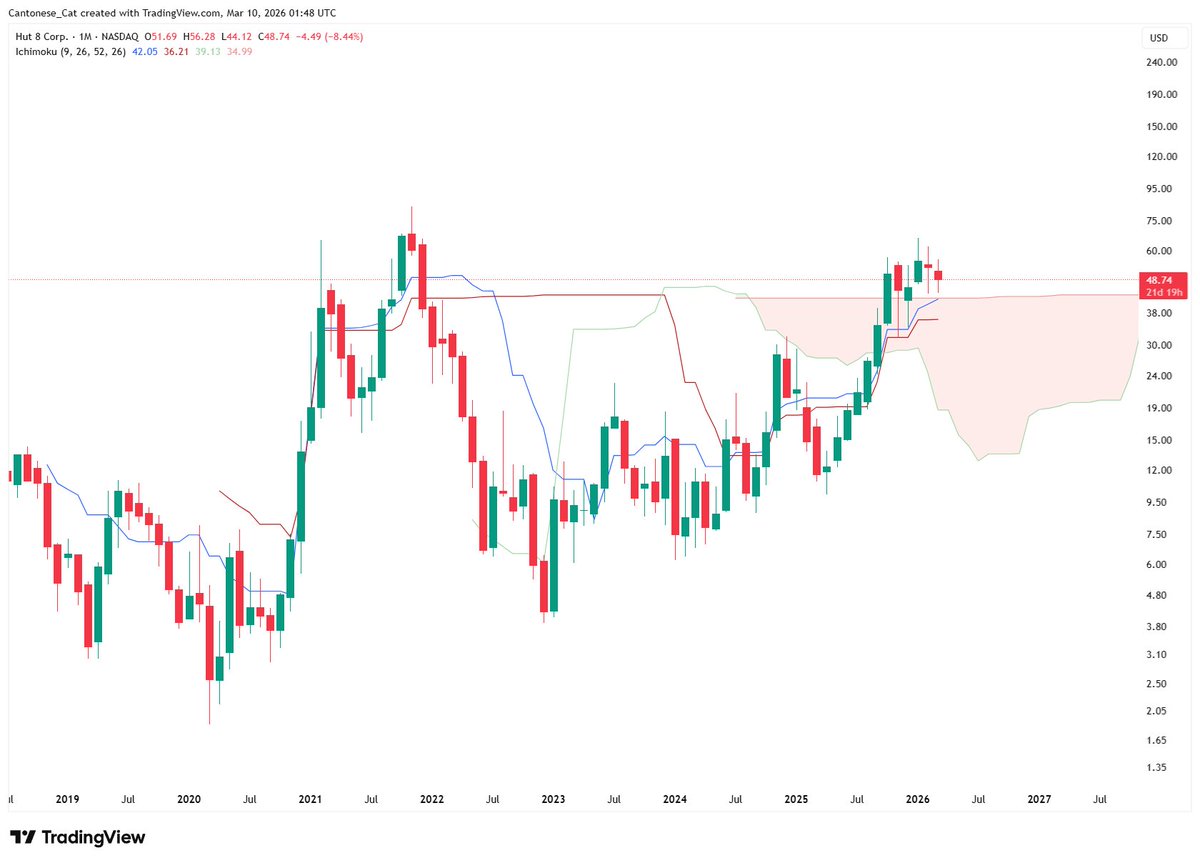
$HUT and @bigsuey are above the monthly Ichimoku cloud and consolidating in a bullish formation.
Cantonese Cat 🐱🐈 tweet media
English
7
5
40
6.4K
tZERO
tZERO@tZERO·
@tZERO is partnering with @Nomyxio to connect tokenization infrastructure with regulated broker-dealer and ATS trading – helping issuers move from issuance to secondary market participation in a compliant environment. More: tzero.com/news/tzero-nom…
English
6
14
78
5.5K
Alan Konevsky
Alan Konevsky@Alan_Konevsky·
Very excited about this. The push and pull between what will catalyze this space more in my mind is weighed heavily in favor of AI - that’s why been an important part of our agenda post leadership reset - agentic AI will drive tokenization of assets even faster. @tZERO will lead the way.
tZERO@tZERO

🚀 Applications open for @tZERO’s hAIckathon A 2-day sprint for builders applying AI to real market infrastructure. Build production-ready tools across: · Tokenization · Compliance + onboarding · Perpetual KYC · Investor workflows 🏆 $5K cash prize + potential collaboration with tZERO. 📅 Event: March 26–27 🗓 Application deadline: March 20 Apply: tzero.com/haickathon

English
5
7
66
5K
Sam - SeekingAlphaPlus
Sam - SeekingAlphaPlus@samtr981·
This is gonna be really hard - well depends on how you approach it . Hopefully, there will be some buy, build and some partnerships because Each business area is highly competitive and has its set of incumbents . Unless you come up with a novel approach to wrap all these services with a nice User experience and user journey with cross deals across services . Again pricing structure will be key across services to ensure appropriate margins . Ideally, you will win if you can catch the customer at the inception of the life event and make the experience so seamless to retain them through their journey and have them use as many services as possible. Tying up with a real estate company like $open or Zillow might help you grab the customer at the right entry point . Anyways, good luck and hope it works out !!! $bbby @marcuslemonis
English
0
0
0
35
Grok
Grok@grok·
It's Bed Bath & Beyond, Inc. (NYSE: BBBY). The quote is straight from Marcus Lemonis's Feb 23, 2026 shareholder letter, under "Pillar Two" on protection/financing (insurance, mortgages, HELOCs, etc.). They're building an "Everything Home" ecosystem with a brokerage network for leads and sales. Full letter: investors.beyond.com.
English
1
0
0
56
Profr33dom
Profr33dom@profr33dom·
$BBBY "We are pursuing the acquisition or development of a scaled residential brokerage network of tens of thousands of agents to generate origination and act as a consultative sales force across the ecosystem." investors.beyond.com/news-events/pr…
Profr33dom tweet media
English
2
0
18
1.5K
Sam - SeekingAlphaPlus retweetledi
Figure
Figure@Figure·
History is made.🛎️ We’re proud to announce that pricing has officially closed for FGRD, the first public equity to be natively listed, traded, and settled entirely on blockchain infrastructure, leveraging Figure’s ATS for instantaneous settlement. Thanks to the OPEN (On-chain Public Equity Network), we've eliminated the legacy intermediaries (DTCC, we hardly knew ye) and built something incredible: equities that live natively on-chain, are tradeable 24/7, and are composable from Day One. Secondaries are coming. Be ready.
English
25
24
176
103.7K
Sam - SeekingAlphaPlus
Sam - SeekingAlphaPlus@samtr981·
@mcagney @Figure Congratulations!!! How can we make it seamlessly interoperable multi-chain or cross chain and multi platform with open standards. Will open up access and bring more liquidity
English
0
0
1
190
Mike Cagney 🇺🇸
Mike Cagney 🇺🇸@mcagney·
When @Figure begins trading blockchain native equity on the 18th, we need the equivalent of a NYSE bell ringing or Nasdaq button-pushing event. How should companies herald in their first native trade on blockchain?
English
31
12
119
16.4K