npj@TiltingatM3
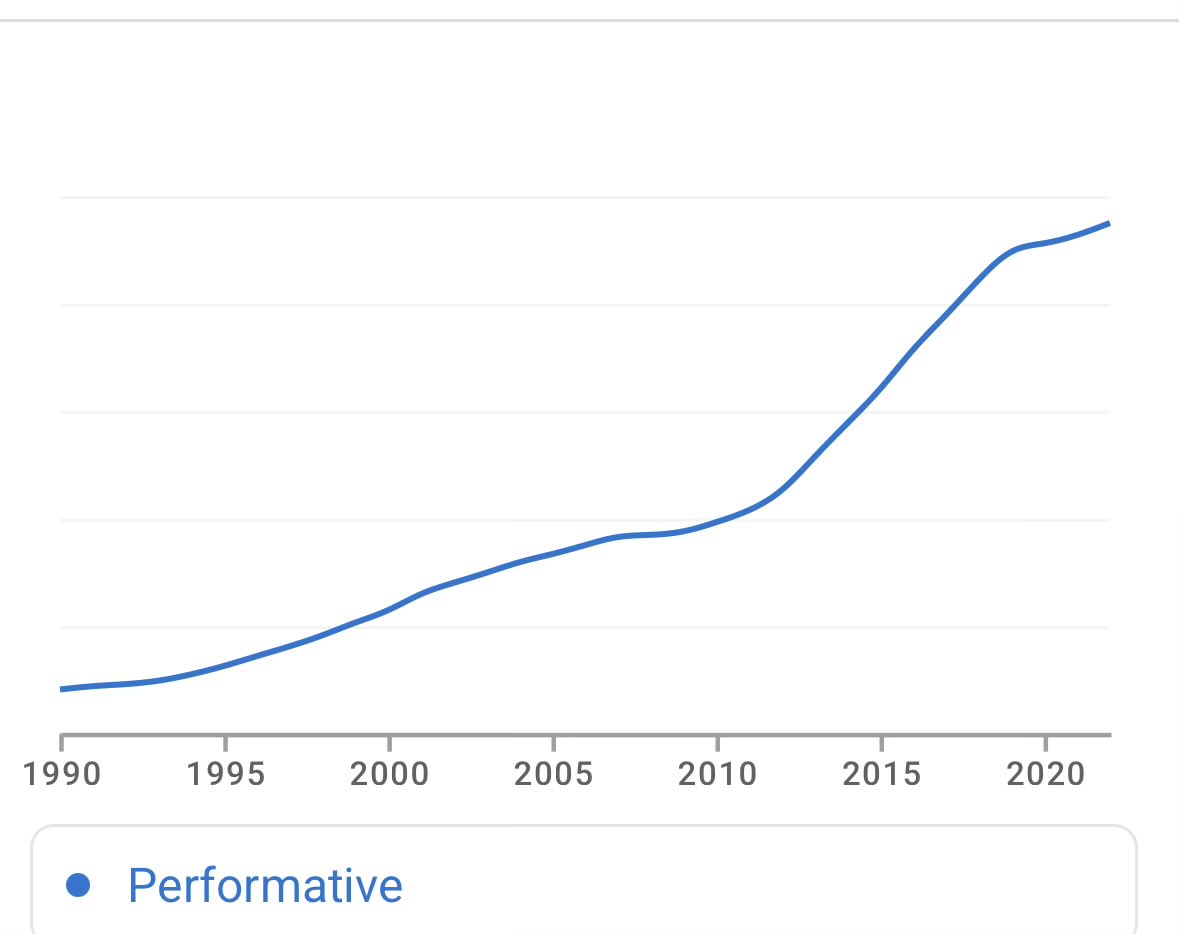
Toozology is a difficult and esoteric science, and so it must be approached with the greatest care. But the Toozologists have not reached their goal, a true and correct interpretation of Tooze. They have not appreciated his recent contribution at the right hermeneutical level. Questions have been registered pragmatically—is this ‘blueprint’ feasible? if feasible, would it actually be ‘leadership’ (ie hegemony)? The extent to which this represents another major revision to his thinking has not been seen. In particular, it must be placed within the context of two other Toozological observations: first, his soft spot for Kindleberger’s hegemonic transition theory of the 1930s; second, his hatred for Arrighi and disdain for the neo-Gramscian idea that the history of capitalism can be narrated as a sequence of hegemonies, such that we could characterize the contemporary period as an “interregnum.” Hitherto these positions have been reconciled by observing the “radical novelty” of the early twentieth century—both imperialism and the problem of attempting to construct a global order “after imperialism” were radically novel problems; ditto America, a self-contained continental superpower protected by two oceanic moats. There was a transitional crisis caused by the failure of liberal hegemony in the early twentieth century, but this was because of that conjuncture’s radical novelty. The uniqueness of that conjuncture means the ‘interregnum’ concept developed to explain it is not appropriate for our time. There will be no hegemonic transition from America to anyone else, Tooze had maintained; instead we have polycrisis. Now, he has a blueprint for How China Could Still Win hegemony. Apparently, then, whether or not we are living in an interregnum has not yet been determined. It is an open question. It may be the case, according to Tooze’s recent column, that we do in fact have a hegemonic transition on our hands, if only the CCP wills it. Thus we draw the conclusion that there are other uniquenesses that can lead to a conjuncture correctly being characterized as a hegemonic transition. The early twentieth century uniqueness was not itself unique. Whether there were also nonuniquely unique circumstances characterizing the conjuncture during which the Italian city states and the Dutch Republic came into capitalist leadership roles appears to be equally open to further research and investigation within the bounds of correct Tooziological doctrine as a result of this innovation.