

samuz 🐝
329 posts

samuz 🐝
@samz_syd
startup founder, investor, father
Sydney, New South Wales Katılım Nisan 2016
236 Takip Edilen113 Takipçiler

Interesting idea Mark. Two points I can immediately think of:
1) Does this tax only apply if the data centre is in the US? If compute from Australia is not subject to this tax, the US will be less competitive in this sector, and more data centres will be built in other countries.
2) This approach will make open source models more competitive, assuming the tax will not be extended to cloud providers.
English

We should federally tax Tokens at the Provider level.
Not a lot. Less than 50c per million tokens.
It will accomplish 4 things (at least )
1. It will push the big AI players to optimize tokenization, caching , routing and localization
Which will
2. Reduce energy usage. Saving them in energy costs more than what they paid in tax and reducing strain created by the growth in energy consumption
Which will
3. Generate maybe 10 billion dollars a year to start, but over the next ten years could grow 30x to 100x
Which will
4. Create a source of funding to pay down the federal debt or deploy, in response to the things AI brings that we don’t expect or don’t like
At some point the models will pass it on to customers. Of course. That’s ok. Customers will have the ability to choose between providers. Or to do everything using open source models locally.
Thoughts ?
English
I went through X’s newly open-sourced algorithm (with the help of AI to actually read the codebase). Here’s what changed and what to do about it.
What’s actually different:
•The 2023 algorithm was hand-coded rules you could game. That system is gone.
•It doesn’t predict one “relevance score.” It predicts 15 separate probabilities per post.
•11 positive: like, reply, repost, quote, click, profile click, video view, photo expand, DM share, dwell, follow author.
•4 negative: not interested, mute, block, report. These subtract from your score.
•Each post is scored in isolation. No riding viral waves, no batch tricks.
•An author diversity penalty damps your later posts if you cluster them.
•No hashtag magic, no “optimal time” baked in. The model only cares about engagement patterns.
What to actually do:
•Optimize for dwell, share, and profile click — not likes. They’re harder to fake, so they’re worth more.
•Write posts that make people stop and read. Dwell is a signal.
•Write posts people DM to a friend. Hot takes get liked. Useful things get forwarded.
•Every post stands alone. No warm-ups. A stranger should get value without scrolling your timeline.
•Space your posts. 3–4 across the day beats 10 in a burst.
•Don’t burn your existing followers for stranger reach. One mute from a follower likely costs more than several stranger-likes gain.
•Reply with substance or don’t reply. Drive-by “great post!” is exactly what the negative weighting catches.
•Use media intentionally. Video views and photo expands are separate scoring paths.
•Fix your profile. Profile clicks are tracked — don’t waste the signal on an empty bio.
•Ignore anyone quoting exact weights. The coefficients aren’t public. “DM shares are worth 12x a like” is a guess.
Qualitative summary: the new algorithm rewards being genuinely useful to a specific audience and punishes engagement farming harder than the old one. The hacks that survive are mostly just “write better posts, post consistently, don’t bait your own followers.”
Elon Musk@elonmusk
The latest 𝕏 algorithm has been published to GitHub github.com/xai-org/x-algo…
English

Question on my mind right now: What role is least impacted by AI (so far)?
Lenny Rachitsky@lennysan
Engineers don't write code. PMs are shipping to production. The design process is dead (there's no time). Marketing can ship their own campaigns. SDRs are being replaced by AI. Everyone's a data scientist now. What a time to be alive.
English
samuz 🐝 retweetledi

Meet @retrimentum from @upshot_cards
From selling World of Warcraft Gold, to building prediction markets on Base in the form of digital trading cards
This is his story ↓
English

Really cool. I spent years building voice AI, and I can see that to achieve these use cases where the model doesn't natively support them, you have to build a complex harness to achieve a part of this.
Now I'm wondering whether good models in a different paradigm will erase the need for any harness. I also see this trend for coding agents too.
Thinking Machines@thinkymachines
People talk, listen, watch, think, and collaborate at the same time, in real time. We've designed an AI that works with people the same way. We share our approach, early results, and a quick look at our model in action. thinkingmachines.ai/blog/interacti…
English
Very cool & interesting.
Still mainly using md files, but multidimensional context within project creates too many files I rarely read.
One use case I have done myself before, for design systems, md didn't visualize the look well, so I switched to HTML: easy to read/understand. Maybe all READMEs should be HTML too?
Cool paradigm: may not go mainstream, but worth trying for tasty AI context/knowledge management in projects.
Thariq@trq212
English
@icanvardar Another thesis is that the apps that can solve a common problem don’t require change management already exit.
English

most people don’t want to change their habits
only a small percentage actually can
but most apps are still built as if people are ready to change
that mismatch is why many products fail
English

I thought about this too. IMO the starting point would be something they are familiar with using AI image, such as:
1. A storybook
2. A travel journal
3. A "how-to" kind of visual document
Alternatively, could also guide the to write a song using Suno or ElevenLabs. That would be really cool as well.
English

I want to get my 8 year old to start building stuff with agents that she actually can share with her class and teachers. Any ideas?
Maybe she can make her first dollar online too.
English

@stats_feed Misleading stats - it’s 85% American movies in AU market. Indian movies and Australian movies are both niche
English
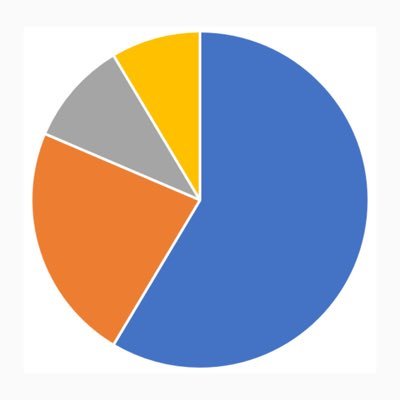
🇮🇳 Indian films outperform Australian ones at the Australian box office.
English

this week I met several non-tech founders who Claude-coded $1M ARR businesses
English
Real estate + AI video, smart
Justine Moore@venturetwins
Real estate agents have discovered AI video and it’s glorious (from dawn.forkenbrock on IG)
Italiano
samuz 🐝 retweetledi
linkedin having no real competitor is honestly kind of sad
not because linkedin is bad
but because it means nobody is even trying to rethink how professional identity on the internet should work
English
@TheGeorgePu Hope you have American customers. At least they are paying for their own electricity 😆
English

I'm a Canadian founder building on AI.
Model: trained in San Francisco.
GPUs: designed in Santa Clara, made in Taiwan.
Cloud: running in Virginia.
The only Canadian thing about my stack is me.
There are American AI companies.
The rest of us are billing addresses.
English
Great to see some well-produced AI films at UNSW. My fav is the last one (can’t remember the name) - zero cinematic effects, just a group of friends chatting over dinner.
- 5 films
- Around 10-15 mins each
- Scripts: Claude and ChatGPT
- Image: mainly NanoBanana and some Midjourney (these films were made before Image 2.0)
- Video: Kling, Veo 2 and Seedance 2
- Music: 80% Suno, 20% ElevenLabs

English

@quxiaoyin PMs' roles are rapidly evolving - what @_catwu shared about how PM roles are changing within Anthropic is an inspirational pathway. I think what you're suggesting is heading in the same direction
English

Everyone's saying product managers are screwed.
I keep seeing articles like this one by Lenny where VCs think PMs are heading for massive disruption. Another piece straight-up called product management a "sunset industry."
As someone who wrote a PM bestseller eight years ago, I'm conflicted.
The articles aren't wrong about some things. Most PM work is just translating between teams and doing alignment - stuff AI can absolutely do better. AI has all the Slack messages, meeting transcripts, everything. Why do we need humans for alignment?
Plus teams are smaller now anyway. Companies that used to need 1-2 PMs for 20 people now run with 2-person teams. Who needs a PM when there's barely anyone to manage?
I agree - traditional PM work is toast.
But here's where it gets interesting. Everyone agrees that "builder PMs" who can take ideas from concept to live product will be incredibly valuable.
So who becomes these super builders? PMs learning to code? Or engineers finally getting to build what they want without PM interference?
My take (and yes, I'm biased): PMs have the edge. Product sense matters more than coding skills when AI handles implementation.
My engineer friends disagree. They think I'm just another liberal arts major who couldn't handle real technical work. They believe engineers will naturally become better builders than PMs scrambling to learn tech.
Maybe they're right. But I still think understanding user problems beats understanding compilers.
The winners will be people who think like founders - regardless of whether they came from PM or engineering.
Because AI makes technical execution easier. It doesn't make knowing what to build any easier.
#ProductManagement #AI #Engineering #Startups #TechCareers #FutureOfWork #Builders
English