sanket

5.7K posts

sanket

sanket

@sanketp

Bangalore, India Katılım Nisan 2008
186 Takip Edilen499 Takipçiler
sanket
sanket@sanketp·
On the Banks of the Pampa: An Ecocentric Reimagining of the Past Reflections on the ancient roots of state violence and the enduring cost of development ruminata.com/p/on-the-banks…
English
0
0
0
31
sanket
sanket@sanketp·
@arrac We can't effectively use the "market forces" argument, because for all practical purposes this is a duopoly like so many other industries in India. And there are high entry barriers.
English
1
0
0
23
sanket
sanket@sanketp·
@arrac I'm sure we'll have anecdotes across the spectrum. I also don't have a problem with gig economy per se. But we have to address the issues of potential for exploitation, minimum wage, and weigh it against the high job risk, etc.
English
1
0
0
18
sanket
sanket@sanketp·
I can think of any number of systems that were fundamentally unfair despite creating a large number of jobs, sustaining and thriving for centuries, and in which people “chose” to work — well, because what else could they do?
Deepinder Goyal@deepigoyal

Zomato and Blinkit delivered at a record pace yesterday, unaffected by calls for strikes that many of us heard over the past few days. Support from local law enforcement helped keep the small number of miscreants in check, enabling 4.5 lakh+ delivery partners across both platforms to deliver more than 75 lakh orders (all-time high) to over 63 lakh customers during the day. This happened without any additional incentives for delivery partners - NYE does see higher incentives than usual days and yesterday was no different than the past NYE days. I am grateful to local authorities across the country and to our teams on the ground for clear enforcement and swift coordination. Most importantly, thank you to our delivery partners who showed up despite intimidation, stood their ground, and chose honest work and progress. One thought for everyone: if a system were fundamentally unfair, it would not consistently attract and retain so many people who choose to work within it. Please don’t get swept up by narratives pushed by vested interests. The gig economy is one of India’s largest organised job creation engines, and its real impact will compound over time, when delivery partners’ children, supported by stable incomes and education, enter the workforce and help transform our country at scale.

English
1
0
0
132
sanket
sanket@sanketp·
@hallidude The poor and oppressed were "invisible" all these centuries and only now we are becoming aware of them? Come now. There are deep rooted societal issues none of which are the problems of Zomato or others. But to almost equate gig economy with emancipation of the oppressed? Wow.
English
0
0
1
30
sanket
sanket@sanketp·
Forget banning or regulating gig economy but this is just delusional! Wow.
Deepinder Goyal@deepigoyal

Last one on this topic, and I have been holding this in myself for a while. For centuries, class divides kept the labor of the poor invisible to the rich. Factory workers toiled behind walls, farmers in distant fields, domestic help in backrooms. The wealthy consumed the fruits of that labor without ever seeing the faces or the fatigue behind it. No direct encounter, no personal guilt. The gig economy shattered that invisibility, at unprecedented scale. Suddenly, the poor aren't hidden away. They're at your doorstep: the delivery partner handing over your ₹1000+ biryani, late-night groceries, or quick-commerce essentials. You see them in the rain, heat, traffic, often on borrowed bikes, working 8–10 hours for earnings that give them sustenance. You see their exhaustion, their polite smile masking frustration with life in general. This is the first time in history at this scale that the working class and consuming class interact face-to-face, transaction after transaction. And that discomfort with our own selves is why we are uncomfortable about the gig economy. We want these people to look our part, so that the guilt we feel while taking orders from them feels less. We aren't just debating economics. We are confronting guilt. That ₹800 order might equal their entire day's earnings after fuel, bike rent, and app cuts. We tip awkwardly, or avoid eye contact, because the inequality is no longer abstract. It's personal. Pre-gig era, the rich could enjoy luxury without moral discomfort. Labor was out of sight. Now, every doorbell ring is a reminder of systemic inequality. That's why debates explode. It's not just policy. It's emotional reckoning. Some defend the system (“they choose it”), others demand change (“this isn't progress, its exploitation”). And here’s the uncomfortable twist: the unsaid ask of clumsy ‘solutions’ isn’t dignity. It is about returning to invisibility. Ban gig work and you don’t solve inequality. You remove livelihoods. These jobs don’t magically reappear as formal, protected employment the next day. They disappear, or they get pushed back into the informal economy where there are even fewer protections and even less accountability. Over-regulate it until the model breaks, and you achieve the same outcome through paperwork instead of slogans: the work evaporates, prices rise, demand collapses, and the people we claim to protect are the first to lose income. And then what happens? The rich get their old comfort back. Convenience returns without faces. Guilt dissolves. We go back to clean abstractions and moral posturing from a distance. The poor don’t become safer, they become invisible again: back in cash economies, back in backrooms, back in shadows where regulation rarely reaches and dignity isn’t even debated. The gig economy just exposed the reality of inequality to the people who previously had the luxury of not seeing it. The doorbell is not the problem. The question is what we do after opening the door. Visibility is the price of progress. We can either use this discomfort to build something better (which we keep doing continuously as delivery partners are our backbone), or we can ban and over-regulate our way back into ignorance. One of those choices improves lives. The other simply helps the consuming class feel virtuous in the dark.

English
1
0
0
66
sanket
sanket@sanketp·
@arrac Sure. Valid points. But my problem right now is the constant rationalization and the self congratulatory stance they indulge in. And who are these “miscreants”? People asking for better working conditions?
English
1
0
0
21
Aditya Rachakonda
Aditya Rachakonda@arrac·
@sanketp I think it is also up to the society and the systems to create better jobs. I feel far too much blame goes onto the (low income) job providers and very little into job creation. More often than not as society we look up to an inefficient job creator like the govt for new jobs.
English
1
0
0
38
sanket
sanket@sanketp·
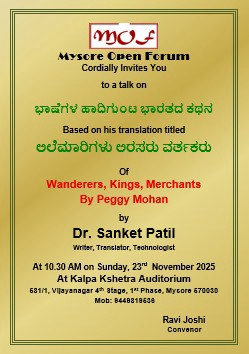
The talk will be bilingual, with Kannada as the primary language. If you are in Mysore and interested in linguistics, history, or translation—or if you just want to say hello—do join us. (2/2)
English
0
0
0
47
sanket
sanket@sanketp·
On Sunday in Mysore, I'll be giving a talk on Peggy Mohan's "Wanderers, Kings, Merchants" and my Kannada translation ಅಲೆಮಾರಿಗಳು ಅರಸರು ವರ್ತಕರು; the cultural (and political) imperative of bringing such non-fiction into Kannada, and my journey through its challenges. (1/2)
sanket tweet media
English
1
0
0
164
sanket
sanket@sanketp·
From 'zero-sum thinking' to 'groupthink' and 'confirmation bias,' cognitive shortcuts are fueling an argumentation crisis. In my new essay, I explore how these false dichotomies damage our discourse and why we must reclaim nuance. konaru.org/p/false-dichot…
English
0
0
0
30
sanket
sanket@sanketp·
The Unheeded Story of the Islands. In this essay, I explore how colonization, rewriting of history, and tourism threaten Andaman’s indigenous peoples and ecology as I travelled with @pankajsekh's book. What stories are lost? konaru.org/p/the-untold-s…
English
0
1
3
126
sanket
sanket@sanketp·
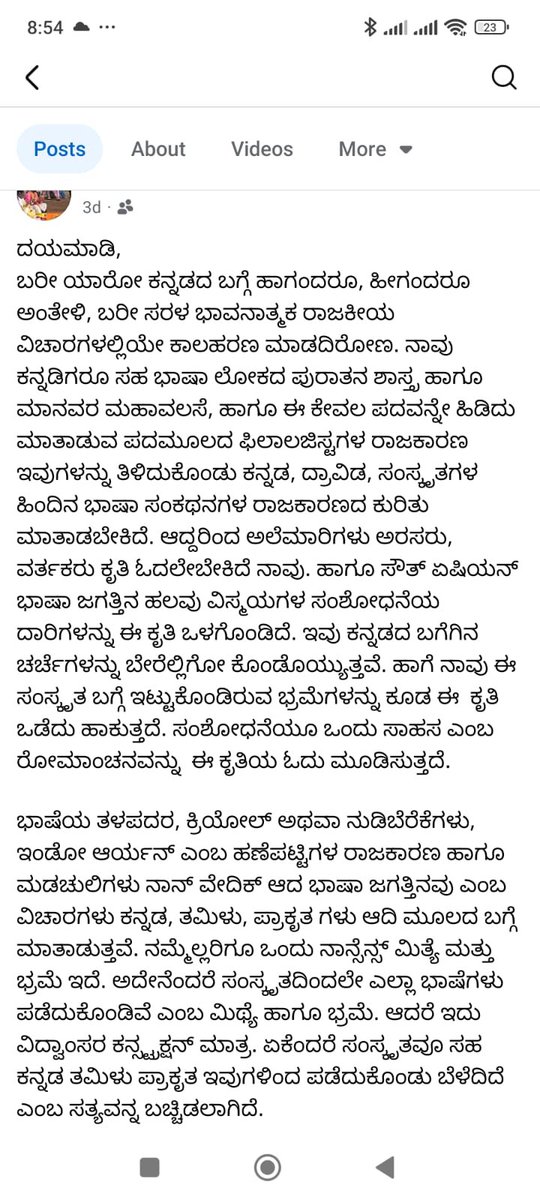
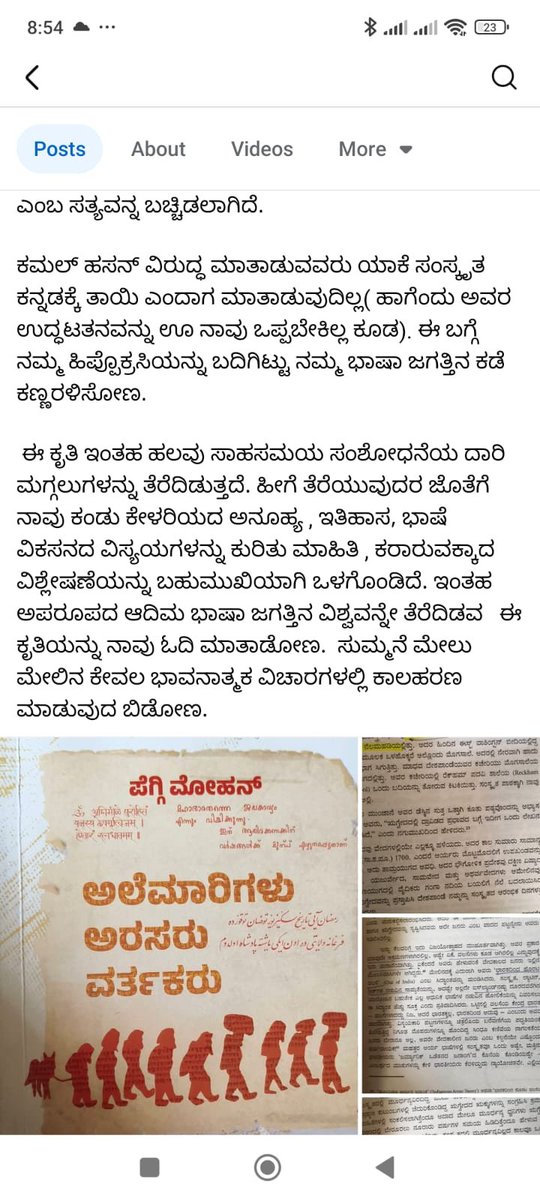
A friend sent these screenshots. Such a pleasant surprise on a relaxed Sunday morning! The book seems to be making headway and finding its small niche. Here's hoping it can spur healthy and engaging discussions in Kannada (without resorting to dogmatism).
sanket tweet mediasanket tweet media
English
0
0
0
60
sanket
sanket@sanketp·
(little money left with producer after paying him + Pigeonhole Principle). In his most recent movie (can't be bothered to look up its name), among his numerous roles he also plays a historian / linguist. Whatay prolific multi-speciality multi-cuisine actor if there was one! 2/2
English
1
0
1
65
sanket
sanket@sanketp·
Kamal Haasan, one of the most well known actors since time immemorial (while it's hard to establish a definite timeline, perhaps it's safe to say he's been active since the early Sangam period) is also well known for playing multiple roles in his movies 1/2
English
1
0
1
81
sanket
sanket@sanketp·
Dear genius startup founders, “tax paying” patriots, “meritocrat” mavericks, champions of the cosmopolitan (well, anyone for that matter) who want to leave Bangalore and relocate to the real India — my skills and services are available to you, for free. I’ll help you pack.
English
0
0
0
69
sanket
sanket@sanketp·
India is much more than Hindi, Hindu, Hindustan. Congratulations Banu Mushtaq and Deepa Bhasthi! And thank you! The rest of us shall bask in your glory for some time now. 4/4
English
0
0
0
29
sanket
sanket@sanketp·
This is something Kannada deserves given its rich literary history and a culture of pluralism. The Kannada language and the people have also been due for a big win on the world stage since a very long time.
English
6
0
1
46
sanket
sanket@sanketp·
There’s always a bit of hollowness associated with awards even if the quality of the work for which it is awarded itself is solid gold. It’s just in the nature of awards. However, we must crlebrate this and other such awards. 1/
sanket tweet media
English
1
0
1
67