Sardar Sami

9.2K posts

Sardar Sami banner
Sardar Sami

Sardar Sami

@sardsami07

Always search for change, respond to it and exploit it as an opportunity | Web3 researcher

Katılım Şubat 2023
1.3K Takip Edilen2.2K Takipçiler
Bemma
Bemma@Bemma_1·
Most people hear “firewall” and think restriction. But in systems like @quipnetwork, it’s something else entirely. It’s structure. Because once you move from simple users to distributed nodes, the real problem isn’t participation it’s uncontrolled participation. Too much noise breaks coordination. Too much freedom without structure breaks reliability. So the firewall layer becomes the quiet filter in the background not to block people, but to make sure what enters the system actually contributes to it. Clean inputs. Valid nodes. Stable compute flow. That’s what makes the network scalable without turning messy. It’s easy to overlook this part because it doesn’t feel “exciting”. But this is exactly where real infrastructure is built not in hype cycles, but in the rules that keep everything running when scale hits.
Bemma tweet media
English
43
1
38
115
An0i🍁
An0i🍁@Anoi_aceii·
AI agents are becoming more connected but @TheARCTERMINAL is focused on making them more sovereign. As platforms race to build social layers where autonomous agents interact, arc terminal takes a different approach: your private agent, your encrypted memory, your keys.
An0i🍁 tweet media
SAMSOL@samuelonweb3

Afternoon CT @TheARCTERMINAL uses a modular architecture where different features can function independently yet connect seamlessly. This design allows continuous upgrades without disrupting the overall system. It gives flexibility for future expansions and new integrations. As a result, the platform stays adaptable and scalable as Web3 evolves.

English
30
2
29
128
Sardar Sami
Sardar Sami@sardsami07·
@Glimx_ Stablecoin funding + clear dashboards removes a lot of friction
English
0
0
0
2
GLIMX (winning arc)
GLIMX (winning arc)@Glimx_·
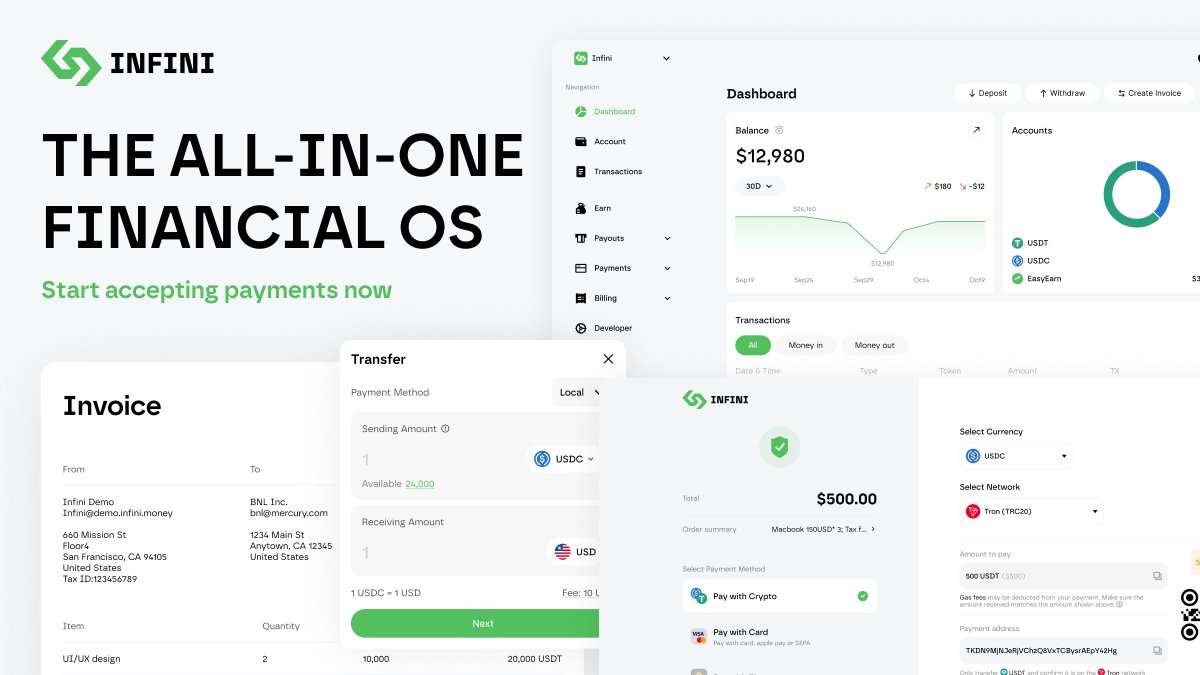
I simplified team expenses with one smart move. I registered an INFINI Business account and issued the INFINI Corporate Card. My team now pays directly for ChatGPT, Claude, cloud tools, ads, and SaaS subscriptions. Every spend shows instantly on the dashboard with clear categories and easy controls. No more reimbursement headaches. We fund with stablecoins and use Batch Payout for fast payments to creators and freelancers. If you run a remote team as a founder, operator, agency, or Web3 company, this works well. Register here: join.infini.money/business/XxUUd… Complete KYC and apply for the INFINI Corporate Card today. Follow @0xinfini @christianeth #infinicard
GLIMX (winning arc) tweet media
English
47
0
43
3.6K
Evan Jawad
Evan Jawad@evanjawadx·
Cashback finally moving from “coming soon” to actually hitting wallets. Looks like @useTria is wrapping up season 2 and starting distributions soon, with payouts expected around May 12 in USDC or USDT. Good to see they’re taking time to calculate everything properly instead of rushing it out half done. If you’ve been using the card, this is basically your activity turning back into real value. Spend → earn → get rewarded back. Feels like a small thing, but this is what makes the whole system more usable in the long run.
Evan Jawad tweet media
English
29
0
25
2.2K
Sunflower🌻
Sunflower🌻@Wisteria08·
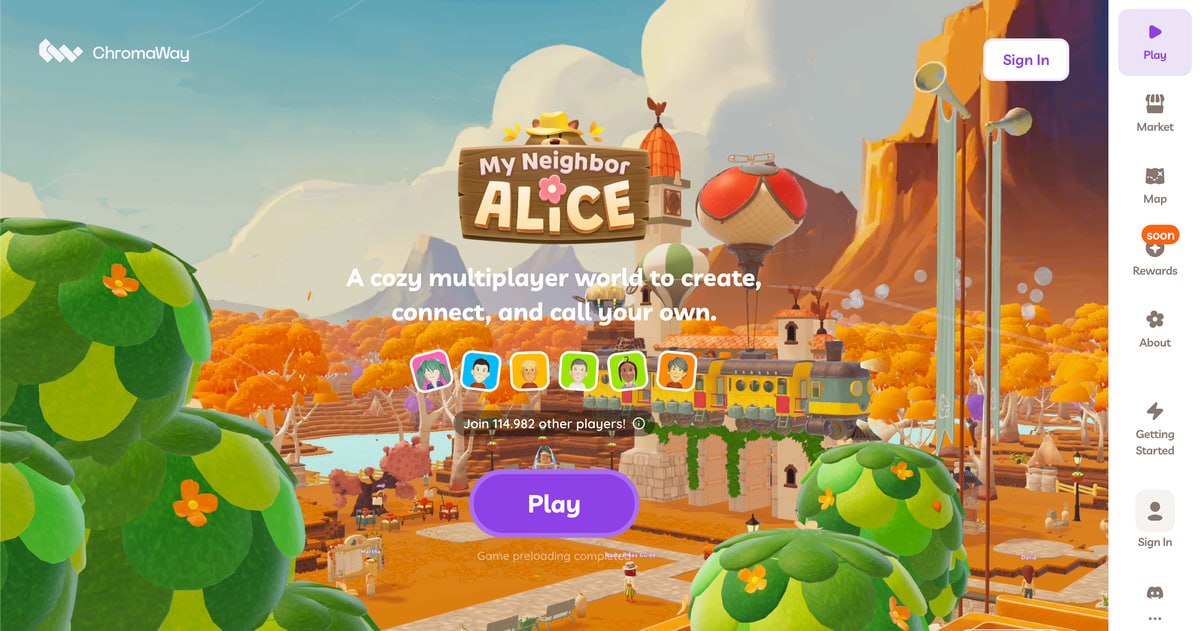
In @MyNeighborAlice , land isn’t just a decorative feature or a place to build it’s a core part of what ownership means inside the game. When you acquire land, you’re not borrowing space from the game’s servers. It’s an asset tied to you, something you control and decide how to use. That shift matters, because it moves players away from the usual model where everything ultimately belongs to the platform, and toward one where your time and creativity actually accumulate into something you hold. That ownership becomes more meaningful the moment you start using it. Land acts as your base for activity a place to gather resources, craft items, and shape your own corner of the world. It also changes how you interact with others, because you’re no longer just passing through the game, you’re participating in it. What you build and produce can connect with other players, creating a loop where individual effort feeds into a broader ecosystem. And that ecosystem has value. Through the in-game economy, players can trade using the ALICE token, turning gameplay into something that carries weight beyond progression alone. It’s not just about completing tasks or unlocking features it’s about contributing to a system where your actions can be exchanged, recognized, and built upon. Underneath all of this is Chromia, which handles how these assets are recorded and maintained. Your land isn’t just stored in a game database; it’s secured as a digital asset connected to your wallet, giving it a level of persistence that typical in-game items don’t have. That said, ownership doesn’t exist in isolation. The experience is still shaped by the game’s design, updates, and rules. What you can do with your land evolves as the world itself evolves. In the bigger picture, MyNeighborAlice reflects a broader shift in gaming one where players aren’t just users of a world, but participants with real stakes in it. It’s less about playing inside a system, and more about having a place within it. You should check this out myneighboralice.com/?ref=053177729e
Sunflower🌻 tweet media
Sunflower🌻@Wisteria08

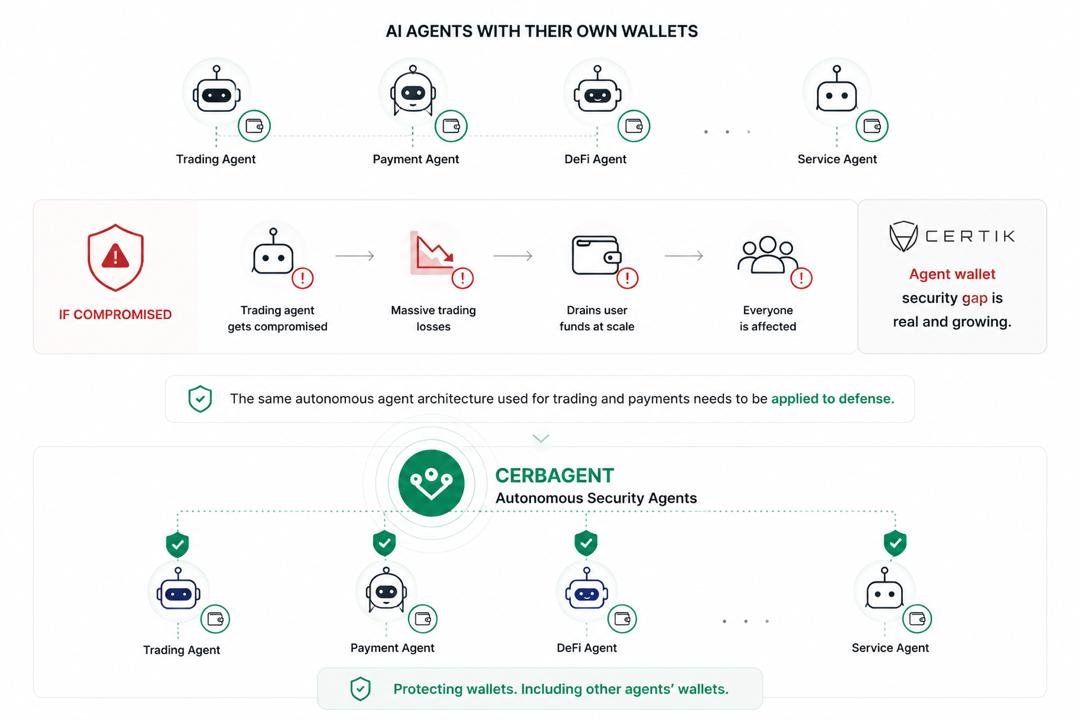
Hardware wallets have earned their reputation. They lock your private keys away from the internet, and that alone prevents a huge class of attacks. But over time, you start to see the limitation they protect access, not judgment. And in today’s Web3 environment, attackers aren’t trying to break into your wallet anymore. They’re trying to get you to open the door yourself. It’s no longer about brute force or technical exploits. It’s approvals that look harmless, signatures that feel routine, and interactions that blend in with normal usage. A single click can grant permissions that outlive the moment, quietly exposing assets long after the transaction is confirmed. That’s where things break down. Because even with a hardware wallet, you’re still the final decision-maker. The device shows you the transaction, but it doesn’t interpret intent. It won’t warn you if a contract behaves abnormally, or if an approval you’re about to sign could be reused in ways you didn’t anticipate. So the risk shifts from “can someone access my keys?” to “can I fully understand what I’m approving?” That’s the layer most setups are missing. @CerbAgent approaches security from that exact angle. It doesn’t compete with hardware wallets it complements them. Instead of focusing only on storage, it analyzes behavior, simulates outcomes, and flags risk before a signature turns into a loss. It’s a subtle shift, but an important one: from protecting keys to protecting decisions. And that’s why more users are starting to frame it differently. Not as a replacement, but as an intelligence layer that sits on top of what they already trust. “I use a hardware wallet for custody, but that doesn’t stop me from signing something dangerous. CerbAgent adds context, $CERB is my bet on smarter security.” Because in a space where most damage comes from valid actions with unintended consequences, understanding what you’re doing matters just as much as securing how you store it.

English
47
2
45
173
Brayn
Brayn@web3brayn001·
most people treat airdrops like a timing game wait… watch… then rush in when everyone else does I used to do the same but looking at MyNeighborAlice, that approach feels off I was actually going through how land works in Alice seeing how people already own spaces and build on them and that’s where it flipped for me this isn’t really about catching the airdrop it’s about being inside early enough to matter because the people who benefit most aren’t the fastest they’re already participating owning land building interacting with the world especially now with the Spring Airdrop (50,000 $ALICE) live it feels less like a reward and more like a filter I got in here myneighboralice.com/?ref=0480fa212d be honest if you had land in Alice right now would you actually build something on it or just wait and hope the airdrop carries you?
Brayn tweet media
English
107
31
205
487
Alok Shukla
Alok Shukla@Alok7765·
By now you all have definitely heard the name @MyNeighborAlice. Let me tell you what it actually is. It is a fully on-chain multiplayer builder and farming game built on Chromia blockchain. The world has 100,000 land plots where you can explore, craft unique NFTs, fish, trade, and build communities with real players. Ownership here is actually real. Your land and items are stored fully on-chain and belong to you completely. The economy runs on $ALICE covering rewards, trading, and governance all in one. No downloads needed. Just open your browser, go to myneighboralice.com, sign up, and you are inside the game in minutes. Chapter One is live on mainnet right now. Binance Launchpool Project of the Year 2021 and now a fully running world in 2026. This one is worth your attention 👀
Alok Shukla tweet media
English
54
2
60
305
Batuhan AKÇA
Batuhan AKÇA@Batuhan_Akca332·
one thing i like about @TheARCTERMINAL is that ANIMA doesn’t feel positioned as just one generic chat box that matters more than it sounds most ai tools treat every task the same way ask answer close tab repeat but web3 workflows are not all the same sometimes you just need a quick chat sometimes you need deeper research sometimes you need a plan before taking action that is why the chat / research / plan setup feels interesting to me it makes ANIMA feel less like a random assistant and more like a workflow layer that changes depending on what the user is trying to do small design choice maybe but in crypto, the gap between “i have information” and “i know what to do next” is usually where people get stuck arc seems to be building right around that gap
GIF
English
55
0
52
148
RIGM7
RIGM7@RIGAM07·
I used to think “audience” meant numbers on a screen. Then I watched a small creator with barely any followers build a tighter, more active circle than accounts 100x bigger. That’s when something clicked for me about @RallyOnChain . Rally doesn’t treat influence like a billboard you rent. It feels more like a neighborhood you co own. The value isn’t in how loud you can shout, but in how deeply people choose to stay. I’ve seen creators with modest reach create real gravity because ownership changes behavior. People don’t just consume, they participate. What stands out to me is how the system makes influence visible in a way that isn’t hidden behind platform algorithms. On chain signals don’t care about who you are off platform. They show what actually happens. It creates a strange kind of honesty. Not perfect, but harder to fake. And that shifts power quietly back to creators who build trust instead of chasing trends. There’s also something bigger here that’s hard to explain unless you’ve felt it early. Being part of Rally right now reminds me of arriving before a city is fully built. Streets are still forming, names aren’t final, but the people there already believe in what it could become. That shared belief becomes the brand itself. I don’t see the community as an add on. It is the product. Tools can be copied, features can be replicated, but a group of people who feel like they are building something together is much harder to reproduce. That’s where Rally feels different to me. Here’s the question I keep coming back to. If influence becomes transparent and community owned, what happens to the creators who built everything on borrowed platforms? Do they adapt, or does a new class of creators take their place? Curious how you see it. Is this shift overdue, or are we overestimating how much people care about ownership?
RIGM7 tweet media
English
43
2
39
86
Js Jubel
Js Jubel@setu901·
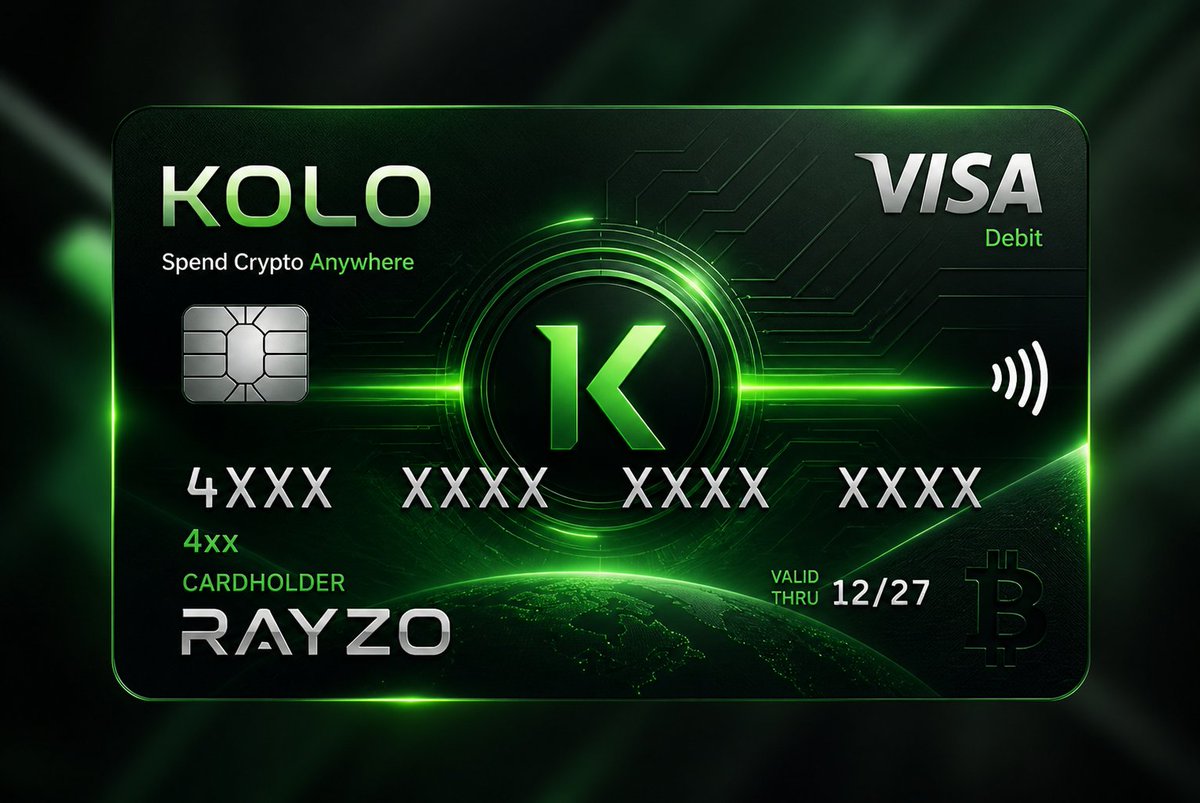
KoloHub: Turning Crypto Into Everyday Spending Power A lot of people assume @KoloHub is just another crypto card. That’s only part of the story. It’s a complete system that makes using crypto in daily life simple and practical. ✅ The Card (where crypto meets real life) - Spend BTC, ETH, USDT and more - Auto converts to your local currency at checkout - Works online and in store anywhere cards are accepted - Supports Apple Pay & Google Pay No need to swap first. It just works. Plus, you earn cashback on spending. ✅ The App (your control center) - Store and manage your crypto - Easy coin swaps - Track your balance and spending - Everything in one place No more jumping between apps. KoloHub is not just about holding crypto. It’s about actually using it.
Js Jubel tweet media
English
32
4
35
118
Sardar Sami
Sardar Sami@sardsami07·
@XHash3354 Web3 is already happening, most people are just late to notice
English
0
0
0
0
Hash X
Hash X@XHash3354·
The future isn’t coming… it’s already being built 🌆 While most people scroll, a few are stacking digital assets quietly 📊 Web3 is not just tech — it’s a mindset shift ⛓ Decentralizing finance, one block at a time. Are you watching… or participating? 👀 #Web3 #Crypto #Blockchain #DeFi #NFT #BuildInPublic
Hash X tweet media
English
63
2
80
229
Sardar Sami
Sardar Sami@sardsami07·
@BenokNFT MyNeighborAlice land ownership brings real asset control into gameplay
English
0
0
0
1
Chan.
Chan.@BenokNFT·
Owning land in MyNeighborAlice is not just about building. It represents a form of real digital ownership inside the game. Each piece of land exists as an asset that belongs to the player. You are not simply using it, you actually hold it and can choose what to do with it. This is different from traditional games where everything is fully controlled by the platform. Here, your land becomes your personal space where your progress, designs, and effort are stored and expressed. This ownership in @MyNeighborAlice also connects directly to how players participate in the game. Once you have land, you can grow resources, create items, and interact with other players in a more meaningful way. The game includes a player-driven economy where activities can be traded using Alice , allowing what you do in the game to have value within its ecosystem. Because of this, players are not only consuming content but also contributing to the world and its economy. The system is supported by Chromia, where ownership of land is recorded and secured. This means your land exists as a digital asset tied to your wallet, not just your in-game account. However, its full use and experience still depend on the game itself, including its rules and ongoing development. Overall, land ownership in My Neighbor Alice shows how blockchain can move games beyond simple entertainment into systems where players can own assets, create experiences, and actively participate in a shared digital world. myneighboralice.com/?ref=0be49961c5
Chan. tweet media
English
127
2
120
442
HLevi
HLevi@haiderlevi·
Nomisma is building for long-term value, not short-term hype. Most projects optimize for attention. quick launches temporary incentives short-lived liquidity @NomismaNetwork takes a different approach It focuses on sustainable systems instead of attracting capital for a moment Nomisma is designed to: → keep value productive over time → support evolving strategies → align incentives beyond quick gains with AI-driven allocation capital adapts as conditions change not just chasing trends but staying efficient this isn’t about fast cycles it’s about lasting impact Nomisma isn’t built for the moment it’s built for what comes next. @TheARCTERMINAL is simplifying how we navigate Web3. Most people don’t struggle with lack of options. they struggle with too many steps too many tools too many tabs too much friction Arc terminal is built to reduce that complexity bringing everything into a single, unified flow instead of jumping between platforms you can: → research opportunities → analyze data → execute actions all in one place with an adaptive AI layer the system understands context so you’re not repeating yourself or starting from scratch every time it’s not about adding more features it’s about making everything easier to use Arc Terminal isn’t just a tool it’s a simpler way to interact with Web3 Also, check out @3look_io The season 2 is on.
HLevi tweet media
English
37
2
86
191
Sardar Sami
Sardar Sami@sardsami07·
@Hiraweb3 Cross-chain support without migrations is a big advantage
English
0
0
0
2
Hira
Hira@Hiraweb3·
Quantum timelines are speeding up quickly, with moves by Google, involvement by Coinbase and integrations such as Falcon on Solana finally bringing the conversation to the fore. While most of the sector is still debating potential solutions such as forks or freezing assets, @quipnetwork appears to be adopting a different approach by developing protection measures that are effective immediately. It is already live across major chains such as Bitcoin, Ethereum and Solana without requiring consensus changes or asset migration. With over 500 nodes, open-source tooling and a growing node management layer, the idea of a 'worldwide quantum computer' is more than just branding - it's the direction they're actively building towards. While much of the crypto world is still in discussion mode, this looks more like execution.
Hira tweet media
English
67
2
88
3.1K
Sardar Sami
Sardar Sami@sardsami07·
@yep_ifad ZKsync Prividium targeting institutional constraints is a strong architectural shift
English
0
0
0
2
Ifad ⚡
Ifad ⚡@yep_ifad·
Traditional finance already operates at enormous scale, but the infrastructure behind it is still fragmented and inefficient. Commonly cited estimates place global deposits above $100 trillion, annual financial transaction flow in the hundreds of quadrillions, and correspondent banking requiring roughly $27 trillion in pre funded liquidity. None of this is structurally modern. The issue is not scale. It is architecture. Today’s system depends on intermediaries, delayed reconciliation, and capital trapped across multiple balance sheets just to keep settlement working. Even simple cross-border movement is a chain of trust assumptions, not a single verifiable state. If you look at the problem through a requirements lens, institutions cannot just “move onchain” using existing public chains. They need private execution for sensitive activity, compliance-ready control over environments, cryptographic verifiability without trusted operators, and seamless connectivity to liquidity and counterparties. Most systems fail at least one of these constraints. This is where @zksync positions Prividium differently. Prividium is a permissioned ZK Chain built as a Validium using the ZK Stack. Execution and data stay within institution-controlled environments, while zero-knowledge proofs and state commitments are anchored to Ethereum. The result is private computation with public verifiability, not compromise between the two. In practice, this enables regulated financial workflows with role-based access control, selective disclosure for auditors, and identity-aware systems, while still inheriting Ethereum’s settlement guarantees. Institutions like Cari Network (supporting 5 US regional banks with over $600B in deposits), BitGo, Deutsche Bank through Memento, and ADI Chain with First Abu Dhabi Bank are already exploring or deploying these environments, alongside 35+ institutions in evaluation. The comparison to today’s system is straightforward. Traditional finance coordinates through messaging layers and reconciles after the fact. Onchain systems verify state directly. One depends on institutions agreeing on records. The other depends on cryptographic proof. The final constraint is trust at scale. That is where ZK proofs matter. They allow verification without exposure, which is exactly what regulated systems have always lacked in blockchain environments. Within the ZKsync network, $ZK is the native asset with a fixed supply of 21 billion and no inflation. Governance is split across token holders, a security council, and guardians, forming a structured model for protocol evolution. As the network grows, fee logic and economic design are expected to evolve through governance rather than fixed assumptions. The direction is not ideological. It is structural. When systems at this scale move from reconciliation-based coordination to cryptographic settlement, capital efficiency and liquidity design change fundamentally. Prividium is one attempt to make that transition viable for institutions that cannot compromise on privacy, compliance, or control, while still needing shared settlement infrastructure. The shift is not about replacing finance. It is about rebuilding its coordination layer.
Ifad ⚡ tweet media
English
59
0
154
4.2K
Soayeb
Soayeb@soayeb_0x·
While most of the market is busy chasing hype, something more structured is quietly building. @alturax is bringing a different angle to yield with USDT0, pushing up to 37% APR, backed by actual economic activity rather than assumptions. The interesting part isn’t just the number. It’s how it works. Automated, strategy-based compounding handles everything in the background, no constant monitoring, no manual adjustments. And with it now accessible through Binance Wallet, the entry barrier is almost nonexistent. Feels less like speculation, more like a system designed to sustain.
Altura@alturax

37% APR on USDT0. Real yield from real economic activity. Stack unbeatable incentives while the Altura vault compounds your capital with strategies designed to perform in any market condition. Now available on @BinanceWallet.


English
69
0
71
168
SHAKIL khan sk
SHAKIL khan sk@DeFiShakil·
gXoob GM Web3 Fam @XOOBNetwork is launching new projects . Yesterday, a new project went live with a $5,000 reward pool. This is a good opportunity for you . Stay with $XOOB and keep improving yourself. xoob.link
SHAKIL khan sk tweet media
English
208
67
222
1.2K
RAYZO 🂱
RAYZO 🂱@rayhan_01_·
@KoloHub is making crypto feel more usable in daily life not just something you hold but something you can actually spend. With access to Visa networks in 150+ countries payments become much more practical. What stands out? It is the community. People are using it sharing real feedback and helping others understand how simple crypto payments can be. Less theory more real world use.
RAYZO 🂱 tweet media
English
39
0
32
85
Ziadul Hasan
Ziadul Hasan@alveejack1·
Most people still think crypto is just for holding or trading. @KoloHub quietly fixed that. You open the app, finish KYC fast, and get a virtual Visa card right away. No waiting around. Load your wallet with BTC, ETH, USDT or others. No need to swap anything before paying. When you tap the card, it converts your crypto to local money instantly at checkout. Works anywhere Visa is accepted, so it feels just like a normal card. You even get up to 2% back in BTC on what you spend, straight into your wallet. What stands out is you’re not giving up control. It keeps that non-custodial feel while still making payments simple. This is probably the cleanest way I’ve seen crypto move into real daily use without extra steps. Go to : kolo.xyz
Ziadul Hasan tweet media
English
79
1
97
1.5K