

Alex Matei
274 posts

Alex Matei
@sash20m
Software Engineer. I post on life, tech, AI and startups.
Katılım Mayıs 2013
546 Takip Edilen76 Takipçiler
@arXmedes @Concerned_Cit25 @cb_doge This is not how that works. Everyone has access to the same github repos, that's not where the values comes from. Cursor has a ton o data on those little and innocent chats users have with their agents and how they stir it to complete a task, that alone it's why it's $60B.
English


BREAKING: SpaceX is acquiring Cursor in a $60 billion all-stock deal.
• Cursor is being valued at $60 billion
• Cursor will become a wholly owned SpaceX subsidiary
• Cursor shareholders will receive SpaceX Class A shares
• The exchange ratio will be based on SpaceX’s 7-day average share price before closing
• Subject to regulatory approvals and customary closing conditions
• Expected to close in Q3 2026
Cursor is one of the world’s leading AI coding platforms and one of the fastest-growing software companies. This marks one of the largest AI acquisitions ever and significantly expands SpaceX’s footprint in AI.

English
Engaging with AI is engaging with a reflection of your own intelligence.
English
Alex Matei retweetledi

Everyone can use @elonmusk's "Magic Wand Number" and "Idiot Index"
They're universal ideas, helpful in any industry.

English
@MTSlive Can we get an option to filter the documents in a chronological order too see the latests ones introduced ?
English

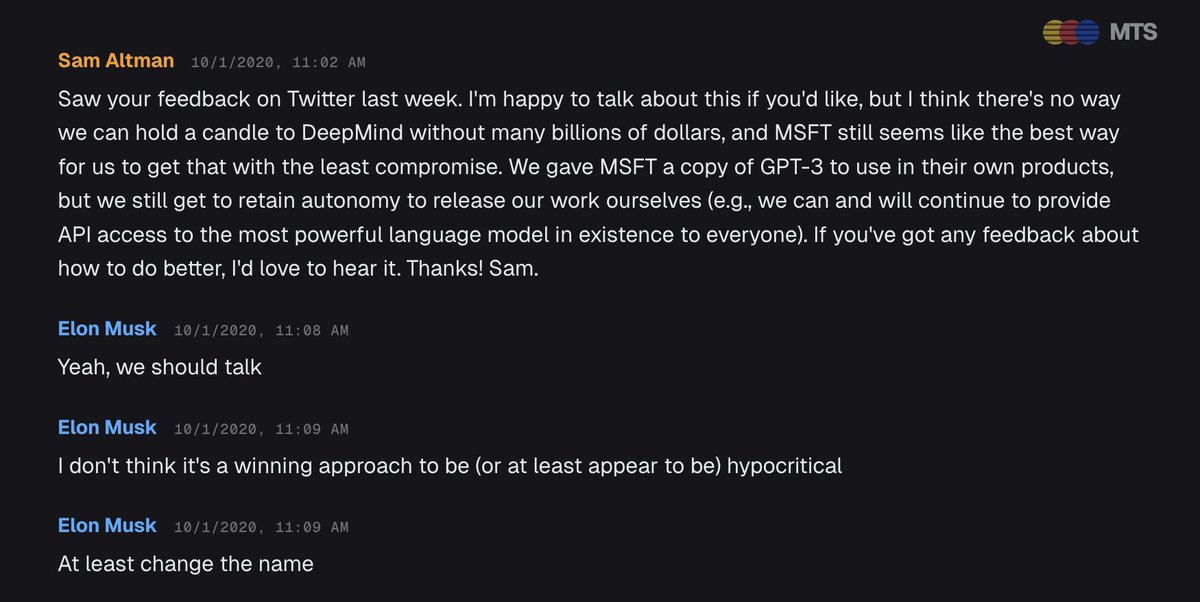
We built a way to explore everything that's been entered into evidence for the Musk v. Altman trial.
Greg's journal. Texts between Elon and Sam. OpenAI's LP agreement and more.
All at our latest drop:
evidence.mts.now
English

Jack, this is a thin idea made to sound revolutionary. Here's why.
Your historical framing is a parlor trick. Two thousand years on Roman contubernia and Prussian staff officers don't change the fact that this argument rests on a single reduction: hierarchy exists to route information. That's wrong. Hierarchies persist because they solve multiple problems simultaneously: accountability, skill development, conflict resolution, resource allocation, mentorship, and yes, information routing. Reducing all of that to "bandwidth" is like saying hospitals exist to route paperwork.
The "world model" is the most interesting idea you have, and the most oversold. A system that composes financial primitives based on real-time transaction data from both sides of a marketplace, that's genuinely compelling infrastructure. But you slide from "we have rich transaction data" to "therefore we don't need middle management" as if those are connected claims. They aren't. Knowing that a merchant's cash flow is tightening doesn't eliminate the need for humans who interpret ambiguity, manage competing priorities, and make judgment calls the model can't. The hard part was never seeing the information. It's deciding what to do when the information conflicts.
You acknowledge that Spotify, Zappos, and Valve all tried to flatten hierarchy and failed at scale. The argument is that AI is what those experiments lacked. Maybe. But the failure pattern wasn't "we couldn't see what was happening." It was "we couldn't resolve disagreements, develop people, or maintain accountability without structure." A better world model doesn't fix that. Those are human coordination problems, not information routing problems. Calling them the same thing is the broad error of your entire piece.
The three-role structure still has hierarchy. DRIs own outcomes with "full authority to pull resources" across teams. Player-coaches "invest in the growth of the people around them." That's management. You renamed it. You even describe DRIs rotating across problems on 90-day cycles, which is exactly how good organizations already deploy senior leaders. This isn't a new structure. It's a reorg with a manifesto.
And the tell that this is all stupendously overbuilt: "Hierarchy and middle management impede information flow." This is a line designed to make founders feel smart for firing people. It reframes experienced humans as "routing layers," interchangeable with software. That's not insight. It's a rationalization for headcount reduction dressed up as organizational philosophy.
Your transaction flywheel at the core is real and probably worth studying. The org theory wrapped around it is not. You will learn something useful from this experiment, but so did Zappos, and the lesson was that the humans they treated as overhead turned out to be load-bearing.
English

Alex Matei retweetledi

Elon Musk avait dit un truc qui m'avait marqué sur l'allocation de ressources. En substance : passé un certain niveau de richesse, l'argent n'est plus de la consommation, c'est de l'allocation de capital.
Cette phrase change tout.
L'économie, dans le fond, c'est juste un problème d'allocation. Tu as des ressources finies et des usages infinis. Qui décide où va quoi ?
Imagine une cour de récré. 100 enfants, des paquets de cartes Pokémon distribués au hasard. Tu laisses faire. Très vite, un ordre émerge. Les bons joueurs accumulent les cartes rares, les collectionneurs trient, les négociateurs trouvent des deals. Personne n'a planifié. Et pourtant chaque carte finit dans les mains de celui qui en tire le plus de valeur. Le système maximise le bonheur total de la cour. C'est ça, la main invisible.
Maintenant fais entrer la maîtresse. Elle trouve ça injuste. Léo a 50 cartes, Tom en a 3. Elle confisque, redistribue, impose l'égalité. Trois effets immédiats. Les bons joueurs arrêtent de jouer, à quoi bon. Les mauvais n'ont plus de raison de progresser, ils auront leur part. Les échanges s'effondrent. La cour est égale, et morte. Elle a maximisé l'égalité, elle a détruit le bonheur.
Le problème de la maîtresse, c'est qu'elle ne peut pas avoir l'information que la cour avait collectivement. C'est le problème du calcul économique de Mises, formulé en 1920. L'URSS a essayé de le résoudre pendant 70 ans avec le Gosplan. Résultat : pénuries, queues, effondrement. Pas parce que les Soviétiques étaient bêtes, parce que le problème est mathématiquement insoluble en mode centralisé.
Quand Musk a 200 milliards, il ne les consomme pas, il les alloue. SpaceX, Starlink, Neuralink, xAI. Chaque dollar est un pari sur le futur. Et lui a un track record. PayPal, Tesla, SpaceX. Il a démontré qu'il sait identifier des problèmes immenses et y allouer des ressources avec un rendement spectaculaire.
L'État aussi a un track record. Hôpitaux qui s'effondrent, éducation qui décline, dette qui explose, services publics qui se dégradent malgré des budgets en hausse constante. Le marché identifie les bons allocateurs, la politique identifie les bons communicants.
Le profit n'est pas une finalité, c'est un signal. Il dit : tu as alloué des ressources rares vers un usage que les gens valorisent suffisamment pour payer. Plus le profit est gros, plus la création de valeur est grande. Quand Starlink est rentable, ça veut dire que des millions de gens dans des zones rurales ont enfin internet. Quand un ministère est en déficit, ça veut dire qu'il consomme plus qu'il ne produit. L'un crée, l'autre détruit, et on appelle ça redistribution.
Dans nos sociétés il y a deux catégories d'acteurs. Les entrepreneurs et les bureaucrates. L'entrepreneur prend un risque personnel pour identifier un problème, mobiliser des ressources, créer une solution. S'il se trompe il perd. S'il a raison, ses clients gagnent, ses employés gagnent, ses fournisseurs gagnent, l'État collecte des impôts. Il est la cellule de base du progrès humain.
Le bureaucrate ne prend aucun risque personnel. Son salaire est garanti. Au mieux il maintient une rente existante. Au pire il la détruit par excès de réglementation, mauvaise allocation forcée, incitations perverses qui découragent ceux qui produisent. Mais dans aucun cas il ne crée.
Regarde les 50 dernières années. iPhone, internet civil, SpaceX, Tesla, Google, Amazon, Stripe, mRNA, ChatGPT. Toutes des inventions privées, portées par des entrepreneurs, financées par du capital risque. Pas un seul ministère n'a inventé quoi que ce soit qui ait changé ta vie au quotidien.
La France est devenue le laboratoire mondial de la dérive bureaucratique. 57% du PIB en dépenses publiques, record absolu. Une administration tentaculaire, une fiscalité qui pénalise la création de richesse. Résultat : décrochage face aux États-Unis, à l'Allemagne, à la Suisse. Fuite des cerveaux. Désindustrialisation. Dette qui explose.
Et le pire c'est que la mauvaise allocation s'auto-renforce. Plus l'État prélève, moins les entrepreneurs créent. Moins ils créent, moins il y a de base fiscale. Plus l'État s'endette et taxe. Boucle de rétroaction négative parfaite. La maîtresse pense qu'elle aide, et chaque année la cour produit moins.
Dans nos sociétés, ce sont les entrepreneurs, toujours, qui font avancer la civilisation. Les bureaucrates au mieux maintiennent une rente, au pire la détruisent. Aucune société n'a jamais progressé en taxant ses créateurs pour subventionner ses gestionnaires.
La question n'est jamais qui a combien. C'est qui alloue le mieux la prochaine unité de ressource pour maximiser le futur de l'humanité. La réponse depuis 200 ans n'a jamais changé. Ce ne sont pas les fonctionnaires.
Français

The success of an AI Agent doing stuff and building things for you will always be correlated to your level of clarity about that thing.
English
@nikitabier @AngelaBelcamino Thank God. My prayers have been answered. So many content “hustlers”, it’s getting very tiring. This is one of the reasons I don’t spend that much time on X.
English

All aggregators had their payouts reduced to 60% this cycle. We will add another 20% deduction in the next cycle.
It became abundantly clear: flooding the timeline with 100 stolen reposts and clickbait everyday crowded-out real creators and hurt new author growth.
The next step is to assign a permanent deduction to habitual bait posters who use “🚨BREAKING”on every post.
X will never infringe on speech or reach—but we will not compensate for manipulation of the program or our users.
English

Dom Lucre said he posted 100 times in a week.
Now that the money’s gone, so are the stolen clips every 15 minutes.
Funny how fast “content creators” disappear when the $ do.
Imagine if monetization disappeared entirely—this platform would look very different overnight.
English
Alex Matei retweetledi

Alex Matei retweetledi

History in the making
In this new image from our @NASAArtemis II crew, you can see Orientale basin on the right edge of the lunar disk. This mission marks the first time the entire basin has been seen with human eyes.

English

Excited to launch Gemma 4: the best open models in the world for their respective sizes. Available in 4 sizes that can be fine-tuned for your specific task: 31B dense for great raw performance, 26B MoE for low latency, and effective 2B & 4B for edge device use - happy building!

English
Alex Matei retweetledi


Alex Matei retweetledi
Liftoff.
The Artemis II mission launched from @NASAKennedy at 6:35pm ET (2235 UTC), propelling four astronauts on a journey around the Moon.
Artemis II will pave the way for future Moon landings, as well as the next giant leap — astronauts on Mars.
English
@ShaneCollinsAI @realsigridjin @Fried_rice That doesn’t mean that everyone needs to make their proprietary code public, of course.
A good reason to not make it public is that it’s your business’s market advantage, and a bad reason to not make it public would be to hide its security issues.
English
@ShaneCollinsAI @realsigridjin @Fried_rice Short term, maybe, but long term this could be very good for them.
The idea is that, if you hide your system’s workings because somebody might take advantage of a security issue in it, then your need to fix the system, not to hide the implementation.
English

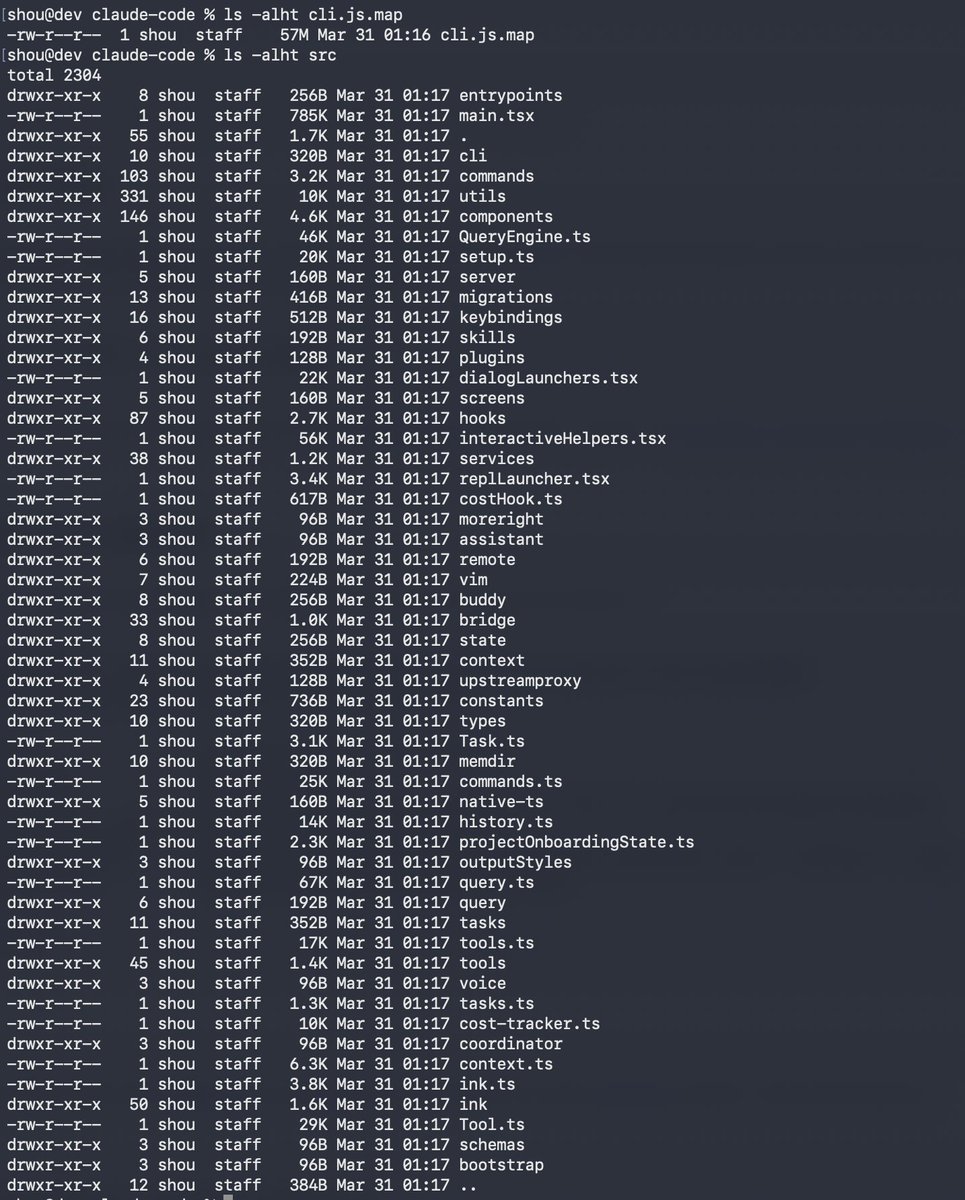
Claude code source code has been leaked via a map file in their npm registry!
Code: …a8527898604c1bbb12468b1581d95e.r2.dev/src.zip
English
no you didn’t 🤣
sui ☄️@birdabo
anthropic’s CEO meeting was leaked after the massive source code breach.
English
English

Everyone is memeing Anthropic for leaking the Claude Code source maps. You're laughing at the wrong thing.
IP theft doesn't matter. What matters is they just handed a literal treasure map to threat actors looking for zero-days in a dev tool with deep system access. It's an open invitation for massive supply chain attacks.
White hats: is this a minor PR fumble, or a DEF CON level crisis waiting to happen?
English